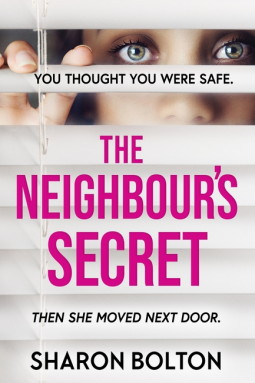
The Neighbour’s Secret by Sharon Bolton

The narrator of Sharon Bolton’s new novel is the very definition of a nosy neighbour. Living in the middle of three adjoining cottages with very thin walls makes it easy to hear the people on either side: the narrator knows what music they listen to and what they watch on television, who they speak to on the telephone and what time they get out of bed in the morning. In the evening, as it gets dark and people turn on their lights, it’s time to take a walk through the streets of the small Cumbrian village specifically to pry through illuminated windows to see the residents going about their daily lives. This is why the narrator becomes frustrated when Anna Brown moves in next door and stubbornly remains a woman of mystery, giving away very few clues to her past.

Yet the narrator is also a mystery, reluctant to share personal information with either the reader or the other characters. For a long time we don’t even know their name, which is why I’m being equally secretive in this review! Let’s focus on the plot instead. There are two separate storylines that alternate throughout the book, starting to come together towards the end. In the first, the narrator and Anna, who have formed a tense friendship, investigate the disappearances of several teenage girls at the InGathering, a yearly event held by the local church. The details of this event are – like everything else in this book – shrouded in mystery, but the church seems to resemble a cult with rituals and traditions that they prefer to keep hidden.

The other narrative is set a year earlier and describes the meetings between a psychiatrist and her patient, seventeen-year-old Jago Moore. Jago stabbed one of his teachers at school and the authorities want an assessment of his mental condition before deciding what action to take. This storyline seems quite unrelated to the other, until we start to suspect who the psychiatrist is. Again, though, not everything is as it seems and there are multiple twists and turns as we head towards the conclusion of the book!

I was able to guess some of the plot twists before they happened, but not all of them and not always very far in advance. It’s easy to make certain assumptions about some of the characters and situations in the book, but these assumptions aren’t necessarily correct and Bolton very cleverly creates confusion and misdirection from beginning to end.

The central mystery surrounding the disappearing girls at the InGathering was actually the part of the novel that interested me the least and I found the revelations about what was really going on at the church quite far-fetched. The Jago Moore sections, however, were chilling – Jago is clever and manipulative and I found his behaviour terrifyingly believable. The whole book has a dark, creepy atmosphere; the village of St Abel’s Chapel in the Lake District should have been an idyllic setting, but with so much secrecy and with most of the action taking place in the middle of the night, it feels like a sinister place rather than a picturesque one.

Although this isn’t one of my absolute favourite books by Sharon Bolton, I did enjoy it and liked it better than last year’s The Fake Wife. It seems that her next book, coming in 2025, will be another standalone; I’m looking forward to it but would also like a return to the Lacey Flint series, which I love!

Thanks to Orion for providing a copy of this book for review via NetGalley.
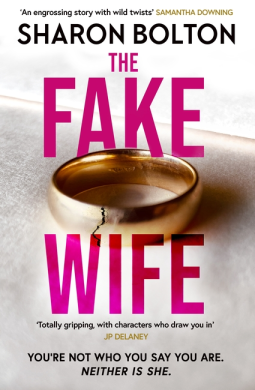
The Fake Wife by Sharon Bolton

I very rarely choose to pick up a contemporary crime novel, but I’m always happy to make an exception for Sharon Bolton. I think I’ve read all of her novels but one and have loved nearly all of them, so I had high hopes for her newest book, The Fake Wife, published last month.

The novel begins on a snowy evening just before Christmas when Olive Anderson, on her way home from a business trip, is staying at a hotel in Hexham, Northumberland. She has managed to get a table in the busy hotel restaurant, but when she enters the dining room she is surprised to see another woman sitting in her place. With no other tables available, Olive agrees to dine with the stranger, but is even more surprised when the woman tells the waiter that she and Olive are a married couple. For some reason even Olive can’t explain, she finds herself going along with the story and accompanying her ‘wife’ back to her hotel room after the meal.

PC Garry Mizon has twice tried and failed to qualify as a detective and has had to settle for a job with the traffic police, patrolling the roads at night and in bad weather. When politician Michael Anderson reports his wife, Olive, missing, Garry is ordered to accompany DS Lexy Thomas to interview him. Believing Olive may have had an accident on the country roads after leaving her hotel, Garry and Lexy head out into the snow to see if they can track her down. Olive, however, isn’t the first woman connected with Michael Anderson who has gone missing and to get to the truth behind her disappearance, Garry and Lexy will need to delve into the politician’s past and the story of his first wife, Eloise.

When I first started to read The Fake Wife, I wasn’t at all sure that I was going to like this particular Bolton novel. Those opening scenes in the hotel seemed ridiculously contrived – Olive’s reaction to having a strange woman stealing her table then pretending to be her wife certainly wasn’t the way I would have reacted! – and as I read on, other parts of the plot felt very implausible as well. It was also clear from early on that there was going to be a lot more sexual content in this book than you normally get from Bolton, something which I don’t really enjoy. Somewhere after the first few chapters, however, I became immersed in the story and then it didn’t really matter how far-fetched the beginning had been. I’m glad I didn’t abandon it, because otherwise I would have missed out on all the twists and turns of the plot as the novel headed towards its conclusion – and I wouldn’t have got to know Garry Mizon.

Garry is a wonderfully endearing character, one of my favourites in all of Sharon Bolton’s books. He’s one of those people who always try their best, yet nothing ever seems to go right for them, as we see at the beginning of the book when he makes a catastrophic and embarrassing mistake during a raid. Having proved yet again his unsuitableness for detective work, he is only asked to drive Lexy to the Andersons’ because nobody else is available, but as the investigation begins to unfold, we quickly discover that he is much more intelligent and resourceful than his superiors think he is – as well as being a genuinely nice person. He and Lexy make a great team and I would love to meet them again in a future book, although I suspect this is probably just going to be a standalone.

This book isn’t a favourite by Bolton, then, but the characters made it worthwhile. It’s also the perfect novel to read at this time of year, as so much of it is set outdoors in the snow. I’ll look forward to her next book, but meanwhile I really need to find time to go back and read Blood Harvest, which I think is the only one I still haven’t read!

Thanks to Orion for providing a copy of this book for review via NetGalley.
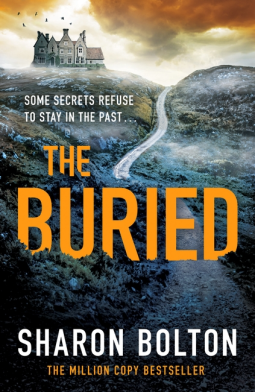
The Buried by Sharon Bolton

Two new Sharon Bolton books in one year! I loved The Dark, the latest in Bolton’s Lacey Flint series, which was published in the spring – and now, with The Buried, she returns to her Florence Lovelady series. I’ve been waiting for this sequel since I read The Craftsman in 2018 and had almost given up hope of it ever appearing, but here it is at last. It was definitely worth the wait!

The Buried begins in the summer of 1999, with Florence Lovelady visiting Larry Glassbrook in prison. Florence, now a senior police officer with the London Met, was responsible for Larry’s conviction thirty years earlier for the murder of three teenagers in Sabden, Lancashire. Now the remains of four more children have been discovered and Florence is confused. Are these more of Larry’s victims or are the remains more recent, meaning that the real killer is still on the loose? Also, the bodies were found in the grounds of Black Moss Manor Children’s Home, which Florence had helped to close down in 1969 after finding evidence of neglect and cruelty. What does this mean and how can she discover the identity of the children?

Soon after Florence’s visit, Larry Glassbrook dies of cancer and preparations are made for his funeral. His daughter Cassie returns to Sabden after a long absence and immediately sets her sights on John Donnelly, whom she loved as a teenager and who is now a married man with children. Cassie herself has become a successful songwriter, but she has never quite managed to put the past behind her and still has questions about some of the things that happened in Sabden thirty years ago.

The first section of the book alternates between Florence and Cassie during the build up to Larry’s funeral and I have to admit, I felt very confused. I found that I’d forgotten most of The Craftsman and I kept coming across references to people and events I couldn’t remember at all. Who was Marigold? What was Florence’s involvement with Black Moss Manor? I had no memories of those things at all, but they were obviously important. Then I discovered that I wasn’t supposed to remember them as they didn’t actually form part of the plot of The Craftsman. I just needed to be patient because the second section of the novel takes us back to 1969 and my questions about Marigold and Black Moss Manor were answered. The shifting timelines with various parts of this book set both before and after the events of The Craftsman means it works as both a sequel and, in a way, a prequel.

The 1969 storyline (which forms the main part of the novel) is excellent – Sharon Bolton at her best. I was completely gripped by Florence’s investigations into the allegations of abuse at the children’s home and the obstacles she faces in trying to get anybody to take her concerns seriously. The 1960s setting allows Bolton to explore the sexism and misogyny Florence faces as she tries to do her work; the other police officers are exclusively male – local men from Sabden who resent Florence’s university education, southern accent and the fact that she is a woman doing what they consider a man’s job. Meanwhile, we get to know Sally Glassbrook, Cassie’s mother, who is struggling to cope after Larry’s arrest and imprisonment. As the family of a convicted murderer, Sally and her daughters are in a vulnerable position and find themselves having to fend off the unwanted attentions of Roy Greenwood, Larry’s former business partner.

Finally, I need to mention the supernatural elements! The way The Craftsman ended made me think these were going to be a major part of the second book, but things didn’t go quite as far in that direction as I’d expected and the crimes committed are all very human ones. We do see more of the coven of witches who are operating in Sabden (Pendle Hill, site of the famous 17th century witch trials, casts its shadow over the town), the influence of the mysterious and sinister group known as the Craftsmen, and Florence’s own seeming ability to communicate with the dead, but I didn’t think these elements dominated the story too much. However, they are there and won’t appeal to everyone. I would say these books are closer in tone to Bolton’s early standalones such as Sacrifice and Awakening than they are to the Lacey Flint novels or her other recent thrillers.

I loved this book once I managed to get back into the story, but I would definitely recommend reading The Craftsman first – or re-reading it if, like me, you read it several years ago and can’t remember the details.

Thanks to Orion for providing a copy of this book for review via NetGalley.
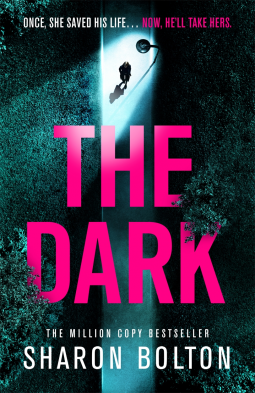
The Dark by Sharon Bolton

She’s back! After an eight year absence – during which time Sharon Bolton has written several excellent standalone crime novels – Lacey Flint has returned in possibly her darkest and most dangerous case yet. It’s the fifth book in the series and after such a long wait, I’m pleased to report that I think it’s as good, maybe even better, than the previous four.

In The Dark, Lacey is still working as a police constable for the Metropolitan Police Marine Unit, not yet ready to consider going back to her old role as a detective. When a baby is snatched from its parents and thrown into the River Thames, Lacey is there to prevent a tragedy, but the incident leaves the police and the public shocked and confused. Who would want to harm an innocent baby? They don’t have to wait long for an answer; it soon emerges that the attack was carried out by a newly formed terrorist group calling themselves MenMatter. The group believe that men’s rights are being pushed aside and that women’s freedoms need to be restricted so that ‘natural order’ can be restored. The abduction of the baby was just the first of several terrorist attacks aimed at gaining publicity for their cause.

As DCI Mark Joesbury and his team at the London Met race against time to discover who is behind MenMatter, on the streets of London tensions between men and women begin to grow. It seems the terrorists are succeeding at creating fear and division; nobody is safe, but with her heroics on the river Lacey appears to have made herself a particular target. As she and Joesburys’ team try to identify the leaders of the group, Lacey discovers that her own secrets are at risk of being exposed. Can she help bring the criminals to justice while also ensuring that Joesbury never learns the truth about her past?

The Dark has a very topical plot; I’m sure it must have been inspired by the debate surrounding the murder of Sarah Everard in the UK last year, when questions were raised over the safety of women on the streets, as well as other 21st century policing problems such as the use of the dark web to plan and launch terrorist attacks and the growing online community of ‘incels’ (involuntary celibates). The scenarios Bolton describes seem almost dystopian but also frighteningly believable and possible. However, she doesn’t try to paint all men as misogynistic or violent and fans of the series will be pleased to know that Mark Joesbury is as wonderful as ever!

As well as some heart-stopping dramatic sequences which really made me fear for some of the characters’ lives, the novel also has a mystery element, with the police trying to uncover the identity of the incel leader behind the attacks. I had my suspicions and was proved to be correct, but that didn’t take away any of the tension as I waited to see when Lacey and the others would come to the same conclusion! It was particularly fascinating to watch Georgie, one of Joesbury’s team, use her knowledge of psychology and language patterns to form theories about online identities.

Of course, one of the highlights of the Lacey Flint series is Lacey Flint herself! In this book, Lacey’s secretive nature makes her particularly vulnerable and leads her to make some decisions that at first seem stupid and reckless but are actually the result of her desperation to conceal the truth about her troubled past. I wonder if this really is the last book in the series this time; it has quite a satisfying ending but there are still plenty of loose ends that haven’t been tied up and I would love to read more. On the other hand, I also love Sharon Bolton’s standalones so will be very happy to read whatever she writes next!

If you’re new to this series, you might like to start with the first book – Now You See Me.

Thanks to Orion for providing a copy of this book for review via NetGalley.
The Pact by Sharon Bolton

A new book from Sharon Bolton is always something to look forward to and she very rarely disappoints. Her latest one, The Pact, is a real pageturner; although I wouldn’t rank it amongst my favourite Bolton novels, it does have a typically gripping plot with lots of twists and turns and I read most of it in one day.

The novel begins with six teenagers – Felix, Daniel, Talitha, Amber, Xavier and Megan – awaiting their exam results. As six of the top students at the prestigious All Souls School, they are all expected to get the perfect As they need to go to Oxford and Cambridge Universities. Despite having such bright futures ahead of them, the six of them have spent the summer drinking, taking drugs and playing a dangerous, reckless game of dares that, if it went wrong, could leave those bright futures in ruins. And that is exactly what happens the night before they are due to receive their results: there’s an accident and innocent people are killed. Eighteen-year-old Megan volunteers to take the blame, leaving her friends free to get on with their lives – but in return, each of them will owe her a favour when she gets out of prison.

Twenty years later, we catch up with Dan, Felix, Tal, Xav and Amber, now all adults with successful careers, some married and some with children. Although the events of that fateful night have left their scars, the five friends have moved on and Megan has been almost forgotten. Megan, however, has not forgotten about them – and now that she has been released, she is coming back to remind them of their pact…

As I’ve said, The Pact kept me gripped from beginning to end, which is an impressive feat as I didn’t like or care about a single character! Five of the group are spoiled and privileged and admit themselves that they are not nice people, and even the sixth, Megan, a scholarship student from a much poorer background, is not much easier to like than the others. I felt that I should at least feel some sympathy for Megan because of her twenty years in prison – and I usually did find myself siding with her against the other characters – but I struggled to believe that anyone would really have made such a sacrifice in the first place! In fact, the whole plot seemed unlikely and implausible, although that didn’t stop me from enjoying it and hoping each of the characters would get what they deserved in the end.

As the end approaches, there are some of those typical Sharon Bolton twists and turns I mentioned earlier, but I found them too easy to predict which was disappointing when I think of how genuinely shocked I was by the surprises and revelations in most of her earlier books. In this case, I think I would also have preferred fewer twists, as the original direction in which the story was heading was excellent and I felt that it fizzled out slightly towards the end. Despite these reservations, though, this was an exciting, fast-paced read and kept me entertained for a day or two. I don’t read a lot of contemporary crime fiction so it’s always good to pick up one of Sharon Bolton’s books and immerse myself in something different for a while!

Thanks to Trapeze for providing a copy of this book for review via NetGalley.

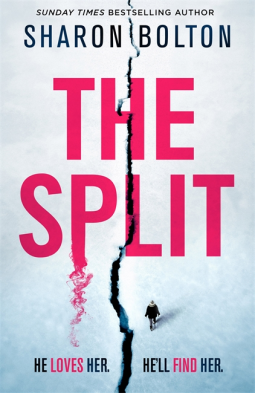
The Split by Sharon Bolton

Sharon Bolton is an author whose books I always enjoy, even though I don’t read a lot of contemporary crime fiction these days. I had expected her next book to be the promised sequel to 2018’s The Craftsman, but I was quite happy to find that The Split was a standalone thriller as her earlier standalones such as Sacrifice, Awakening and Little Black Lies have been some of my favourites.

The Split takes us to South Georgia, a remote and inhospitable island in the southern Atlantic Ocean where twenty-eight-year-old Felicity Lloyd is working as a glaciologist for the British Antarctic Survey. It’s fascinating work and Felicity knows she has been given a wonderful opportunity, but she also has another reason for accepting the job – a chance to put as much distance as possible between herself and Freddie, a man from her past of whom she is still afraid. However, it seems that even here, on the other side of the world, she has been unable to escape. Freddie is coming for her, on the last tourist boat of the summer, and has sent her a letter that fills her with fear:

My dearest Felicity,
Finally, I’ve found you. South Georgia? Wow! Know, my darling, that there is nowhere you can go that I won’t follow –

Who exactly is Freddie and what does he want with Felicity? We find out later in the book, but first we have to go back nine months in time to Cambridge where a series of murders has been committed. Felicity’s connection, if any, with these murders is unclear; all we do know is that she is still haunted by some previous traumatic experiences and has been attending sessions with a therapist. Eventually everything will be revealed, but before we get to that point there are plenty of the twists and turns that are to be expected from a Sharon Bolton novel.

When I first started to read this book it was the South Georgia setting that initially appealed to me, but although we are given some beautiful descriptions of the landscape and the cold, harsh environment, I found I wasn’t being drawn into the story as much as I would have liked. The details of whaling operations and Felicity’s research into glaciers didn’t really interest me – and being thrown straight into the middle of the story with no idea of who anybody was or what was happening didn’t help, even though I understood the reasons for that structure. It wasn’t until the action switched to Cambridge and the backgrounds of Felicity and the other characters began to be explored that I was able to settle into the novel and enjoy it.

I can’t really tell you much about the Cambridge section of the book as it would be too difficult to avoid spoilers, but it quickly becomes clear that we can’t rely on everything Felicity tells us because she has been left so badly scarred by her past experiences. Joe, her therapist, who is one of the other main characters whose perspective we see, has suffered his own recent traumas and it’s obvious that there is also more going on in his life than we are aware of at first. The truth about these two characters – and others, including Bamber, a wild and angry young woman who is very protective of Felicity, and Sean, a mysterious figure who stalks the streets of Cambridge at night – unfolds slowly, with everything coming together when we return to South Georgia in the dramatic final third of the novel. However, I found most of the twists quite easy to guess, which is unusual for a Sharon Bolton book and a bit disappointing.

This hasn’t become one of my favourites, then, but I did enjoy it after a slow start. I must find time to read Blood Harvest, the only one of her previous books I still haven’t read!

Thanks to Trapeze for providing a copy of this book for review via NetGalley.
The Craftsman by Sharon Bolton

I love Sharon Bolton’s books; I don’t read contemporary crime very often these days, but she is an author I always look forward to reading. Her latest novel, The Craftsman, marks a move to a different publisher and is apparently the first in a trilogy.

The Craftsman opens in 1999 with Florence Lovelady, an Assistant Commissioner of Police, attending the funeral of Larry Glassbrook in the Lancashire town of Sabden. Larry has spent the last thirty years in prison – and it was Florence who helped to put him there. His crime? The murder of three teenagers, all buried alive in the graveyards of Sabden. After the funeral, Florence visits Larry’s house where she had been a lodger at the time of the crimes, and here she finds something which makes her begin to question what really happened all those years ago.

About half of the novel is set in 1969, taking us through the events leading up to the murders and the police investigation which follows. As a young female police constable, Florence is the target of prejudice and bullying – and her suggestions that witchcraft could be involved in the murders make her even less popular. But high above Sabden looms Pendle Hill, a place associated with witchcraft since the Pendle Witch Trials of the 17th century. Florence is sure they are dealing with no ordinary crime and no ordinary criminal…but how can she make her colleagues take her theories seriously?

Sharon Bolton’s novels are always dark and eerie, but this one even more so than usual. After all, what can be more terrifying than being buried alive? The setting – an area steeped in superstition and with a history of magic and witchcraft – adds to the atmosphere; it’s more than just a backdrop because a coven of witches and even Pendle Hill itself eventually begin to play an important role in the story.

I loved the way the novel was split between the 1960s and 1990s, showing the contrast in attitudes between the two. In 1969, Florence is a young woman fresh from university doing what many consider to be ‘a man’s job’. The men she works with belittle her achievements constantly, try to give her the less dangerous tasks to carry out, and resent her for thinking of things they hadn’t thought of themselves. And it’s not just the men – Florence observes that some of the worst sexism she encounters actually comes from other women. Florence is also a southerner, so even when she’s not at work, she still feels like an outsider amongst the people of Sabden, most of whom were born and bred in the North West of England. Following Florence’s ordeals as she tries to win the trust of her neighbours and the respect of her fellow police officers interested me almost as much as the mystery itself.

And there is a mystery to be solved here, although it doesn’t seem that way at first. We are told in the very first chapter that it was Larry Glassbrook who was found guilty of the murders, but even knowing that, there are still plenty of twists and turns to the plot and plenty of tension, building and building as we move towards the end of the book. The ending, when it comes is…unexpected, to say the least, and probably something readers will either love or hate. I would have preferred something more conventional – and it does make me wonder what direction things are going to take in the second book in the trilogy. Apart from that, though, I really enjoyed The Craftsman and will look forward to meeting Florence Lovelady again.

This is my sixth book read for the R.I.P. XIII challenge (category: mystery/horror).