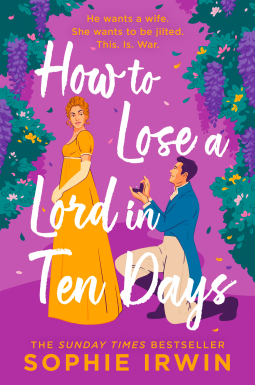
How to Lose a Lord in Ten Days by Sophie Irwin

This is Sophie Irwin’s third novel and since I loved her first two – A Lady’s Guide to Fortune-Hunting and A Lady’s Guide to Scandal – I was looking forward to reading this one, but although I did enjoy it, I think it’s my least favourite of the three. If you’re new to her work, all three of Irwin’s books are set in Regency England and are all standalones with different sets of characters. Apparently this one is loosely based on the romantic comedy How to Lose a Guy in Ten Days, which I haven’t seen, although I don’t think that would have made any difference to my impressions of the book.

Our heroine this time is Lydia Hanworth, a wool merchant’s granddaughter, who, as the novel opens, has found herself engaged to a man she doesn’t love. Lydia’s aunt and uncle, with whom she has lived since the deaths of her parents, have made it clear that if she refuses Lord Ashford, she’ll be sent to live with her awful Aunt Mildred – but Lydia has no intention of marrying him, or any other man not of her choosing. The engagement is due to be announced by Ashford’s father at a party in ten days’ time. That means Lydia has ten days to make Ashford regret he ever met her and voluntarily withdraw his proposal!

Like Sophie Irwin’s other books, this is a lively, entertaining read written with a lot of humour and comedy. Most of the story plays out at a house party hosted by Ashford’s cousin Phoebe, which means there are a limited number of characters to get to know. Despite this, not all of them came fully to life for me and a subplot that develops later in the book involving Phoebe, her husband and a missing necklace felt unnecessary. It does provide some purpose for Lydia’s brother, Pip, though – he has just begun working for the Bow Street Runners and has arrived at the house party with his notebook and quizzing glass, hoping for a real mystery to solve.

Some of Lydia’s attempts to drive Ashford away are quite amusing and could be described as harmless fun (her hideous, unfashionable gowns; her loud, grating laugh; her tone-deaf attempts at singing) but others seem a bit cruel. Despite Lydia’s dislike of him, which is largely based on misunderstandings, Ashford is a decent person and doesn’t really deserve to be humiliated by her! I also couldn’t quite believe that the other guests would have overlooked her behaviour and background so easily and accepted her as one of the party. She broke so many of the rules of upper-class Regency society her reputation should have been in ruins, but it seemed that while people were momentarily shocked by her actions, it was all forgotten the next day.

Still, this is another enjoyable read from Sophie Irwin and I’m sure if I hadn’t held it to such high standards based on her first two books, I would probably be less critical of it. If you’re looking for a light, fun summer read this would be ideal.

Thanks to HarperCollins for providing a copy of this book for review via NetGalley.

Book 15/20 for 20 Books of Summer 2025.
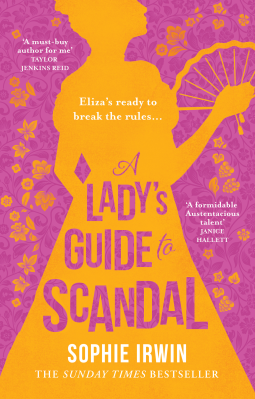

A Lady’s Guide to Scandal by Sophie Irwin

I loved Sophie Irwin’s first novel, A Lady’s Guide to Fortune-Hunting, which I read last year and was looking forward to reading her new one. Despite the similar title, A Lady’s Guide to Scandal is not really a sequel as it features completely different characters, but both books are set in Regency England and I think if you enjoy one of them you’ll probably enjoy the other.

Eliza, Countess of Somerset, has just been widowed at the age of twenty-seven and has inherited her late husband’s fortune – on the condition that she avoids becoming the subject of any scandal. Eliza didn’t love her husband – the man she had really wanted to marry was his nephew, Oliver Courtenay, whom her parents dismissed as unsuitable ten years earlier – but she obediently dresses in black and prepares to observe the traditional period of mourning, living quietly in Bath with her cousin, Margaret. Of course, now that’s she financially independent for the first time in her life, the temptation to go out and enjoy herself is very strong…and grows even stronger with the arrival of the roguish poet Lord Melville and his equally unconventional sister.

As soon as the charismatic Melville appeared on the scene (a character who must surely be inspired by Lord Byron) I thought I knew how the rest of the novel would play out. However, it’s not long before Oliver Courtenay, who has now inherited his uncle’s title of Lord Somerset, also turns up in Bath. It’s clear that Eliza still has feelings for Oliver – maybe even still has hopes of the marriage that was denied them all those years earlier – so the story is not as predictable as it seemed to be at first. I knew which man I wanted Eliza to choose but there are enough twists and turns in the plot that I couldn’t be completely sure she would make the right choice.

Although I found Kitty Talbot in Fortune-Hunting more fun to read about, I did enjoy watching Eliza’s character develop throughout this book. When we first meet her at the reading of her husband’s will, she has spent her whole adult life trying to be a good wife and daughter and conforming to society’s expectations, but through her friendships with Melville and his sister Caroline, she begins to find the courage to make her own decisions and live her life the way she wants to live it. At the same time, her actions are still quite believable within the context of the Regency setting and she doesn’t feel too anachronistically modern. As well as the lively Melvilles, there are lots of strong and memorable secondary characters including Somerset’s awful relatives, who have their eye on Eliza’s fortune, and her cousin Margaret, who becomes involved in a secret romance of her own.

Like the first book, this is very reminiscent of Georgette Heyer’s novels and also has some similarities with the plot of Austen’s Persuasion. However, Irwin does have her own style and is not just imitating other authors. I’ll be looking out for her next book, whether it’s another Lady’s Guide or something else!

Thanks to HarperCollins for providing a copy of this book for review via NetGalley.

This is book 37/50 for the 2023 Historical Fiction Reading Challenge.

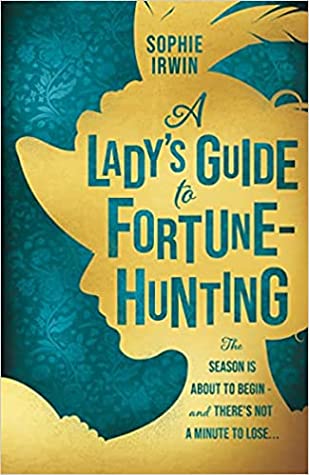
A Lady’s Guide to Fortune-Hunting by Sophie Irwin

This was a gamble for me; I don’t usually read Regency romances other than Georgette Heyer’s and I was worried that this book might be silly and derivative. However, I’m pleased to say that I found it entertaining, intelligent and thoroughly enjoyable. Although some elements of the plot undoubtedly draw heavily on Heyer and Austen and we have a heroine who in many ways resembles Becky Sharp from Vanity Fair, Sophie Irwin still manages to make the story feel fresh and engaging.

Kitty Talbot is the eldest of five recently orphaned sisters whose father has left them with a mountain of debt and in danger of losing their home. Having just been jilted by her wealthy fiancé, Kitty decides that the only solution is to find another rich man to marry – but unless she can do so within the next twelve weeks, Netley Cottage will be repossessed and the family thrown into poverty. So, accompanied by her sister Cecily, Kitty heads to London for the Season, determined to launch herself into society and find a suitable husband as soon as possible.

Once settled in London at the home of her mother’s old friend, Aunt Dorothy, Kitty sets her sights on young Archie de Lacy, who quickly succumbs to her charms. But just as Archie seems to be on the verge of proposing, his brother Lord Radcliffe arrives from his country estate – and sees straight through her plans. This is going to make finding a husband much more difficult than Kitty had expected!

Although I could predict from early in the novel how it was going to end, that didn’t make it any less fun to read. Sophie Irwin throws just about everything into the story that you would expect to find in a Regency romance: balls, dinner parties, trips to the theatre and the Vauxhall Pleasure Gardens, carriage rides, notorious gambling dens, elopements to Gretna Green and encounters with highwaymen. There are also plenty of interactions between our heroine and the man we can quickly guess is going to be the hero, allowing us to watch their relationship develop over the course of the novel.

Kitty is unashamedly open – at least to her family and friends – about her plans to marry for money. She’s ruthless and manipulative, yet it’s clear that everything she does is for the sake of her younger sisters and she is not motivated by greed or personal comfort. Even though you know that what she is doing is morally wrong, you can’t help hoping that she succeeds. I also hoped for some happiness for her sister, Cecily, who at eighteen is just a few years younger and has accompanied Kitty to London at their Aunt Dorothy’s suggestion. The bookish, intellectual Cecily is more comfortable reading poetry or visiting a museum, but she reluctantly tags along with Kitty to tea parties and dances and almost ruins her sister’s schemes by making one faux pas after another.

I noticed one or two words and phrases that don’t belong in a Regency novel (‘misgendering’ being the worst example), but the language is generally appropriate and the period is brought to life quite vividly. The book does have a lot of interesting things to say about wealth, the class system and why some people should be denied the same opportunities in life as others just because they come from a less privileged background. This gives the novel some extra depth and makes it more than just a light romance.

This is Sophie Irwin’s first novel, but I’m already looking forward to her next one.

Thanks to HarperCollins for providing a copy of this book for review via NetGalley.

This is book 23/50 read for the Historical Fiction Reading Challenge 2022.