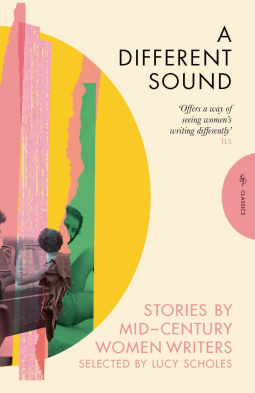
A Different Sound: Stories by Mid-Century Women Writers edited by Lucy Scholes

This is a fascinating collection of short stories, all written by women and originally published in the 1940s and 50s. When I saw the list of authors included in the book, there were several I’d already read, others I’d heard of but never read, and a few that were completely new to me. There are eleven stories in total and as always when writing about collections like this, I’ll have more to say about some of them than others!

There’s only one story in this collection that I’ve read before – and that’s The Birds by Daphne du Maurier. As she’s one of my favourite authors, I decided to read it again and found it just as wonderful and atmospheric as I did the first time. Rather than discuss it again here, I’ll direct you to my previous review and will just add that even if you’ve seen the Hitchcock film, I would still recommend reading the story which is quite different in several ways.

Elizabeth Jane Howard is an author I’m familiar with through her Cazalet Chronicles (I’ve read the first two books in the series and am planning to read the others) and she is represented here with Three Miles Up, an eerie story in which two men are taking a trip through the countryside on a canal boat when they encounter a young woman called Sharon. Once Sharon joins them on the boat, things begin to go wrong and they find themselves sailing up a canal that doesn’t appear on any maps. I loved this one, although I wasn’t aware that Howard wrote ghost stories so it wasn’t what I’d expected at all.

The other two authors I’ve read previously are Stella Gibbons and Elizabeth Taylor. The Gibbons story, Listen to the Magnolias, is set during the war and involves an elderly widow nervously awaiting the arrival of five American soldiers who will be billeted in her home, while Taylor’s The Thames Spread Out follows a woman who is trapped upstairs in her house during a flood while swans swim at the bottom of her staircase. I liked both of these, particularly the second.

Apart from The Birds, my favourite story in the book turned out to be The Skylight by Penelope Mortimer, in which a woman and her young son rent a house in a remote area of France but arrive to find the doors all locked and no sign of the owners. The only point of access is an open skylight in the roof and the mother makes a decision she quickly comes to regret. Mortimer creates a real sense of fear and tension in this story and I couldn’t wait to reach the end to find out if everything was going to be okay!

Considering the publication dates, the Second World War naturally plays a part in many of these stories – I’ve already mentioned the Stella Gibbons, but another is Diana Gardner’s wonderful story, The Land Girl, about a young woman placed on a farm as a Land Girl who takes an instant dislike to the woman whose home she is staying in and decides, out of spite and jealousy, to cause trouble for her.

The stories above are the ones that really stood out for me in this collection, but I enjoyed all of them to some extent, apart from maybe Elizabeth Bowen’s Summer Night which I found well written but confusing due to the structure and changing perpectives. I was also slightly disappointed by Sylvia Townsend Warner’s Scorched Earth Policy about an elderly couple preparing for a wartime invasion, simply because it was too short for any real plot or character development. It was nice to discover some authors I’d never come across before, though: Frances Bellerby, who in The Cut Finger tells the story of a little girl learning some important lessons about the world; Inez Holden whose Shocking Weather, Isn’t It? follows a woman who visits her cousin in various different places over the years; and Attia Hosain who explores the feelings of a newly married woman struggling to fit in with her husband’s friends in The First Party.

I can definitely recommend this collection; I found something to interest me in every story, even the ones I didn’t enjoy as much. I also now have a list of authors I need to explore further!

Thanks to Pushkin Press Classics for providing a copy of this book for review via NetGalley.

A Pink Front Door by Stella Gibbons

My second book for this year’s Dean Street December, hosted by Liz at Adventures in Reading, Running and Working from Home, is Stella Gibbons’ 1959 novel A Pink Front Door. I didn’t love the only other Gibbons book I’ve read, Cold Comfort Farm – I know I’m in the minority, but I just didn’t find it as funny as everyone says it is – so I wanted to give her another chance. I’m pleased to report that I enjoyed this one much more.

The house with the pink front door is home to Daisy and James Muir and their baby son (whom Daisy always refers to as James Too). Daisy is one of those people everyone turns to when they are in need of help and who enjoys trying to solve their problems for them. In post-war London these problems often involve housing and the novel opens with Daisy finding new lodgings for Tibbs, an Eastern European refugee who is struggling to settle into a new life, and Molly Raymond, a young woman who keeps embarrassing herself by chasing after unsuitable men. However, when Daisy’s old university friend, Don, tells her that he is also searching for somewhere to live with his wife and three young children, this proves to be much more of a challenge. Daisy knows that Mrs Cavendish has the whole top floor of her house available to rent, but will that snobbish woman agree to share her home with people who are ‘not her sort’?

The novel shifts between the perspectives of some of the characters mentioned above and also several others, including Daisy’s elderly aunts, Marcia and Ella, who have lived together for many years since neither of their lives went quite the way they had expected when they were younger. Through the stories of Marcia and Ella, Gibbons explores some of the issues facing older unmarried women, as well as the different but equally frustrating ones faced by younger, married women – Don’s wife Katy, for example, who has a degree in chemistry which she is unable to use because she’s now looking after three children and being treated like a servant by Mrs Cavendish in return for the use of her spare rooms.

For most of the book, the plot moves along at a slow, steady pace; I would describe this as much more of a character-driven novel and I did enjoy getting to know all of the characters, even the unpleasant ones. There’s some drama later on when Daisy’s long-suffering husband begins to lose patience with being neglected all the time and decides to take drastic action – and then another dramatic development right at the end of the book which was unexpected and, in my opinion, unnecessary. Still, I got on with A Pink Front Door better than I did with the much more popular Cold Comfort Farm. I’m glad I decided to try Stella Gibbons again and am looking forward to reading more of her work now.

Top Ten Tuesday: Books to make you laugh (or at least smile)

Top Ten Tuesday

I wasn’t going to take part in this week’s Top Ten Tuesday (hosted by The Broke and the Bookish) because I didn’t think I read enough funny books to be able to make a list…but when I stopped to give it some thought, I actually didn’t have a problem coming up with ten titles.

I have concentrated here on books which were specifically written to be funny or which contain lots of amusing scenes, rather than just one or two funny moments (the list would have been far too long in that case). Let me know if you’ve read any of these or if you can think of any more.

Three Men in a Boat

1. Three Men in a Boat by Jerome K. Jerome – This tale of three friends (and dog) who take a disastrous boat trip along the River Thames had to be top of my list!

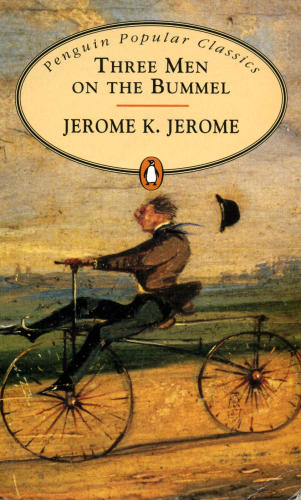
Three Men on the Bummel

2. Three Men on the Bummel by Jerome K. Jerome – Our old friends, J, Harris and George get together again for a tour of Germany in this sequel to Three Men in a Boat.

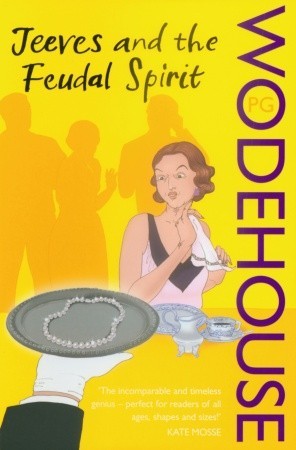
Jeeves and the Feudal Spirit

3. Jeeves and the Feudal Spirit by P.G. Wodehouse – I could have included other Wodehouse books here too, but this Jeeves and Wooster novel is the only one I have reviewed on my blog.

Cold Comfort Farm

4. Cold Comfort Farm by Stella Gibbons – I didn’t find this parody of the British rural novel quite as funny as other people have but it still deserves to be included here.

The Convenient Marriage

5. The Convenient Marriage by Georgette Heyer – Many of Heyer’s novels feature a bit of comedy and some witty dialogue, but this is one I remember being particularly funny.

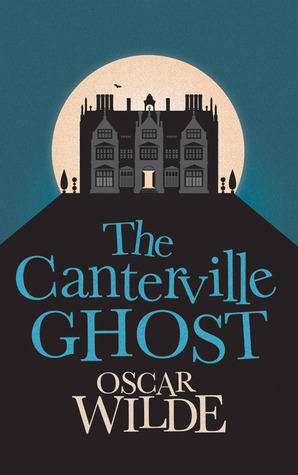
The Canterville Ghost

6. The Canterville Ghost by Oscar Wilde – This light and entertaining satire is possibly the least ghostly ghost story I’ve ever read!

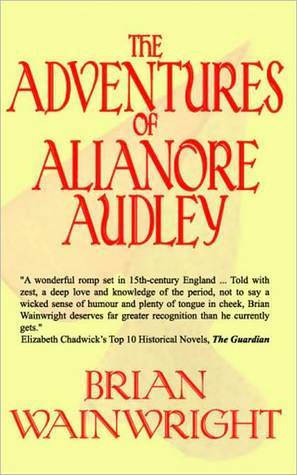
The Adventures of Alianore Audley

7. The Adventures of Alianore Audley by Brian Wainwright – Some knowledge of the Wars of the Roses might be needed to fully appreciate this tale of a 15th century Yorkist spy.

Don Quixote - Edith Grossman

8. Don Quixote by Miguel de Cervantes – Who would have thought such an old book could be so funny? The humour doesn’t always work but when it does it’s hilarious.

The Uncommon Reader

9. The Uncommon Reader by Alan Bennett – A lovely, witty novel about the Queen’s love of reading.

The Idle Thoughts of an Idle Fellow

10. The Idle Thoughts of an Idle Fellow by Jerome K. Jerome – Yes, it’s another book by Jerome. This collection of essays is not as funny as the Three Men books, but will still make you smile.

~

Have you read any funny books recently? What would be on your list?

Cold Comfort Farm by Stella Gibbons

Cold Comfort Farm Cold Comfort Farm was the book the recent Classics Club Spin chose for me to read. I did actually manage to read it before the end of June, as the rules stated, despite the fact that I’m posting my review in July!

This is the story of Flora Poste, nineteen years old and recently orphaned, who decides to go and live with her relations. After writing to various family members and dismissing their offers as being unsuitable, something in the reply she receives from her cousin Judith Starkadder at Cold Comfort Farm in Sussex appeals to Flora and her mind is made up. Flora thinks she knows what to expect from life on a typical Sussex farm (it will be bleak, miserable and old-fashioned – and there’s sure to be a farmer called Amos and two young cousins called Seth and Reuben). As soon as she arrives she discovers that Cold Comfort Farm really is the typical farm she had imagined. Each of the farm’s inhabitants has their own set of problems that require Flora’s assistance, so armed with one of her favourite books, The Higher Common Sense by the Abbé Fausse-Maigre, she begins to ‘tidy up’ the lives of the Starkadders and help them adapt to modern life.

Not having read this book before or seen the adaptation, I didn’t know much about it before I started except that it was a parody of the British rural novel and supposed to be funny. Now, I’m going to be completely honest here and admit that I didn’t find it as funny as I’d expected. A sense of humour is such a personal, individual thing (and I do have one, honestly!) so who can say why a book works perfectly for one person and not so perfectly for another. I did think it was very clever, amusing and witty, but not hilarious. Anyway, it helped that I’ve read some of the types of books Gibbons is parodying (such as Thomas Hardy’s rural novels, for example) though it’s probably not essential to be familiar with these books.

What I enjoyed most about this book was meeting the collection of eccentric characters who live on the farm, from Amos Starkadder, Judith’s husband, who preaches at the Church of the Quivering Brethren to Aunt Ada Doom who “saw something nasty in the woodshed” when she was young and hasn’t left the farm since. Another of my favourites was Adam, the old farm hand who “cletters” the dishes with a twig (isn’t that a great word?) and refuses to use the little dishmop Flora buys him because it’s too pretty.

Something else I found interesting was the fact that this book is set in the future (at least, the future for when it was published in 1932) and there are a few references to video phones and other futuristic elements. I didn’t know about this before I started reading and saw the note at the beginning that told us “the action of the story takes place in the near future”. I’m not sure what the point of this was, though, as it didn’t seem to be necessary or to have any effect on the story.

I didn’t love Cold Comfort Farm the way most people seem to, which is a bit disappointing, and it’s probably not a book I’ll want to re-read, but I did still enjoy it and am grateful to the Classics Club Spin for picking it for me!

And the Classics Club Spin number is…

Number 6!

classicsclub

Last week I decided to take part in the Classics Club Spin. The rules were simple – list twenty books from your Classics Club list, number them 1 to 20, and the number announced today (Monday) represents the book you have to read during May and June.

The book at #6 on my list is:

Cold Comfort Farm

Cold Comfort Farm by Stella Gibbons

There were other books on my list that I was looking forward to more, but I’m quite happy with this one, I think. I haven’t read anything by Stella Gibbons yet and have been wanting to for years!

Have you read it? Did you enjoy it?

If you participated too, I hope the Spin has selected a great book for you.