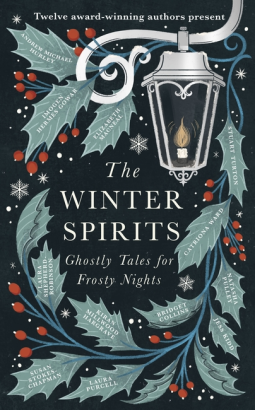
 I’ve previously only read one short story by Susan Stokes-Chapman (in the anthology The Winter Spirits) and I was interested in reading more of her work. This seemed like the perfect time of year to read her new book, The Twelve Days of Christmas!
The book is loosely based on the Christmas carol of the same name, with each chapter inspired by one of the gifts traditionally mentioned in the song – for example, Chapter 1 features pear trees and a character called Miss Partridge (“a partridge in a pear tree”) and Chapter 6 revolves around a game involving hidden goose eggs (“six geese a-laying”). In some cases this is done quite subtly, but in others it’s more heavy-handed; I can appreciate that it’s probably not easy to work all of these references into a novel without it beginning to feel unnatural!
Each chapter feels almost like a separate story (a few of them probably would work as standalones), but they are also linked together through shared characters and a shared setting. That setting is the little English village of Merrywake during the Regency period, with the Napoleonic Wars playing out in the background. Beginning on Christmas Day and ending on Twelfth Night, we join Viscount Pepin of Wakely Hall and his family, friends and servants as they celebrate the festive season. There’s a lovely Christmassy atmosphere as we watch the characters decorate the house, kiss under the mistletoe, open gifts, write and solve riddles, and prepare for the grand Twelfth Night Ball. But although it may all sound idyllic, not everyone at Wakely Hall is having a happy Christmas…
Stokes-Chapman explains in her author’s note that this book is her tribute to Jane Austen and Georgette Heyer and you can definitely see the influence of both. The Viscount and Viscountess Pepin (the name also has links to the song The Twelve Days of Christmas) with their five daughters immediately made me think of Austen’s Pride and Prejudice – the chapter based on “five gold rings” deals with the five girls and their hopes of marriage. The servants, though, are given just as much attention as the upper classes: there are stories about Loveday Lucas, the new kitchen maid, who can’t seem to do anything right; Will Moss the under-gardener, who appears to have fallen in love with someone completely unsuitable; and Mrs Wilson, the cold, strict housekeeper who is shocked to find that her staff consider her heartless.
I loved the world Stokes-Chapman created at Wakely Hall, but it was also nice to get some insights into the lives of the other residents of Merrywake, such as the village toymaker whose son, a drummer in the British army, has failed to come home from France. The toymaker’s story was one of the highlights of the book for me and together with the chapter that follows, about another army musician (a piper, as you may have guessed), it shows that the impact of the Napoleonic Wars is being felt all over the country, in even the smallest of communities.
The Twelve Days of Christmas is a lovely book and despite it obviously being very contrived in places, I found it completely absorbing. I particularly liked the way so many different characters from such varied backgrounds are all given their chance to shine, while each chapter also cleverly builds on the one before. I was sorry to say goodbye to the people of Merrywake and would love a sequel so we could catch up with them again in the summer!
Thanks to Random House UK, Vintage/Harvill for providing a copy of this book for review via NetGalley.
 She Reads Novels