Every Secret Thing by Susanna Kearsley

Every Secret Thing is the third book I’ve read by Susanna Kearsley. I didn’t enjoy it quite as much as the other two – The Rose Garden and Mariana – but that could just be because it’s a different type of novel and didn’t include some of the elements that I loved in the others I’ve read.

Kate Murray is a Canadian journalist who has been sent to London to report on an important criminal trial. While she is there, she meets Andrew Deacon, an old man who tells her he knew her grandmother and that he has an important story to tell her. He invites Kate to come to his hotel for dinner that night, but as he begins to walk away he is hit by a car and is killed. As Kate tries to find out what the connection was between Deacon and her grandmother, more suspicious deaths occur and it seems that someone wants to stop Kate from uncovering any more information. And when Kate’s investigations lead her to Portugal, she finds herself caught up in a wartime mystery involving espionage and murder in 1940s Lisbon.

Every Secret Thing has also been published under the name Emma Cole, presumably as it is a slightly different genre to her other books and might appeal to different readers. The writing style is the same, but although this book does still have a historical storyline told through the recollections of the various people Kate speaks to, there’s no time travel, reincarnation or any of the other paranormal elements that appear in Susanna Kearsley’s other novels. I would describe this book as similar to a Mary Stewart suspense novel. I know I’ve compared Kearsley to Mary Stewart before, but I can’t help mentioning it again because she does remind me of her so much.

One of the things I found interesting about this book was the way it covered so many different aspects of World War II that I didn’t know much about. We find out what life was like for a young woman in New York City during the war, for example, and we are given some insights into what was involved in working for British secret intelligence. We also learn a little bit about all the intrigue and espionage that was taking place in Portugal throughout the war. Lisbon is such a fascinating setting for a World War II novel – as a neutral port, it was a centre of operations for spies and agents from both the Allied and Axis forces and also an important escape route for refugees.

Kate Murray is a likeable narrator but the most memorable character in the book for me was Andrew Deacon. Although he dies right at the beginning of the story, we get to know him through the memories of the other characters whose lives he touched in one way or another, including his secretary Regina Marinho, his nephew James Cavender and of course, Kate’s grandmother. The only problem I really had with this book was that I thought the plot relied too heavily on coincidences and chance meetings. One or two of these in a novel isn’t a problem but when there are too many of them everything starts to feel too convenient and unrealistic. So, not my favourite book by Susanna Kearsley/Emma Cole but I still enjoyed it and if there are going to be more books about Kate Murray I’ll be happy to read them.
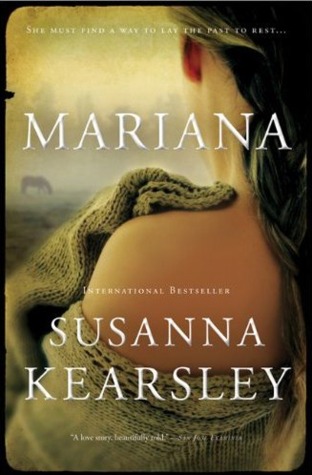

Mariana by Susanna Kearsley

From the moment Julia Beckett first sees Greywethers as a five-year-old, she knows there’s something special about the lonely farmhouse, but it’s not until she’s an adult and a successful illustrator of children’s books that she gets the chance to buy it. As she settles into her new home, Julia gets to know her new neighbours, including the gardener Iain Sumner, Geoffrey de Mornay, the owner of nearby Crofton Hall (which is said to be haunted), and Freda Hutherson, who somehow seems to know a lot about Julia without being told.

Soon Julia’s life becomes mysteriously linked with the life of Mariana Farr, a young woman who lived at Greywethers with her uncle in the 17th century. As Julia spends more and more time in the 1600s she grows increasingly obsessed with Mariana’s story and starts finding it difficult to keep the past separate from the present.

There are some books that feel like they could almost have been written specifically for me and Mariana is one of them – it had all the things I love in a book and I really have nothing negative to say about it. The time period for the historical sections is one that I always find interesting to read about (the Restoration era, the plague and the aftermath of the English Civil War), the characters are easy to like and the relationships between them feel believable, and I also loved the atmosphere – although this is not actually a ghost story, it does have quite a ghostly, haunting feel.

I’ve mentioned before that novels with dual time frames don’t often work for me as I usually find myself enjoying the historical storyline more than the modern day one. That was not a problem with this book because the events that took place in the two time periods were very closely connected and the transitions between the two were so smooth I hardly noticed when one changed to the other. The other Susanna Kearsley book I’ve read, The Rose Garden, has a time travel element too but in Mariana a different method is used and the way Julia moves between the centuries really felt convincing.

The ending was unexpected and really surprised me because I certainly hadn’t guessed what was going to happen. It was maybe a bit abrupt and left a few things unresolved, but I liked it. Susanna Kearsley’s writing reminds me of two other authors whose novels I love – Daphne du Maurier and Mary Stewart. Having enjoyed this one and The Rose Garden so much I’m looking forward to reading more of her books.

I received a copy of Mariana through Netgalley

From one to six…

Before I started blogging I only ever used to read one book at a time. Now I’ve somehow found myself in the middle of six!

Here are the books I’m currently reading:

A Small Circus by Hans Fallada

Alone in Berlin was one of the best books I read last year, so I was excited about reading another of Hans Fallada’s novels. So far though, this one is not as good and I’m finding the plot quite confusing. I’m trying to decide whether or not I want to continue with it but will give it at least a few more chapters.

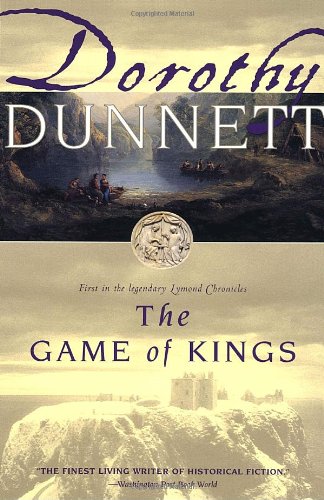
The Game of Kings by Dorothy Dunnett

This is the first of the Lymond Chronicles and the first Dorothy Dunnett book I’ve read. Dunnett fans will be pleased to know that I’m absolutely loving this book and have already ordered the next one in the series!

Mariana by Susanna Kearsley

After reading The Rose Garden a few months ago I wanted to read another Susanna Kearsley book and was delighted to receive this one through Netgalley. I’m still near the beginning but I can already tell it’s going to be as good, or maybe even better, than The Rose Garden.

Great Expectations by Charles Dickens

With February marking the 200th anniversary of Dickens’ birth, I wanted to read one of his novels this month. I’m enjoying Great Expectations so far and finding it surprisingly easy to read compared to some of the other Dickens novels I’ve read. I’m reading a few chapters a day on my Kindle which I’ve found is a good way to get through some of these long classics.

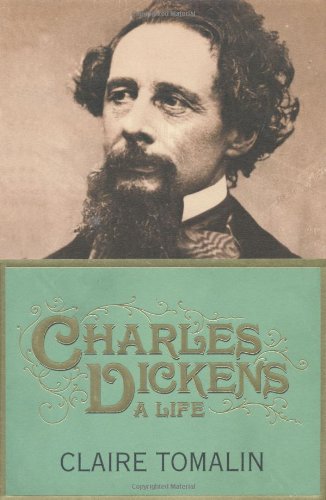
Charles Dickens: A Life by Claire Tomalin

I started this Dickens biography in January. Not being a big non fiction fan, it’s taking me a long time to read this one as I’m only picking it up when I’m in the right mood for it.

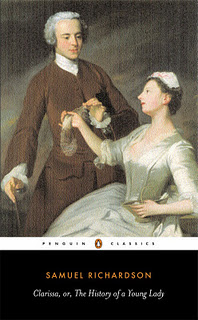
Clarissa by Samuel Richardson

As I mentioned in a previous post I’m reading Clarissa as part of a year-long group read so I’m not expecting to finish it before December. This is another one I decided to read as an ebook as the paperback is just too big!

***

The six books that I’m reading at the moment are all different enough that I’m not having any trouble keeping them separate in my mind, but I do feel as if it’s been a long time since I actually finished a book!

How many books do you usually have on the go at the same time? Do you always finish one book before you start another or do you like to have a variety to choose from?

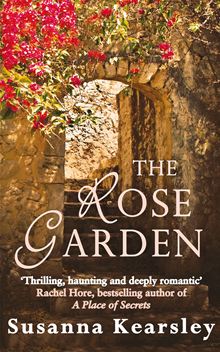
The Rose Garden by Susanna Kearsley

Following the death of her sister Katrina, Eva Ward leaves her home in Los Angeles and travels to England to scatter Katrina’s ashes. Eva knows that of everywhere in the world the place that held the most special memories for her sister was Cornwall, where the two of them had spent many happy days visiting Trelowarth, the home of their childhood friends, the Halletts. As well as scattering the ashes, Eva is looking forward to spending time with Mark and Susan Hallett again and helping them think of ways to attract tourists to the new tea room at Trelowarth. What she hasn’t expected is to find herself slipping back and forth in time between the present day and the eighteenth century, a world of Jacobites, smugglers – and a man called Daniel Butler.

I had never read anything by Susanna Kearsley until now, but she was one of those authors I was sure I would like – and now that I’ve read The Rose Garden I’m pleased to have been proved right! I love novels where time travel forms part of the plot and it’s always interesting to see the different methods authors come up with to explain how and why it happens. In this book I thought the author handled the transitions between past and present very well, in a way that reminded me of Daphne du Maurier’s The House on the Strand (which is also set in Cornwall). I also couldn’t help thinking of Diana Gabaldon’s time travel novels, due to the idea of a modern day woman finding herself in the eighteenth century and in the middle of a Jacobite rebellion. But it wouldn’t be fair to describe The Rose Garden as a copy of any other novel because it’s different enough from anything else that I’ve read to be a great book in its own right.

Eva meets some interesting characters in both time periods, though the most memorable are probably the ones she gets to know in the eighteenth century: Daniel Butler, his brother Jack, and their Irish friend, Fergal. It would have been nice to have seen more of Eva’s conversations with Daniel and Fergal though, as this would have helped make their characters feel more fully developed. And in the present day, I would have liked to have spent more time with Claire (Mark and Susan’s stepmother). I suppose there was a limit to how much the author could include, but I did feel there was the potential for this book to be even better than it already was.

I also loved the Cornish setting – it provided the perfect backdrop for both the historical and contemporary periods of the story. I enjoyed reading about Eva’s adventures in both periods and because the two threads of the story were woven together so closely I found them equally interesting. And later in the book the plot took a turn that I hadn’t expected, which was a nice surprise.

I’m sure I’ll be reading more books by Susanna Kearsley soon – I just need to decide which one to try next!