Classics Club August Meme – A Favourite Classic


The Classics Club are now hosting a new monthly meme and this month we are asked to write about our favourite classic. Like most of the other Classics Club members who have been participating in this meme I find it difficult to pick just one book. There are so many that I love and on a different day and in a different mood I might have chosen to write about Wuthering Heights, Jane Eyre, To Kill a Mockingbird, The Woman in White, Gone with the Wind or even a children’s classic, like my beloved Watership Down. But if I have to name one classic as my all-time favourite, it would have to be The Count of Monte Cristo by Alexandre Dumas.
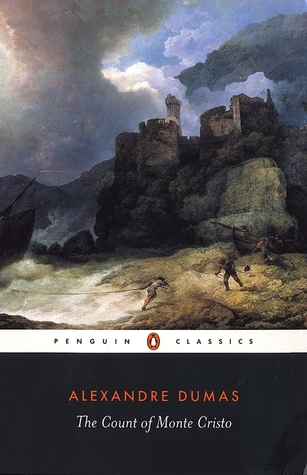
I’ll admit that other classics might offer deeper insights into life, more beautifully-written descriptive passages and more fully-developed characters, but this is the one I enjoy reading the most and that’s why it’s my favourite. It has such an exciting, entertaining plot (and lots of fascinating subplots), so much action and adventure – and one of my favourite fictional characters, Edmond Dantes.

I’m sure most of us have experienced some form of injustice at some point in our lives and can remember how it made us feel. The hero/anti-hero of The Count of Monte Cristo, Edmond Dantes, is the victim of an injustice so great that it completely destroys his life. Determined to punish his enemies for what they have done, he transforms himself into the Count of Monte Cristo and sets into motion an intricate plan for revenge.

I read The Count of Monte Cristo for the first time in 2006 and knew from the very first chapter that I was going to enjoy it. It’s a very long book – over 1,000 pages in the edition I read – but if you’ve never read it, please don’t let the length put you off. The story moves along at such a fast pace I remember being surprised to find it was a much quicker read than I’d expected. Don’t be tempted to read an abridged edition either because you would be missing out on so much. The plot is so complex I can’t imagine how anything could successfully be left out without spoiling the whole structure of the story.

I’ve also read two other Dumas novels – The Black Tulip and The Three Musketeers – and I loved them both, but not quite as much as I love this one. I’ve now read it twice and it’s on my list to re-read again soon for The Classics Club!

What is your favourite classic?

Sylvia’s Lovers by Elizabeth Gaskell

Sylvia’s Lovers is set in the final years of the eighteenth century in the small town of Monkshaven on the Yorkshire coast. During this period Britain and France were at war and the men of Monkshaven lived in fear of the press-gangs who regularly captured sailors from the town and forced them into action against France. Against this backdrop we meet Sylvia Robson, the beautiful young daughter of a farmer from nearby Haytersbank, and the two very different men who hope to marry her. One of these is Sylvia’s cousin, Philip Hepburn, a serious, reliable man who works in a draper’s shop; the other is the much more exciting and charismatic Charley Kinraid, a ‘specksioneer’ (chief harpooner) on a whaling ship. When Philip discovers that Kinraid is a rival for Sylvia’s love, he makes a decision that will eventually have tragic consequences for everyone involved.

Elizabeth Gaskell said this was the saddest book she ever wrote and I can definitely understand why she would have said that! Apart from the central storyline involving Sylvia, Philip and Kinraid, there are other characters with their own tragic stories to be told. Hester Rose, for example, who works with Philip in Foster’s shop and has been secretly in love with him for years without ever daring to say so. And Daniel Robson, Sylvia’s father, a former whaler who decides to take action to stop any more of the town’s young men being pressed into the navy.

Monkshaven is a fictional town but was based closely on the real North Yorkshire town of Whitby. A few weeks ago I posted a visual tour of Monkshaven – I hope the photos and quotes I included help to convey some of the atmosphere Gaskell created in her descriptions of the town. My own familiarity with Whitby (I’ve been there many times over the years) made it easy for me to picture the scenes. When we were told of a funeral procession slowly winding its way up the steps to the church on the cliff or the crowds gathering to watch a whaling ship coming in, I could see the images clearly in my mind.

Sylvia’s Lovers took a long time to read (it was 500 pages and felt even longer, partly because I had to concentrate on understanding the dialogue – I should probably warn you that this book does contain a lot of Yorkshire dialect) but the setting, the historical background and the characters kept me interested. Sylvia frustrated me at the beginning because she was so silly and immature, uneducated and unwilling to learn; by the end of the book though, she had changed a lot and I found myself starting to like her. I had sympathy for Philip, both before and after he made his terrible mistake, and I loved Hester Rose. Kinraid was the only character who never felt fully developed but I think that was maybe intentional.

This book reminded me of Tess of the d’Urbervilles by Thomas Hardy, with all the descriptions of scenery, the local dialect, the focus on rural working-class life and the overwhelming mood of sadness and misery. As one tragedy followed another through the second half of the book, it started to seem that there were going to be no happy endings for any of the characters. I can honestly say this was one of the most depressing books I’ve read and on a few occasions towards the end I wondered why I was still reading it. The answer to that is because I find Gaskell’s writing so beautiful and moving and because she had really made me care what happened to Sylvia, Philip, Hester and the others. This is only the second Gaskell novel I’ve read; the first was North and South which is a much more popular book, but I think I liked this one more despite it being so heartbreaking.

The Classics Club

Jillian of A Room of One’s Own has come up with a great idea to unite people who like to read and blog about classic literature. It’s called The Classics Club and the idea is to make a list of fifty or more classics you want to read within the next five years. Modern classics and re-reads can also be included.

My goal is to finish by 10 March 2017 and after a lot of thought I’ve chosen the sixty books listed below – though I suspect I’ll probably end up making some changes!

My list:

Emma by Jane Austen (re-read)
Pride and Prejudice by Jane Austen (re-read)
Aurora Floyd by Mary Elizabeth Braddon
Shirley by Charlotte Bronte
Jane Eyre by Charlotte Bronte (re-read)
Wuthering Heights by Emily Bronte (re-read)
Death Comes for the Archbishop by Willa Cather
Hide and Seek by Wilkie Collins
David Copperfield by Charles Dickens
Oliver Twist by Charles Dickens
A Tale of Two Cities by Charles Dickens
Crime and Punishment by Fyodor Dostoevsky
The Three Musketeers by Alexandre Dumas (re-read)
Twenty Years After by Alexandre Dumas
The Vicomte de Bragelonne by Alexandre Dumas
Rebecca by Daphne du Maurier (re-read)
Frenchman’s Creek by Daphne du Maurier
The Mill on the Floss by George Eliot
The Good Soldier by Ford Madox Ford
The French Lieutenant’s Woman by John Fowles
Wives and Daughters by Elizabeth Gaskell
Mary Barton by Elizabeth Gaskell
Sylvia’s Lovers by Elizabeth Gaskell
Cold Comfort Farm by Stella Gibbons
The Odd Women by George Gissing
The Return of the Native by Thomas Hardy
The Mayor of Casterbridge by Thomas Hardy
Far from the Madding Crowd by Thomas Hardy
The House of the Seven Gables by Nathaniel Hawthorne
The Hunchback of Notre Dame by Victor Hugo
The Remains of the Day by Kazuo Ishiguro
Washington Square by Henry James
The Haunting of Hill House by Shirley Jackson
The Princess of Cleves by Madame de Lafayette
The House by the Churchyard by Joseph Sheridan Le Fanu
The Painted Veil by W Somerset Maugham
Beloved by Toni Morrison
The Scarlet Pimpernel by Baroness Orczy
Excellent Women by Barbara Pym
The Romance of the Forest by Ann Radcliffe
Wide Sargasso Sea by Jean Rhys
Scaramouche by Rafael Sabatini
The Heart of Midlothian by Sir Walter Scott
Frankenstein by Mary Shelley
Of Mice and Men by John Steinbeck
The Grapes of Wrath by John Steinbeck
The Strange Case of Dr Jekyll and Mr Hyde by Robert Louis Stevenson
Vanity Fair by William Makepeace Thackeray
The Small House at Allington by Anthony Trollope
The Last Chronicle of Barset by Anthony Trollope
Can You Forgive Her? by Anthony Trollope
Kristin Lavransdatter by Sigrid Undset
Around the World in Eighty Days by Jules Verne
The Time Machine by H.G. Wells
The Importance of Being Earnest by Oscar Wilde
The Age of Innocence by Edith Wharton
The House of Mirth by Edith Wharton
The Heir of Redclyffe by Charlotte M Yonge
La Bête Humaine by Emile Zola
Germinal by Emile Zola

Who else is joining the Classics Club?
Which books on my list do you think I should read first?