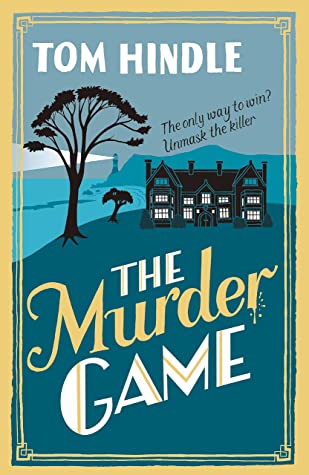
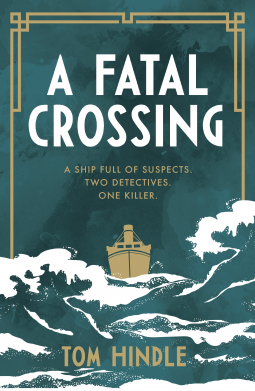
 I loved Tom Hindle’s first novel, A Fatal Crossing, a mystery set on a cruise ship in the 1930s, so I was excited about his new book, The Murder Game. I was expecting something similar – another historical mystery written in the style of the Golden Age – but was surprised to find that this one has a contemporary setting, although still with many of the tropes of a classic crime novel.
In The Murder Game, a group of people have assembled for a New Year’s Eve murder mystery evening at Hamlet Hall, a hotel in the small seaside town of Hamlet Wick. The arrangements are all in place – a fictional murder has been invented, roles have been assigned to each of the guests and actors have been brought in to play the supporting characters – but before the game can even begin, a real murder takes place at Hamlet Hall.
There’s no shortage of suspects; the victim was not a popular person and most of the others have a motive for the murder. PC Fay arrives on the scene and begins to investigate, hoping to solve the mystery herself to further her career, but her progress is slow and in the meantime tensions are increasing between the guests, actors and hotel staff. The atmosphere grows more hostile as they argue about a controversial project to renovate the local lighthouse – the site of a tragic accident several years earlier – and with no phone signal and everyone forbidden to leave the hotel, the residents of Hamlet Hall could find themselves in danger if the killer decides to strike again.
The Murder Game got off to a good start, but it didn’t really sustain my interest all the way through and I found it less enjoyable than A Fatal Crossing. I had loved the idea of a novel set during a murder mystery evening and was disappointed that the game never had time to begin before the real murder took place! The group of people gathered at the hotel for the evening are an unpleasant bunch, but that’s nothing unusual in this sort of novel – however, I felt that the story moved from one character’s perspective to another so often that I didn’t have a chance to get to know any of them very well.
The plot is quite complex and centres around two previous cases of people being killed under suspicious circumstances in Hamlet Wick. After we unravel the truth about those two deaths, which took place years before the novel begins, the events of the present day begin to make more sense – although I had already guessed who the culprit was, having picked up on one or two clues. I don’t often solve mysteries correctly, so it was nice to see that I had got it right for once! I couldn’t really see the point of the police officer character, though, as she seemed to have little impact on the story and we aren’t given much insight into her thought processes so can’t try to solve the murder along with her.
I found parts of the novel entertaining but my expectations were probably too high after enjoying A Fatal Crossing so much. I’ll still be looking out for a third novel from Tom Hindle and will be interested to see what setting he chooses next.
Thanks to Century for providing a copy of this book for review via NetGalley.
 She Reads Novels