Tales from the Underworld by Hans Fallada – #GermanLitMonth

Translated by Michael Hofmann

November is always a busy month with lots of events taking place in the book blogging world, so for German Literature Month (hosted by Caroline of Beauty is a Sleeping Cat and Tony of Tony’s Reading List) I decided to read a short story collection that I could dive into now and then throughout the month in between reading other things. Hans Fallada is probably my favourite German author so I thought Tales from the Underworld would be a good choice.

This collection was published by Penguin Modern Classics in 2014 and contains a large number of Fallada’s short stories which were originally published between 1925 and 1946. The stories have been translated from the original German by Michael Hofmann, who has also translated other Fallada books including Alone in Berlin and A Small Circus. Many of the stories are semi-autobiographical, which I would have guessed from the small amount I know about Fallada’s life, but this is covered in more detail in the foreword by Jenny Williams.

As the title of the book suggests, the focus is on the darker side of life – some of the stories are about thieves, prisoners or drug addicts, while others deal with subjects such as poverty and unemployment. You’re probably thinking that it all sounds very bleak and depressing, but Fallada’s lively, conversational style and sense of humour means it’s much less miserable and much more entertaining than it could have been in the hands of a different author. I think my favourite story was Fifty Marks and A Merry Christmas, a lovely, touching story about a young couple, Mumm and Itzenplitz, who are struggling to make ends meet but determined to have a happy Christmas despite their financial problems. This one reminded me very much of the novel Little Man, What Now? which was published in the same year.

The stories range from the very short, such as the sequence titled Calendar Stories, written in the style of fables with an obvious moral, to the more substantial, such as Short Treatise on the Joys of Morphinism, in which an addict desperately tries to acquire enough morphine to get through the day, looking for pharmacies that will accept fake prescriptions. The addict’s name is Hans, because this is one of the autobiographical stories – Fallada and his wife were both addicted to morphine, which also inspired his 1947 novel, Nightmare in Berlin.

The impact of the two world wars is felt in several of the stories, including The Returning Soldier, where a man comes home from the war with a wounded arm and finds that his father is less sympathetic than he had hoped. Some of the stories deal with urban life – for example War Monument or Urinal? is a satire on the politics and bureaucracy that holds back progress in a small town – while others, such as The Good Pasture on the Right have rural settings and explore the problems facing farmers and the importance of owning land. Fallada also looks at different aspects of marriage and parenthood, with stories like Happiness and Woe, where an unemployed father is tempted into spending the family’s rent money, and The Missing Greenfinches, in which a father tries to teach his young son to value the lives of even the smallest creatures.

I haven’t mentioned even half of the stories here, but I hope I’ve given an idea of how fascinating and varied this collection is. I think it would be a good introduction to Fallada’s work, but if, like me, you’ve already read some of his books, it’s interesting to see how many of these topics come up again in his longer fiction and how many are drawn from his own life. It was a good choice for German Literature Month, just as I hoped it would be!

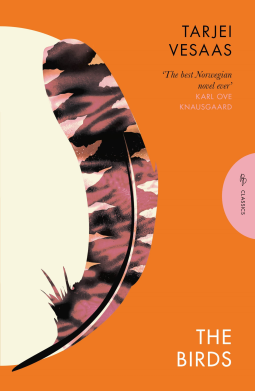
The Birds by Tarjei Vesaas

Translated by Torbjørn Støverud and Michael Barnes

Tarjei Vesaas is a completely new author for me, but when I saw two new editions of his books available from Pushkin Press in English translations, I was intrigued by both of them. I decided to start with The Birds, which sounded fascinating. On the front cover, the author Karl Ove Knausgaard describes it as ‘the best Norwegian novel ever’.

The Birds is a short but powerful book. It’s the story of Mattis, a Norwegian man in his late thirties who sees the world differently. Today he would be described as having a mental disability, but Mattis lives in a time when people are not always so sensitive. He’s aware that his neighbours talk about him behind his back and that the village children call him Simple Simon. He has never been able to hold down a steady job and lives with his older sister, Hege, who supports them both through her knitting.

Mattis has low self-esteem and is afraid of what will happen to him if his sister ever leaves, but he is still able to find pleasure in the small things in life, such as the appearance of a woodcock which begins to fly over their house at night. Although nobody else seems to care, to Mattis this is an important, momentous event and the bird and its fate eventually become symbolic of himself. Another, equally significant event is the arrival of Jørgen, a lumberjack with whom Hege falls in love. Convinced that she’ll go away with Jørgen and abandon him, Mattis struggles to cope with this unwelcome change in his life.

This book was published in 1957 and I was impressed by how sensitively and convincingly Vesaas writes about Mattis and his disabilities. He knows he’s not like other people, which makes him feel inadequate and isolated, so any little victory means a lot to him. I found it very moving to see the joy he feels when two young women are kind to him and his sense of pride when he finally starts his own business as ferryman (despite there never being any passengers). I also had a lot of sympathy for Hege. Although we only really see her through Mattis’ eyes, it’s clear that the situation is equally difficult for her. She loves her brother and is protective of him, but at the same time she feels tired, trapped and frustrated. Life seems to be passing her by, so when she finally gets a chance of happiness, she doesn’t want to lose it.

The Birds is a sad, poignant novel but also has some moments of hope and inspiration and is beautifully written, in a simple, gentle way. I loved it and am now looking forward to reading The Ice Palace which sounds just as good.

Thanks to Pushkin Press for providing a copy of this book for review via NetGalley.

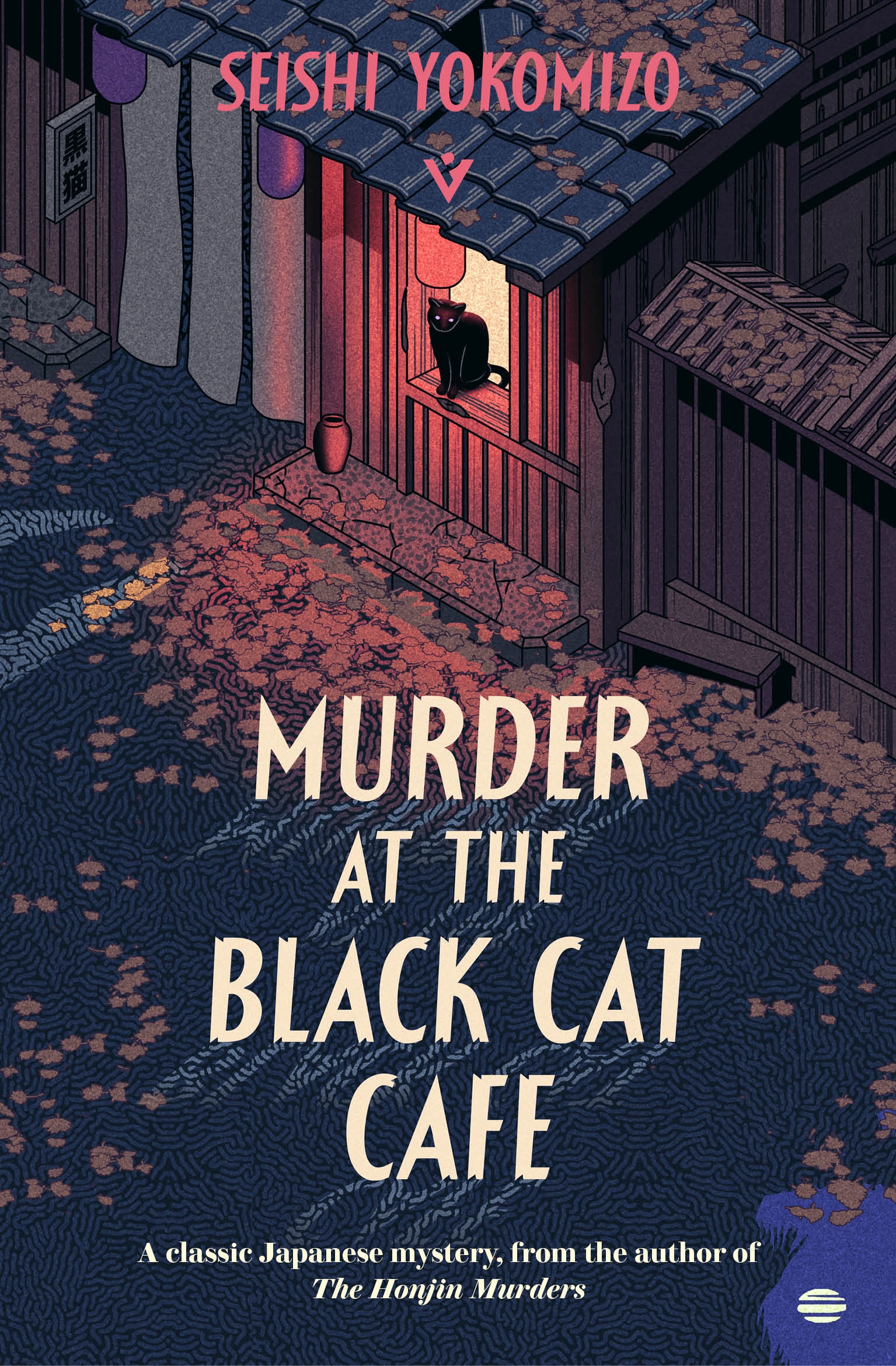
Murder at the Black Cat Cafe by Seishi Yokomizo

Translated by Bryan Karetnyk

Over the last few years, Pushkin Press have been publishing Seishi Yokomizo’s Kosuke Kindaichi mysteries in new English translations. This is the latest, but I found it different from the previous ones in several ways.

First, where the other books are full-length novels, Murder at the Black Cat Cafe is a novella (this edition also includes another short story, Why Did the Well Wheel Creak?, to make the book more substantial). Yokomizo’s detective, Kosuke Kindaichi, plays a prominent role in the first story, but a very small one in the second – in fact, I wouldn’t really call that one a Kindaichi mystery at all as he only appears right at the end. Both stories belong to the type Yokomizo refers to in the prologue as ‘faceless corpse’ mysteries – in other words, where the murder victim has had their face destroyed so they can’t be identified.

The other main difference is in the setting. Usually the Kindaichi mysteries are set in rural Japan – a small village, a country house, a remote island – but Murder at the Black Cat Cafe has a city setting: Tokyo’s red-light district, an area known as the Pink Labyrinth. First published in 1947, the story takes place just after the war and begins with a policeman on patrol discovering the faceless body of a woman in the garden of the Black Cat Cafe, an establishment owned until very recently by the Itojimas, who have just sold it and moved away. Beside the corpse is the body of a black cat, which has also been killed. It’s assumed that the cat is the famous mascot of the Cafe – until the Cafe’s black cat emerges alive and well. Where did the other cat come from and who is the dead woman?

I enjoyed the post-war urban setting, but with the second story, Why Did the Well Wheel Creak?, we are back on more familiar ground with a family living in a remote village. The patriarch, Daizaburo, has two sons – one legitimate and one illegitimate – who are almost identical apart from their eyes. When both young men go to war and only one returns alive, having lost both eyes, questions begin to be asked. Is this man who he says he is or could he be pretending to be his brother?

Both of these stories, then, feature mistaken or stolen identities and people who may or may not be impostors and both have enough twists and turns to keep the reader guessing until the truth is revealed. The first one was probably the stronger mystery, but I did enjoy the second one as well and liked the way the story unfolded through letters sent from a sister to her brother. I’m already looking forward to the next Kindaichi book, She Walks at Night, coming next year.

Thanks to Pushkin Vertigo for providing a copy of this book for review via NetGalley.

Book 2 for RIP XX

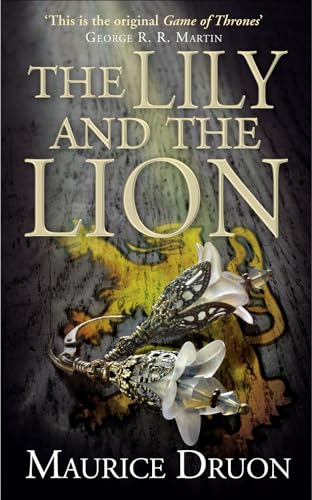
The Lily and the Lion by Maurice Druon #ParisinJuly2025

Translated by Humphrey Hare

I always seem to forget about Paris in July, but this year I remembered in time and decided it would be the perfect opportunity to get back to Maurice Druon’s Accursed Kings series, which I started years ago and still haven’t finished! The Lily and the Lion (first published in French in 1959) is the sixth of seven books telling the story of Philip IV the Fair of France and the kings who follow him, said to have been cursed “to the thirteenth generation” by the vengeful Grand Master of the Knights Templar as he burned at the stake. Les Rois maudits, to give the series its French title, was very successful in France, being adapted for television twice, and has also been credited by George R.R. Martin as the inspiration for Game of Thrones.

The first book in the series is The Iron King and I would recommend starting there if possible. If you don’t have much knowledge of this period of French history (which I certainly didn’t), reading the books in order makes it easier to gradually understand the historical context and the relationships between the various characters. One character who has been with us since book one is Robert of Artois and his story becomes the main focus of book six.

The Lily and the Lion begins with the death of yet another French king, Charles IV. With no direct heir, his cousin Philippe of Valois is chosen as his successor, thanks largely to the machinations of Robert of Artois. In return for helping Philippe to the throne, Robert has been promised the new king’s support in reclaiming his lands of Artois which he believes have been stolen from him by his Aunt Mahaut. A large part of the book is devoted to the dispute over Artois, which is more exciting than it sounds as Robert is prepared to go to any lengths, including forgery, perjury and murder, to get what he wants – and Mahaut is equally determined to stop him.

In England, meanwhile, Philip the Fair’s daughter Isabella and her lover, Roger Mortimer, are now effectively ruling the country after deposing her husband, Edward II. However, Isabella and Edward’s son, the young Edward III, is almost old enough to take control of the throne himself and is planning to overthrow Mortimer. Thanks to some encouragement from Robert of Artois, who has lost patience with Philippe of Valois, Edward III also sets his sights on the throne of France, believing he has a claim through his mother. The seeds of the Hundred Years’ War have been sown!

For a long time, The Lily and the Lion was the last book in the series, until the publication of The King Without a Kingdom many years later in 1977. It does feel like a final book, as Druon ties up loose ends and brings his various storylines to a conclusion. I had wondered if he would return to the story of Marie de Cressay and Guccio Baglioni’s son, Jean, switched as a baby with John the Posthumous, the young King of France who supposedly died aged four days old – and he does, right at the end of the book in the epilogue. This felt very much like an afterthought, though, and I would have liked to have at least had some glimpses of Jean’s life in the main part of the novel.

Although I preferred the earlier books in the series, I did enjoy reading this one and seeing Robert and Mahaut’s long-running feud finally come to an end. I’ve heard that the final book is very different and not as good, but I’m sure I’ll read it eventually – maybe for next year’s Paris in July!

Book 12/20 for 20 Books of Summer 2025.

Strange Houses by Uketsu

“I can’t tell you how many people have told me their scary house stories.

But none of them can compare to the houses in this story. These strange, strange houses.”

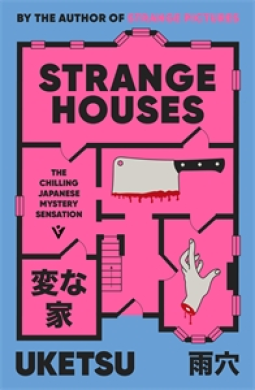
I loved Uketsu’s Strange Pictures when I read it earlier this year, so I was excited to see another of his books, Strange Houses, available on NetGalley. Like the first book, this one has been translated into English from the original Japanese by translator Jim Rion. Also like the first book, it contains a number of illustrations and diagrams that form an important part of the story.

The novel begins with our narrator, a freelance writer, being approached by his friend Yanaoka, who is searching for a suitable house in which he and his wife can raise their first child. Having viewed a house in a quiet residential area of Tokyo, Yanaoka and his wife have both fallen in love with it but are confused by the floor plan which shows a ‘dead space’ – in other words, a tiny hidden room with no doors. The narrator has another friend, Kurihara, who is an architect, so he decides to ask his opinion.

When Kurihara studies the floor plans, he picks up on several other unusual features of the house. These, together with the hidden room, lead him to form a bizarre but terrifyingly logical explanation for the design of the building. Yanaoka chooses not to buy it, but the narrator is intrigued and continues digging into the house’s history, uncovering connections with some other equally strange houses!

I really enjoyed the first half of this book, almost as much as Strange Pictures. It has a similarly interactive feel, where we are encouraged to look at the illustrations and identify the clues in them along with the narrator. Although Kurihara’s theory about the design of the Tokyo house seems ridiculously far-fetched, it does also make sense when you consider the layout of the rooms, the positions of doors and windows and the location of the house itself. I would never have imagined that floor plans could be creepy, but the ones in this book certainly are!

A difference between this book and Strange Pictures is that the other book is made up of several separate but interconnected stories, while this one consists of just one plot and one set of characters. The change in format means this book feels less varied and innovative, but it also allows us to follow the story of one family – the family who built the houses – through to the end. In the second half of the book, the focus moves away slightly from the plans and layouts and concentrates more on the history of the family. Things become quite convoluted, with complex relationships between the family members, rivalries between different branches and tales of curses and traditions going back several generations. I was reminded of Seishi Yokomizo’s mystery novels and I wonder if these, as well as Yukito Ayatsuji’s Bizarre House series, have influenced Uketsu.

In an interview, translator Jim Rion has talked about how Uketsu wants his writing to be easy to read and accessible to all readers and I think Rion has done a great job of keeping that same clarity in his translations. I’ve also discovered that a third book, Strange Buildings, is coming soon. Something to look forward to!

Thanks to Pushkin Vertigo for providing a copy of this book for review via NetGalley.

Book 6/20 for 20 Books of Summer 2025.

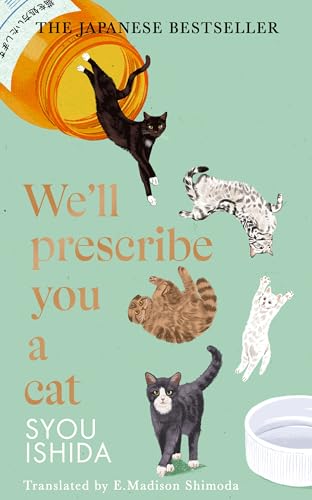
We’ll Prescribe You a Cat by Syou Ishida – #ReadingtheMeow2025

Translated by E. Madison Shimoda

Until now I seem to have avoided the current trend for Japanese novels with cute cat pictures on the cover. It wasn’t a deliberate decision to avoid them – that sort of book just doesn’t usually appeal to me. When I was looking for ideas for cat-related books to read for this year’s Reading the Meow, though, I thought this one sounded intriguing.

We’ll Prescribe You a Cat begins with Shuta Kagawa visiting the Nakagyō Kokoro Clinic for the Soul in Kyoto. Shuta’s unhappiness at work is causing him to suffer from stress and insomnia and he has decided to consult a psychiatrist. However, he quickly discovers that this is no ordinary clinic – first, it proves extremely difficult to find, hidden away down a narrow alleyway; then, instead of prescribing medication, Dr Nikké says something completely unexpected: “We’ll prescribe you a cat”. And with that, Shuta becomes the temporary owner of Bee, an eight-year-old female mixed breed – but will he manage to complete the course of ‘medication’ without any side effects and what will happen when it’s time to give the cat back?

Shuta’s story is the first of five that make up this novel, each one following a similar format with a character entering the Kokoro Clinic and, regardless of their symptoms, being prescribed a cat. The cat is a different one each time, each with his or her own personality and characteristics. Sometimes the cat is compatible with the client; sometimes it seems to cause more trouble and disruption, but in each case, when the prescription comes to an end, the person finds that their life will never be the same again.

Animal-assisted therapy is a legitimate form of therapy used by charities and mental health groups to treat a range of issues, allowing people to spend time with animals in a controlled environment. That’s what I had assumed this book would be about, so I was surprised to see Dr Nikké and his nurse, Chitose, simply handing the clients a cat in a carrier with some food and written instructions – no checks done to make sure the person had a suitable home for the cat, no questions asked about allergies or the needs of other family members. Then, at the end of the week or two week period, the cat is going to be handed back to the clinic and passed on to the next person. It seemed cruel and irresponsible. However, I quickly discovered that the book has a fantasy element – which grows stronger and more bizarre as it progresses – and I was probably taking things too seriously!

You may be wondering what the fantasy element is. Well, to begin with, the clinic itself is very unusual – sometimes it can be found and sometimes it can’t, depending on the person looking for it and how desperately they need to find it. There’s also something strange about Dr Nikké and Chitose, but I’m not going to say any more about that except that each of the five stories adds a little bit to our understanding of what is going on. Still, when I finished the book I felt that a lot of things were left unexplained or only partly answered. There’s a sequel, We’ll Prescribe You Another Cat, which will be available in English in September, but I’m not sure whether it will provide any more clarity or if it’s just another collection of similar stories. I don’t think I liked this one enough to want to read the sequel, but I did find it interesting and I enjoyed taking part in this year’s Reading the Meow with this book and Paul Gallico’s Jennie!

Strange Pictures by Uketsu – #ReadIndies

Translated by Jim Rion

Strange Pictures is a strange novel, but it’s also a completely fascinating one. I’ve been reading a lot of the classic Japanese crime published by Pushkin Vertigo recently, but this is a modern crime novel, first published in Japan in 2022 and made available in an English translation last month. I had never heard of the author, but apparently he’s a ‘YouTube sensation’ known only by the single-word pseudonym Uketsu. He always appears in his videos wearing a mask and his true identity has not been revealed to the public.

In this book, Uketsu takes as his premise the idea that studying drawings made by victims or perpetrators of crime can give us important insights into the psychological state of those people, which could provide clues to help solve the mystery. Strange Pictures consists of three interconnected short stories based around this concept. The links between the stories are not clear at first, but gradually an overall narrative starts to form, raising questions that are answered in a final, fourth section of the book.

Each of the three stories involves some ‘strange pictures’. First, a series of drawings made by a pregnant woman before her death, which her husband posts on his blog. Then, a disturbing picture of a house drawn by a child at school. And finally a sketch of the mountains drawn by a murder victim in the final moments of his life. These pictures are reproduced in the book, along with various other illustrations, and Uketsu interprets them for us step by step as the characters begin to uncover the clues they contain. He discusses the symbolism in some of the pictures and in other cases the physical drawing itself – the paper it was drawn on; the way images can be digitally resized, rotated and layered; the use of gridlines to help with proportion and perspective; coloured crayons that smudge and blur. All of these things and many more are significant to the plot.

The first two stories in the book help to introduce the characters and provide context, but the third one is a great little murder mystery in its own right. I loved the interactive feel, with not just the main drawings but also other sketches, maps and diagrams helping to clarify what’s happening and lead us to the solution. There are also some very creepy moments, particularly a scene with a woman and child convinced they are being followed home to their apartment, and another where a man awakes in his tent in the mountains to discover that he’s no longer alone.

Although I found this book very enjoyable, it’s not one that you would choose to read for the beauty of the prose as the writing style is very plain and simplistic. However, it’s easy to read and while it’s obviously better if you can experience the book in its original language, I think Jim Rion has done a good job with the translation. A second Uketsu book, Strange Houses, revolving around a series of floorplans, is due to be published in English later this year. I’m already looking forward to it!

As Pushkin Press are an independent publisher, I am counting this book towards this year’s #ReadIndies event hosted by Kaggsy’s Bookish Ramblings and Lizzy’s Literary Life.