In a Treacherous Court by Michelle Diener

There are already so many historical fiction novels set in the Tudor court that for a book to stand out from the others the author really needs to find a new way to approach the subject. Michelle Diener’s In A Treacherous Court is refreshingly different because it features two interesting but little-known historical figures – John Parker and Susanna Horenbout – both of whom really existed, yet aren’t characters that you would usually find in Tudor novels. Despite having read a lot of books set during this period, I had never come across either of these people until now.

Susanna Horenbout is a Flemish artist who travels to the court of Henry VIII in 1525 to become the king’s illuminator. During the journey to England, a man dies on board the ship and Susanna is at his side as he whispers his dying words, a secret message that he wants her to deliver to the King. It seems that someone is afraid of what Susanna may have learned, because as soon as she arrives in England an attempt is made on her life. One of the King’s most trusted courtiers, John Parker, Yeoman of the Crossbows, has been sent to meet the ship and after discovering how much danger Susanna is in, he vows to protect her while at the same time trying to unravel a plot that could threaten Henry’s throne.

In a Treacherous Court is the first in a series and after reading this one, I think both Susanna Horenbout and John Parker have a lot of potential as characters. As historians know so little about their lives, it gives the author some freedom to create exciting adventures for them without being too restricted by what really happened (the story does stick to the historical facts where possible though, and there is an author’s note at the end of the book that explains which parts of the novel are based on truth and which are purely fictional). I did find the romance between Susanna and Parker a bit hard to believe as it all seemed to happen so quickly, but who can say whether or not their relationship might really have developed the way it did in the novel?

The plot is very fast-paced with lots of action in every chapter which makes the story fun to read, although I thought the constant murder attempts and attacks on Susanna did become a bit repetitive. This book is definitely at the lighter end of the historical fiction spectrum, but it’s certainly an entertaining read with some original ideas that give it a different feel from most of the other Tudor court novels I’ve read.

I received a review copy of In a Treacherous Court from Simon & Schuster

The Secret Keeper: A Novel of Kateryn Parr by Sandra Byrd

This is Sandra Byrd’s second novel featuring a lady-in-waiting to one of Henry VIII’s wives (the first was To Die For: A Novel of Anne Boleyn). I have not read that one or any of her other previous novels but requested this one from Netgalley as I’m always interested in trying new historical fiction authors.

The Secret Keeper is narrated by Juliana St. John, a knight’s daughter who becomes lady-in-waiting to King Henry VIII’s sixth and final wife, Katherine Parr (spelled Kateryn in this book). Amid all the intrigue of the Tudor court Juliana is a loyal friend to the Queen and as they get to know each other better a strong bond is formed between them. As we follow Kateryn’s story through Juliana’s eyes, we discover that Juliana is hiding some secrets of her own, including one that won’t be revealed until the end of the book.

Having read about this period many times before, I was familiar with the major events of Katherine Parr’s life including her marriage to Henry VIII, the King’s death and her relationship with Sir Thomas Seymour, and her support for Anne Askew, who was tortured and burned at the stake as a heretic. You don’t really need to have any previous knowledge though, as the story is easy enough to follow anyway (and there are some useful family trees at the front of the book too). Katherine is probably most famous for being the wife who survived, but this novel makes it clear that she deserves to be remembered for so much more. She was a Protestant reformer and wrote and published two books, Prayers or Meditations and The Lamentations of a Sinner. Bearing in mind this was the 16th century, this was a significant achievement (Katherine was apparently the first English queen to have books published under her own name) and I enjoyed the little insights we were given into women’s literacy. The Queen also liked to discuss philosophy and religion with her friends and played an important role in the education of her stepchildren, including the future Elizabeth I, another woman who valued literature and learning.

However, this book was more than just a retelling of Katherine Parr’s life story because Juliana is a fictional character with an interesting story of her own to tell. She goes through some very difficult and traumatic situations during her time at court and one of her ordeals in particular is something that still has a lot of relevance today. Throughout the novel Juliana also experiences prophetic dreams and she must decide what she should do with the special knowledge she has been given.

Juliana was a sympathetic character and I also really liked Jamie Hart, the Irishman who is Juliana’s romantic interest throughout the book. I wished we had spent more time with him, as I felt I didn’t get to know him well enough and I would have liked his relationship with Juliana to have played a bigger part in the story. Normally I find there’s too much romance in Tudor court novels rather than not enough, but in this case I just wanted Juliana to have some happiness and I found I was looking forward to Jamie’s occasional appearances at court almost as much as she was!

Considering the number of novels that have been written about the Tudor court and Henry VIII’s six wives in particular, it must be so difficult to find a different way to approach this subject. Sandra Byrd manages to do this to some extent, by telling the story through the eyes of a fictitious lady-in-waiting, but although I enjoyed reading it there was nothing that I thought really made the book stand out from other historical fiction novels of this type. I did appreciate the way the author had made an effort to use language appropriate to the period and avoided the excessively modern dialogue that can often spoil the atmosphere of historical fiction. Oh, and if you’re wondering about the spelling of Kateryn’s name, the author’s note tells us that there’s some evidence that the queen used this spelling herself, signing her documents Kateryn the Queen, KP.

I received a review copy of The Secret Keeper from the publisher via Netgalley

Sacrilege by S.J Parris

Sacrilege is the third in a series of historical mysteries set in Tudor England and featuring Giordano Bruno, a former monk who left his monastery in Italy to escape the Inquisition. Bruno is now in London working as a spy for Queen Elizabeth I’s Secretary of State and ‘spymaster’, Sir Francis Walsingham. At the beginning of Sacrilege, he is reunited with Sophia, a girl he met in a previous instalment of the series. Sophia has run away from her home in Canterbury after being accused of murdering her husband, Sir Edward Kingsley, and she wants Bruno to help clear her name.

Bruno agrees to travel to Canterbury with Sophia where he hopes to uncover the truth about Kingsley’s death and discover the real murderer, but he also has another reason for visiting the city: Walsingham has asked him to investigate rumours of a Catholic plot against the Queen. But soon after his arrival there’s another death and Bruno finds himself caught up in a conspiracy involving the remains of St Thomas Becket, the former Archbishop of Canterbury who was murdered in the cathedral centuries earlier.

If you’re new to this series it would probably be better to start at the beginning with Heresy, and read the books in order. I haven’t read the previous two novels and although I was able to follow the plot of this one without too many problems, I did feel I was missing out on some important background information. The novel is narrated in the first person by Giordano Bruno, but I felt I never really got to know him, which could be partly due to the fact that I started in the middle of the series. I thought he was likeable enough, but not really the charismatic narrator the blurb had promised.

I didn’t know anything about Bruno before reading this book, but he was a real person, an Italian philosopher, mathematician and astronomer. It was interesting to read about him after finishing the novel and discover how much of his back story given in the book was based on the known facts about his life. We do meet some of the better known historical figures of the Elizabethan period too (Francis Walsingham and Sir Philip Sidney, for example) but although they do have a role to play, during most of the story they are kept in the background while the focus is on Bruno and his investigations.

The actual mystery storyline was interesting and complex. Although things did move forward at quite a fast pace, there were also a lot of long descriptive passages and I found I had to really concentrate on these because they sometimes contained clues and information that were vital to the plot. The novel appears to have been well researched and I thought the atmosphere of 16th century Canterbury, the city and the cathedral, was evoked quite well, but it all felt just a bit too modern to be completely convincing. I did enjoy Sacrilege but I don’t think I liked it enough to want to read more books in this series.

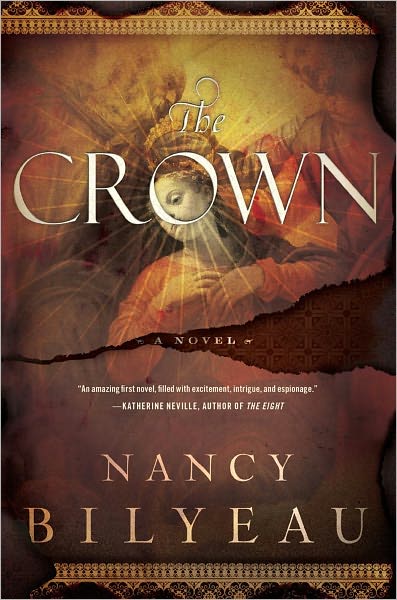
The Crown by Nancy Bilyeau

Nancy Bilyeau’s first novel, The Crown, is a historical mystery set during the Tudor period, beginning just before the death of Henry VIII’s third wife Jane Seymour. The story revolves around the search for a legendary crown which is said to possess special powers. Our heroine and narrator is Joanna Stafford, niece of the third Duke of Buckingham, and a novice nun at Dartford Priory.

When Sister Joanna escapes from the priory and travels to London to witness the execution of her cousin for treason she is unfortunate enough to be captured and taken to the Tower of London. Here she is visited by Stephen Gardiner, the Bishop of Winchester, who sends her back to Dartford on a mission to find the mysterious Athelstan crown which he believes could be hidden somewhere within the priory. As Joanna learns more about the crown she starts to wonder why the Bishop wants it so desperately, but with her beloved father also imprisoned in the Tower and threatened with torture, it seems she has no choice but to obey Gardiner’s orders…

This was one of the most entertaining Tudor novels I’ve read and a real page turner from beginning to end. When the search for the Athelstan crown began I was concerned it might become too much like The Da Vinci Code but that didn’t happen. The mystery of the hidden relic was an important part of the story, but not at the expense of the character development or the wonderful sense of time and place that the author creates.

I really liked Joanna Stafford. One of the things that makes her such an interesting narrator is the constant conflict between her commitment to the vows she’s required to take as a nun and her desire to do whatever is necessary to help her father, even if it means breaking some of these vows. The fact that she sometimes struggles with her conscience and doesn’t always make the right decisions helped me to believe in her as a character.

As a member of one of England’s most powerful families, Joanna meets a lot of famous names from the period including Katherine of Aragon, Anne and George Boleyn, Catherine Howard and Princess Mary, but unlike a lot of Tudor novels this one doesn’t really focus on the court. Instead we are given lots of details on life in a priory and what it was like to be a nun during the Dissolution of the Monasteries, when on the orders of Henry VIII the religious houses of England, Wales and Ireland were closed down, destroyed or sold. This is not something I knew much about before starting this book and I had no idea what happened to the monks and nuns after the monasteries were dissolved, so it was good to learn more about the process and what it involved. But although there’s plenty of history here, it really serves as a background to the plot and never slows the story down at all, so I think this book could be enjoyed by people who like thrillers and mystery novels as well as by fans of historical fiction.

The Crown is a complete story in itself, but the way it ended left me feeling that there were more adventures ahead for Joanna. Apparently Nancy Bilyeau has written a sequel and I’m already looking forward to reading it and entering Joanna’s world again.

I received a copy of The Crown through Netgalley

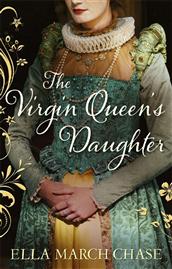
The Virgin Queen’s Daughter by Ella March Chase

This novel, as you can guess from the title, is based on the idea that Elizabeth I, the Virgin Queen, may have had a daughter. Although there’s no real evidence to support this claim, it was apparently rumoured that Elizabeth, as a young princess, had secretly given birth to an illegitimate child who might have been fathered by Thomas Seymour, her stepmother Katherine Parr’s husband. Elizabeth was also linked throughout her life with Robert Dudley and so another theory is that he could have been the baby’s father.

The Virgin Queen’s Daughter is narrated by Elinor de Lacey (Nell), Elizabeth’s newest lady-in-waiting, a young woman who shares Elizabeth’s hair colour and love of books and learning. Nell was brought up in the countryside by John and Thomasin de Lacey, believing them to be her parents, but after her arrival at court she begins to make some discoveries about her past. Could Nell be Elizabeth’s secret daughter?

If you’ve read lots of Tudor fiction I’m not sure The Virgin Queen’s Daughter offers anything very new, but although I’ve read quite a few Tudor novels I’m not at the point where I’m bored with the period yet and so I really enjoyed this book. Although I find it hard to believe that someone in Elizabeth’s position could have concealed the fact that she was pregnant and kept the birth of her child a secret, I still thought it was an interesting subject for a historical fiction novel.

Many of the famous names of the Tudor/Elizabethan period are here: as well as Elizabeth I herself, there’s Robert Dudley, the “spymaster” Francis Walsingham, the mathematician and astrologer John Dee, Elizabeth’s beloved governess Kat Ashley, and several of the Queen’s ladies – Lettice Knollys, Isabella Markham and Mary Grey (sister of Lady Jane Grey). But the strongest characters in the book are the fictional ones: Nell de Lacey and one of the noblemen she meets at court, Sir Gabriel Wyatt. Nell is an interesting and intelligent narrator – like the Queen she enjoys reading and studying, things women were not usually encouraged to do at that time. And Gabriel was such a great character I was a bit disappointed that he didn’t really exist!

I thought Ella March Chase did a good job of portraying the intrigue and danger of life at court, where you never knew who could and could not be trusted, and where anyone believed to be a threat to the Queen could find themselves locked in the Tower. And with two of the main characters being fictional, the author could take their story in some unexpected directions, which added plenty of tension and suspense to the novel.

The Virgin Queen’s Daughter doesn’t really stand out from other historical fiction novels of this type, but overall it was a fun and entertaining read which I would recommend to fans of Philippa Gregory, Alison Weir or Karen Harper.

The Queen’s Governess by Karen Harper

The Queen’s Governess is yet another historical fiction novel set during the Tudor period, but although the story is a familiar one it is told from a different perspective: that of Kat Ashley, the governess of Elizabeth I.

Born Katherine Champernowne, the daughter of a beekeeper from Devon, Kat comes to the attention of Thomas Cromwell who brings her to court to spy for him in the household of Anne Boleyn, Henry VIII’s second wife. When Anne finds herself on trial for treason, adultery and incest, Kat vows to take care of her daughter, the young Princess Elizabeth. Much more than just a governess, Kat becomes Elizabeth’s friend, advisor and mother figure. The fates of Kat and her beloved husband, John Ashley, become tied with the princess’s and they are forced to endure exile and imprisonment before Elizabeth is finally crowned.

So much has been written about the Tudor period that I’m sure it must be getting very difficult for historical fiction authors to find an original way to approach the subject. Anyone with even a vague knowledge of the Tudors will probably recognise many of the characters and events in this book. Elizabeth I, Henry VIII and all six of his wives are here, along with Thomas Cromwell, the Seymours, the Dudleys and Mary I. It’s the choice of Kat Ashley as narrator that helps to keep things new and interesting. I’m not sure if there have been any other novels about Kat, but this is certainly the first one I’ve ever been aware of and it made a refreshing change to read about a lesser-known historical figure from the period.

Telling the story from Kat’s perspective does have its disadvantages though. It seems that not much is actually known about her, and although she was obviously an important part of Elizabeth’s life she appears to have had very little direct influence on the course of history. The result of this is that for much of the book Kat is an observer, describing births, deaths, executions and other significant events of the Tudor court, rather than playing a major role in any of these historical moments.

However, I do think Karen Harper has done a good job in taking the known facts of Kat’s life and fleshing out her character, using her imagination and historical knowledge to fill in the gaps. The book includes an author’s note explaining how much is fact and how much is fiction, and it does seem that the novel has been well researched and that she has done her best to make it as accurate as possible, even down to the choice of spellings of people’s names.

While I was reading this book I kept thinking that it felt very similar to Philippa Gregory’s Tudor court novels and I’d have no hesitation in recommending The Queen’s Governess to Gregory fans, as well as to anyone interested in Tudor history in general. I’ll probably read more of Karen Harper’s work in the future.

Have you read any Tudor novels told from an unusual perspective?

Winter King: The Dawn of Tudor England by Thomas Penn

Winter King: The Dawn of Tudor England is a biography of Henry VII, England’s first Tudor king – a king of whom Francis Bacon said, “he were a dark prince, and infinitely suspicious, and his times full of secret conspiracies and troubles”.

I previously knew very little about Henry VII and was drawn to this book in the hope that it would be a good introduction to the subject. The book opens with a prologue which details the years of unrest and uncertainty that accompanied the Wars of the Roses and explains how Henry VII came to the throne in 1485. Penn then takes us through all the important moments of Henry’s life and reign, including the marriage of his eldest son Arthur to Catherine of Aragon and Arthur’s subsequent death which led to Henry’s second son (the future Henry VIII) becoming his heir.

Henry VII himself is portrayed as a complex and secretive person, clever and shrewd, manipulative and controlling (especially where money and power are concerned). Something that is emphasised throughout the book is that Henry knew his claim to the throne had not been a strong one and that he went to great lengths to convince his subjects to accept him as a legitimate king of England and to prove to them that the rival houses of York and Lancaster had been reconciled under the Tudor name. Despite his efforts, though, he found himself the constant target of plots and conspiracies. The book goes into a lot of detail in recounting some of these planned rebellions and the reasons why they failed.

As someone who doesn’t read a lot of historical non-fiction and who is not an expert on the Tudors, I still had no problems understanding any part of this book. Although it does require some concentration, I found it a very interesting and absorbing read from beginning to end. For those of you who do already have a good knowledge of Henry’s reign, there might not be anything new here but I’m sure you’ll still find plenty to enjoy. Penn’s descriptions of royal weddings, funerals, court pageants etc are particularly well-written and vivid.

The book is very thorough and detailed, with all sources and references provided in the notes. It’s not what you could describe as a quick and easy read, but it’s still very enjoyable and I would highly recommend it to anyone who is interested in learning about the reign of Henry VII and the early life of his son, Henry VIII. Thomas Penn appears to have stayed objective and resisted the temptation to let his own opinions and theories get in the way of the facts, giving us a balanced and unbiased view of a fascinating period of history. I hope he goes on to write more books as he’s definitely a name to look out for.

I have to admit, before I started reading this book I already had a very negative impression of Henry VII due to the way he is portrayed in novels such as The Sunne in Splendour by Sharon Kay Penman and The Daughter of Time by Josephine Tey. Winter King hasn’t done much to change my opinion of him, but I’m pleased that at least I’ve now had the chance to fill in some of the gaps in my knowledge.