Carmilla by Sheridan Le Fanu

My first book for this year’s RIP challenge is Irish author Joseph Sheridan Le Fanu’s classic vampire novella, Carmilla. First published in 1872, it is thought to have influenced Bram Stoker’s Dracula, which came more than twenty years later, and is one of the earliest examples of vampire fiction (although John Polidori’s The Vampyre and Byron’s Fragment of a Novel were written earlier still).

My previous experience with Le Fanu has been limited to his Victorian Gothic novel, Uncle Silas, and one of his short stories, Laura Silver Bell, both of which I read ten years ago. I’ve always intended to read more of his work, so when I saw Carmilla available through NetGalley (a new Deluxe Edition is being published by Pushkin Press this week) it seemed the perfect opportunity.

The story is narrated by nineteen-year-old Laura, who lives in a lonely castle in Styria, Austria, with only her father and governesses for company. Laura longs for a friend her own age and it seems she may get her wish when a young woman is injured in a carriage accident near the castle. Her name is Carmilla and her mother, who is desperate to continue on her journey, asks Laura’s father to take care of her daughter until she returns. Laura is delighted to have Carmilla staying with them, but also feels uneasy, because she has seen Carmilla before – in a dream that has haunted her since her childhood.

As this is a very short book, if I say much more I will be giving away the entire plot – and anyway, as I’ve already said that this is a vampire novel, you can probably guess what Carmilla really is and how the rest of the story will unfold. For the modern day reader there are no big surprises here, although I’m sure that at the time when it was published, as one of the first of its kind, it would have felt much more original and shocking. However, there are still plenty of things that make this book an entertaining and worthwhile read.

First of all, it’s interesting to read Carmilla while keeping in mind its place in history and its influence on later vampire fiction – there are some very obvious similarities with Dracula and Anne Rice has cited it as an inspiration for her Vampire Chronicles. It can also be read as an early example of a lesbian romance; although the constraints of 19th century fiction prevent Le Fanu from being too explicit, the relationship between Laura and Carmilla is clearly based upon physical attraction and we learn that Carmilla always chooses young women as her prey. Finally, with its sinister atmosphere, remote castle setting and other elements of classic Gothic literature, it’s the perfect choice if you’re taking part in the RIP event or just looking for something dark and spooky to read as we head towards Halloween!

Thanks to Pushkin Press for providing a copy of this book for review via NetGalley.

Book 1 read for R.I.P XVI

Shadow of Night by Deborah Harkness

Shadow of Night This is the second book in the All Souls Trilogy by Deborah Harkness. I read the first, A Discovery of Witches, earlier this year and the third, The Book of Life, has just been published, which is what made me decide to pick up the middle book last week.

Shadow of Night follows witch Diana Bishop and vampire Matthew Clairmont as they travel back in time to the year 1590 with two goals in mind. The first is to hunt down Ashmole 782, an elusive manuscript which they hope will provide important information on the origins of their species – witches, vampires and daemons (known collectively as ‘creatures’). The second is to find another witch who can help Diana to understand and control her magical powers. Another benefit of leaving the present day behind is that Matthew and Diana will be able to escape the clutches of the other witches, vampires and daemons who have also been trying to get their hands on Ashmole 782.

Arriving in Elizabethan England, Diana discovers that Matthew is one of a group of writers, artists and scientists known as the School of Night, whose other members include Sir Walter Raleigh and Christopher (Kit) Marlowe. Reunited with his old friends again, Matthew also resumes one of his other occupations – spying for Elizabeth I. Meanwhile, Diana’s mission to find a witch willing to train her in the use of magic proves more difficult than expected in a time when public fear and suspicion of witches is increasing. Discovering that life in the past is no less complicated than it was in the present, Diana’s and Matthew’s adventures take them first into the heart of Elizabethan London, then to Matthew’s family estate at Sept-Tours in France and to the court of Rudolf II in Prague.

This book should have been perfect for me as I usually enjoy both historical fiction and time travel, but I think I actually preferred A Discovery of Witches. There were some parts of this book that I loved, but for such a long novel (nearly 600 pages) I found the pace very slow and uneven. It seemed that most of the book’s major developments all took place in the final 50-100 pages.

There are a lot of characters to keep track of in Shadow of Night and the character list at the back of the book was very useful. Diana and Matthew meet a huge number of real historical figures as they travel between London, Sept-Tours and Prague, but while some of these were very intriguing, such as the Rabbi Judah Loew who created the Golem of Prague, many of them had little or no relevance to the story. I couldn’t help thinking that they had been included just for the sake of it; I would rather have had fewer characters so that we could spend more time getting to know each one. I also really disliked the portrayal of Kit Marlowe in the book. I’m sure the real Marlowe would have been a fascinating character to write about in his own right; making him a daemon (a very spiteful, petulant daemon) added nothing to the story.

Matthew began to stretch my belief to its limits. Not only does he belong to the School of Night, he is also a member of at least one other secret organisation and an order of chivalry, a spy for Elizabeth I and a close personal friend of numerous famous historical figures from all over Europe. You may think that as I’m happy to accept that he’s a vampire I should be able to accept the rest of it too, but it all felt too convenient and just not believable in the context of the story. I do like Diana, partly because as she’s the narrator the reader naturally feels closer to her, but I would still like to see her take the lead more often when it comes to decision-making.

The time travel aspect of the book didn’t quite make sense to me either – it seemed that as Matthew was returning to an earlier period in his own life, he simply replaced his previous self for a while, but I’m not sure what was supposed to have happened to the 16th century Matthew in the meantime or what would happen when he came back. Time travel is always confusing, though, so I tried not to think about it too much! I did like the way each section of the book ended with a chapter set in the present day, showing how Matthew and Diana’s actions in the past affect the future. This also gave us a chance to briefly catch up with characters from the previous book such as Diana’s aunts, Sarah and Emily, and Matthew’s mother, Ysabeau.

Although I didn’t find this book as enjoyable as A Discovery of Witches, I think it maybe suffered from being the middle book in a trilogy. I will still be reading The Book of Life and hoping I don’t have any of the problems I had with this one!

Thanks to Headline for providing a copy of this book for review.

A Discovery of Witches by Deborah Harkness

A Discovery of Witches

“It begins with absence and desire. It begins with blood and fear. It begins with a discovery of witches.”

A Discovery of Witches is the first in Deborah Harkness’s All Souls Trilogy. I’ve come to this book years after everybody else, as usual, but it seems I’ve picked a good time to read it as the third book is due out this summer. I did actually receive a review copy of the second one, Shadow of Night, a while ago but as I prefer to start at the beginning of a series I couldn’t read it until I got round to reading this one first. I haven’t been actively looking for a copy of A Discovery of Witches as I really wasn’t sure it was something I would like, but when I noticed it was available through NetGalley I decided it was time to give it a try.

Our narrator, Diana Bishop, is an American academic who has come to England to research the history of alchemy in Oxford’s Bodleian Library. She is also a witch. Not the kind who wears a black hat and flies on a broomstick, but a young woman who is able to live and work alongside humans while possessing magical powers which even she doesn’t fully understand. When Diana discovers an old alchemical manuscript known as Ashmole 782 in the library, it draws the unwelcome attention of several other beings – not just witches, but also vampires and daemons. It seems that the manuscript is bewitched and contains hidden information these other creatures desperately want.

Among the crowds of otherworldly creatures descending on Oxford in search of the manuscript is scientist Matthew Clairmont, who happens to be a vampire. Together, Matthew and Diana attempt to unravel the secrets of Ashmole 782 and in the process they begin to fall in love. But relationships between witches and vampires are strictly forbidden and the Congregation – a council made up of three representatives from each group of creatures – will do anything to put an end to their romance.

This book was a nice surprise, because I enjoyed it much more than I’d expected to! If you’ve been following my blog for a while, you will know that I don’t normally read books about vampires and witches, but I think it was precisely the fact that I don’t normally read books about vampires and witches that explains why I found this one so much fun to read. It was something different for me and the complaint some readers have, that it’s too much like Twilight for adults, meant nothing to me as I haven’t actually read Twilight (am I the only person who hasn’t?) so I’m not really familiar with what might be seen as vampire romance cliches. There were echoes of lots of other books, though. The way the story began with the discovery of a manuscript in the library was reminiscent of The Historian by Elizabeth Kostova (one of the few vampire books I have read) and the backstory involving Diana’s parents reminded me of the Harry Potter books.

There were lots of things to enjoy about A Discovery of Witches. I loved the combination of romance, history, adventure and fantasy. I liked the idea of creatures (the collective term for witches, vampires and daemons) co-existing with humans and doing the normal, everyday things that humans do – studying in libraries, drinking tea, checking their emails, even going to yoga classes. I loved the descriptions of the various locations Diana and Matthew visit, beginning in Oxford before moving on to a remote castle in the French countryside and then finally a haunted house with a mind of its own and several resident ghosts. And I enjoyed all the little scientific and historical details that are dropped into the story – information on evolution, genetics and the history of alchemy.

The book was not without a few flaws, though. I thought the pace was uneven – after a great start there was a long period where not much happened and while I wasn’t exactly bored, I did wonder when the plot was going to move forward again. Somewhere in the middle of the novel I started to feel impatient with Diana as she seemed so content to have Matthew protect her and make all the decisions in their relationship, which was disappointing after she’d appeared to be such a strong character at the beginning. I found it frustrating that she was so reluctant to use her magic, although I did eventually understand the reasons why she couldn’t or wouldn’t.

It also seemed that the sole purpose of the final few chapters of the book was to set things up for the sequel. This was not a big problem for me, as I already have a copy of the second book and could have started it immediately if I’d wanted to, but I’m sure it must have been annoying for people who read the book when it was first published and wanted to know how the story would be resolved!

I don’t think I’ll be rushing to fill my shelves with vampire books now, but I did enjoy this one and will certainly be continuing with Shadow of Night soon.

Thanks to Headline for providing a review copy via NetGalley

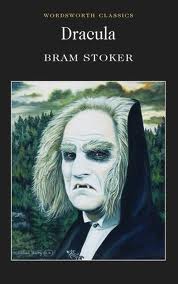
Review: Dracula by Bram Stoker

“My friend. – Welcome to the Carpathians. I am anxiously expecting you.”

When Jonathan Harker travels to Count Dracula’s castle in Transylvania to advise the Count on the subject of buying property in England, he quickly becomes aware that there’s something not quite normal about his host – and after making some terrifying discoveries, he finds himself imprisoned in the castle. Back in England, Harker’s fiancée Mina Murray is anxiously waiting in Whitby for news of Jonathan. But as if she didn’t already have enough to worry about, her friend Lucy Westenra becomes mysteriously ill, with inexplicable puncture wounds on her throat. Could Lucy’s illness have anything to do with the ship that was recently swept into the harbour during a storm?

Interspersed with the main storyline are Dr Seward’s medical notes on one of his patients, a man called Renfield who likes to eat flies and spiders – but what is the connection between Renfield, Lucy and Dracula? Dr Seward brings in his friend Van Helsing, an expert in unusual diseases, and with the help of Mina, Jonathan, Lucy’s fiance Arthur Holmwood and a friend, Quincey Morris, they attempt to solve the mystery and defeat Dracula.

Dracula was an obvious choice for me for the RIP challenge, particularly as it’s one of those books I feel as if I should have read years ago, yet never have (apart from a children’s version which doesn’t really count as it was so heavily abridged). Yet even though I had never read it, a lot of the story was familiar as it has become so firmly entrenched in popular culture. Dracula is not the first vampire story (a few weeks ago I wrote about John Polidori’s The Vampyre and Byron’s Fragment of a Novel) but it’s definitely the most famous.

The book is written in an epistolary style with the entire story being told through letters, journal entries, telegrams and newspaper reports. This structure kept the story moving forward and it was interesting to see so many different perspectives, but I did feel that some of the entries were too short and the story kept switching too abruptly from one person’s journal to another. I would have liked to have spent longer with one character before switching to the next. Some of the ‘voices’ were very similar, but I really liked the character of Mina, who was a strong, sensible, intelligent woman and although she was subjected to the usual Victorian attitudes of the time, she played an important role in the story. In comparison, Lucy is more of a typical Victorian heroine.

The opening section in Transylvania was my favourite part of the book. I loved the atmosphere Stoker created, with the snow falling and the wolves howling.

Though we were in shelter, we could hear the rising wind, for it moaned and whistled through the rocks, and the branches of the trees crashed together as we swept along. It grew colder and colder still, and fine, powdery snow began to fall, so that soon we and all around us were covered with a white blanket. The keen wind still carried the howling of the dogs, though this grew fainter as we went on our way. The baying of the wolves sounded nearer and nearer, as though they were closing round on us from every side. I grew dreadfully afraid, and the horses shared my fear.

When the story moved from Transylvania to Whitby, the pace slowed down and I started to get bored. I did enjoy all the descriptions of Whitby though, with its harbour and ruined abbey. Whitby is only a couple of hours’ drive from where I live, so we go there a lot, and it’s always nice to read about a place you know well.

I actually didn’t find the book very frightening, though maybe that’s just because I was already so familiar with the story. There were some very creepy scenes though, such as when Harker sees Dracula emerging through a window and crawling headfirst down the castle walls:

I was at first interested and somewhat amused, for it is wonderful how small a matter will interest and amuse a man when he is a prisoner. But my very feelings changed to repulsion and terror when I saw the whole man slowly emerge from the window and begin to crawl down the castle wall over the dreadful abyss, face down with his cloak spreading out around him like great wings…I saw the fingers and toes grasp the corners of the stones, worn clear of the mortar by the stress of years, and by thus using every projection and inequality move downwards with considerable speed, just as a lizard moves along a wall.

I’m glad I finally read Dracula, but it’s not going to become a favourite classic of mine. Although I didn’t love it, I thought it was surprisingly easy to read and the first few chapters were great, so if you have any interest at all in vampire stories or gothic horror novels, I think it’s worth reading at least once.

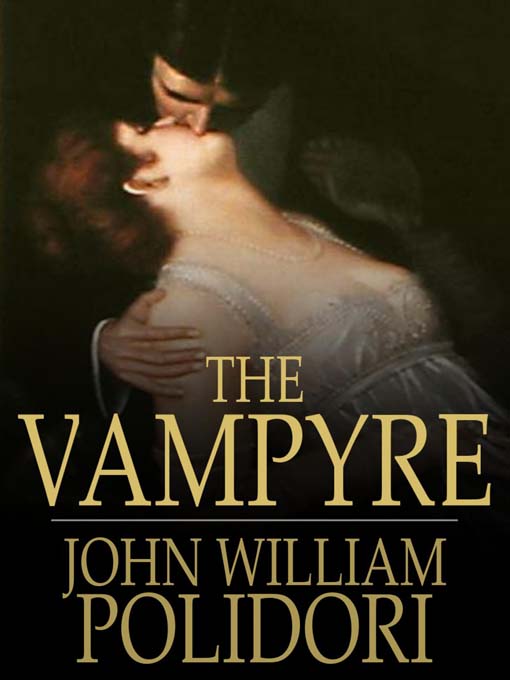
Short Story: The Vampyre by John Polidori

As I’m hoping to read Dracula soon, I thought it might be a good idea to also read one of Bram Stoker’s influences – John Polidori’s The Vampyre. This short story is considered to be one of the first vampire stories in literature and the first to portray a vampire in the way we would recognise today. I have actually been interested in reading this story since I read The Count of Monte Cristo by Alexandre Dumas and was intrigued by the references to the vampire Lord Ruthven. (If you’ve read The Count of Monte Cristo you might remember the scene where the Countess G- is remarking on the Count’s pale skin and nicknames him ‘Lord Ruthven’.)

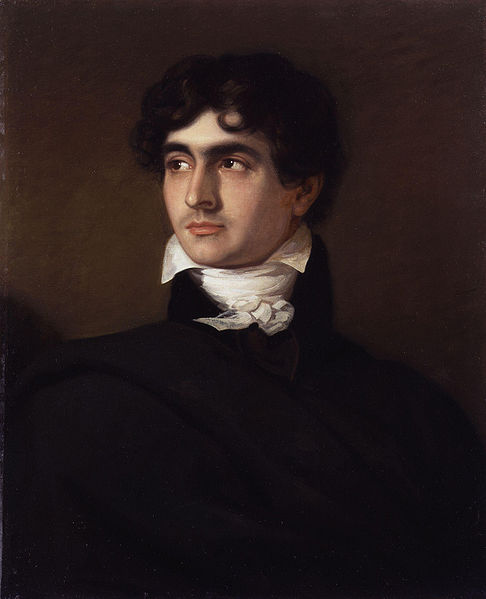
The origins of The Vampyre are fascinating. John William Polidori was Byron’s personal physician and in 1816, went with him to Switzerland. At the Villa Diodati, on Lake Geneva, Byron and Polidori were joined by the poet Percy Bysshe Shelley, his future wife Mary Wollstonecraft Godwin and her stepsister Claire Clairmont, and decided to amuse themselves by writing horror stories. Mary began work on what would become Frankenstein, and Byron wrote the beginning of a vampire story (which survives today as Fragment of a Novel) based on the various vampire myths and legends. Although Byron abandoned his vampire story, Polidori took inspiration from it and The Vampyre was the result. Unfortunately for Polidori, The Vampyre was wrongly attributed to Byron, despite Byron’s attempts to set the record straight.

As a story, it really isn’t very satisfying. Our narrator is a young Englishman called Aubrey, who travels to Rome with his acquaintance, the nobleman Lord Ruthven. The more time he spends with Ruthven, the more Aubrey begins to distrust him and to realise that Ruthven is not what he seems… The plot is so thin that there’s not much more I can tell you without spoiling it – although really, there’s nothing to spoil as the story is very predictable (for the modern reader anyway – I’m sure it would have been more compelling at the time when it was first published).

The Vampyre is interesting historically because of its portrayal of Lord Ruthven as a mysterious, pale-faced aristocratic figure who preys on innocent young ladies, which is the way many future vampires would be described (the vampires of folklore had generally been described as hideous-looking monsters). If you’re interested in how vampire stories began and how they evolved over the years, this is worth reading. If you’re just looking for a good short story to read, you might be disappointed with this one.

Read The Vampyre online here

Byron’s Fragment of a Novel is also available online and is so short it only takes a few minutes to read. It’s a shame he decided not to continue with this, as I think it had the potential to be much better than The Vampyre. I’ve read a few of Byron’s poems but this is my first experience of his prose and even based on such a short sample of his work I find his writing superior to Polidori’s.

Read Fragment of a Novel online here


John William Polidori (1795-1821)