The Figurine by Victoria Hislop

‘Every object, whether it’s old, new, beautiful or even ugly, has a life. A starting point, a journey, a story, Whatever you want to call it. Some have places where they really belong, which is different from the location where they find themselves.’
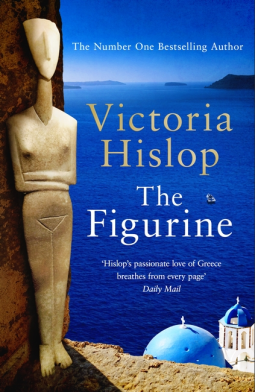
In her new novel, The Figurine, Victoria Hislop tackles the subject of the theft and smuggling of art and antiquities, a problem that has existed for centuries and sadly is still making news headlines today. As Hislop explains in her foreword to the book, ‘the theft of cultural treasures and the falsification of provenance diminishes our understanding of civilisation’. The Figurine explores this topic through the eyes of Helena McCloud, a young woman with a Greek mother and Scottish father.

We first meet Helena in 1968 as an eight-year-old child arriving in Athens to visit her grandparents for the first time. Her mother was born and raised in Greece, but she doesn’t accompany Helena on this trip and appears to have been estranged from her family for many years, although at this point we don’t know why. Everything is new and strange to Helena, but during this visit – and more to follow over the next few summers – she begins to fall in love with Greece and to develop loving relationships with her grandmother and the housekeeper, Dina. Her grandfather, however, remains a cold, remote figure and her dislike of him grows as she discovers that he has connections with the military dictatorship currently in control of the country.

Helena’s summers in Greece come to an end in the 1970s due to political turmoil and by the time it’s safe to return, her grandparents are no longer alive. Heading to Athens to inspect the apartment she has inherited from them, she makes another shocking discovery about her grandfather, this time relating to his involvement in the looting of valuable historical artefacts. Helena’s own interest in antiquities has already led her to take part in an archaeological dig on an island in the Aegean Sea. Can she use her newly gained knowledge to make amends for what her grandfather has done?

This is the third Victoria Hislop novel I’ve read, after Those Who Are Loved, also set in Greece, and The Sunrise, set during the Turkish invasion of Cyprus, and although I didn’t enjoy it as much as those two books, it was still a fascinating story. As well as the exploration of cultural theft and its impact on world heritage, we also learn a lot about the political situation in Greece during the 1960s and 70s and of course, there are lots of beautiful descriptions of the country itself. While there are some horrible characters in the novel, Helena also makes several friends and I loved watching her bond with her grandparents’ servant, Dina – I enjoyed seeing them sneak out onto the streets of Athens in search of somewhere to view the 1969 moon landing, because her grandfather has cruelly removed the television to stop them from watching this historic event.

My main problem with this book was the length; I felt that there were lots of scenes that added very little to the overall story and could easily have been left out. I also found some parts of the plot predictable and others very unrealistic, particularly towards the end of the book where Helena and her friends decide to take matters into their own hands when it would surely have been much more sensible just to have gone to the police.

Although this isn’t a favourite Hislop novel, I do have another one, The Thread, on my shelf which I’m looking forward to reading.

Thanks to Headline for providing a copy of this book for review via NetGalley.
Those Who Are Loved by Victoria Hislop

This was one of several books on my 20 Books of Summer list this year that I didn’t have time to read before the September deadline, but if I’d know how much I was going to love it I would have made it a priority. It turned out to be one of the best books I’ve read this year and probably the most moving.

The novel opens in Greece in 2016 and introduces us to an elderly woman called Themis, whose family have gathered in her Athens apartment to celebrate her birthday. Aware of how little the younger generations know about their country’s history, she decides to share her life story with her two favourite grandchildren, Nikos and Popi. It seems as though almost every book I pick up recently is set in multiple time periods and, to be honest, I’m getting a bit bored with that format, but in this case the framing story only forms the beginning and end of the book – the bulk of the novel is set in the past, which makes it easier to become fully immersed in the story Themis is telling.

And what a fascinating story it is, beginning in the 1930s and taking us through the Axis occupation of Greece during the Second World War, the rise of communism and the Civil War that followed, the political crisis that led to a military junta taking control of the country and then the abolition of the monarchy and establishment of a more democratic society, bringing us right up to the present day. As I probably knew even less about 20th century Greek history than Nikos and Popi at the start of the novel, I found that I was learning a lot from the book, as well as being gripped by the personal stories of Themis and her family.

After their father leaves for America and their mother suffers a nervous breakdown, Themis and her three siblings are raised by their beloved grandmother. As they each grow up to hold different political opinions, a heated discussion takes place every evening when the family sit down around their large mahogany dining table. Themis and her brother Panos want to free Greece from German occupation and later, as their views move further to the left, they both decide to join the Communist army. Meanwhile, her eldest brother Thanasis and sister Margarita are much more right wing, believing that Nazi Germany is Greece’s friend and that the Communists are the dangerous ones.

One of the things I liked about the novel is that, although we naturally find ourselves siding with Themis as the main protagonist, the whole subject of political division and difference is treated with balance and sensitivity. We see that Thanasis and Margarita, despite standing for everything Themis dislikes, do still have some good qualities, while Panos and Themis find themselves doing some questionable things in the name of their own beliefs. The message I took away from the book is that violence, destruction and killing can never be justified, no matter how much someone may try to tell themselves they’re doing it for the right reasons.

I was struck by this quote which I think feels very relevant to today’s world as well as to 1940s Athens:

People seemed to be losing their humanity. The schism that existed between left and right had been allowed to widen, the polarisation to deepen, and now the city was paying the consequences.

Those Who Are Loved is a powerful, emotional story. So far the only other Victoria Hislop book I’ve read is The Sunrise, which I enjoyed, but found quite uneven. This one is a much stronger book, in my opinion, and held my interest from beginning to end. I do have a copy of The Thread, which will be the next one I read and also set in 20th century Greece.

Thanks to Headline Review for providing a copy of this book for review via NetGalley.
The Sunrise by Victoria Hislop

The Sunrise This is Victoria Hislop’s fourth novel but the first one I’ve read. She has previously written about the Greek leper colony on the island of Spinalonga (The Island), the Spanish Civil War (The Return), and the history of the Greek city of Thessaloniki (The Thread), all of which sound interesting to me as I know nothing about any of those subjects! Like the three books I’ve just mentioned, in The Sunrise, Hislop takes a time and place that many people, including myself, will be unfamiliar with and weaves a story around it.

In the summer of 1972, the city of Famagusta in Cyprus is a thriving holiday resort, one of the most popular tourist destinations in the Mediterranean. The beach is lined with luxury hotels, the most luxurious and expensive of them all being The Sunrise, which has just opened its doors for the first time. For the hotel’s owner, Savvas Papacosta, these are exciting times; his dream of becoming the most successful hotelier in Famagusta is moving one step closer to reality.

Within two years, everything changes. Unknown to the tourists as they enjoy the sun, sea and sand, a Greek military coup has led to Turkey invading the northern part of the island to protect the Turkish Cypriots. When the army approaches Famagusta, frightened guests evacuate the hotels and people flee their homes, among them Savvas and his glamorous wife, Aphroditi. But as Turkish soldiers surround the abandoned city, two families remain hidden inside their apartments. One family, the Georgious, are Greek Cypriots, and the other, the Özkans, are Turkish Cypriots. We follow the stories of both of these families, as well as the Papacostas, and see how each character copes with what has happened to their city.

I did enjoy The Sunrise but I thought it felt a bit uneven; not much happened in the first half of the book and a lot of time was spent introducing the characters, setting the scene and describing the interior of the new hotel. With hindsight, I can see that maybe this was necessary, so that we could appreciate the extent to which the lives of these characters were disrupted and destroyed by the coming conflict, but I still found myself getting impatient and wanting to get into the story! I loved the second half of the novel, though. The descriptions of the abandoned city – houses with beds still unmade and food still on the tables, waiting in vain for their owners to return – are extremely vivid and there are images from the book that have stayed in my mind several days after finishing it.

I didn’t particularly like any of the characters in the story but I thought they were an interesting selection of people and I could certainly sympathise with the situations in which they found themselves. While there are one or two characters in the novel who are motivated by greed and self-interest, it was good to see people of different backgrounds and political beliefs working together, overcoming their differences and discovering that their ‘enemies’ are human beings just like themselves.

Towards the end of the book there are too many coincidences and things are wrapped up too neatly for my liking, but overall I found The Sunrise a fascinating read. I have never been to Cyprus and as I said at the start of this post, I know very little about its history (apart from the 15th century civil war, which I read about in Dorothy Dunnett’s Race of Scorpions) so I’m pleased to have had an opportunity to learn about Famagusta’s tragic past. What makes the story even more poignant is that the district of Varosha, where The Sunrise is set, remains a ghost town even today, untouched and uninhabited for four decades.

Thanks to Bookbridgr for my copy of The Sunrise.