Reading the Victorians in 2011

Around this time last year, I signed up for a lot of challenges for 2010. After a few months though, I discovered that challenges don’t really work for me. I prefer to just read whatever I feel like reading without being under any pressure – so I’ve been trying not to be tempted by any of the 2011 challenges. However, I couldn’t resist the Victorian Literature Challenge as I was planning to read a lot of Victorian classics next year anyway.

* The challenge is hosted by Bethany at Words, Words, Words and runs from 1 Jan 2011 to 31 Dec 2011.

* There are four levels to choose from:
Sense and Sensibility: 1-4 books.
Great Expectations: 5-9 books.
Hard Times: 10-14 books.
Desperate Remedies: 15+ books

I’m signing up for the Hard Times level, but hopefully will read enough for the Desperate Remedies level. I prefer not to make lists because I have trouble sticking to them, but here are some of the authors and books I’d like to read in 2011.

Charles Dickens
I’ve only read two of Dickens’ books so far: A Christmas Carol and Bleak House. I have a copy of Our Mutual Friend on my shelf so I might read that one next, but I’d also like to read Great Expectations. Hopefully I’ll have time for them both next year.

Thomas Hardy
The only two Thomas Hardy books I’ve read so far are Tess of the d’Urbervilles and A Pair of Blue Eyes, both of which I read this year and loved. I would welcome any suggestions as to which one I should read next. I’d like to read them all eventually!

Charlotte Bronte
I love the Brontes – all three of them. I’ve read Emily’s Wuthering Heights and both of Anne’s books, The Tenant of Wildfell Hall and Agnes Grey, but only Jane Eyre by Charlotte. I’ll definitely read Villette in 2011 (I was hoping to get to it this year, but I’m not going to have time now) and would like to read Shirley and The Professor too.

Mary Elizabeth Braddon
Aurora Floyd is definitely on my list for 2011 as I’ve really enjoyed both Lady Audley’s Secret and The Doctor’s Wife

Anthony Trollope
I enjoyed The Warden, and Barchester Towers was even better (I’ll be posting my review of that one soon) so I can’t wait to read more Trollope. I just need to decide whether to continue with the remaining four books in the Barsetshire series or to try one of his other books.

George Eliot
I read Middlemarch this summer and loved it, so I want to read another George Eliot book in 2011. Not Silas Marner though, because I read that at school and although I can’t remember much about it, I know I didn’t like it.

Oscar Wilde
I’m not sure about including Oscar Wilde on my list. I read The Picture of Dorian Gray a few years ago and The Canterville Ghost in October, and most of his other works are plays. I don’t usually read plays and the few that I have read I haven’t really enjoyed, but I’d be prepared to give one of his a try, probably The Importance of Being Earnest.

Elizabeth Gaskell
I feel guilty about not having read any of Elizabeth Gaskell’s books yet, despite reading so many glowing reviews of her work. I did read one of her short stories and liked her writing style, so I’m looking forward to reading some of her novels next year.

What do you think? Any Victorian classics I definitely need to read in 2011? Will you be reading some Victorian literature next year too?
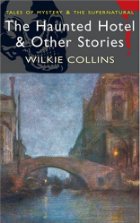
Review: The Haunted Hotel & Other Stories by Wilkie Collins

Time for one more review before the RIP challenge ends!

Having read so many of Wilkie Collins’ books and loving them all, I’m starting to worry now whenever I pick up one that I haven’t read yet, in case that’s going to be the one that disappoints me. Luckily it wasn’t this one! This collection published by Wordsworth Editions includes the novella The Haunted Hotel and eight other short stories, all with a ghostly, spooky or supernatural theme.

Part ghost story and part gothic mystery, The Haunted Hotel begins in London but soon moves to Venice, an atmospheric setting complete with dark canals and ancient palaces. At the heart of the story is the mysterious Countess Narona, who marries Lord Montbarry after he breaks off his engagement to Agnes Lockwood. When Montbarry dies in Venice soon after insuring his life for ten thousand pounds, rumours abound that the Countess may have had something to do with his death.

While I enjoyed The Haunted Hotel, I wouldn’t class it among Collins’ best work and the shortness of the story means the characters aren’t as well developed. I did love the second half of the story in which the palace where Montbarry died is converted into a hotel. There’s a very creepy sequence of events where each member of the Montbarry family who stays in the hotel feels a ghostly influence that manifests itself in a different way to each person.

You can buy The Haunted Hotel on its own, but I recommend looking for this edition because the additional short stories are well worth reading too. In every story, Collins gradually builds the suspense and draws the reader into the story. One of my favourites was Miss Jeromette and the Clergyman, a short ghost story in which the ghostly happenings are accompanied by mysterious clouds of white fog. I loved the way even though the story was quite predictable, it was still a pageturner. The same can be said about Nine O’Clock, in which a man condemned to death during the French Revolution tells his friend about a family curse. We know almost from the beginning what will happen, but the story still manages to be suspenseful.

Another favourite was A Terribly Strange Bed, an Edgar Allan Poe-like tale which creates a feeling of claustrophobia and terror as the narrator finds himself trapped in a room with a very unusual bed. Another story on a similar theme is The Dead Hand, in which a man attempts to find a room at an inn for the night, but finds that everywhere is full. When he’s eventually offered a bed in a double room, he makes a surprising discovery about the stranger who’s occupying the other bed.

I also enjoyed the final story in the book, The Devil’s Spectacles, which is about a man who is given a pair of spectacles that allow him to see the true thoughts and feelings of anyone he looks at.

I don’t generally like reading short story collections straight through from beginning to end, but I didn’t have a problem with this book. There are only eight stories (plus The Haunted Hotel) and most of them are less than twenty pages long. This was a perfect book to read in the week before Halloween.

Review: The Victorian Chaise-longue by Marghanita Laski

Of all the books in the Persephone catalogue this is the one I’ve been looking forward to reading the most. Maybe it was the word ‘Victorian’ that appealed to me (I’m slightly obsessed with the Victorian period) or maybe it’s just that it has sounded so fascinating in every review I’ve read. I’ve seen this book described as a horror story – ‘a little jewel of horror’. For me, though, it wasn’t so much frightening as unsettling and creepy.

Melanie Langdon is a young mother recovering from tuberculosis in bed at her home in 1950s London. When the doctor tells her she can move to another room for a change of scenery, Melanie decides to lie on the chaise-longue in the drawing room, an ugly item of Victorian furniture she had purchased in an antique shop.

Melanie lies on the chaise-longue and falls asleep – but when she awakens, something has changed. She’s still lying on the same chaise-longue, she still has TB, but it’s now the year 1864, she’s being cared for her by her hostile sister Adelaide, and her name is no longer Melanie – it’s Milly. Is Melanie dreaming? Remembering a previous life? Has she really travelled back in time and become somebody else?

Who is Milly Baines? came the gradual inquiry, and at last she looked, as she had not dared to before, at what was immediately around her, examined, tested, interpreted the feeling of this body of Milly Baines in which was imprisoned the brain of Melanie Langdon.

I have to admit I’m not sure that I fully understood what was supposed to be happening in this book. After thinking about it though, maybe that was the point – the reader isn’t supposed to understand because Melanie herself doesn’t understand. The book conveys a sense of confusion, panic and disorientation and I could really feel Melanie’s helplessness as she lay on the chaise-longue, trapped in Milly’s body, desperately trying to work out who she was and how she could escape.

What makes Melanie’s story so disturbing and nightmarish is that although she has apparently been transported back in time, she has kept all of her twentieth-century ideas and sensibilities. As Milly, she finds herself a victim of the repression of Victorian society and there’s nothing she can do to change her situation.

At only 99 pages, this book can easily be read in an hour, but there’s so much packed into those 99 pages that the story will stay in your mind for a lot longer than that.

Recommended

Review: Fingersmith by Sarah Waters

I’ve had a copy of this book on my shelf for a few months now but I kept putting off reading it because, after seeing so many glowing reviews, I was afraid I wouldn’t like it. Eventually I decided I would have to just get on with it, before I really was the only person left on earth who still hadn’t read it!

Somehow I had managed to avoid coming across any spoilers (and hadn’t seen the TV adaptation either) so was able to go into Fingersmith knowing almost nothing about the plot. As I don’t want to spoil the book for any of you who haven’t read it yet, all I will tell you is that Fingersmith is the story of Sue Trinder, an orphan raised by Mrs Sucksby in a den of thieves in Victorian London, and Maud Lilly, a young heiress who lives with her uncle at their country house, Briar. When an acquaintance of Mrs Sucksby’s, known as ‘Gentleman’, comes up with a plan to cheat Maud of her inheritance, Sue agrees to pose as a lady’s maid and help him with his scheme. And that’s all I’m going to say about it!

I was expecting a complex plot with lots of twists, and that was what I got. Unfortunately, I guessed what the first big plot twist was going to be! I was disappointed because I would have loved to have been shocked by it. (Actually, I think if only I’d read this a few years ago before I started reading so many Victorian sensation novels, it probably would have come as a shock.) I’m envious of those of you who didn’t see the twist coming because I can imagine it must have been stunning. Although this did have a slight impact on my enjoyment of the book, luckily there were plenty of other things that I did enjoy!

As I’ve probably mentioned before, the 19th century is one of my favourite periods to read about. I love the original Victorian classics and I love Victorian historical fiction too. Having read both this book and Affinity now, I can say that Sarah Waters has a real talent for portraying the atmosphere of Victorian London: the dark alleys, the narrow streets, the fog, the Thames. The locksmith’s shop at Lant Street, where Sue lives, is described particularly vividly.

Although I thought many of the characters in the book were very unlikeable, I could still find every one of them interesting, which must be a testament to Sarah Waters’ skills as a writer. I thought Gentleman was fascinating (funny how the word gentleman can be made to sound so sinister!). I liked the relationship between Sue and Maud too and the way the book switches perspective between the two girls, giving us an insight into each of their emotions, thoughts and motives, and allowing us to sympathise with them both.

I was really hoping I’d be able to gush about how much I loved this book, like the majority of people have. However, although I did enjoy it and couldn’t put it down at times (it didn’t feel like a 550 page book at all – I got through it in half the time it would normally take me to read a book this length), I don’t think it’s going to be one of my top reads of the year. Maybe it’s just that my expectations were a bit too high, which is not the fault of the book. Having enjoyed this one and Affinity, I’m looking forward to reading the rest of Sarah Waters’ books, starting with The Little Stranger for the RIP challenge.

Review: The Meaning of Night by Michael Cox

I was intending to read this book when it was first published four years ago, but for some reason I didn’t and forgot all about it until I noticed it in the library recently.  I’m glad I finally got round to it, even if I’m late as usual!

The plot will be a familiar one to anyone who has read a lot of Victorian fiction – it’s a story of love, betrayal and deceit, revolving around a lost inheritance and a childhood rivalry. A vast country estate, a beautiful, mysterious heroine, and the dark, foggy streets of 19th century London combine to make this a clever imitation of the Victorian sensation novel.

In a similar way to The Unburied which I reviewed earlier this month, the book is presented as a genuine 19th century manuscript, complete with an ‘Editor’s Preface’ and numerous footnotes. The use of footnotes, which seemed to appear on almost every page, reminded me of Susanna Clarke’s Jonathan Strange & Mr Norrell. However, whereas in Jonathan Strange the footnotes really added something to the story, providing us with fascinating anecdotes about the history of magic, in The Meaning of Night they served very little purpose – other than to give the book a scholarly feel. Overall though, this was one of the best written of all the novels of this type that I’ve read so far and I was impressed by the author’s use of language and writing style to make this feel like an authentic 19th century novel.

The narrator, Edward Glyver, is really quite a horrible person. In the first chapter – in fact, in the first sentence (so this is not a spoiler) – he confesses to murder:

“After killing the red-haired man, I took myself off to Quinn’s for an oyster supper.”

He also cheats on the woman who loves him, develops an obsession with his enemy, Phoebus Rainsford Daunt – and becomes increasingly dependent on opium, making him an unreliable narrator at times. Is he a character deserving of our sympathy, then? Definitely not – and yet, I was rooting for him throughout the story, wanting him to right the wrongs that had been done to him, which is a testament to Michael Cox’s writing skills.

The only thing that really disappointed me about this book was the ending. I can’t say too much about it without spoiling the story for you, but the ending left me feeling dissatisfied – I had been hoping for a few more plot twists.

This book won’t be to everyone’s taste – if you simply don’t like intricately plotted Victorian or Victorian-style novels you’ll want to avoid this one. However, fans of Charles Dickens or Wilkie Collins will probably enjoy this book, as they were clearly two of Michael Cox’s influences (many of the characters have Dickensian names such as Phoebus Daunt, Fordyce Jukes and Josiah Pluckrose). It should also appeal to readers of Sarah Waters, Charles Palliser or other writers of neo-Victorian fiction. In particular, I found it very similar to Palliser’s The Quincunx, though slightly less complex and intellectually demanding.

Recommended

Genre: Historical Fiction/Pages: 608/Publisher: John Murray/Year: 2006/Source: Library book

Review: The Warden by Anthony Trollope

Being a lover of Victorian fiction, I have wanted to read something by Anthony Trollope for a long time but didn’t know which of his books to begin with. I’ve heard a lot about The Way We Live Now and Can You Forgive Her? but I decided to go with The Warden because it’s relatively short and I thought that if I wasn’t enjoying it I’d be more likely to finish a book with 200 pages than one with 800. Luckily, this wasn’t a problem – I enjoyed the book and wouldn’t have minded if it had been longer.

In the year 1434 John Hiram established a hospital (or almshouse) in the town of Barchester where for centuries to come, twelve elderly, infirm men could live under the care of a warden. At the time when the story takes place, Septimus Harding is the current warden and whilst the amount of money given to the old men has barely changed at all over time, the warden’s income has increased to eight hundred pounds a year. When reformer John Bold decides to investigate, Harding finds himself facing a moral dilemma.

The book really made me stop and think, because none of the characters seemed to be either completely in the wrong or completely in the right.  Although it was clearly unfair that Mr. Harding was receiving so much money, I sympathised with him because as soon as the unfairness of his position was brought to his attention he became determined to do the right thing.  As for the other main characters – John Bold and Harding’s son-in-law Archdeacon Grantly – although they are on opposite sides of the debate and have very different opinions regarding the warden’s situation, Trollope presents them both as well-intentioned people with normal human flaws.  The female characters don’t play a very big role in this book, but I loved the relationship between Mr. Harding and his daughter Eleanor.

I really liked Trollope’s writing style which is elegant, insightful and witty in a gentle way.  There are a few chapters where he departs from the main storyline to spend several pages talking about politics or the media but this is a common trait of Victorian writers.  Although it was slow moving in places, Trollope managed to keep me interested from beginning to end.  I’m sure some of his other books will be better, but this one was good enough to make me want to read more of his work.

Recommended

Publisher: Penguin Classics/Year: 1984 (first published 1855)/Pages: 240/Source: My own copy bought used