The Odd Women by George Gissing

George Gissing - The Odd Women Published in 1893, George Gissing’s novel is based around the idea that there were at least half a million more women than men in Victorian England. As one of the characters in the story, Rhoda Nunn, explains:

“So many odd women – no making a pair with them. The pessimists call them useless, lost, futile lives. I, naturally – being one of them myself – take another view.”

Rhoda believes that it is possible for these ‘odd’ (that is, unmarried) women to lead lives that are both happy and useful. In partnership with her friend, Mary Barfoot, she runs an establishment in London where young middle-class women can learn typing and other secretarial skills that will enable them to earn a living if they remain single. Rhoda herself is now in her thirties and has no intention of marrying, but when Miss Barfoot’s cousin Everard comes to visit she is tempted to change her mind.

The Odd Women is also the story of Rhoda’s friends, the Madden sisters, faced with having to support themselves after the death of their father. With so few career choices available to them, the two elder sisters, Alice and Virginia, find work as a governess and a paid companion, while dreaming of opening their own school one day – a dream that is unlikely to ever become a reality. The youngest Madden girl, Monica, is working long hours in a draper’s shop and her future looks no brighter than her sisters’…until she receives a marriage proposal from Edmund Widdowson, a retired clerk much older than herself. Aware that this could be the only opportunity she gets, Monica jumps into marriage with a man she knows she doesn’t love.

When I first started to read The Odd Women, it seemed that Alice and Virginia were going to be the main focus of the novel, but that turned out not to be the case. Instead, the two elder Madden sisters quickly move into the background and we focus almost solely on the alternating storylines of Rhoda and Monica. Through the character of Rhoda, Gissing explores the views of a woman determined to resist marriage and make her own way in life, and through Monica he looks at the fate of a woman who chooses to marry simply because she is afraid of what her life will become if she stays single.

This is a fascinating novel and for a book written in the 1890s it feels very modern. With themes including feminism, marriage and the roles of women, it’s not the sort of book you would usually expect from a male Victorian author. It reminded me very much of Alas, Poor Lady by Rachel Ferguson. Both books show how women in Victorian/Edwardian society tended to be poorly prepared for an unexpected change in circumstances and how few options were open to them when they found themselves in need of employment.

I found this novel very readable, although the long discussions between Rhoda and Mary Barfoot did become a bit tedious at times and often felt more like lectures on feminism than believable conversations between two people (and I was disappointed that, while being so open-minded regarding unmarried middle-class women, they didn’t have the same sympathy for working-class women). Other than that, I enjoyed The Odd Women much more than I thought I would – although enjoyed is maybe not the right word to use, as this is really quite a bleak story. I would like to read more of George Gissing’s books, starting with New Grub Street, I think.

The Eustace Diamonds by Anthony Trollope

The Eustace Diamonds Today is Anthony Trollope’s 200th birthday! When I saw that Karen of Books and Chocolate was hosting a special Trollope Bicentennial Celebration this month, I knew I wanted to take part and I knew exactly what I would be reading. Having read and enjoyed Trollope’s first two Palliser novels, Can You Forgive Her? and Phineas Finn, it made sense to continue with the third in the series – The Eustace Diamonds.

Unlike Trollope’s other set of six novels, the Chronicles of Barsetshire, which revolve around a cathedral town and the lives of the clergy, the Palliser novels have plots involving politics and featuring the Palliser family – the politician Plantagenet Palliser, his wife Lady Glencora, and his uncle, the Duke of Omnium. In The Eustace Diamonds, though, these three characters are pushed into the background. Our heroine this time (although, as Trollope himself tells us at the beginning of the book, ‘heroine’ is maybe not the right way to describe her) is Lizzie Greystock, who quickly becomes Lady Eustace when she marries the wealthy Sir Florian.

After less than a year of marriage, Sir Florian dies, leaving Lizzie a rich widow in possession of a valuable diamond necklace which she claims her husband had given to her before his death. However, the Eustace family lawyer, Mr Camperdown, insists that the diamonds belong to the Eustace estate and that Lizzie has no legal right to them. The question of the ownership of the necklace forms the central plot of the novel, as the people around Lizzie are forced to take sides. Her cousin Frank vows to support her no matter what, while Lord Fawn, who has recently proposed to her, is horrified by the scandal surrounding his fiancée and searches for a way out of the marriage.

Lizzie is selfish, she tells lies, she manipulates people and situations to her own advantage and her own aunt describes her as “false, dishonest, heartless, cruel, irreligious, ungrateful, mean, ignorant, greedy, and vile”. She is a difficult character to like (and I was sorry that Trollope doesn’t give her more redeeming features) but she is a fascinating character to read about and I loved following the twists and turns of her story.

But The Eustace Diamonds also follows other characters and other storylines. There’s Lucy Morris, a governess in the service of Lord Fawn’s mother, who is love with Lizzie’s cousin, Frank Greystock. Frank, however, is preoccupied with Lizzie and her ordeals, and it seems he is unable to give Lucy the commitment she deserves. And there’s also Lucinda Roanoke, a young woman with strong views of her own on the subject of marriage – views which don’t always agree with those of her aunt, Mrs Carbuncle.

I’m finding it difficult to decide exactly what I thought of The Eustace Diamonds. In some ways I loved it even more than the previous two Pallisers, but in others I found it the weakest of the three. I struggled a little bit with the amount of political detail in Phineas Finn, but in this book there is far less focus on politics. Instead, Trollope concentrates on relationships, on marriage, on the law, and on attitudes towards money, property and reputation. In the middle of the book, the dispute surrounding the jewels begins to go in a more sensational direction, which I did find interesting, but I couldn’t help thinking that this type of plot might have been better suited to an author like Wilkie Collins rather than Trollope.

At 800 pages I did think the book felt too long for the story that was being told. Most of Trollope’s novels are long, of course, but I’m not usually conscious of the length while I’m actually reading; this time I was. Despite being absorbed in the story, I found the plot very repetitive at times and the controversy over the ownership of the diamonds seemed to go round in circles for a while – maybe a result of the novel originally being published as a serial and needing to be drawn out over a long period of time.

I did enjoy The Eustace Diamonds overall, though – and can honestly say I haven’t read a Trollope novel yet that I haven’t enjoyed. Now I’m looking forward to catching up with Phineas Finn again in the fourth Palliser novel, Phineas Redux.

The Goddess and the Thief by Essie Fox

The Goddess and the Thief “A diamond. A curse. An obsession.” These are the words on the front cover of Essie Fox’s third novel and they give us a good idea of the type of story we can expect to find inside. The Goddess and the Thief is a Victorian Gothic novel (like the previous two books by this author – The Somnambulist, which I’ve read, and Elijah’s Mermaid, which I haven’t) and combines a complex plot with an atmospheric setting and a sense of mystery.

The novel begins in colonial India, where a little girl called Alice Willoughby is growing up in the care of her beloved ayah, Mini, having lost her mother in childbirth. Alice loves India – she loves the warmth, the vivid colours, the stories Mini tells of Parvati and Shiva – and is heartbroken when her father decides to take her back to England to live with her Aunt Mercy. Alice is lonely and miserable in her new home and finds Mercy cold and uncaring. Things become even worse when she discovers that her aunt is a medium and that she will be forced to take part in Mercy’s fraudulent séances and other spiritualist activities.

Alice’s life reaches another turning point when she and Mercy meet the mysterious Lucian Tilsbury, a man who has recently returned from India and is planning to involve the two women in an elaborate scheme…a scheme revolving around the Koh-i-Noor diamond, the famous jewel claimed by the British at the end of the Anglo-Sikh war. Some say the diamond is cursed and others that it is blessed, but one thing that is certain is that it exerts a strange power over everyone who comes into contact with it.

You may be thinking that this sounds like The Moonstone, but while there are some similarities with the Wilkie Collins mystery, this is a very different book and the story surrounding the diamond took some surprising twists and turns which I definitely wasn’t expecting! I was particularly intrigued by the occasional appearances of Queen Victoria and the Maharajah Duleep Singh, two people for whom the Koh-i-Noor has a very important significance.

The scenes set in India at the beginning of the book were among my favourites and I was sorry when we left India behind for the gloom of Aunt Mercy’s house in Windsor. The mood of the novel then becomes increasingly dark and oppressive and I was pleased that tales of the Hindu gods and of Alice’s life in Lahore continued to be woven into the plot. I liked Alice as a central character and enjoyed following her adventures, while also feeling afraid and worried for her as she found herself betrayed, badly treated and unsure of whom to trust.

My only problem with The Goddess and the Thief was that there were certain passages which I found confusing and difficult to follow, partly because the use of opium played a role in the story, which meant that the boundaries between reality and unreality often became blurred. I appreciate that this was done intentionally, to make Alice’s situation even more frightening, but it was the one aspect of the novel that didn’t work very well for me. Of course, it could have been my own fault for not concentrating hard enough!

Having enjoyed both this book and The Somnambulist (this one slightly more than the first, I think), I will have to read Elijah’s Mermaid soon!

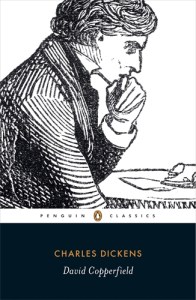
David Copperfield by Charles Dickens

David Copperfield Since I started blogging I have been trying to read at least one Dickens novel a year – I read A Christmas Carol in 2009, Bleak House in 2010, Our Mutual Friend and The Mystery of Edwin Drood in 2011, Great Expectations in 2012 and A Tale of Two Cities in 2013. Unfortunately I didn’t manage to read any Dickens at all in 2014 so decided to make him a priority this year. With plenty of his books still to choose from, I picked up David Copperfield on the first day of January. It took me most of the month to read it – it’s a long book – and it has taken me almost as long to decide what to say about it!

How do you begin to write about a book like this? The plot is not the sort that you can sum up adequately in a paragraph or two. In fact, there really isn’t a central plot at all, but rather, lots of subplots all circling around the narrator, David Copperfield – or Trotwood, Trot, Daisy or Doady as he is called at various points in the novel…usually anything but David!

At the time of David’s birth, his father has already been dead for six months. Growing up in the small Suffolk town of Blunderstone, his early years are relatively peaceful and uneventful, until his mother marries again and David is sent away to boarding school. As he progresses through school and on into adulthood, a host of fascinating and eccentric characters pass in and out of David’s life. These include:

  • Betsey Trotwood, David’s formidable but kind-hearted great-aunt, who never quite recovers from the disappointment of David being a boy instead of the little girl she’d set her heart on.
  • Mr Murdstone, David’s cruel and brutal stepfather.
  • David’s beloved childhood nurse, Peggotty, her brother Daniel and his nephew and niece, Ham and Little Em’ly.
  • James Steerforth, a handsome, charming and manipulative schoolfriend of David’s.
  • The villainous ‘humble clerk’, Uriah Heep.
  • Wilkins Micawber, with whom David lodges in London, always in debt but never giving up hope that ‘something will turn up’.
  • And Dora Spenlow and Agnes Wickfield, two very different young women who enter David’s life.

All of these characters, as well as many others, have an important role to play in David’s story, helping to shape the man he grows up to be.

Of all of Dickens’ novels David Copperfield was apparently the author’s own favourite. In his own words, “like many fond parents, I have in my heart of hearts a favourite child. And his name is David Copperfield.” It’s also supposedly the most autobiographical of his novels – and having read Claire Tomalin’s Charles Dickens: A Life, I can see where he drew on some of his own personal experiences in writing David’s story. Even the style of David Copperfield is autobiographical, with David himself narrating the events of his life, sometimes in retrospect from an unspecified point in the future.

Although, as I’ve explained, the story is made up of a set of complex and closely linked subplots, this is very much a novel that is driven by the characters. As with any book with such a large cast of characters, there were some that I loved (such as Betsey Trotwood and Peggotty), and some I disliked (such as Steerforth and the Murdstones) but all were so well-drawn they seemed to jump out of the pages. The one character I really couldn’t stand, though, was Dora Spenlow! Dickens gets a lot of criticism for his female characters, but Dora is the worst I’ve encountered in any of his books so far: a woman who happily calls herself a ‘silly little thing’ and asks to be thought of as a ‘child-wife’. Thank goodness for Agnes Wickfield – I suppose she could also be criticised for representing the Victorian ideal, but I found her a much more likeable and far less infuriating character than Dora!

David Copperfield, as I mentioned at the start of this post, is a very long book. My edition had more than 900 pages, which seemed quite daunting at first, and I fully expected it to take much longer than a month to read, especially as I like to have one or two other books on the go at the same time. Once I started reading, though, I found it surprisingly addictive and it was actually a much quicker read than I imagined it would be. Of the seven Dickens novels I’ve now read, A Tale of Two Cities is still my favourite, but I think this one ties with Our Mutual Friend for second place.

The Crimson Petal and the White by Michel Faber

The Crimson Petal and the White “Watch your step. Keep your wits about you; you will need them. This city I am bringing you to is vast and intricate, and you have not been here before. You may imagine, from other stories you’ve read, that you know it well, but those stories flattered you, welcoming you as a friend, treating you as if you belonged. The truth is that you are an alien from another time and place altogether.”

With these words the unnamed narrator of The Crimson Petal and the White takes us by the hand and leads us on a journey into the depths of Victorian London where we meet a cast of fascinating, diverse characters from all levels of society. One of these is Sugar, a nineteen-year-old prostitute who is writing a novel in her spare time and is prepared to do whatever it takes to improve her situation in life. Another is William Rackham, heir to a perfumery business, who seeks out Sugar after seeing her name listed in More Sprees in London, a guide to the city’s pleasures. From their first meeting at Mrs Castaway’s brothel, a chain of events is set in motion that will change not only Sugar’s life but William’s too.

Sugar is a wonderful character and I came to love her over the course of the book. She’s intelligent, well-read and ambitious and although she sometimes makes mistakes and is not always very ‘nice’, it’s impossible not to sympathise with her and want to see her succeed. I should warn you that Sugar’s story is not a pleasant or comfortable one to read and her work as a prostitute is described in a lot of detail, often quite explicitly. However, I didn’t think it ever felt gratuitous and it all helped to build up a picture of what Sugar’s life was like and to look at the issue of prostitution in a way that 19th century authors didn’t have the freedom to do.

While Sugar is our heroine, there’s another woman who is given almost as much time in the novel – William’s beautiful wife, Agnes Rackham, who is suffering from an illness that is causing delusions, fits and irrational behaviour. We, the readers, know what is wrong with Agnes but as far as her husband is concerned, she is insane. As her story develops, Agnes becomes almost as complex and interesting a character as Sugar, though less sympathetic. Another subplot follows William’s brother, Henry, who has turned down a position in the family business to become a clergyman and has fallen in love with Emmeline Fox, a widow who works for the Rescue Society, an organisation which helps to reform prostitutes. Through the lives of all of these characters and others, Faber is able to explore many different aspects of Victorian society.

The novel is divided into five parts, with section headings ranging from The Streets to The World at Large, giving us some clues as to how Sugar’s story is going to progress. Her rise in the world is great to watch but exactly how she does it is something I’d prefer to leave future readers to discover for themselves – assuming that I’m not the last person to read this book, which is how it feels sometimes! Like The Book Thief which I finally read earlier this month, this is another book I’ve been meaning to read for years and I can’t really explain why it has taken me so long, especially as the Victorian period is one of my favourites.

I loved this book and thought it was beautifully written, but I did have one problem with it – the end. I’m sure I’m not the first person and won’t be the last to have been disappointed by the ending. After reading more than 800 pages, I was hoping for more resolution to the story. I know there’s a book of short stories, The Apple, which is a sort of sequel but I’ve seen mixed opinions of it. If you’ve read it, please let me know if you would recommend it!

Phineas Finn by Anthony Trollope

Phineas Finn The second of Trollope’s Palliser novels introduces us to Phineas Finn, a young Irishman who is elected to parliament at the age of twenty-five.

After supporting Phineas while he studied in London, his father, a country doctor, expects him to return home to Ireland to practise law there and to marry his childhood sweetheart, Mary Flood Jones. Phineas, though, has other ambitions and decides to stand for parliament. Unfortunately, members of parliament receive no payment for their work so when Phineas, against all expectations, is elected, he finds that he must persuade his father to support him for a while longer. Doctor Finn reluctantly agrees, but other friends – such as Phineas’s mentor, the barrister Mr Low – are quick to express their disapproval:

“Phineas, my dear fellow, as far as I have as yet been able to see the world, men don’t begin either very good or very bad. They have generally good aspirations with infirm purposes;—or, as we may say, strong bodies with weak legs to carry them…In nine cases out of ten it is some one small unfortunate event that puts a man astray at first. He sees some woman and loses himself with her — or he is taken to a racecourse and unluckily wins money — or some devil in the shape of a friend lures him to tobacco and brandy. Your temptation has come in the shape of this accursed seat in Parliament.”

Young, idealistic and enthusiastic about his new responsibilities, Phineas sets off for London where as well as finding his way in the corrupt and complex world of politics he also finds himself involved in romantic entanglements with three very different women.

Lady Laura Standish is the daughter of Phineas’s patron, the Earl of Brentford, and the first woman with whom he falls in love after leaving Ireland. Early in the novel, Laura turns down Phineas and marries another politician, Mr Kennedy, for all the wrong reasons. It’s not long before she realises her mistake and begins to desperately search for a way out of her unhappy marriage. Phineas then turns his attentions to Laura’s friend, Violet Effingham, an heiress who seems likely to marry Lord Chiltern, Laura’s brother. A friendship develops between Phineas and Chiltern, but soon they find themselves rivals for Violet’s love. And finally, there’s Madame Max Goesler, a rich and independent widow with a hint of scandal in her past.

Will Phineas marry one of these women or will he decide that his heart belongs in Killaloe with Mary Flood Jones after all? And will Phineas’s political career lead to success or will Dr Finn and Mr Low be proved right in the end?

I’m really enjoying the Palliser series so far, although I think the Barsetshire novels will always hold a special place in my heart through being my first introduction to Trollope. I think I liked the first Palliser novel, Can You Forgive Her?, a little bit more than this one, simply because there is more focus on politics in this book. I could follow some of it – I can remember a school history lesson dealing with the Reform Bill, the ballot and the ‘rotten boroughs’, things which are covered in a lot of detail in this book – but I have to confess to having very little interest in all the speeches, votes and debates that Trollope devotes so much time to.

Luckily, even while finding the politics boring I could still love the rest of the novel and as usual with Trollope I was pulled into the lives of the characters and the dilemmas in which they find themselves. Phineas, of course, is our hero and like most of Trollope’s ‘heroes’ is not always particularly heroic, but this is what makes him such an appealing character. I felt that things were falling into place for him too easily and success was coming too quickly before he really had time to grow into his new life and career, but although he does make mistakes, he learns from them and we can be confident that he’ll try to do the right thing in the end.

But the characters who interested me most were the women in Phineas’s life – Lady Laura, Violet Effingham and Madame Max Goesler. All three are portrayed as intelligent, complex people and I felt that Trollope truly understood and sympathised with the situations they found themselves in and the options that were open to them.

This wasn’t one of my favourite Trollope novels but I loved the characters and am already looking forward to meeting some of them again later in Phineas Redux – after I’ve read the third book in the series, The Eustace Diamonds.

The Streets by Anthony Quinn

The Streets In 1882, twenty-one-year-old David Wildeblood comes to London to begin his new job working as a reporter for Henry Marchmont’s weekly newspaper, The Labouring Classes of London. The idea of the paper is to highlight the suffering of some of the city’s poorest people and David’s task is to visit some of London’s worst slum areas, such as the notorious Somers Town, to speak to the inhabitants and report on their living conditions.

Having grown up in rural Norfolk, David is instantly an ‘outsider’, inexperienced in London ways and unfamiliar with the slang. This makes his job very difficult, but things improve when he is befriended by Jo, a young costermonger who can introduce him to people and places he would never have been able to access on his own.

As David continues his investigations into living standards at Somers Town, he is shocked by the state of the housing and the poverty of the people who live and work there. Soon he uncovers something even worse – a network of corruption and exploitation by unscrupulous landlords – and finds that he has gained some very powerful enemies.

The story also has a romantic element and there are two main female characters whom David gets to know throughout the novel. One is Kitty, the daughter of David’s godfather, and the other is Roma, the sister of his new friend, Jo: two very different women. Kitty, with her valuable jewels and pet monkey, comes from a rich, privileged background and while she does take an interest in the welfare of those who are less fortunate than herself, she seems to view them as a project or a problem to be solved. Roma, on the other hand, has endured hardships and made sacrifices from an early age to support herself and her brother: she and Jo are the type of people Kitty considers to be in need of help. David himself doesn’t quite fit in with either of these social groups and it was interesting to see his relationships with both Kitty and Roma develop.

Looking at other reviews of this book I see the word ‘Dickensian’ being used a lot, and while there’s nothing in the writing style or atmosphere that reminds me of Dickens, it is certainly a novel that draws attention to some of the same issues that were obviously very important to Dickens. I could appreciate the huge amount of research Anthony Quinn must have carried out while writing this novel (in the acknowledgments he mentions two 19th century sources: London Labour and the London Poor by Henry Mayhew and Life and Labour of the People in London by Charles Booth) and I found it fascinating from a social history perspective. Fascinating, but disturbing too; the plans of the wealthy for social engineering, segregation of the lower classes and the creation of rural labour camps were uncomfortable to read about.

As a work of fiction, though, I didn’t enjoy The Streets very much at all; the pace was slow and the plot, despite sounding so promising, was not very entertaining. I didn’t feel I was fully engaging with David or any of the other characters (apart from Roma on occasions) and the ‘back slang’ used throughout the book, which I know must have been intended to add some authenticity to the story, really irritated me. What made it even more disappointing is that this book really did sound like something I should have loved: a Victorian setting, a mystery to be solved, and references to Dickens and Eliot on the cover. I didn’t regret persevering to the end, but I was still quite pleased when I reached the final page and could move on to something else.