The Hill in the Dark Grove by Liam Higginson

This is a beautifully written debut novel set in rural Wales. It’s described as ‘folk horror’ but if that doesn’t appeal to you, don’t worry as I found this an unsettling book rather than a scary one.

Carywn and Rhian are a married couple in their sixties who own a sheep farm in the mountains of North Wales. It’s a difficult life but it’s the only one Carwyn has ever known and one that Rhian adapted to many years earlier. The farm is remote and lonely, the winters cold and harsh, but for the most part the couple are happy together – until the day Carwyn discovers an ancient head carved from granite buried in one of the fields on his land. As he continues to dig, he unearths bones, beads and arrowheads, and finally a megalithic stone circle. For reasons Carwyn can barely explain even to himself, he’s reluctant to share what he has found with the authorities; he can’t bear the thought of the head being taken to a museum, of archaeologists and tourists descending on the site. The stones, he tells himself, belong to him, to the land, to Wales.

As winter arrives and snow begins to fall, Carwyn becomes more and more obsessed with the ancient relics, continuing to dig and neglecting his work on the farm. Rhian, however, doesn’t have the same enthusiasm and as their relationship becomes increasingly strained, she begins to feel that she’s married to someone she no longer knows and doesn’t like.

The Hill in the Dark Grove, as I’ve said, is an unsettling novel, with a sense of foreboding that builds and builds as the story progresses. It’s obvious that nothing good is going to come of Carwyn’s single-minded obsessiveness and our sympathies are with Rhian as she’s forced to accept that the kind, gentle man she loves has now been replaced by a stranger. Although they do occasionally cross paths with other human beings – two hikers lost in the mountains; a neighbour Rhian meets at the livestock market in town; the bailiffs who come to speak to them about their debts – for most of the novel Carwyn and Rhian are alone together on their farm. The isolation and loneliness of their situation adds to the atmosphere, particularly as the bad weather closes in and Rhian starts to feel trapped and friendless.

Liam Higginson writes beautifully, but I found the book overly descriptive, which slowed things down to the point where my attention started to wander. There are also a lot of flashbacks to earlier times in Carwyn and Rhian’s lives and I felt that these happpened too often, breaking up the flow of the story. I did love one of these flashbacks, though: a wonderful passage describing the midwinter tradition of the Mari Lywd – a procession led by a skeletal horse – and the impression this makes on the five-year-old Rhian. If you enjoy reading about Welsh folklore and superstition there’s plenty of that in this novel, along with lots of details of sheep farming and an element of Welsh nationalism (the decline in use of the Welsh language, the properties being bought up by wealthy English people as second homes).

I didn’t love this book as much as I would have liked to, but as a first novel it’s quite impressive and I’ll be looking out for more from this author in the future.

Thanks to Picador for providing a copy of this book for review via NetGalley.
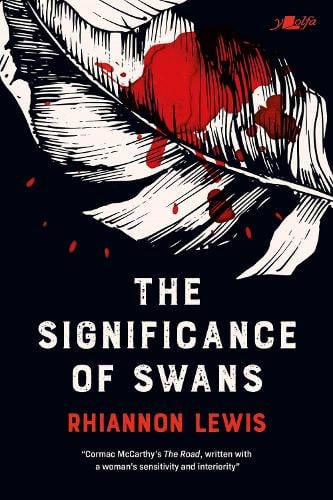
The Significance of Swans by Rhiannon Lewis

In this fascinating new dystopian novella, Rhiannon Lewis expands on a short story from her 2021 collection I am the Mask Maker. When I read that short story, I actually mentioned in my review that it was one I found particularly intriguing and wished was longer, so I was pleased to learn that my wish had come true!

The book begins with Aeronwy visiting her brother at his farm on the Welsh coast. Just before she says goodbye and returns home, they spot the unusual sight of seven swans flying in formation through the winter sky. The next day thousands of disappearances are reported – not just in Aeronwy’s small corner of Wales, but all over the country and beyond.

As the days and weeks go by, the overnight ‘removals’, as they become known in the media, continue. Every morning, people awake to find an empty space in their bed, the impression left by their partner’s body still visible; every morning, adults fail to arrive at work and children fail to attend school. Aeronwy and her husband do their best to continue with their lives, hoping that whoever or whatever is behind the removals will leave them alone, but the rapidly declining population means that public services and infrastructure are affected and soon there’s no more television, no more radio, no way of finding out what’s going on in the outside world. Eventually, the inevitable happens and Aeronwy’s husband is removed. She sets out alone to make the hundred-mile journey to her brother’s farm, in the hope that he might still be alive, but what will she find when she gets there?

I don’t read many post-apocalyptic novels, but I find that most of them tend to tackle the same questions. What caused the apocalyptic event? Is there a reason why some people were able to survive and not others? If we meet another human being, can they be trusted or will they see us a threat to their own survival? Will it be possible to build a better world from the ruins of the old one? In The Significance of Swans, Rhiannon Lewis does explore these things and provides some answers, while leaving other issues open to interpretation. What makes this book different from others I’ve read is the idea of the seven swans, glimpsed by Aeronwy and her brother the day before the removals begin. The swans appear to have some significance, but what is it?

With the whole book being written from Aeronwy’s perspective, this means we only get a limited view of what is going on, particularly once communication with the rest of the world is lost and she finds herself alone with nobody to talk to. Yet it’s fascinating to see things through Aeronwy’s eyes and to watch this ordinary middle-aged woman from Wales try to make sense of her situation. I thoroughly enjoyed this unusual novella and thought it was the perfect length – long enough to develop the themes hinted at in the shorter version from I am the Mask Maker and short enough to keep things moving at a steady pace without ever becoming boring. I received a copy for review courtesy of Y Lolfa, an independent Welsh publisher. You can find out more about this and the other books they publish here.

The Reckoning by Sharon Penman – #Dewithon24

My second book for this year’s Reading Wales Month, or Dewithon, hosted by Book Jotter, is not actually by a Welsh author (Sharon Kay Penman – or simply Sharon Penman as she is published here in the UK – was an American historical novelist) but it’s set in Wales and is the third and final part of the Welsh Princes Trilogy, following Here Be Dragons and Falls the Shadow. I loved both of those books, so I expected to love this one too and I wasn’t disappointed.

Although I would recommend reading all three books in order, it’s not essential and it’s been such a long time since I read Falls the Shadow that I had forgotten a lot of the details anyway. I did remember the dramatic descriptions of Simon de Montfort’s defeat at the Battle of Evesham that ended that book; The Reckoning begins more than five years later in January 1271, but the effects of the battle are still being felt. Simon de Montfort’s surviving family members have fled England to take refuge elsewhere in Europe and his daughter Ellen’s planned marriage to Llewelyn ap Gruffydd, Prince of Wales, now seems in doubt. With de Montfort defeated, Henry III of England’s position on the throne is now much more secure and when he dies in 1272 his eldest son, Edward, succeeds him as king.

Meanwhile, the situation across the border in Wales is less stable. Prince Llewelyn is determined to continue the work of his grandfather Llewelyn the Great and keep Wales independent and united, but with his own younger brother Davydd conspiring against him it’s not going to be easy. When England’s new king, Edward I, turns his attentions to bringing Wales under English rule, Llewelyn finds that he can’t rely on the support of Davydd and the other Welsh lords – and to complicate things further, his bride Ellen de Montfort has been captured by Edward on her way to Wales for the wedding.

The Reckoning is a wonderful, thorough account of the final years of an independent Wales. Reading the book from a modern perspective, knowing that Edward will succeed in conquering Wales and that Llewelyn will become known as ‘Llewelyn the Last’, it’s impossible not to feel a sadness as the story approaches its end and it becomes clear even to Llewelyn himself that defeat is inevitable. What makes it particularly sad is that divisions between the Welsh nobility and even within Llewelyn’s own family play such a big part in their defeat and by the time war actually breaks out, Llewelyn has already had to concede so much Welsh territory and political power that he knows there’s little hope of succeeding.

A book of this size – around 600 pages – takes a long time to read when the story is so detailed and needs a lot of concentration, but I thought it was worth every minute. I loved Ellen and Llewelyn (although having read several of Penman’s books now, I’ve found that her brave, honourable heroes all seem to be cast in the same mold) and found the ‘villains’ equally interesting. Some sections of the novel are written from the perspectives of Edward and other members of the English court, which adds some nuance to the story – and I was particularly intrigued by the complex character of Davydd, who spends the entire book switching between supporting his brother and plotting to betray him, but has a personal charm that makes him difficult to actually dislike.

I learned a lot about Wales from this book, and from the first two in the trilogy – not just about Welsh history, but also Welsh laws and customs and how life in medieval Wales differed from life in medieval England. Although I had to read it in small doses due to the length and the small print in my edition, the story held my interest from beginning to end – and the ending, when it came, was heartbreaking, but that was to be expected!

Have you read this or any other books about the English conquest of Wales?

Book 13/50 for the Historical Fiction Reading Challenge 2024

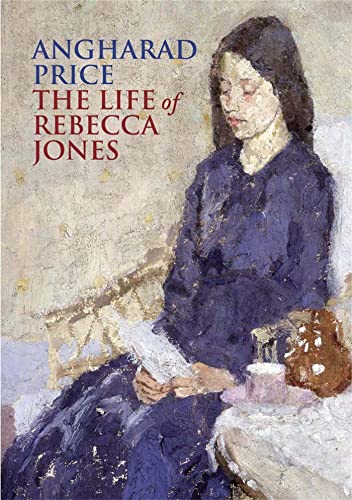
The Life of Rebecca Jones by Angharad Price – #Dewithon24

Translated by Lloyd Jones

I’m aiming to read more books in translation this year so when I started considering possible options for Reading Wales, also known as #Dewithon, hosted this month by Paula at Book Jotter, it seemed like a good opportunity to read something translated from the Welsh language. Eventually I decided on The Life of Rebecca Jones by Angharad Price, first published as O! Tyn y Gorchudd (“oh, pull aside the veil”), in 2002 and translated into English by Lloyd Jones in 2010. It has been listed as one of the top 25 Greatest Welsh Novels by the Wales Art Review (a good resource if you’re looking for Welsh reading ideas).

The novel is a fictional biography, spanning almost the whole of the twentieth century, and is narrated by Rebecca Jones, who looks back on her life in the small rural community of Maesglasau. Beginning with the arrival of her newly wed parents at Tynybraich farm, followed quickly by the birth of Rebecca herself in 1905, she takes us through her entire life, comparing the twists and turns it takes to the path of the stream that flows through the Maesglasau Valley:

“Memories of my childhood reach me in a continuous flow: smells and tastes converging in a surging current. And just like the stream at Maesglasau, these recollections are a product of the landscape in our part of rural mid-Wales at the beginning of the twentieth century. Its familiar bubbling comforts me.
It was not really like that, of course. The flow was halted frequently. Indeed a stream is not the best metaphor for life’s regular flow between one dam and the next.”

Rebecca’s story is not a particularly dramatic or exciting one and is structured as a simple, linear chronicling of events, yet I found it very moving and compelling. As the novel progresses, Rebecca tells us about her daily life on the farm and the different roles performed by men and women, she describes the beautiful landscape and the changing seasons, and looks at some of the customs and traditions of the Maesglasau people. All of this is interspersed with the poetry of Hugh Jones, who was born in Dinas Mawddwy in the 18th century and wrote the hymn that inspired the Welsh title of the novel.

Rebecca is not the only child in the Tynybraich household; she has several younger brothers and sisters, some of whom die in infancy. Three of the brothers – Gruffudd, William and Lewis – are either born blind or become blind later in childhood (is it worse to have never seen the beauty of the world or to have glimpsed it and had it taken away?) and are all sent away to a boarding school for blind children. The education they receive leads to opportunities they would never have had at home in their Welsh valley and while Rebecca is proud of their remarkable achievements she also feels that her brothers’ ties to their own history, culture and language have been broken. This is a pattern she sees repeated in the wider community as the years go by and more and more young people are choosing to leave Maesglasau and make their homes elsewhere. Meanwhile, for those who remain, further changes are brought by modern technology, new ideas, and a greater movement of English people crossing the border into Wales.

When I first started to read, I wasn’t quite sure whether Rebecca and her family were real people or fictional ones, although the book does include photographs and feels historically authentic. I was quickly able to discover that the family at Tynybraich did indeed exist and are ancestors of Angharad Price. There was even a documentary filmed in the 1960s about the three blind brothers. However, not everything Price tells us about Rebecca’s life is the truth, for reasons only explained once we reach the end of the book. That ending was both surprising and perfect.

Have you read this book or are there any others written in the Welsh language that you can recommend?

Book 9/50 for the Historical Fiction Reading Challenge 2024

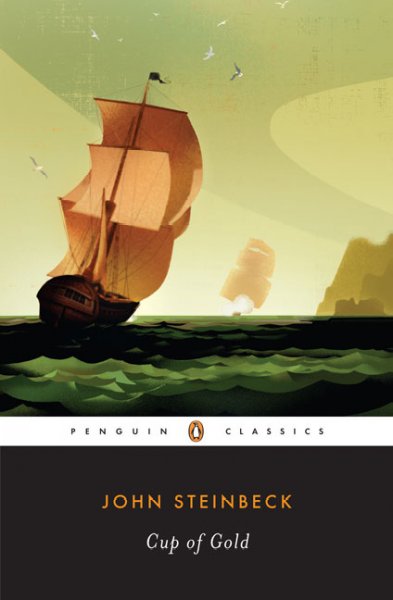
Cup of Gold by John Steinbeck – #1929Club

It’s always interesting, when an author has become famous for books written later in their career, to go back to the very beginning and read their earliest work. Cup of Gold, John Steinbeck’s first novel, was published in 1929 and is my second choice for this week’s 1929 Club hosted by Simon and Karen.

I’ve previously only read two of Steinbeck’s books (East of Eden and The Pearl) and hadn’t even heard of this one until I started to look at options for 1929 Club. I was intrigued because it sounded so completely different from his other books – not the sort of plot or genre I would have associated with Steinbeck at all. It’s also a short novel (just over 200 pages) so I could easily fit it into my busy October reading schedule!

Cup of Gold opens in 17th century Wales where a fifteen-year-old boy, Henry Morgan, lives on a farm with his parents and his grandmother, Gwenliana, who claims to have second sight. Growing up in a remote part of the Welsh countryside, Henry is growing restless to leave home and see more of the world. When Dafydd, an old farmhand who left many years earlier to go to sea, returns to the farm to tell the family of his adventures, Henry becomes determined to do the same. His mother, who still considers him a child, tells him not to be ridiculous, but his father accepts that this is something his son must do and sends him off with his blessing.

Before leaving, Henry consults the wise, white-bearded poet known as Merlin, who lives alone with his red-eared dog in the hills above the Morgans’ valley. Merlin makes the following observation, words Henry will remember for the rest of his life:

“You are a little boy. You want the moon to drink from as a golden cup; and so, it is very likely that you will become a great man – if only you remain a little child. All the world’s great have been little boys who wanted the moon; running and climbing, they sometimes caught a firefly. But if one grow to a man’s mind, that mind must see that it cannot have the moon and would not want it if it could – and so, it catches no fireflies.”

Arriving in Cardiff – the first time he has seen a large town – Henry secures passage on a ship to Barbados, where he finds himself indentured to a plantation owner. This is not what Henry had been hoping for, but he knows it will only be for a few years and then he’ll be free again to achieve his dream of becoming a buccaneer and making his fortune.

If the name Henry Morgan is familiar to you, then you’ve probably already guessed that this is the story of the notorious pirate of the Caribbean, a real historical figure (and the inspiration for Captain Morgan rum). In fact, the full title of the novel is Cup of Gold: A Life of Sir Henry Morgan, Buccaneer, with Occasional Reference to History. ‘Occasional reference’ is not an exaggeration because it seems that very little of Steinbeck’s account has anything to do with historical fact – although, to be fair, there are lots of gaps in our knowledge of Morgan’s early life and career so plenty of scope for an author to use their imagination. It’s unclear whether I should even be referring to Morgan as a pirate; many sources describe him as a privateer, although the only difference I can see is that one is declared ‘legal’ by the government who stands to gain from their raiding and pillaging and the other isn’t.

The ’cup of gold’ of the title, which Merlin compares to reaching for the moon, refers to two things – Panama, which Henry sees as the ultimate prize just waiting to be captured from the Spanish, and a beautiful woman known as La Santa Roja (the Red Saint). Henry’s yearning for both of these is what drives him – and the narrative – forward. Yet I found this book to be neither the swashbuckling adventure novel nor the romance I’ve seen it described as and it’s certainly not as much fun as Georgette Heyer’s Beauvallet or Rafael Sabatini’s Captain Blood. It’s a more serious novel than either of those and never loses sight of its central themes: the quest for happiness and the question of whether we can ever be truly content with what we have or will go on searching for something that’s always out of reach. However, I discovered that I didn’t really care about Henry’s happiness as I found it so difficult to relate to somebody who deliberately set out on a life of piracy and committed so many terrible acts! That was a bit of a problem with so much of the story told from Henry’s perspective.

This is a beautifully written novel, though, and the sections set in Wales – or Cambria, as Steinbeck usually calls it – feel mystical and dreamlike. The inclusion of Merlin in the plot is intriguing: are we supposed to believe that he is really the legendary magician, alive in the 17th century, or is he just an eccentric old man who believes he is Merlin? Either way, Arthurian legend is obviously something that interested Steinbeck and he would later go on to write The Acts of King Arthur and His Noble Knights, which was posthumously published in 1976.

I wouldn’t describe this as a must-read classic, but it’s worth reading if the subject or setting appeal or if you’re interested in experiencing the work of a famous author at the very start of his career.

I’m also counting this as book #57 for the Historical Fiction Reading Challenge 2022.

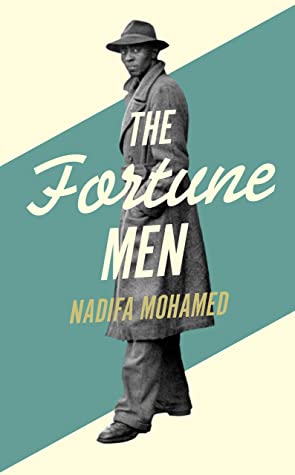
The Fortune Men by Nadifa Mohamed

The next book I’ve read from my 20 Books of Summer list is Nadifa Mohamed’s third novel, The Fortune Men. I enjoyed her previous book, The Orchard of Lost Souls, and was looking forward to this one, particularly as it has been so highly acclaimed, being shortlisted for the 2021 Booker Prize and Costa Novel Award and longlisted for the 2022 Walter Scott Prize for Historical Fiction. It’s based on a true story – the trial of a Somali man accused of murder in 1950s Wales. If you don’t already know all the details of the trial and its outcome, I would recommend not looking them up until you’ve finished the book. I’ve tried to avoid spoilers in this review!

I found the opening chapters of the novel slightly overwhelming, as we are introduced to a large number of characters of various nationalities and backgrounds, switching quickly from one viewpoint to another, but in hindsight I think this was probably intentional, designed to throw the reader straight into the bustling, multicultural heart of Cardiff’s Tiger Bay as it would have been in 1952. After a while, the focus tightens to concentrate on two main characters: the murder victim and the man accused of the murder. His name is Mahmood Mattan, a Somali sailor who has settled in the dockland area of Tiger Bay.

Things are not going well for Mahmood at the beginning of the novel – he has separated from his wife, Laura, a Welsh woman who lives nearby with their three sons, and he is staying in a boarding house with several other men, none of whom make him feel very welcome. He’s struggling to find work and is drifting into a life of petty crime and theft, with any money he does have being spent on gambling. However, when Violet Volacki is found dead on the floor of her shop, her throat slit and a large sum of money missing from the safe, Mahmood is blamed just because the victim’s sister and young niece – Diana and Grace – reported seeing a Somali man standing in the shop doorway just before the murder took place. Even when Diana and Grace say that Mahmood was not the man they saw, the police are adamant that they’ve caught the right man and that he will hang for what he’s done.

Although we know Mahmood is not a murderer, he is not a particularly easy character to like either. He’s a thief, a gambler and often his own worst enemy, as we see during his arrest and trial, when his attitude rubs everyone up the wrong way and makes things worse for himself. But he’s also a loving husband and father and despite feeling that she couldn’t go on living with him, Laura has not given up on their relationship and vows to help him in any way she can. In the middle of the book, we are given Mahmood’s backstory, with some insights into his childhood in British Somaliland (as it was known then), his days working as a ship’s stoker, and how he came to live in Wales and to marry Laura. While I think this information could have been worked into the story more gradually, it was good to learn more about Mahmood’s past and to discover what made him into the man he became.

We also get to know Violet Volacki and her widowed sister Diana – but I’m not sure how much of this part of the novel was based on fact and how much was fictional, because Violet Volacki was not the real name of the murder victim (it was Lily Volpert, apparently changed at the request of a family member). Still, it was interesting to see some of the story from a different perspective, although I thought Diana disappeared from the novel too soon after Violet’s death – I would have liked to have seen more of how she was coping in the aftermath of the murder and how she felt about Mahmood being blamed.

This is a powerful novel and becomes quite emotional as the full scale of this terrible miscarriage of justice is revealed. I can’t really say that it’s a book I loved, but it’s one that I’m glad I’ve read.

This is book 9/20 from my 20 Books of Summer list.

This is book 37/50 read for the Historical Fiction Reading Challenge 2022.

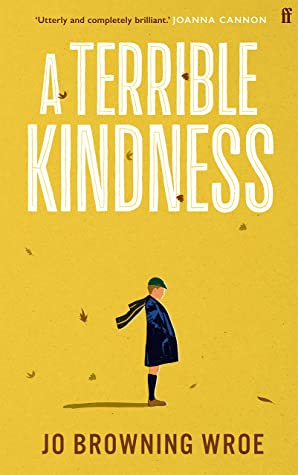
A Terrible Kindness by Jo Browning Wroe

The Welsh village of Aberfan is a place many of us associate with the 1966 mining disaster where a landslide of coal waste collapsed onto the village school, killing 116 children and 28 adults. Among the many volunteers who arrived in Aberfan to help deal with the aftermath of the tragedy were several hundred embalmers. A Terrible Kindness imagines the story of one of these embalmers, the fictional William Lavery.

William is just nineteen years old and newly qualified when the disaster happens, but he works tirelessly alongside older and more experienced embalmers to help identify and tend to the bodies of the victims. Not surprisingly, this will have a profound effect on him and leave him psychologically damaged for years to come. It also brings back memories of other traumatic moments that occurred earlier in William’s life – including one particular incident that led to the breakdown of his relationship with his mother. This incident is only hinted at throughout the book and it’s not until the final chapters that we find out what happened.

The Aberfan disaster is something that is still within living memory for a lot of people, so it’s important that authors handle things like this with care and sensitivity – and I think Jo Browning Wroe does this very well. These scenes are naturally very sad and moving, but also filled me with admiration for these people who voluntarily carried out such an unpleasant, difficult but essential task. However, Aberfan is only the starting point for William’s story and apart from two or three chapters, the rest of the book is set elsewhere.

A lot of time is spent on William’s years as a young chorister at a choir school in Cambridge, the friendships he made there and the events that made him abandon his promising singing career and go into the family embalming business instead. The complex relationships between William, his mother, his uncle and his uncle’s partner are also explored and this is the real focus of the book rather than what happened at Aberfan. I did have a lot of sympathy for William, who was clearly struggling, but I wished he had been able to get help and find a way to move on rather than making life so unhappy for himself and his loved ones for so many years. His mother, Evelyn, also frustrated me with her inability to consider other people as well as herself and I felt that the revelation of the incident that caused her estrangement from William was a bit of an anticlimax.

I think the inclusion of the Aberfan storyline will draw a lot of readers to this book, but will also put other readers off and I do wonder whether a fictional tragedy would have served the purpose of the plot just as well. As an exploration of grief and forgiveness, though, it’s an excellent read and an impressive first novel by Jo Browning Wroe.

Thanks to Pigeonhole for the opportunity to read this book.

This is book 2/50 read for the Historical Fiction Reading Challenge 2022.