Royal Mistress by Anne Easter Smith

Royal Mistress After reading Marjorie Bowen’s Richard III novel, Dickon, a few weeks ago, my interest in the Wars of the Roses was rekindled and the next book I picked up was Royal Mistress, another novel set in the same period…but from a very different perspective. Anne Easter Smith’s heroine is Jane Shore, famous for being a mistress of Edward IV. Jane is not usually given a lot of attention, so I looked forward to seeing her character fleshed out and brought to life, and to learning more about her beyond her relationship with the king.

Born Elizabeth Lambert, Jane is the daughter of a prosperous London silk merchant (the name ‘Jane’ is thought to have been the invention of a 17th century playwright, but in this novel we are told that Elizabeth has taken the name Jane to distinguish her from an Aunt Elizabeth). Jane is married off at the age of twenty-two to William Shore, another mercer, or dealer in textiles. The marriage is not what she’d hoped it would be and Jane quickly discovers that while her husband is not above using her beauty to advertise his silks and satins, in the privacy of their own home he is cold, distant and has no interest in giving her the children she so desperately wants. To make things worse, Jane is still in love with Thomas Grey, with whom she’d had a brief romance before discovering that not only was he married, he was also the son of Elizabeth Woodville, queen of England.

As she begins to seek an annulment of her marriage, Jane catches the eye of Will Hastings, the king’s chamberlain, and through him she gets to know Edward IV. Royal Mistress follows Jane throughout the years of her relationship with the king, as she becomes an important part of Edward’s life and finds some of the warmth and affection that was missing in her marriage. After Edward’s death, however, Jane finds herself at the mercy of Richard III, who disapproves of her behaviour and wants to have her dismissed from court. Jane turns to Will Hastings for protection…but he is also out of favour with the new king and Jane’s safety cannot be guaranteed.

Royal Mistress is the first book I’ve read by Anne Easter Smith and I’ll be completely honest and say that, based purely on the title and front cover, I didn’t expect much from it. And after reading the first few chapters, I thought I was right. The story is slow to start, concentrating on a purely fictional romance between Jane and Tom Grey (it’s true that Jane was a mistress of Grey’s after Edward’s death, but there is no evidence of an earlier relationship between them) and while I did like Jane – she is portrayed as generous, warm-hearted and down-to-earth – her character didn’t seem to have a lot of depth or a lot of purpose other than being the mistress of various men.

As I got further into the novel, though, more characters are introduced, parts of the story are told from perspectives other than Jane’s, and I was swept away by the retelling of a period of history that I love. Reading the author’s note at the end of the book, I could see how much care had gone into her interpretations of the characters and their actions and motivations (even if I didn’t always agree with these interpretations). It’s interesting that Smith says she is a staunch supporter of Richard III and yet with this novel being written mainly from Jane’s point of view, it was necessary for her to portray Richard in a less than positive light. Where the disappearance of the princes in the tower is concerned, though, I was happy with the theory she puts forward as it’s one I find quite convincing.

I see Anne Easter Smith has written four more novels set during the same period, but while I did end up enjoying this one, I’m not sure yet whether I will want to read any of her others. I would like to read more about Jane Shore, though; I have a copy of Vanora Bennett’s Queen of Silks on my shelf which I hope to read soon, but if you can recommend any other books please let me know. I was interested to see that Jean Plaidy’s 1950 novel on Jane is called The Goldsmith’s Wife, as it was thought until recently that William Shore was a goldsmith rather than a mercer. Proof that history is still evolving!
Dickon by Marjorie Bowen

Dickon Marjorie Bowen (1885-1952) was a very prolific author of historical fiction, romance, crime and horror, producing over one hundred and fifty books during her lifetime. Endeavour Press have gradually been making some of them available to modern readers and there are several that I’m interested in reading, but I decided to start with this one, Dickon, as it is set during one of my favourite historical periods: the Wars of the Roses.

The title refers to Richard III (Dickon, of course, is a nickname for Richard) and the novel follows Richard throughout his entire life, beginning with the moment when, as a child, he learns that his father, the Duke of York, and elder brother, Edmund, have been killed at the Battle of Wakefield. The book is divided into three sections; the first is called The Three Suns, which refers to the parhelion which appeared in the sky at the Battle of Mortimer’s Cross, but could also be a pun on the three remaining ‘sons’ of the Duke of York – and covers Richard’s childhood up to the point where his brother wins the throne for York, becoming King Edward IV.

The middle section, The Bear and Ragged Staff (a reference to the emblem of the Earl of Warwick) concentrates on 1470-1472, the period of the rebellion of Warwick and George, Duke of Clarence. Finally, The White Boar takes us through Edward’s death and the period immediately afterwards – Richard’s own brief reign and his tragic end at the Battle of Bosworth in 1485. There is no doubt that Richard suffered a lot of misfortune and tragedy and this is symbolised in the novel in the form of Jon Fogge, a man-at-arms whom Richard believes has been haunting him throughout his life, bringing bad news and bad luck to the Plantagenets.

Dickon was published in 1929 and I think it’s fair to say that it’s quite different from the majority of historical fiction that is being published today. The dialogue has a very old-fashioned feel, being sprinkled with words like ‘thou’, ‘thee’, ‘doth’ and ‘hath’, something that seems to have been dropped by most modern historical novelists, and the whole novel also has an air of innocence, with sex scenes only hinted at rather than explicitly described. I do like ‘older’ historical fiction but I suspect some readers will find this book too archaic and romanticised.

In her preface to the novel, Marjorie Bowen says that she has studied all of the known sources and “has violated no known fact, nor presented any character or action in any light that is not probable, as well as possible”. I did notice a few historical inaccuracies, but as I’m not completely sure how much material was available in 1929 and how much has only come to light in more recent years, I’m not going to be too critical. There are also a lot of controversies surrounding Richard III and his reign – there is no one version of events that has been accepted by everybody – so different authors and historians do have different theories and different interpretations. I was particularly curious to see how Bowen was going to approach the mystery of the disappearance of the Princes in the Tower, so I was disappointed to find that her solution was simply to ignore the whole episode!

Richard himself is portrayed as sensitive, loyal and trusting, a brave warrior and a devoted brother, father and husband. His character lacks the depth and complexity I would have liked and sometimes seems too good to be true, although I can appreciate that this is one of the earliest pro-Ricardian novels, written decades before books like The Daughter of Time or The Sunne in Splendour, and that the author was trying to provide an alternative to the usual view of Richard as the hunchbacked villain of Shakespeare’s play.

If you’re completely new to this period of history and the life of Richard III, this book is maybe not the best place to start, but I did find it quite enjoyable and a good addition to my collection of Wars of the Roses fiction. I will be reading more by Marjorie Bowen.

Thanks to the publisher for providing a review copy via NetGalley.

Historical Musings #4: Time Periods

Historical Musings I find history fascinating and am happy to read books set in any historical period, but there are some I seem to be drawn to more than others. While it’s good to discover new eras and new subjects, it can also be very rewarding to read several novels set during the same period, each one adding to your knowledge and helping to build up a bigger picture. It’s interesting to see how different authors approach the same topics, interpret the same historical sources and portray the same historical figures.

At the moment my favourite historical period, without a doubt, is the Wars of the Roses. My interest in this period is relatively recent. It began five years ago when I read The White Queen by Philippa Gregory and since then I’ve been reading everything I can find on the subject, from the better known books such as The Sunne in Splendour and The Daughter of Time to the more obscure ones such as The Adventures of Alianore Audley. A list of the Wars of the Roses books I’ve reviewed on this blog is available here and I still have lots of others waiting to be read!

Other time periods I love reading about are:

* Renaissance Italy
* The 19th Century
* Plantagenet England (the period before the Wars of the Roses)
* The First and Second World Wars
* The French Revolution
* The English Civil War and Restoration
* The Tudor and Elizabethan periods

I’m starting to develop an interest in Anglo-Saxon England as well, but I think I’ll need to read a few more books set in this era before I can decide whether it is a ‘favourite’. I also enjoy reading historical fiction set in Scotland and in India, China and Russia, to name just a few other countries, but not necessarily during any particular period which is why I haven’t listed them above. And then, of course, there are authors like Edward Rutherfurd who write novels that span centuries and other authors – Susanna Kearsley and Kate Morton, for example, whose books are often set in dual or multiple time periods.

As I mentioned in my Historical Musings post a couple of months ago, the historical periods I struggle with tend to be the Ancient ones – Ancient Rome, Ancient Greece, Ancient Egypt. I’m hoping it’s just a case of finding the right books to spark my enthusiasm for these subjects.

What about you? Which periods of history do you like – or not like – to read about? Can you recommend any good books set in your favourite period?

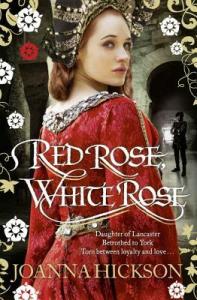
Red Rose, White Rose by Joanna Hickson

Red Rose White Rose A few years ago I read Joanna Hickson’s The Agincourt Bride, the first of two novels on the life of Catherine de Valois. I didn’t enjoy it enough to want to read the sequel, The Tudor Bride, but when I saw that she had written a new novel telling the story of Cicely Neville (the mother of Edward IV and Richard III) I couldn’t wait to read it. The Wars of the Roses is one of my favourite periods of history but I haven’t read very much about Cicely and I was interested in learning more.

The novel begins in 1433 and introduces us to the seventeen-year-old Cicely Neville. As the youngest daughter of the late Earl of Westmorland, Cicely belongs to one of the richest and most powerful families in the north of England. Born at Raby Castle in County Durham, Cicely is known as ‘the Rose of Raby’ – but her brothers have also bestowed on her the less flattering nickname of ‘Proud Cis’. Cicely has never given much thought to the children of her father’s first marriage – a branch of the family who feel they have been pushed aside and disinherited – but when she is briefly held hostage by one of these relatives, Sir John Neville, she discovers just how far they will go to reclaim their lands and titles.

Restored to her own family at Raby, Cicely is married off to Richard, Duke of York, to whom she has been betrothed since she was nine. As a descendant of Edward III, Richard believes his own claim to the throne is stronger than that of the present king, Henry VI, and as his frustrations with Henry’s weak leadership increase, so do his ambitions. Soon the House of York finds itself at war with the King and the House of Lancaster, a particularly traumatic situation for Cicely, with not only her husband in danger but also her two eldest sons, Edward and Edmund, her brother Hal and her nephew, the Earl of Warwick. But even while she fears for the men in her life, Cicely is haunted by memories of another man – Sir John Neville, the man she truly loves.

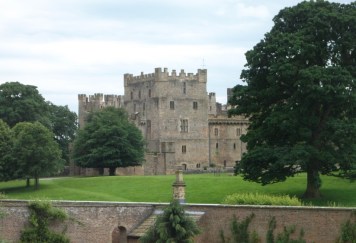
Raby Castle I enjoyed Red Rose, White Rose and thought it was a big improvement on The Agincourt Bride. It was the first half of the book that I found the most interesting, possibly because I’ve read about the Wars of the Roses, the battles and the rise of the House of York many times before, whereas Cicely’s early story was something different (even though it seemed to be largely fictional – Hickson states in her author’s note that there was no historical basis for the affair between Cicely and John Neville). I also loved the fact that these early chapters were set in the north, in an area I’m familiar with; I visited Cicely’s childhood home, Raby Castle, just two years ago so could picture it very clearly (see my photograph above).

Something I haven’t mentioned yet is that while part of the book is narrated by Cicely herself, the rest is narrated by her illegitimate half-brother, Cuthbert. Most of the characters in the novel are based on real people, but Cuthbert is not and I’m not sure that I really liked the inclusion of a fictitious storyline alternating with the historical one. I also thought the two narrative voices felt too similar and if the name of the narrator hadn’t been given in the chapter headings, I would have had difficulty distinguishing between the two. However, I did like Cuthbert as a character and he takes us to places that Cicely isn’t able to go herself, such as onto the battlefield, so he does have an important role to play in the story.

There was a good balance of war, politics, romance and adventure in this novel; there’s also a huge amount of historical detail – if you’re expecting a very light, easy read I think you may be surprised! This is a long, complex story and some concentration is needed to keep track of the relationships between the characters. I found it particularly interesting to read about Cicely’s daughter, Anne, forced into marriage against her will to her father’s ward, Harry Holland, the Duke of Exeter, and finding herself on the Lancastrian side of the conflict – as does Cicely’s sister, another Anne. The way these characters felt about their divided loyalties and how they coped with the tensions it caused within the family was portrayed very well.

Finally, while I think Red Rose, White Rose is the perfect title for a book on the Wars of the Roses, it did bother me slightly that there were so many references to the red rose being a symbol of Lancaster. According to the non-fiction I’ve read on the subject (including most recently The Hollow Crown by Dan Jones), although the red rose had possibly been associated with the House of Lancaster since the 13th century, it wasn’t commonly used as a symbol until Henry Tudor’s victory at Bosworth when he combined it with the white rose of York to form the Tudor rose. I don’t think the Lancastrian army would have been wearing red rose badges as described in the novel, but I’m happy to be corrected if I’m wrong.

Now I’m wondering who and what Joanna Hickson’s next book will be about. The way this one ended leaves plenty of scope to continue the story of the Wars of the Roses!

I received a copy of this book from NetGalley for review

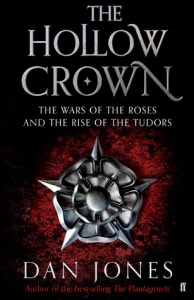
The Hollow Crown by Dan Jones

The Hollow Crown A rare non-fiction review here today! Having loved Dan Jones’ book on the Plantagenets, I was curious to see how he would approach the Wars of the Roses, which is one of my favourite periods of English history. I was looking forward to another well written, thoroughly researched book that would make a complex subject accessible and easy to understand – and that’s what I got, although there were one or two problems which prevented me from enjoying this book as much as the previous one.

The Hollow Crown: The Wars of the Roses and the Rise of the Tudors begins with the marriage of Henry V and Catherine of Valois, laying the foundation for the years of conflict that would follow. Best known for his victory over the French at Agincourt, Henry V was considered one of England’s great medieval kings, but when he died in 1422 of a sudden illness with his only heir still a baby, the scene was set for decades of uncertainty and instability. As Henry’s son, Henry VI, grew into an adult it became obvious that he was unfit to rule. Suffering from an unspecified mental illness, he was a weak and ineffectual king, and this paved the way for rival claimants to the throne – Richard of York and his son, the future Edward IV.

From the 1450s to the 1480s a series of battles were fought between the two rival branches of the royal house – York and Lancaster. This book takes us through the entire period in chronological order, detailing each battle and its outcome and examining the reigns of Henry VI, Edward IV, Richard III and finally Henry VII, who defeated Richard at the Battle of Bosworth and founded a new royal dynasty – the Tudors. Naturally a lot of the focus is on the male figures of the period – the kings and dukes and earls – but Jones shows understanding and sympathy for some of the women too: Margaret Beaufort who gave birth to Henry Tudor at the age of thirteen and according to Jones may have been left physically and mentally traumatised by the experience, and Henry VI’s wife, Margaret of Anjou, who found herself with the responsibility of trying to maintain some sort of control of the kingdom during her husband’s long spells of illness.

This is a shorter book than The Plantagenets (and focuses more intensely on a shorter period of history) and, like the previous volume, it’s very readable and even quite gripping in places. There was one area, though, where I felt that this book was not as good as the first one. In The Plantagenets I felt that Jones had given a fair and balanced account of the historical people and events concerned but The Hollow Crown feels very biased towards the Lancastrian/Tudor point of view. The bias is most noticeable, maybe not surprisingly, in the sections dealing with Richard III where Jones makes it clear where he stands on the questions of what happened to the Princes in the Tower and how Henry VI met his death. Now, I know Richard is a controversial figure and it would be difficult for any historian not to have an opinion of him one way or the other, but it would have been nice if some alternative theories could have been explored here as well instead of just being dismissed in one or two sentences!

I did enjoy The Hollow Crown, though. Dan Jones’ writing style is lively and entertaining, which means his books are good choices for someone like myself who prefers fiction to non-fiction. I feel that I’m starting to have quite a good knowledge of the Wars of the Roses now but there was still some information here that was new to me (particularly near the end of the book, where he looks at the fate of the de la Poles, the final Yorkist claimants). This book could also be a good place to start if you know nothing about the Wars of the Roses – it’s a very complex and confusing period but Jones does a good job of making it as easy to understand as possible…I hope you’ll find it as fascinating as I do!

I received a copy of The Hollow Crown for review via NetGalley.

The White Princess by Philippa Gregory

The White Princess - Philippa Gregory The White Princess is the fifth book in Philippa Gregory’s Cousins’ War series. The Cousins’ War is another name for the Wars of the Roses, a series of 15th century conflicts between the House of York and the House of Lancaster, two rival branches of the English royal family. This novel is set at the end of the period, just after Henry Tudor has defeated Richard III at the Battle of Bosworth and has been crowned Henry VII. Our narrator is Henry’s wife, Elizabeth of York, a niece of Richard III and daughter of another former king, Edward IV. The novel takes us through the early years of Elizabeth’s marriage to Henry (an alliance which was supposed to unite the houses of York and Lancaster), the births of their children and the plots and conspiracies that troubled Henry’s reign.

The Wars of the Roses is a period filled with mysteries and controversies and every author or historian seems to have their own set of opinions and theories. The most intriguing of these mysteries is of course the question of what happened to Elizabeth of York’s two younger brothers who disappeared from the Tower of London never to be seen again. Were they murdered and if so who by? Or did one of them manage to escape? Henry VII was unable to prove that the two princes were dead, so the possibility that they could have survived gave rise to a series of Yorkist rebellions. In The White Princess we focus on one of these uprisings, centred around a pretender known as Perkin Warbeck who claims to be the younger of the princes, Richard, Duke of York. Is he really who he says he is and if so, must Elizabeth choose between her husband and her brother?

While I’m not a particularly big fan of Philippa Gregory’s writing and I think there are much better historical fiction authors out there (and much better Wars of the Roses novels – The Sunne in Splendour by Sharon Penman is my top recommendation) I have quite enjoyed following this series and learning more about the women of the period. This one, though, was disappointing and the weakest of the series, in my opinion. It felt repetitive and unnecessarily long and I just didn’t find Elizabeth a very engaging narrator.

The story is based around two theories that you may or may not find plausible. The first is the idea that Elizabeth was in love with Richard III, her uncle, and that they were romantically involved. As far as I know, there is no historical evidence for this but Gregory is not the only author to have suggested it and I suppose it did add an extra layer to her portrayal of Elizabeth and Henry’s marriage. Then there’s the Perkin Warbeck story, which dominates the second half of the novel. I have read about Perkin Warbeck before and am familiar with the arguments for and against him being the lost prince; the theory Gregory describes here seems very unlikely to me, but this is fiction after all!

Something I think Philippa Gregory is very good at is making a complex period of history easy to understand. Even with no previous knowledge you would probably be able to follow what is happening in this novel without too many problems. Sometimes, though, I think she goes too far in her attempts to clarify things for the reader. For example, when Elizabeth is talking to her sister Cecily about their half brother she refers to him as “Thomas Grey, Mother’s boy” which just sounds silly, doesn’t it?

My biggest problem with this book, though, was the portrayal of the main characters. Elizabeth had such an interesting life and yet she comes across in The White Princess as boring. She doesn’t have the strength, intelligence and spirit of the other women who have been featured in the series – Elizabeth Woodville (The White Queen), Margaret Beaufort (The Red Queen), Jacquetta Woodville (The Lady of the Rivers) and even Anne Neville (The Kingmaker’s Daughter). The portrayal of Henry VII is very negative, which makes it difficult later in the book when we are expected to accept that Elizabeth is starting to love him. I don’t see how anyone could have loved the cruel, petty, vindictive Henry described in this book – especially after something he and his mother do to Elizabeth at the beginning of the novel, which I won’t go into here!

I think maybe I should have skipped this book and gone straight to the latest one, The King’s Curse, which sounds more intriguing and seems to be getting better reviews than this one. It’s about Margaret Pole, Elizabeth’s cousin, an historical figure I know nothing about. I’m looking forward to reading it eventually despite my problems with this one.

For more Wars of the Roses recommendations see My Journey Through Time: The Wars of the Roses and for more on Elizabeth of York and Henry VII see The Tudors – Part I.

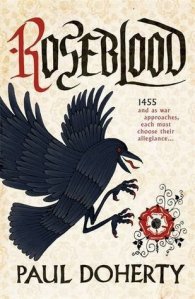
Roseblood by Paul Doherty

Roseblood It’s 1455 and England is heading towards civil war. Henry VI is still on the throne but he is a weak ruler and there are many who think he is not fit to be King. The Duke of York believes his claim is stronger than Henry’s and with the support of some of England’s most powerful noblemen he is determined to win the crown for himself. The scene is set for the period of history that will become known as the Wars of the Roses.

In Roseblood we meet two men who are on opposite sides of the conflict. Simon Roseblood is a Lancastrian, loyal to Henry VI and his wife, Margaret of Anjou. As the owner of a busy London tavern, Roseblood is in an ideal position to be able to obtain information and intelligence that will help the Lancaster cause. But while Roseblood is doing all he can in support of his king, he also has business of a more personal nature to attend to. Five years earlier, his brother, Edmund Roseblood, was murdered during a rebellion led by Jack Cade. Simon has reason to believe that the men responsible were members of the mysterious gang known only as LeCorbeil and he knows he must find a way to avenge his brother’s death.

Amadeus Sevigny is the nephew of the Sheriff of London and clerk to Richard, Duke of York. As a loyal Yorkist, Sevigny is in direct opposition to Simon Roseblood and they are first drawn together when Sevigny tries to frame Roseblood for a crime he didn’t commit – only to discover that Roseblood is his equal when it comes to plotting and scheming. Their paths cross again in a race to hunt down a man who possesses information which would be damaging to both Lancaster and York, but it could be Roseblood’s daughter, Katherine, who holds the key to bringing their rivalry to an end. And throughout all of this, LeCorbeil wait in the background for their chance to complete their destruction of the Roseblood family…

I have read a lot of novels set during the Wars of the Roses (it’s one of my favourite periods of history) but Roseblood is not like any of the others I’ve read and is actually quite a difficult book to describe. It’s a mixture of history, mystery and intrigue with a large cast of colourful characters – many with Dickensian names such as Candlemas, Wormwood and Skulkin. It’s an unusual novel and not really what I’d expected at all! While I found it confusing at the beginning (we are given a lot of historical information in the opening sections, and being thrown straight into one of Sevigny’s schemes and Roseblood’s attempts to thwart it, I struggled to follow exactly what was happening) I eventually found myself drawn into this fascinating, complex story.

Although the novel is set at the beginning of the Wars of the Roses and historical figures such as Henry VI and the Duke of York do make brief appearances, the focus is always on the lives of the fictional characters. Much of the story is told from the perspectives of Roseblood and Sevigny, but there are also some chapters which give us the points of view of Roseblood’s son, Raphael, and daughter, Katherine. I didn’t find Raphael very interesting, but I thought Katherine, with her obsession with Arthurian legend and her imaginary friend, Melisaunde, was a much more memorable character.

Doherty seems to be an author who knows London well – not just London as it is today but as it was in medieval times too – and each location, whether it’s a marketplace, a church or a tavern, is described in minute detail. It was actually a bit too descriptive for me at times – almost like walking down a busy street and having your senses assailed by so many sounds, sights and smells that you start to feel overwhelmed – but I’m sure other readers will love the level of detail he goes into. I was certainly left with the impression that he had thoroughly researched every aspect of both the setting and the time period, which is obviously a good thing!

I’m surprised that I’ve never come across Paul Doherty before, as he appears to have written a huge number of historical novels, many of them mysteries, under several different pseudonyms. I would like to try more of his books, though as there are so many I have no idea where I should start. I’ll also be looking out for a sequel to Roseblood – the way it ended with so much still unresolved, I’ll be disappointed if there isn’t one!

Thanks to Headline for providing a review copy via NetGalley.