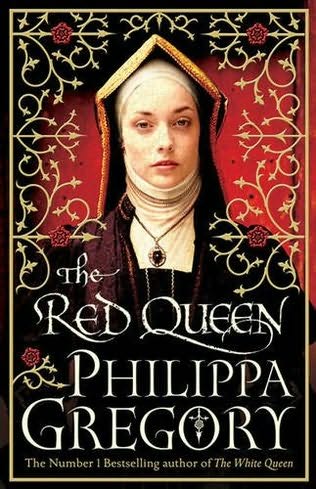
Review: The Red Queen by Philippa Gregory

This is the second book in Philippa Gregory’s new series set during the Wars of the Roses, a tumultuous period of English history in which the rival houses of York and Lancaster struggled for power. In The White Queen we met Elizabeth Woodville, wife of Edward IV of York, sister-in-law of Richard III and mother of the two young princes who mysteriously disappeared in the Tower of London in 1483. The Red Queen is the story of another woman who also played an important part in the Wars of the Roses: Margaret Beaufort of Lancaster, the mother of King Henry VII.

Although this is the second book in the series, I wouldn’t really describe it as a sequel – that is, The Red Queen doesn’t just pick up where The White Queen left off. The two books overlap somewhat and cover some of the same events, but from opposing sides of the conflict. You don’t really need to have read the first book to understand this one, although it would probably make sense to read them in the correct order. I really like the concept of two books each telling the story from a different perspective; throughout much of The White Queen, Margaret Beaufort and the Tudors were shadowy characters in the background, plotting and scheming from afar, so it was good to have them take centre stage in The Red Queen.

One of the themes running throughout the book is Margaret’s belief that God has chosen her to be another Joan of Arc, who will lead the House of Lancaster to victory, and that God’s will is for her son Henry Tudor to be crowned King. Margaret was not very likeable – in fact she came across as a very cold, ambitious and unpleasant person – but as far as I can tell, this is probably true of the historical Margaret. I was surprised that I could still enjoy this book despite the narrator being so unsympathetic; sometimes obnoxious characters can be fun to read about, and I found Margaret’s uncharitable thoughts about the House of York and the Woodville family quite funny at times.

I can’t really comment on the historical accuracy of this book because I have never studied the period in any depth – however, my lack of knowledge meant that I could just concentrate on enjoying the story! The Wars of the Roses were a complex and long-running series of conflicts, during which many of the key players changed their allegiances several times (and just to confuse things further, many of them also had the same names – lots of Henrys and Edwards, for example) but Philippa Gregory has made it easy to understand and follow what’s going on. I do think a more detailed family tree would have been helpful though – the one provided in the book was incomplete and I didn’t find it very useful.

The book is written in the same format as The White Queen, with most of the story being told in the first person present tense, occasionally switching to the third person to relate important events at which Margaret was not present, such as the Battle of Bosworth Field. I really like the way Philippa Gregory writes battle scenes using language that I can understand, as I often find reading about battles very confusing! The whole book is written in quite simplistic prose and can be repetitive at times, but it always held my attention and drew me into the story.

If you are new to the Wars of the Roses – a fascinating period of history – then I would recommend either The Red Queen or The White Queen as an excellent starting point. I also think that if you’ve tried Philippa Gregory in the past and didn’t find her books to your taste, it could be worth giving her another chance as these newest books are quite different from the Tudor ones that I’ve read.

Recommended

I received a copy of this book from Simon & Schuster UK for their Red Queen Blog Tour
After the Sunday Papers #5

Last month was a great reading month for me – I read ten books, which I know is not many for a lot of other bloggers, but for me it’s more than I usually manage to read. And as well as reading those ten books, I was also slowly working my way through Middlemarch by George Eliot, which I finished last weekend. Considering this was my third attempt at reading it, I felt a real sense of achievement when I reached the final page! As I’ve finished it a few weeks ahead of schedule for Ana’s readalong, I won’t post my thoughts on the book just yet, but will wait until later in the month. Who else has been reading Middlemarch for the readalong? Are you enjoying it?

Another readalong I’ve signed up for is Bleak House by Charles Dickens, which is being hosted by Amanda of The Zen Leaf. Bleak House, like Middlemarch, is a book that I started reading once before but stopped because I wasn’t in the right mood for it. I can be a very moody reader sometimes! Hopefully this time I’m going to enjoy it. If you’d like to participate too, see Amanda’s post to sign up.

This week I’ve been reading The Red Queen by Philippa Gregory which I was sent by Simon & Schuster UK for their Red Queen blog tour. The Red Queen is the second book in Philippa Gregory’s new Wars of the Roses series, which was a fascinating time in English history. I would welcome any recommendations of good non-fiction books about this period as I’d really like to learn more about it.

I’ll be posting my review of The Red Queen soon, but in the meantime why not enter this competition to win a signed copy of the UK hardback – it’s open worldwide until September 30th.

I also received two more books for review this week, which is exciting for me as I don’t usually get very many.

After You by Julie Buxbaum is the third book I’ve received from Transworld for their Summer Reading Challenge (the first two that I’ve read and reviewed were Second Hand Heart and If I Stay). I also had a nice surprise when Rosy Thornton contacted me to offer me a copy of her new novel, The Tapestry of Love. I’m looking forward to reading both of these books.

What will you be reading this week?

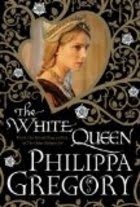
Review: The White Queen by Philippa Gregory

Philippa Gregory is best known for her Tudor court novels, but with The White Queen she moves further back in time to the Plantagenets and the Wars of the Roses.

Elizabeth Woodville is twenty seven when she meets and falls in love with King Edward IV. Following a private wedding, Elizabeth becomes Queen of England and finds herself caught up in the ongoing battles between the House of Lancaster and the House of York. Amidst all the politics, intrigue and betrayal, Elizabeth’s concern is for the future of her children – in particular her two royal sons who will become the famous ‘Princes in the Tower’, a mystery which remains unsolved to this day.

The book is written in the first person present tense which I found slightly irritating, though not enough to stop me from enjoying the book. The use of present tense does help the reader to feel as if they are experiencing events along with Elizabeth, so it works in that sense, but my personal preference is definitely for past tense. There are a few passages where the viewpoint temporarily changes to the third person in order to describe battles which Elizabeth doesn’t witness but which are an important part of the storyline. I often find battle scenes boring, but these are well written and go into just the right amount of detail.

I found the story itself quite suspenseful and exciting – it probably helped that although I read a lot of historical fiction novels, I haven’t read many about the War of the Roses, so only had a vague idea of what was going to happen. Of course, this meant that I wasn’t sure exactly which parts of the book were based on fact and which parts were the invention of the author. In her note at the end of the book, Gregory mentions that there’s not much information available about the period, therefore there are some areas where she felt free to use her imagination.

If you’re not very familiar with the historical background, you’ll need to concentrate to be able to keep track of all the battles, changes of allegiances and numerous claimants to the throne. The family tree provided at the front of the book is not very helpful – it’s incomplete and really needed to show at least one more generation, as it ends before some of the important characters in the story were even born.

I found it difficult to warm to the character of Elizabeth but could feel sympathy for her, especially towards the end of the book. Richard III was also portrayed quite sympathetically – nothing like the evil hunchback in Shakespeare’s play! I would have liked to have seen his relationship with Elizabeth more thoroughly explored in the book – there was no real explanation for why she distrusts him so much, other than that she’s had dreams and premonitions that something bad will happen to her sons in the Tower. On the subject of the Princes in the Tower, the book explores an interesting theory, which may or may not be true – it would be nice to think that it was.

Interspersed with the main story is the tale of Melusina, the water goddess, from whom Elizabeth and the female members of her family are said to have descended and from whom they claim to have inherited magical powers.
Magic and mythology are recurring themes throughout the book. Elizabeth and her mother Jacquetta’s witchcraft skills are used as an explanation for several key historical events – for example, they whistle up storms to defeat their enemies at sea. This aspect of the story became quite repetitive and just didn’t appeal to me much. Sometimes it felt as if there were references to Melusina, water, rivers, the sea etc on almost every page!

The book ends abruptly, but that’s not surprising since The White Queen is the first in a trilogy called The Cousins’ War and will be followed by The Red Queen and The White Princess which will focus on Margaret Beaufort and Elizabeth of York respectively.

I would recommend The White Queen if, like me, you don’t have much knowledge of the Wars of the Roses and are looking for an enjoyable and relatively easy to understand introduction to the period. For those of you with a lot of background knowledge, I think there should still be enough new ideas to keep you interested.

Recommended

Genre: Historical Fiction/Pages: 417/Publisher: Simon & Schuster/Year: 2009/Source: My own copy bought new