The Predicament by William Boyd

After finishing last year’s Gabriel’s Moon, I was pleased to learn that William Boyd was writing a second book about Gabriel Dax. I’ve now read it and enjoyed it even more than the first.

The Predicament begins in March 1963 with travel writer Gabriel trying to lead a peaceful life in a small East Sussex village. However, his parallel life in the world of espionage just won’t leave him alone. His Russian contact, Natalia Arkadina of the KGB, still believes he is a double agent working on behalf of Russia and has requested a meeting with him to give him his latest assignment. Meanwhile, Faith Green of MI6 has also approached him with a new mission: to go to Guatemala and interview Padre Tiago, the man expected to win the upcoming presidential election there.

Gabriel is not thrilled about getting involved in spying again, but agrees to the Guatemala plan as he’ll be able to combine the trip with some research for his new book on the world’s rivers. Unfortunately, things go badly wrong and he leaves the country in a hurry, having made himself the target of some unscrupulous people. It’s not long before he is given a new task, though – this time he must go to Germany and try to prevent an assassination attempt on President Kennedy, who is visiting West Berlin.

I don’t often choose to read spy thrillers, but one of the things I find compelling about this series is that Gabriel is such a reluctant and accidental spy. He never intended to get mixed up in international espionage and is really not very good at it! We do see him adding to his skill set in this book, though, being trained on how to lose someone who is trying to follow him and how to use everyday items as weapons. And although his Guatemala mission is disastrous, he does play a part in foiling the conspiracy to kill JFK in Berlin (I’m sure it’s not a spoiler to say that it was foiled as everyone knows that he wasn’t assassinated in Germany). Boyd does a good job of creating tension in the Berlin sections, despite it already being obvious what the outcome is going to be!

Gabriel’s Moon probably had slightly more depth, as it also featured a storyline about a childhood trauma that affected Gabriel’s mental health, but I preferred this book overall – possibly because when I read the first one I was comparing it unfavourably with Boyd’s previous and very different novel, The Romantic, which I loved. And although the mental health storyline is pushed into the background in this book, Gabriel does find himself facing some other personal predicaments: he is being accused of plagiarism by another travel author, who is not pleased that Gabriel has written about the same group of islands; his ex-girlfriend Lorraine is trying to rekindle their relationship; and Gabriel himself is continuing to struggle with his feelings for his MI6 handler, Faith Green. Faith is an enigmatic character – is she really romantically interested in Gabriel or is she just stringing him along for her own purposes?

The Predicament is an entertaining read with some fascinating settings – Guatemala on the brink of a political revolution and post-war Berlin shortly after the construction of the Berlin Wall. Throughout the book, Gabriel’s Russian contacts, Natalia and Varvara, keep pushing for him to also visit Moscow, so maybe that will finally happen in the next book! This is apparently intended to be a trilogy, so hopefully we’ll get answers to some of the other questions in the final novel too. Something to look forward to.

Thanks to Viking for providing a copy of this book for review via NetGalley.
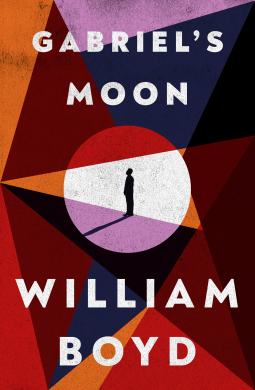
Gabriel’s Moon by William Boyd

William Boyd’s The Romantic was one of my books of the year in 2022, so I was excited about reading his new one, Gabriel’s Moon – although it did sound very different. Unlike The Romantic, which follows the entire life story of its hero, this book is a spy novel set over a much shorter period of time.

It’s 1960 and travel writer Gabriel Dax is visiting what is now the Democratic Republic of the Congo, where he has the opportunity to interview the new Prime Minister, Patrice Lumumba. During the conversation, which Gabriel captures on tape, Lumumba explains that he has enemies who want him dead and he provides the names of the three people he thinks are plotting to kill him. On his return home to London, Gabriel is convinced somebody has been inside his house in his absence and has been searching for something. It seems that somebody wants Gabriel’s tapes of the Lumumba interview – and their attempts to obtain them become more desperate once news emerges that Lumumba has been executed by a firing squad.

His accidental involvement in the Lumumba conspiracy brings Gabriel into contact with the mysterious Faith Green, an MI6 intelligence officer who sends him on a series of missions, the purpose of which Gabriel doesn’t fully understand. In a secondary storyline – which explains the title of the novel – Gabriel decides to consult a psychoanalyst, Dr Katerina Haas, in an attempt to get to the bottom of the mental health issues that have plagued him all his life, ever since his mother was killed in a house fire when he was six years old. The official cause of the fire was given as Gabriel’s night light, a candle inside a moon-shaped globe, but Gabriel’s memories of what actually happened that night are very different.

I enjoyed this book overall, but I found it a bit slow at times and, as a thriller, not particularly thrilling. There’s a lot of travel to various locations in Europe and Africa (all beautifully evoked), with a lot of sitting around in bars drinking and talking, but I never really felt that Gabriel was in much danger. Having said that, I was never bored and became fully drawn into the world of espionage, spies and double agents that Boyd creates, all set against a backdrop of the Cold War. I found it slightly unbelievable that the spies Gabriel meets all speak to him so openly, readily sharing secret information with him – but then, Gabriel doesn’t always know how to interpret that information and it’s his very innocence and gullibility that makes him so useful to Faith Green and MI6. As the story progresses, he eventually decides it’s time to stop being the self-described ‘useful idiot’ and try to take control of his own destiny.

Faith Green remains a bit of a shadowy, enigmatic character throughout the book and because I felt I never really got to know her, I became irritated by Gabriel’s obsessive infatuation with her, particularly as he already has a girlfriend, Lorraine – whom he looks down on because of her working-class background, while at the same time admitting that he’s only with her because he finds working-class women sexually attractive. Although I didn’t dislike Gabriel in general, some of his attitudes leave a lot to be desired!

One of the most interesting aspects of the novel for me was seeing Gabriel work through his hazy memories and his feelings of guilt about the tragic fire that took his mother’s life. Through his psychoanalysis sessions with Dr Haas, Gabriel is inspired to carry out his own investigations into the night of the fire and begins to uncover the truth. I thought this storyline worked well alongside the espionage one and gave us some more insights into Gabriel’s character.

Although Gabriel’s Moon works perfectly as a standalone, there were some loose threads left at the end that made me think this could be the first in a series – and I was pleased to find that William Boyd is indeed working on a second book. I’ll be looking out for it, but I also have lots of Boyd’s earlier novels still to read. I would be happy to hear your recommendations!

Thanks to Viking for providing a copy of this book for review via NetGalley.

Book 53 for the Historical Fiction Reading Challenge 2024

The Romantic by William Boyd

Wandering through Africa wasn’t that much different, in a sense, from wandering through London, or Paris, or Boston. You thought the road ahead was obvious and well marked but more often than not the destination you had so clearly in mind would never be reached. Never. Things got in the way. There were diversions, problems, changes of mind, changes of heart…

Cashel Greville Ross, the hero of William Boyd’s new novel The Romantic, is a man who does plenty of wandering and whose path through life changes direction many times. Born in Ireland in 1799, he lives through some of the major events of the 19th century and becomes a soldier, a writer, a farmer and an explorer – though not all at the same time. He is present on the battlefield of Waterloo, befriends Byron and Shelley in Pisa and travels through Africa in search of the source of the Nile.

Cashel is not a real person, of course, although Boyd does his best to convince us that he is. The book is presented as a biography, complete with footnotes, pieced together from a bundle of letters, notes, maps and photographs which apparently fell into Boyd’s hands several years ago. It’s not a new idea, but it’s very cleverly done here and I can almost guarantee that you’ll be googling things to see if they’re true, even while knowing that they can’t possibly be!

The Romantic is a long novel, but I read most of it in one weekend because it was so gripping I couldn’t bear to put it down. Although the story never becomes bogged down with historical or geographical detail, it’s still completely immersive and I loved every minute I spent in Cashel’s world. His life story unfolds in a series of distinct episodes and I found each one equally compelling: his childhood in County Cork and the uncovering of family secrets; a journey across Italy in order to write a book about his travels; a moral dilemma faced in a Sri Lankan village while fighting with the Indian Army…these are just a few of Cashel’s adventures and there are many more which I’ll leave you to discover for yourself.

Cashel himself is a likeable character, but also a flawed one. As the title suggests, he’s hopelessly romantic; as a young man, his own proud and impulsive nature ruins his chance of happiness with the woman he loves and this sets the tone for the rest of the novel and the rest of his life, as he continually moves from country to country, continent to continent, unable to put this missed opportunity behind him and settle down. His naivety makes him vulnerable and he is repeatedly taken advantage of, suffering a series of injustices and at one point ending up in the Marshalsea Prison for debt, but he never seems to learn from his mistakes, falling into the same traps over and over again. It’s frustrating, but it’s also what kept me turning the pages, desperate to see how Cashel would get out of the latest predicament he had found himself in!

This is one of my books of the year without a doubt and I’m sorry that I’ve never read any William Boyd before.

Thanks to Viking for providing a copy of this book for review via NetGalley.

This is book 53 read for the Historical Fiction Reading Challenge 2022.

2016 Walter Scott Prize shortlist

Following the announcement last month of this year’s longlist for the Walter Scott Prize for Historical Fiction, today the shortlist of six books has been revealed. As I am currently attempting to work my way through all of the books shortlisted for the prize since it began in 2010 (see my progress here), I was particularly interested to see which titles would make the list this year. And here they are:

Sweet Caress by William Boyd

Sweet Caress

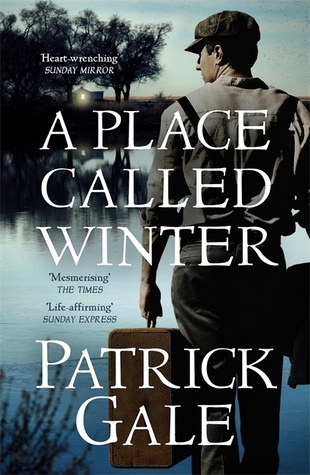
A Place Called Winter by Patrick Gale

A Place Called Winter

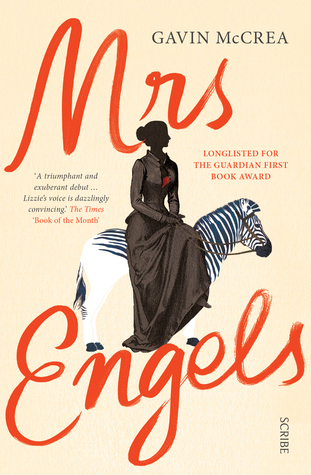
Mrs Engels by Gavin McCrea

Mrs Engels

End Games in Bordeaux by Allan Massie

End Games in Bordeaux

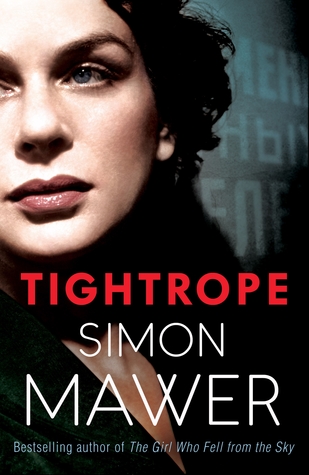
Tightrope by Simon Mawer

Tightrope

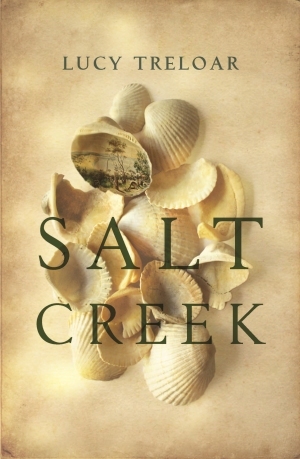
Salt Creek by Lucy Treloar

Salt Creek

Have you read any of these? If not, are there any you’re interested in reading?

So far I have only read one of the six – A Place Called Winter, which I enjoyed, although I haven’t posted my review yet. I know very little about any of the other books on the list, but I do know that Tightrope is a sequel and End Games in Bordeaux is the fourth in a quartet, which means, with my preference for reading a series in order, I will have some catching up to do before I can start either of those two!

I’m surprised – and slightly disappointed – that there’s no place on the shortlist for A God in Ruins by Kate Atkinson or Dictator by Robert Harris, both of which had been longlisted, but congratulations to the six authors above. The winner will be announced in June.