 When I saw this year’s longlist for the Walter Scott Prize, one of the books I was most interested in reading was The Fraud. I haven’t read any of Zadie Smith’s other books, but the subject and setting of this one sounded appealing to me.
At the heart of the novel is a real-life court case in which a man many believe to be Arthur Orton, a butcher’s son from London, claims to be Roger Tichborne, the missing heir to a baronetcy thought to have died in a shipwreck in 1854. The ‘Claimant’, as he becomes known, is immediately identified as Roger by his mother, but the rest of the Tichborne family insist that he’s an imposter. The dispute goes on for several years and captures the imagination of the public, with people travelling for miles to come and watch the case play out in court. Two of the people following the proceedings with interest are Sarah Ainsworth and Eliza Touchet, who are central characters in Smith’s novel.
Eliza Touchet is a cousin by marriage of the novelist William Harrison Ainsworth and has lived with him as his housekeeper – and occasional lover – since the 1830s, while also growing close to his first wife, Frances. By the time of the Tichborne trial several decades later, William has been widowed and married again, this time to Sarah, his former maid. Sarah is obsessed with the Tichbornes and convinced that the Claimant is telling the truth and it is she who persuades Eliza to accompany her to court. Here Eliza finds herself drawn not to the supposed Sir Roger, but to one of the key witnesses – Andrew Bogle, an elderly black man who was Roger’s uncle’s servant and is one of the few people to speak up in support of the Claimant.
The novel moves backwards and forwards in time between the 1830s and 1870s, with the story unfolding through a series of very short chapters, sometimes only a page or two long. I wasn’t really a fan of this structure, as it made it difficult to become fully immersed and keep track of what was happening. And there’s a lot happening! As well as the coverage of the Tichborne trial, there’s a long digression into the early life of Andrew Bogle as a slave on a plantation in Jamaica, discussions of the Victorian literary scene and domestic details of life in the Ainsworth household. There were too many separate storylines for one book and some of them didn’t really seem to lead anywhere or integrate with the others. Having said that, I still found things to enjoy and my overall feelings about the book are probably slightly more positive than negative!
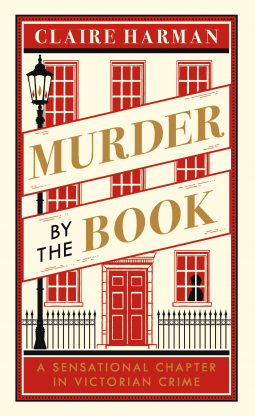
Most of the people who appear in The Fraud really existed, although not necessarily as Zadie Smith describes them. Eliza Touchet, for example, was a real person but died much earlier than she does in the novel and wouldn’t have been around by the time of the Tichborne case, so while there’s a lot to learn from this book it’s worth remembering that it’s not all factually correct. I did find it interesting to read about the life and work of William Harrison Ainsworth, whose books were hugely popular at the time – particularly Jack Sheppard, one of the ‘Newgate novels’ Claire Harman discusses in her true crime book, Murder by the Book – but have largely been forgotten today. Smith explores Ainsworth’s rivalry with Charles Dickens, as well as allegations that he stole some of the ideas for his novels from his illustrator, George Cruikshank. Is it just the Tichborne Claimant who is the ‘fraud’ of the title or could it also be Ainsworth himself?
Although there were parts of The Fraud that I enjoyed, I think there was really enough material here for two or three books and I ended up feeling overwhelmed. Maybe a different Zadie Smith book would have been a better starting point for me after all.

Book 15/50 for the Historical Fiction Reading Challenge 2024
 She Reads Novels