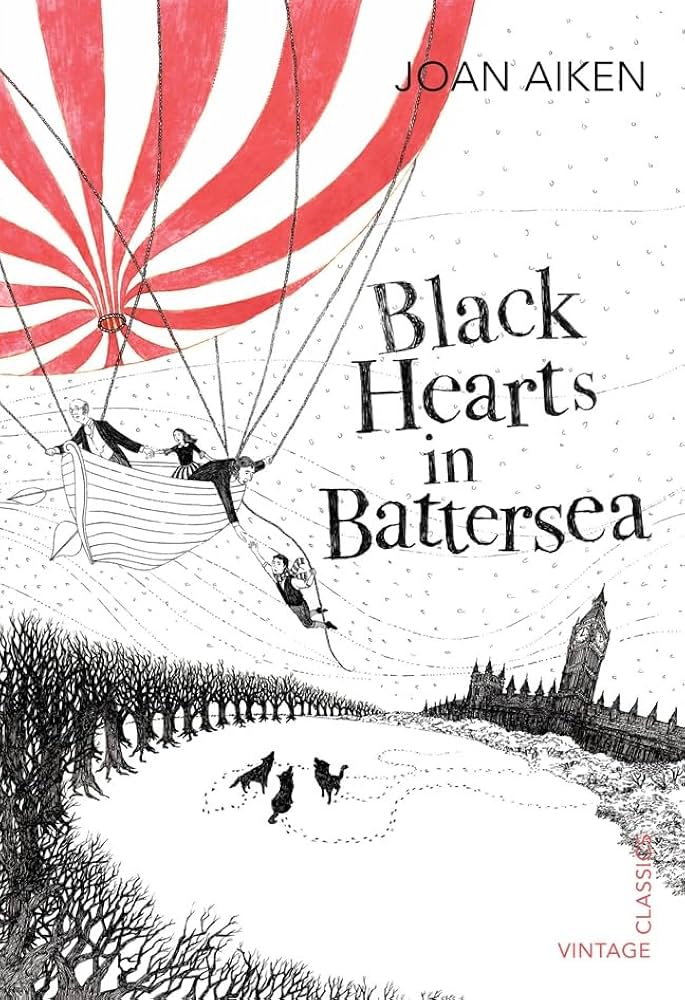
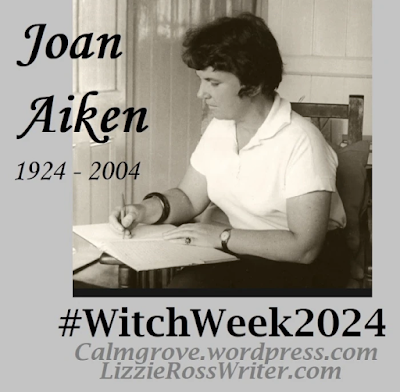
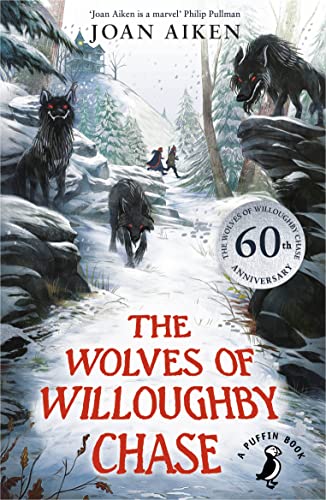
 This week Chris of Calmgrove and Lizzie Ross are hosting their annual Witch Week, an event inspired by the Diana Wynne Jones book, Witch Week, and this year they are celebrating the work of Joan Aiken. I’ve had the second book in Aiken’s Wolves Chronicles series on my TBR since reading the first, The Wolves of Willoughby Chase, last year and this seemed like a perfect opportunity to pick it up.
Black Hearts in Battersea was first published in 1964 and while I would recommend reading The Wolves of Willoughby Chase first, you don’t really need to as this book would also work as a standalone story. It begins with Simon (the boy we first met living in a cave in the woods near Willoughby Chase) searching the streets of London for his friend, Dr Field. Simon is hoping to study at the Art Academy in Chelsea and Dr Field has invited him to share his lodgings in Rose Alley. However, Rose Alley proves very difficult to find, and when Simon does eventually stumble upon the right address he discovers there’s no trace of the doctor – the house is inhabited by the rather unpleasant Mr and Mrs Twite and their daughter, Dido, ‘a shrewish looking little creature of perhaps eight or nine’.
What has happened to Dr Field and will Simon manage to track him down? This is only one small part of this imaginative, action-packed novel which, like the previous book, is obviously intended for a younger audience but is still an entertaining read for those of us who are older. There are missing children and mistaken identities, kidnappings, shipwrecks and balloon rides, and a plot to kill the King – the King in this case being James III as we are in an alternate history where the Stuarts are still on the throne in the early 19th century and are the target of Hanoverian conspiracies. The other significant difference between this fictional world and the real one is that a large number of wolves have crossed from Europe into Britain and although we didn’t see much of them in Willoughby Chase, they do get alarmingly close to Simon and his friends on several occasions in this book!
 Black Hearts in Battersea feels almost like a Charles Dickens novel for children, with the 19th century London setting and the array of larger-than-life characters – who include Dido and the Twite family, the eccentric Duke of Battersea, the excitable Dr Furneaux, who runs the academy Simon attends, and the book’s main villain, Eustace Buckle. I wish I had read this as a child, but as an adult I still found it a lot of fun and I’m sure I’ll read the next book in the series at some point, particularly as this one ends with Dido’s whereabouts unknown!

Book 49/50 for the Historical Fiction Reading Challenge 2024
 She Reads Novels