The Daughters of Mars by Thomas Keneally

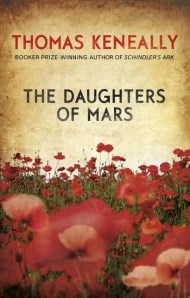
The Daughters of Mars Until I picked up The Daughters of Mars in the library I was only really aware of Thomas Keneally as the author of Schindler’s Ark (which I haven’t read), the book on which the film Schindler’s List was based. I was surprised to find that he has written more than forty other books (both fiction and non-fiction) and I’m pleased that I’ve finally read one. The Daughters of Mars is the story of two Australian sisters, Naomi and Sally Durance, who serve as nurses with the Australian Army Nursing Service during the First World War. I had a few problems with the book, mainly due to the unusual writing style, but it gave me lots of fascinating insights into the challenges facing wartime nurses.

When we first meet the Durance sisters, they are leading very different lives: Naomi has left home and has gone to work at a hospital in Sydney, while Sally has remained on the family dairy farm in the Macleay Valley and is caring for their sick mother. The two girls have little in common other than a love of nursing but an unwelcome bond is formed between them when their mother dies under tragic circumstances. Deciding to get away for a while from Australia and the memories it holds, they enlist on the hospital ship Archimedes. Sailing first to Egypt and then to the Dardanelles, the sisters are kept busy treating casualties of the Gallipoli Campaign and as the war progresses, they find themselves in separate hospitals on the Western Front where they face the horrors of trench warfare and gas attacks.

The work is demanding, dangerous and emotionally draining, but also very rewarding. As well as learning new skills, both girls find new friends among the other young nurses and meet the men they hope to spend the rest of their lives with. Of course, nothing is certain in times of war and there’s no guarantee that either they or the men they love will survive long enough for marriage to become a possibility. And the most important relationship of all – the one between Naomi and Sally – will remain tense and strained until the sisters can find a way to put the past behind them.

I can’t say that I particularly enjoyed reading The Daughters of Mars, but I did find it interesting to learn about the work of the Australian nurses, which is something I haven’t read about before. Most of what we hear about the Great War involves stories of men fighting on the front lines, but it’s important to remember the important contribution of these brave women who also played their part in helping the war effort. While I have read British author Vera Brittain’s first-hand account of life as a wartime nurse, Testament of Youth (which I highly recommend), this is the first time I’ve read about the same subject from an Australian perspective. It was fascinating, although if you’re squeamish I should warn you that Sally and Naomi are faced with all kinds of gruesome battle wounds, injuries and illnesses – and they are described in a lot of detail, along with the medical procedures and surgical operations that are used to treat them.

Now I need to explain what I didn’t like about this book and it’s something that’s really a matter of personal taste. In his author’s note, Keneally tells us that if the use of punctuation in the novel sometimes seems unusual it’s because he has taken inspiration from ‘the forgotten private journals of the Great War, written by men and women who frequently favoured dashes rather than commas’. The dashes didn’t bother me, but the lack of quotation marks did! We use punctuation to indicate speech for a reason and because it wasn’t there I found that the text didn’t flow properly, which made it unnecessarily difficult to read. I felt that I was viewing the events of the story from a distance and never fully engaged with either Durance sister. In fact, I found most of the characters quite bland and difficult to tell apart. There was none of the passion and emotion that I would have expected from a book like this.

I can’t comment on the accuracy of the book (as I said, wartime nursing is not a subject I know much about) but it does seem to have been very well researched and covers almost every aspect of the war you can think of from conscription and conscientious objectors to shell shock and the Spanish flu. Despite the problems I had with Keneally’s writing, I found the story interesting enough to keep reading until I reached the end. And what an intriguing ending it was! Unfortunately I can’t tell you what was so special about it, but it was completely unexpected and I’m still not sure whether I liked it or not – it’s the sort of ending that will leave you wondering why the author chose to end the book in that way and what message he wanted us to take from it.

If anyone has read any other Thomas Keneally books, let me know if you think I should try another one. Are his other books written in a more conventional style?
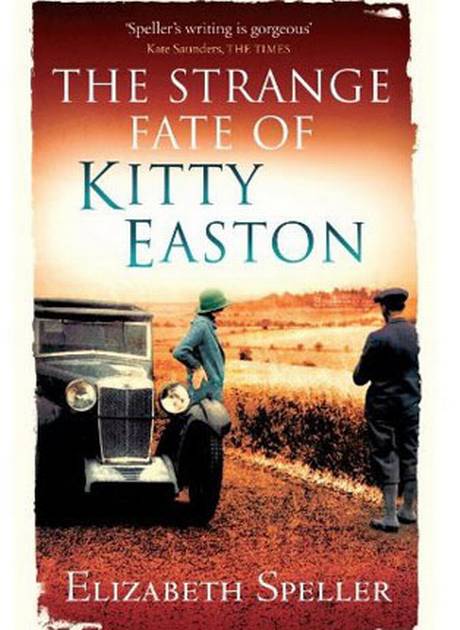
The Strange Fate of Kitty Easton by Elizabeth Speller

Kitty Easton I first met Laurence Bartram two years ago when I read The Return of Captain John Emmett, a mystery novel set in 1920s England. The Strange Fate of Kitty Easton is the sequel. In this book, Laurence’s friend William Bolitho, an architect, has asked Laurence to join him in the village of Easton Deadall. Easton Deadall lost many of its young men in the First World War and William has agreed to design a memorial window for the small church at Easton Hall. As an expert on churches and their renovations, Laurence’s help and advice is needed.

During the journey to Easton Deadall, Laurence learns about the disappearance of Digby and Lydia Easton’s five-year-old daughter, Kitty, several years earlier. Kitty went missing from her bed one night but her body was never found and her fate is still unknown. Since Kitty’s disappearance, the Easton family have continued to suffer; Digby was killed in the war, Lydia has become seriously ill and the relationship between Digby’s two surviving brothers, Julian and Patrick, is strained and tense.

After a slow start in which Elizabeth Speller introduces us to the characters, describes their tragic history and paints a portrait of a small English village trying to recover from the devastation of war, a mystery begins to develop. Another child disappears on a family trip to London to see the British Empire Exhibition and when a murder is committed in Easton Deadall, Laurence is sure both of these incidents are connected to the disappearance of Kitty Easton all those years ago.

I enjoyed this book almost as much as the previous one. The plot was well constructed with some interesting twists and lots of family secrets that are slowly revealed to the reader, but although I’ve referred to the book as a ‘mystery novel’ once or twice in this post, and in many ways it is a mystery novel, it’s also much more than that. The fate of Kitty Easton really only forms a small part of the story.

While reading both of the Laurence Bartram books, I have been impressed by the amazing sense of time and place the author creates. These books don’t just feel like pieces of historical fiction written in the modern day and set in the past – they almost feel as if they could really have been written in the 1920s. As with The Return of Captain John Emmett, my favourite thing about this book was the way it explores so many different aspects of the Great War and reminds us that although the war may have ended in 1918, its consequences were still being felt all over the world for many years afterwards.

There are lots of interesting characters to get to know too (I was particularly intrigued by the story of the youngest Easton brother, Patrick, resented by his family for abandoning them during the war after being excused from fighting on health grounds). The only thing that disappointed me slightly was that until we reach the final chapters of the book, Laurence seems to be on the outside watching and observing rather than taking an active role in the story. I do like Laurence but as the central character of a series I find him a bit bland and it would be nice to see his own personality coming through more strongly.

The way this book ended leaves plenty of scope for a third in the series and I hope there is going to be another one, though I notice that Elizabeth Speller has a new book due out in November with different characters, set during the Battle of the Somme.

A Farewell to Arms by Ernest Hemingway

I’ve never read anything by Ernest Hemingway before, partly because he’s one of those classic authors I’ve always felt intimidated by, but when I was offered a review copy of this beautiful new hardback edition of A Farewell to Arms (with a cover image replicating the original 1929 cover and lots of additional material) it seemed a perfect opportunity to give one of his books a try.

A Farewell to Arms is narrated by Frederic Henry, an American ambulance driver who is serving as a Lieutenant (or ‘Tenente’) in the Italian army during the Italian Campaign of World War I. Early in the story he meets a British nurse, Catherine Barkley. When Henry is injured by a mortar shell he has to spend some time in hospital and during this period his relationship with Catherine develops. What will happen when it’s time for him to return to the front? Part love story, part war story, this novel is based on Ernest Hemingway’s own experiences in the Italian ambulance corps where, like Henry, he was injured and fell in love with one of the nurses at the hospital. The fact that the story is semi-autobiographical gives it a realistic, unsentimental feel.

Hemingway’s writing style is very simple and direct, he gets straight to the point and avoids flowery language and long, detailed descriptions (though he still manages to choose just the right words to evoke the settings he is writing about). You might think that such plain, simple prose would be easy to read but for me, the opposite was true; it was distracting and it took me a long time to get used to it. Some passages are written in an almost stream-of-consciousness style, which is something I often struggle with, and there are also lots of very long sentences consisting of a string of short clauses all joined together by the word ‘and’. His writing is very distinctive and you’ll either like it or you won’t.

Hemingway rarely tells us anything that is not completely essential to the plot and so I finished the book feeling that I never really got to know either Henry or Catherine – neither of them are described in any great detail, we are only given very basic information about their backgrounds, and we aren’t even told the narrator’s name until several chapters into the book. Instead it is left to us to read between the lines, work things out for ourselves and use our imagination, and I think it’s intentional that we are told so little about the lives of Catherine and Henry before the war. However, the fact that the characters were not fully fleshed out meant that Catherine in particular didn’t feel like a real three-dimensional person; I liked her, but seen through Henry’s eyes she was very sweet and submissive, and it would have been nice to have had more insight into her personality.

Frederic Henry’s narrative style is detached and factual, almost as if things are happening at a distance and as if he sometimes feels very disconnected from the events going on around him. This works though, because it helps to portray the futility and harsh reality of war, and it reflects the way Henry feels; he is a person who has seen so many terrible things they no longer have such an emotional effect on him. The problem with the combination of terse writing style and detached narrative voice is that it made it hard for me to form any kind of emotional attachment to the characters, but the story was still quite poignant and moving in places, especially the final chapter.

Apparently Hemingway wrote the ending of the book thirty-nine times before he was satisfied with it. This new edition of the book includes an appendix with the text of all thirty-nine different endings. I read some of them, though not all (I think this type of supplementary material might be of more interest to someone who is studying Hemingway or considers themselves a fan of his work rather than to a first-time reader like myself) and although I did like some of the alternate endings, in my opinion the one he finally settled on was probably the right choice. I had tears in my eyes at the end and I’ve always thought that if an author can make me cry he or she must have done something right!

I’m not sure if I’ll want to read more Hemingway novels in the future but I’m glad I’ve had the chance to try this one and have now had some experience of an author I had heard so much about.

Thanks to William Heinemann for the review copy of A Farewell to Arms

Classics Challenge October Prompt: Chapter Musings

This year I have been taking part in a Classics Challenge hosted by Katherine of November’s Autumn. Every month Katherine posts a prompt to help us discuss the classic novel we are currently reading. The prompt for October is:

Chapter Musings

Jot down some notes about the chapter you’ve just read or one that struck you the most. It can be as simple as a few words you learned, some quotes, a summary, or your thoughts and impressions.

The classic I’m reading at the moment is A Farewell to Arms by Ernest Hemingway, the story of an American ambulance driver on the Italian front during World War I. This is the first Hemingway book I’ve read and I wasn’t sure what to expect, as he seems to be one of those authors people either love or hate. I’m only seven (very short) chapters into the book so it’s really too early to tell, but so far I’m finding it a lot more readable than I had thought it would be.

Chapter 1, which is the chapter I’ve chosen to focus on for the purposes of this post, is less than two pages long yet it has a lot of significance as it sets the scene and the tone of the novel. We learn almost nothing about our narrator in these two pages, not even his name, and although it’s obvious that he is involved with the army in some way, he seems very detached from what is going on around him.

“Troops went by the house and down the road and the dust they raised powdered the leaves of the trees. The trunks of the trees too were dusty and the leaves fell early that year and we saw the troops marching along the road and the dust rising and leaves, stirred by the breeze, falling and the soldiers marching and afterward the road bare and white except for the leaves.”

I’ve included the quote above because I think it’s a good example of Hemingway’s writing style. He uses simple, direct language and seems to like stringing together very long sentences using the word ‘and’! He also manages to paint vivid pictures of his settings while avoiding flowery descriptions. I’m not sure yet whether I like his writing or not, but I’ll see how I feel after reading a whole book written in this style.

Chapter 1 ends with the following two sentences:

“At the start of the winter came the permanent rain and with the rain came the cholera. But it was checked and in the end only seven thousand died of it in the army.”

The Last Summer by Judith Kinghorn

In the summer of 1914, Clarissa Granville is almost seventeen years old and lives at Deyning Park, her family’s country estate. For Clarissa, her brothers and their friends, it’s a summer of parties, tennis games, walking by the lake, playing croquet, and having a good time. It’s also the summer when Clarissa meets Tom Cuthbert, the housekeeper’s son who is home from university. The two soon fall in love but their romance is in trouble from the start, as they both know that Clarissa’s parents will never allow her to marry the son of a servant. Then suddenly everything changes: Britain is at war and Clarissa’s whole world is altered forever.

So many different aspects of World War I are covered over the course of the novel, though with the story being told from Clarissa’s perspective the focus is on the effects of the war on British society and on the people left at home while their loved ones are away fighting. After the war is over we see how the world has become a very different place. We meet men who are trying to cope with the injuries and disabilities they’ve been left with, and the women who are trying to understand and to help them, as well as coming to terms with the loss of all the husbands, brothers, sons and fathers who never came home.

One of the biggest changes to Clarissa’s life is that the class structure that was in place before the war has been broken down. Many rich families like the Granvilles are left struggling financially, unable to afford to keep big houses like Deyning and all the servants they used to have. People who had previously felt secure in their comfortable, privileged lifestyles find themselves desperately trying to find a place in a new and unfamiliar world. But through it all, Clarissa will always remember that final perfect summer of 1914.

Although the story is narrated by Clarissa, we are also given occasional fragments of letters written by unnamed characters. These letters give us a different perspective on things, including some glimpses of life in France during the war, but who is writing them? It’s all revealed eventually and by the time you reach the end of the novel I can almost guarantee you’ll want to go back and read the letters again – they’ll make more sense the second time round.

The Last Summer is a beautifully written novel and one that I really enjoyed. I liked the characters, the time period is one of my favourites to read about, and Clarissa is a lovely, engaging narrator. Clarissa and Tom’s relationship is an interesting one to follow because nothing ever goes smoothly for them and so many obstacles are thrown in the way of their love. Not only are they separated by the war, they also face a lot of other problems including their differences in class and background, Clarissa’s disapproving mother, and their relationships with other people. I desperately wanted them to find happiness together but it was difficult to see how that could ever happen, and I will leave you to discover for yourself whether the book has a happy ending or not.

The Last Summer is my second book for the War Through the Generations reading challenge.

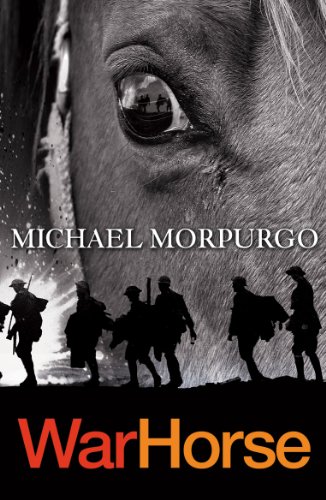
War Horse by Michael Morpurgo

Despite being an avid reader as a child, I somehow missed out on Michael Morpurgo. The only one of his books that I read was Twist of Gold, at an age when I was starting to consider myself ‘too old’ for the children’s section of the library, and all I can remember is that it was about two children from Ireland who go to America to find their father during the Irish potato famine, and that it made me cry. But last week I read my second Michael Morpurgo book, War Horse, because I had decided to go to see the new Steven Spielberg film and wanted to read the book first. And War Horse, like all the best children’s books, is a book that can be enjoyed by people of all ages.

War Horse has a strong anti-war message and shows us the horrors of World War I from a very unusual perspective. The story is narrated by Joey, a young thoroughbred horse, who is bought at auction by a poor farmer from Devon. The farmer soon regrets this decision but his son, Albert, forms a special bond with Joey and trains him to work on the farm, determined to prove to his father that he hasn’t wasted his money. However, the family are struggling to pay their rent and when war breaks out in 1914, Joey is sold to an army officer as a cavalry horse. The rest of the story follows Joey’s experiences in France, first with the British cavalry and then pulling ambulances and artillery for the German army, but will he survive the war and will he ever be reunited with Albert?

Being an animal lover, I’m ashamed to admit that I had never given much thought to the suffering of the horses involved in the First World War or what happened to them after the war was over. Seeing things through Joey’s eyes gave a fascinating new perspective and has helped me to learn a little bit about an aspect of the war I had never really considered. Many of the horses serving with Joey are killed in their very first battle (the thought of leading a cavalry charge into a line of machine guns is so horrible to think about) and more of them die of hunger, illness or exhaustion after being forced to pull guns that are too heavy for them up hills and through deep mud.

I couldn’t help comparing this book to Anna Sewell’s Black Beauty, another book narrated by a horse and one of my absolute favourites from my childhood. I should point out that Joey is not a talking horse and although he does interact with other horses, including his best friend Topthorn, he never actually ‘speaks’ to them in the way Black Beauty does. And yet I found Black Beauty a much more convincing horse narrator than Joey. I kept forgetting that Joey was supposed to be a horse as I thought he sounded very much like a human narrator would. But to be fair, this is a different type of book and Joey is telling his story in a different way.

War Horse has a reputation for being very sad and emotional, and yes, I did have tears in my eyes a few times. The story never becomes too sentimental, but poor Joey does go through a lot of traumatic experiences, and of course the war itself is always distressing to read about. However, because the book is so short (it can easily be read in an hour or two) many of the characters we meet are only around for a few chapters and for one reason or another don’t appear again. This made it difficult to really form a connection with them and so the story didn’t have quite the emotional impact on me that I had been expecting. I’m sure though that if I’d been reading this book at the age of nine or ten I would probably have cried from beginning to end!

One of the things I really loved about the book was that Joey, being a horse, doesn’t ‘take sides’; he doesn’t see the British as good and the Germans bad, for example. Instead he is able to tell the story from a neutral viewpoint, something that is very rare in a novel about war. Joey meets and makes friends with soldiers in both armies and also with a French civilian and his granddaughter. And although he witnesses a lot of cruelty and destruction, he also experiences kindness and compassion from people on both sides. There’s a wonderful moment when a British soldier and a German soldier leave their trenches to meet in no man’s land. I won’t tell you why they do this, but this scene and others like it are what made this book such a powerful read.

This is my first book for the War Through the Generations challenge, which has a World War I theme this year. For anyone else participating in the challenge, I would highly recommend War Horse as a quick but very moving read.

War Through the Generations: 2012 Challenge

I wasn’t planning to sign up for any reading challenges in 2012 but I couldn’t resist this one as it deals with a subject I was hoping to read more about next year anyway. War Through the Generations is a project created by Anna of Diary of an Eccentric and Serena of Savvy Verse and Wit who host reading challenges devoted to books about the impact of war. Previous challenges have included World War II, Vietnam and the US Civil War. The theme for 2012 will be World War I.

The challenge will run from January 1 2012 to December 31 2012.

Here are the rules, taken from the War Through the Generations blog:

This year you have options when reading your fiction, nonfiction, graphic novels, etc. with the WWI as the primary or secondary theme.

Books can take place before, during, or after the war, so long as the conflicts that led to the war or the war itself are important to the story. Books from other challenges count so long as they meet the above criteria.

Dip: Read 1-3 books in any genre with WWI as a primary or secondary theme.

Wade: Read 4-10 books in any genre with WWI as a primary or secondary theme.

Swim: Read 11 or more books in any genre with WWI as a primary or secondary theme.

Additionally, we’ve decided that since there are so many great movies out there about WWI, you can substitute or add a movie or two to your list this year and have it count toward your totals.

I’ve signed up for the Wade level as I’m sure I should be able to include at least four WWI-related books in next year’s reading, though I haven’t decided yet which books I would like to read. Anna and Serena have put together a recommended reading list (which you can find on the challenge blog) and I’ll probably read a few of those. I also received some WWI fiction recommendations in the comments on my recent review post of Blow on a Dead Man’s Embers (thanks to everyone who commented on that post, by the way!) so I have plenty of books to choose from.

If you’re interested in signing up for this challenge please see the War Through the Generations blog for more information – and let me know if you’re planning to participate too!