The Ghosts of Rome by Joseph O’Connor

The story of our Roman Escape Line has been characterised as a tale of courage. But it was always a story of friendship, first and last. The friends we knew and those we did not, some fleetingly encountered, others never at all. I am no sentimentalist, but I call it a love story.

This is the second book in Joseph O’Connor’s new trilogy inspired by the true story of the Rome Escape Line, a secret network that smuggled thousands of Jewish refugees and Allied soldiers out of Nazi-occupied Rome. The first novel, My Father’s House, introduces us to the work of the Escape Line who meet in the neutral Vatican under the guise of a choir to avoid the attentions of the Gestapo and focuses on one member in particular – Monsignor Hugh O’Flaherty, the Irish Catholic priest who is the leader of the network.

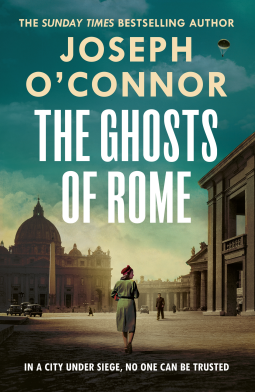
The Ghosts of Rome continues the story, beginning in February 1944, six months into the Nazi occupation. Although Hugh O’Flaherty is still part of the group, we see very little of him in this book as he steps into the background to let other characters’ stories be told. The main focus this time is the widowed Contessa Giovanna Landini, known as Jo, whose palazzo is commandeered by Gestapo officer Paul Hauptmann. Hitler isn’t satisfied with Hauptmann’s performance in Rome so far and he is under pressure to produce results. If he could obtain evidence of the Choir’s activities he’s sure that would help to improve his reputation with the Führer. Hauptmann hopes that the Contessa, whose house he is living in, will lead him to her fellow Escape Line members, but Jo is a resourceful woman and decides to take advantage of Hauptmann’s interest in her to try to protect herself and the Choir.

Another significant storyline revolves around a Polish airman who is shot down over Rome. Some members of the Escape Line want to help him, but others are more cautious. How can they be sure he is who he says he is? What if he betrays them? When it becomes obvious that he has life-threatening injuries and will die if not treated, they are faced with an important decision to make.

Of the two books, I think I preferred My Father’s House because it was more suspenseful, describing the countdown to a major mission on Christmas Eve, and because I found Hugh O’Flaherty such an interesting character. This is an excellent book as well, though, and I’m sure other readers will like it better than the first one. Although Jo Landini is at the forefront of the story, most of the characters we met in the previous book also reappear, including British Envoy Sir Francis D’Arcy Osborne, diplomat’s wife Delia Kiernan and escaped soldier Sam Derry. We also see a lot of Delia’s teenage daughter, Blon, who is angry when her mother leaves the Escape Line and insists on trying to take her place, which not everyone is happy about! These are all people who really existed, but O’Connor includes an author’s note to explain that the way they are portrayed in the book is just his interpretation and shouldn’t be relied on as fact.

If you haven’t read the previous novel, you’re probably wondering whether it’s necessary to have read it before starting this one. I would say it’s not really essential, but it would make it easier to follow what’s happening in this book. There are a lot of characters and O’Connor constantly switches between different perspectives throughout the novel, as well as inserting passages written in other styles – such as transcripts of (fictional) BBC interviews – which means you do need to pay attention otherwise it would be easy to lose track of things. As with My Father’s House, I was particularly interested in the insights we get into the mind of Paul Hauptmann – a very human villain, which just makes him all the more unsettling to read about. It’s the brave and tireless work of the Escape Line, however, that makes these novels so compelling; in this book, I loved the way they managed to hide hundreds of people inside a derelict old theatre right under the noses of the Gestapo.

This is a planned trilogy and although I can’t see any details of the third book yet, I know it will be something to look forward to!

Thanks to Harvill Secker for providing a copy of this book for review via NetGalley.
Midnight in Vienna by Jane Thynne

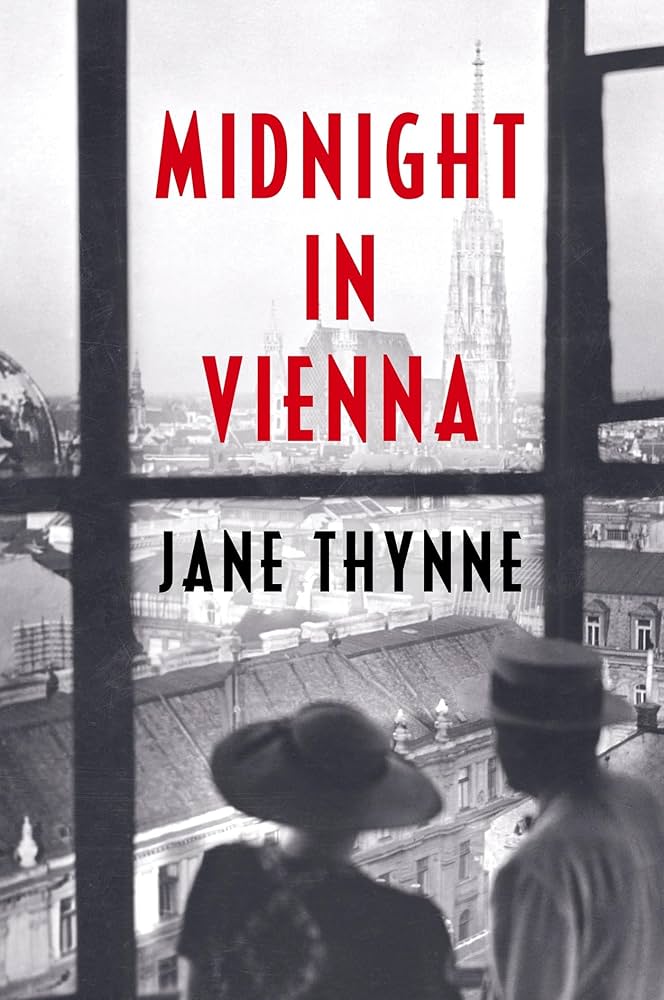
It’s 1938 and Stella Fry has just returned to London from Austria, where she has been working as a private tutor for a Jewish family in Vienna. With the worsening political situation in Europe, the family decided to leave for the safety of New York, and Stella has found herself back home with no job. Famous mystery writer Hubert Newman is advertising for someone to type up his new manuscript and Stella applies for the position. After meeting with Newman and being offered the job, she is shocked when she learns the next day that he has been found dead. Another shock follows twenty-four hours later when she receives the manuscript of his new book, Masquerade, and finds that he has dedicated it To Stella, spotter of mistakes.

Harry Fox is a former Special Branch detective who left the police force under a shadow, but is still carrying out unofficial intelligence work, spying on suspected communists. He has reason to believe that Hubert Newman’s death was not a natural one and when his path crosses with Stella’s and he discovers that she had lunch with the author the day before he died, the two team up to investigate.

I really enjoyed Midnight in Vienna; the only negative thing I can say about it is that Stella was a bit too trusting of strangers and too quick to put herself in dangerous situations without thinking of the consequences. The biggest example comes very early in the novel when, having only just met Harry Fox, she agrees to travel back to Vienna alone on the trail of someone possibly implicated in Hubert’s murder – at a time when everyone else is trying to get out of Austria. However, I can forgive this because the Vienna sections of the book are so well done, perfectly illustrating the mood in Austria during that period which followed the annexation by Nazi Germany.

With Hubert Newman being an author, there’s also a literary element to the novel. Newman (a fictional character, by the way) is a member of the Detection Club, a real-life society of prominent British mystery writers, and Harry Fox’s investigations lead to a meeting with one of the founding members, Dorothy L. Sayers. She only makes a brief cameo appearance but I thought the way Thynne portrayed her character was very convincing. As well as the literary world, we also get a glimpse of the theatrical world of the 1930s through Stella’s actress friend, Evelyn, so there’s a lot going on outside of the central mystery.

This is the first of Jane Thynne’s novels I’ve read. It seems that most of her previous books are similar wartime/espionage thrillers and having enjoyed this one so much I’m sure I’ll be reading more of them. I’m also wondering whether there will be a sequel to this book as I think there’s plenty of scope for some of these characters to return for a second adventure.

Thanks to Quercus for providing a copy of this book for review via NetGalley.
Book 44/50 for the Historical Fiction Reading Challenge 2024

Sufferance by Charles Palliser

Charles Palliser is probably best known as the author of The Quincunx, a long and twisty Dickensian novel which I read and loved years ago, but he has also written five more books including The Unburied and this new one, Sufferance.

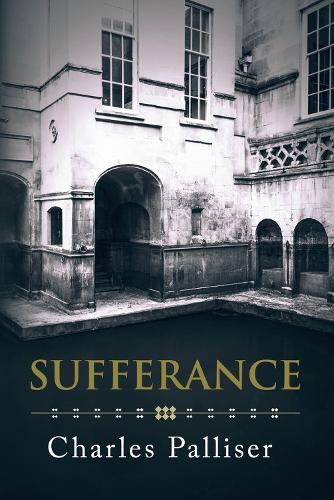
Sufferance is a strange novel as none of the characters are named – not even the narrator – and we are not told where or when the story is set. However, it’s obvious enough that we are reading about an occupied European city during the Second World War and at the start of the novel, the Enemy has divided the city into Western and Eastern Zones. We also know that our narrator is a respectable, law-abiding man who works for the government and has a wife and two teenage daughters.

When the narrator’s youngest daughter brings a friend home from school and explains that the girl’s parents have become trapped in the other zone, unable to return to their house, he thinks he is doing the right thing by inviting her to stay with them until her parents come back. He doesn’t expect it to be for long – and it seems that the girl’s parents are wealthy people, who might repay the family for their kindness when they return. Unfortunately, a series of government announcements makes it clear that the girl belongs to a ‘protected community’, who are gradually having their rights taken away and are being closely monitored by the Enemy occupiers.

As the weeks and months go by with no news of the girl’s parents, our narrator and his wife become increasingly anxious and afraid. What will happen if the authorities discover that they are sheltering one of the protected community? To make things worse, the girl has proved to be a selfish, manipulative person who seems ungrateful for the help she has been given and completely unaware of the danger all of them are facing. Tensions within the family start to build as they struggle to agree on how to deal with the situation, but things are only going to get worse the longer they wait.

This is an excellent novel; the vagueness surrounding names, dates and places, which I could have found irritating in another book, is used very effectively here to create a sinister, unsettling atmosphere. Although the historical parallels are very obvious, we are left with the impression that the things described could happen anywhere, at any time and to anybody. The sense of fear and desperation felt by the narrator comes across very strongly, as with the introduction of identity cards, rationing and new laws regarding the girl’s community, he becomes aware that he is committing a crime.

Sufferance is a fascinating exploration of how each decision we make can have serious consequences and how quickly things can spiral out of control. I loved it and really must find time to re-read The Quincunx!

Thanks to Guernica Editions for providing a copy of this book for review via NetGalley.

The Last Lifeboat by Hazel Gaynor

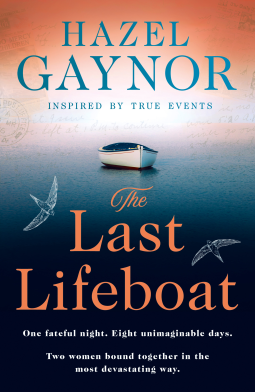
We hear a lot about children being evacuated from the cities to the British countryside during World War II, but not so much about those who were sent away to safety overseas. Hazel Gaynor’s new novel, The Last Lifeboat, explores this often overlooked aspect of the war, taking as its inspiration the real life tragedy of the SS City of Benares, a British evacuee ship which was torpedoed by a German U-boat in September 1940 with almost 100 children on board.

The novel follows the stories of two women: Alice King and Lily Nicholls. Lily, who lives in London, is a widow and the mother of two young children, Georgie and Arthur. All she wants is to keep her children safe, but as bombs begin to rain down on the city, Lily starts to fear for their lives and when she hears about a new government scheme to evacuate children to other countries, she has a difficult decision to make. Meanwhile, schoolteacher Alice King is looking for a way to ‘do her bit’ for the war effort and has signed up with CORB (the Children’s Overseas Reception Board) as a volunteer escort who will accompany a group of children on a ship sailing for Canada.

These two separate storylines connect when Lily entrusts Arthur and Georgie to Alice’s care as parents are not allowed to accompany their children overseas. The ship on which they set sail – the SS Carlisle – is part of a large convoy so everyone assumes they will be protected from the German U-boats, but once out in the Atlantic things go badly wrong. The ship is hit by a torpedo and begins to sink, leaving the passengers and crew to pile into the lifeboats. Some are rescued, others are thrown into the waves, but one lifeboat drifts out of range with Alice King on board. The days that follow will be a traumatic period for Alice, as she and the others in the boat find themselves lost at sea with little hope of rescue and limited supplies of food and water, but it will be equally traumatic for Lily as news of the disaster reaches London and she discovers that one of her children is missing.

I think this is the best of the three Hazel Gaynor books I’ve read so far (the others are The Lighthouse Keeper’s Daughter, about Grace Darling, and The Cottingley Secret, the story of the Cottingley fairies). I liked both Lily and Alice and found each of their stories very moving. Alice’s is more dramatic as the days go by and she and the other lifeboat passengers struggle to survive while adrift in the Atlantic, but I could also feel Lily’s heartbreak and anger as she waits for news of her lost child and makes the shocking discovery that the evacuee ships were not being escorted to Canada as promised but left to fend for themselves after passing a certain point. Knowing that the book is based on a true story and that real people did have to go through the things that Alice and Lily went through just makes it even more powerful.

Thanks to HarperCollins for providing a copy of this book for review via NetGalley.
This is book 22/50 read for the 2023 Historical Fiction Reading Challenge.

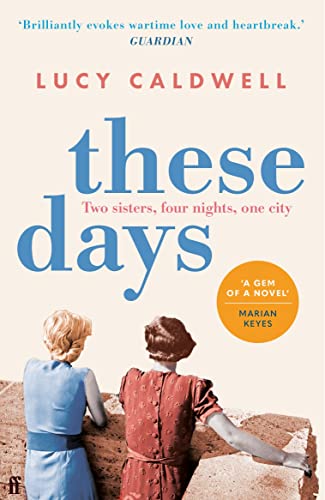
These Days by Lucy Caldwell – #ReadingIrelandMonth23

I hadn’t really considered reading These Days until I saw it had been longlisted for this year’s Walter Scott Prize and as Lucy Caldwell is an author from Belfast I thought it would be a good choice for Reading Ireland Month.

I have previously read very little about the fate of Northern Ireland during World War II – Sebastian Barry’s The Secret Scripture contains a very vivid description of the bombing of Belfast, but otherwise it has barely featured at all in any of my reading. In These Days, Lucy Caldwell gives this topic the attention it deserves, focusing on a series of attacks on Belfast that took place in April and May 1941 – the Dockside Raid, the Easter Raid and the Fire Raids. More than a thousand people were killed in these attacks and the Easter Raid alone caused the greatest loss of life in any night raid outside of London during the war.

This short but tragic period in Belfast’s history is explored through the stories of two sisters, Audrey and Emma Bell, the daughters of Dr Philip Bell and his wife, Florence. I have to confess, when I first started reading this book and saw that not only was it written in the present tense, the author had also chosen to omit speech marks, my heart sank. Not including speech marks seems to be an increasingly popular trend in fiction and maybe some readers like it, but it never works for me. I just find it distracting and annoying. However, I stuck with the book and settled into the story after a while.

Audrey is twenty-one and works as a junior clerk at the tax office. She is engaged to Richard, a doctor like her father, but is beginning to have doubts about the marriage. Becoming Richard’s wife will mean she’s expected to give up her job and conform to society’s expectations, and after witnessing the independence and freedom enjoyed by her unmarried friend, Miss Bates, Audrey is trying to decide what she really wants from life.

Emma is just eighteen and volunteers at a First Aid post, where she has met and fallen in love with Sylvia, a woman ten years older than herself. Emma has always been ‘awkward’ but when she’s with Sylvia she feels that she’s found her place in the world at last. Unfortunately, though, this is the 1940s so their relationship will have to remain a secret.

The Bell sisters, along with their mother Florence, are the main focus of the novel and although the writing style meant it took longer for me to connect with them than I would have liked, I did warm to all three of them and found each of their stories very moving as the bombings began and their lives were thrown into turmoil. We also get to know several other characters, from a range of backgrounds, who cross paths with the Bells at various points in the novel. I particularly loved six-year-old Maisie Gallagher, who becomes separated from her mother during a raid and has the good fortune to be discovered by Audrey.

The attacks were devastating for the people of Belfast, with so much destruction and loss of life, and as you can imagine the book is quite harrowing in places. How could it not be, particularly with images of Ukraine fresh in our minds? But it’s also a book I’m pleased to have read, especially as it has taught me so much about an aspect of the war I had known so little about.

This is book 10/50 read for the 2023 Historical Fiction Reading Challenge.

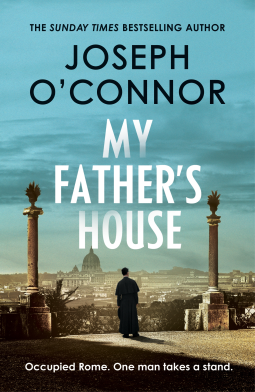
My Father’s House by Joseph O’Connor

Joseph O’Connor’s new novel My Father’s House, published in the UK today, is based on the true story of Hugh O’Flaherty, a Catholic priest who helped thousands of Jews and Allied prisoners of war to escape from Italy during World War II. This is the third book I’ve read by O’Connor (the others are Shadowplay, about the author Bram Stoker and the actors Henry Irving and Ellen Terry, and Ghost Light, which explores the relationship between the playwright John Millington Synge and the actress Molly Allgood) and I think it’s the best of the three.

The main part of the novel is set in 1943. Born and raised in Ireland, Monsignor Hugh O’Flaherty is serving in Vatican City during the war – a neutral territory within Nazi-occupied Rome. As an official Vatican visitor to Italy’s prisoner of war camps, Hugh has been trying to improve conditions for the prisoners, but his actions mark him out as an Allied sympathiser and his superiors prevent him from carrying out any more visits in case he makes the Vatican a Nazi target. However, Hugh won’t be stopped that easily and soon he has set up an Escape Line, successfully smuggling Jews and escaped prisoners out of Rome right under the eyes of the Nazis.

The biggest escape mission yet – the ‘Rendimento’ – has been arranged for Christmas Eve, 1943. In the hope that the Gestapo will be less vigilant on this particular night, Hugh and his group of courageous volunteers have put elaborate plans in place to move a large number of people out of the city under the cover of darkness. As we count down the days and hours leading up to the mission, we also get to know each member of Hugh’s team and how they came to be involved in the Escape Line.

The group use the cover of meeting for ‘choir practice’ and this is where they discuss their plans and receive their instructions – carefully coded, of course, as the Nazis have eyes and ears everywhere. One Nazi in particular is getting too close for comfort; he is Obersturmbannführer Paul Hauptmann, who already has his eye on Hugh due to the camp visits and is starting to close in on the Choir and the Rendimento. But although Hauptmann is our villain, O’Connor gives him a surprising amount of depth, describing his home life and his relationship with his wife and children. This reminder that Nazi officers were often also family men leading normal domestic lives just makes Hauptmann’s behaviour feel even more chilling and shocking.

As the clock ticks down on Christmas Eve, the suspense increases as we are kept wondering whether the mission will succeed. However, the chapters describing the build-up to the Rendimento are interspersed with other chapters in which each member of the Choir introduces themselves and their background and tells us how they met Hugh and joined his group. I wasn’t very keen on this structure as I felt that it broke the flow of the story and took away some of the tension, but it was still interesting to hear their different voices (some of which I found more convincingly written than others). They included Sir D’Arcy Osborne, the British envoy to the Holy See, and his butler John May, diplomat’s wife Delia Kiernan, and escaped soldier Sam Derry – all of whom were real people.

I had never read anything about Hugh O’Flaherty and his work until now, so I’m pleased to have had the chance to learn something new. I see he was the subject of a 1983 film, The Scarlet and the Black, starring Gregory Peck, which I’ve never come across either. Although My Father’s House is a complete novel in itself, it’s apparently the first in an Escape Line trilogy – I’ll be looking out for the next one and will be interested to see if it’s going to focus on a different member of the group this time.

Thanks to Harvill Secker for providing a copy of this book for review via NetGalley.
This is book 3/50 read for the 2023 Historical Fiction Reading Challenge.

Recent reads: The Drums of War; Ashes in the Snow; Ithaca

I’m falling behind with my reviews again, so here are my thoughts on three recent reads – all very different books.

The Drums of War is the third in Michael Ward’s Thomas Tallant mystery series, continuing the story begun in Rags of Time and The Wrecking Storm. It also works as a standalone novel, so don’t worry if you haven’t read the first two in the series.

This third novel opens in London in 1642. With the divisions between King and Parliament becoming greater, England is rapidly heading towards Civil War and spice merchant Thomas Tallant and his friends are being forced to choose sides. Soon Tom finds himself assisting the Puritan leader John Pym in his search for a consignment of stolen gunpowder being smuggled out of London by Royalist forces. Meanwhile, Elizabeth Seymour is carrying out investigations of her own as she sets out on the trail of a mysterious jewel thief. Although Tom and Elizabeth are separated for most of the book and I missed their interactions, I did find both storylines interesting, particularly Elizabeth’s as she suffers a personal trauma and begins to fall back into some of her former bad habits as a result!

As with the first two books in the series, real historical figures appear alongside the fictional ones and as well as John Pym and the commander of the London Trained Bands, Philip Skippon, we also meet the scientist and physician William Harvey and are reacquainted with the intriguing Lucy, Countess of Carlisle. In the second half of the novel, the focus moves away from the mystery-solving for a while to concentrate on the events of the Civil War, particularly the battles of Edgehill and Brentford. This aspect of the story was of less interest to me, but that’s just down to personal taste (I’m not really a fan of battle scenes) and I still found this an enjoyable novel overall.

~

Ashes in the Snow is Oriana Ramunno’s debut crime novel, written in Italian and translated into English by Katherine Gregor. The book is set in Poland during World War II and begins with a young boy, Gioele Errera, finding the body of an SS officer in the snow. The man appears to have choked on an apple, but it soon seems that there is more to his death than that and German criminologist Hugo Fischer is summoned to investigate. Finding the murderer will not be easy, particularly as the dead man’s wife seems reluctant to cooperate, but Gioele agrees to help – if, in return, Hugo will help him to find his family from whom he has become separated.

This is a beautifully written and translated novel but not an easy one to read because, as we quickly discover, Gioele has a twin brother and the two of them have become subjects of the infamous Josef Mengele’s experiments. Of course this sort of thing is not supposed to be pleasant to read about, but I wasn’t really prepared for the level of detail Ramunno goes into in describing this and other parts of Gioele and Hugo’s stories. Hugo is an interesting and likeable character, a man suffering from a degenerative illness who must keep his condition a secret to avoid becoming a target of the Nazi regime himself. He’s an unusual detective and the crime element of the novel works well, but this book wasn’t for me.

~

Ithaca by Claire North is the latest of many Greek mythology retellings based on the events surrounding the Trojan War. What makes this one different from the others I’ve read is that it focuses on the story of Penelope as seen through the eyes of the goddess Hera.

It has been seventeen years since Penelope’s husband Odysseus, King of Ithaca, sailed away to war with Troy and although the war is now over, she and her son, Telemachus, are still awaiting his return. Penelope is kept busy running the kingdom with the help of her women, while also trying to defend the island of Ithaca from raiders and fend off the attentions of the crowd of suitors who have descended upon her home in the hope of marrying her if Odysseus never comes back. Meanwhile, Penelope’s cousin Clytemnestra has fled to Ithaca looking for somewhere to hide after murdering her husband, Agamemnon.

Ithaca is quite a long novel and moves at a slow pace; it’s the first in a planned trilogy and Claire North takes her time setting the scene and introducing the characters. I liked the choice of Hera as narrator; she provides a different perspective on a well-known story and I enjoyed her observations of the mortal world and her interactions with other goddesses such as Athena. However, it does mean we are kept at a distance from Penelope herself, which could explain why I found it difficult to form any kind of connection with her – or with any of the other characters. For that reason, I don’t think I’ll be continuing with the second book. Claire North writes beautifully but I needed more than that to sustain my interest and I preferred Margaret Atwood’s The Penelopiad – I didn’t love that one either, but it was a shorter and more memorable read.