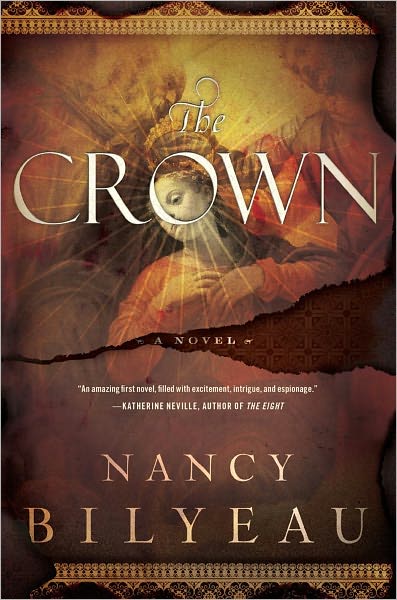
The Crown by Nancy Bilyeau

Nancy Bilyeau’s first novel, The Crown, is a historical mystery set during the Tudor period, beginning just before the death of Henry VIII’s third wife Jane Seymour. The story revolves around the search for a legendary crown which is said to possess special powers. Our heroine and narrator is Joanna Stafford, niece of the third Duke of Buckingham, and a novice nun at Dartford Priory.

When Sister Joanna escapes from the priory and travels to London to witness the execution of her cousin for treason she is unfortunate enough to be captured and taken to the Tower of London. Here she is visited by Stephen Gardiner, the Bishop of Winchester, who sends her back to Dartford on a mission to find the mysterious Athelstan crown which he believes could be hidden somewhere within the priory. As Joanna learns more about the crown she starts to wonder why the Bishop wants it so desperately, but with her beloved father also imprisoned in the Tower and threatened with torture, it seems she has no choice but to obey Gardiner’s orders…

This was one of the most entertaining Tudor novels I’ve read and a real page turner from beginning to end. When the search for the Athelstan crown began I was concerned it might become too much like The Da Vinci Code but that didn’t happen. The mystery of the hidden relic was an important part of the story, but not at the expense of the character development or the wonderful sense of time and place that the author creates.

I really liked Joanna Stafford. One of the things that makes her such an interesting narrator is the constant conflict between her commitment to the vows she’s required to take as a nun and her desire to do whatever is necessary to help her father, even if it means breaking some of these vows. The fact that she sometimes struggles with her conscience and doesn’t always make the right decisions helped me to believe in her as a character.

As a member of one of England’s most powerful families, Joanna meets a lot of famous names from the period including Katherine of Aragon, Anne and George Boleyn, Catherine Howard and Princess Mary, but unlike a lot of Tudor novels this one doesn’t really focus on the court. Instead we are given lots of details on life in a priory and what it was like to be a nun during the Dissolution of the Monasteries, when on the orders of Henry VIII the religious houses of England, Wales and Ireland were closed down, destroyed or sold. This is not something I knew much about before starting this book and I had no idea what happened to the monks and nuns after the monasteries were dissolved, so it was good to learn more about the process and what it involved. But although there’s plenty of history here, it really serves as a background to the plot and never slows the story down at all, so I think this book could be enjoyed by people who like thrillers and mystery novels as well as by fans of historical fiction.

The Crown is a complete story in itself, but the way it ended left me feeling that there were more adventures ahead for Joanna. Apparently Nancy Bilyeau has written a sequel and I’m already looking forward to reading it and entering Joanna’s world again.

I received a copy of The Crown through Netgalley

Queens’ Play by Dorothy Dunnett

Queens’ Play is the second of Dorothy Dunnett’s Lymond Chronicles. A few weeks ago I talked about how much I loved the first in the series, The Game of Kings, and I’m pleased to report that I enjoyed this one too, though maybe not quite as much. I never know how to write about the second book in a series as it’s very difficult to discuss it without giving away some of the things that happened in the previous book. So, while I’ll do my best to avoid spoiling too much, if you haven’t already read The Game of Kings then you might prefer to do so before reading any more of my posts on the series.

Queens’ Play starts two years after the end of The Game of Kings. Mary of Guise, the mother of seven-year-old Mary Queen of Scots, has asked Francis Crawford of Lymond to join them in France and help to protect the little Queen from a plot against her life. However, Lymond’s face and name are too well known in France and so he goes undercover, disguised as one of a party of Irishmen who are visiting the French court.

As with The Game of Kings, I was very impressed by the complexity of the characters and the intricate twists and turns of the plot, but Queens’ Play also gives us a vivid depiction of the court of Henri II with its splendour, extravagance and corruption. There are plenty of exciting, dramatic scenes and set pieces too – Lymond’s adventures in France include a hunt involving a cheetah and a wolfhound, a moonlit race across the rooftops of Blois, a wrestling match (I would never have thought I could find wrestling so thrilling to read about!), stampeding elephants and more than one attempted poisoning.

In the time between finishing Queens’ Play and posting this review I have been reading the third book, The Disorderly Knights (halfway through at the moment and loving it), and I’m already starting to see the importance of Queens’ Play in the context of the series. We are introduced to some new recurring characters and Lymond also learns a lot of important lessons in France – as well as battling some personal demons, he starts to understand what it means to be a leader, to care for the men under your control and to take responsibility for what happens to them.

As I mentioned at the start of this post, I thought Queens’ Play was a great book but I didn’t love it as much as I loved The Game of Kings. I think part of the problem was that at the end of The Game of Kings I had felt we were finally starting to see the real Francis Crawford, yet almost from the very beginning of Queens’ Play he was pretending to be somebody else – and although I was still enjoying the story, I wanted Lymond, not his alter ego. Still, as far as I can tell, a lot of people consider this to be the weakest book in the series, so if that’s true I’m really looking forward to the others!

The Classics Club

Jillian of A Room of One’s Own has come up with a great idea to unite people who like to read and blog about classic literature. It’s called The Classics Club and the idea is to make a list of fifty or more classics you want to read within the next five years. Modern classics and re-reads can also be included.

My goal is to finish by 10 March 2017 and after a lot of thought I’ve chosen the sixty books listed below – though I suspect I’ll probably end up making some changes!

My list:

Emma by Jane Austen (re-read)
Pride and Prejudice by Jane Austen (re-read)
Aurora Floyd by Mary Elizabeth Braddon
Shirley by Charlotte Bronte
Jane Eyre by Charlotte Bronte (re-read)
Wuthering Heights by Emily Bronte (re-read)
Death Comes for the Archbishop by Willa Cather
Hide and Seek by Wilkie Collins
David Copperfield by Charles Dickens
Oliver Twist by Charles Dickens
A Tale of Two Cities by Charles Dickens
Crime and Punishment by Fyodor Dostoevsky
The Three Musketeers by Alexandre Dumas (re-read)
Twenty Years After by Alexandre Dumas
The Vicomte de Bragelonne by Alexandre Dumas
Rebecca by Daphne du Maurier (re-read)
Frenchman’s Creek by Daphne du Maurier
The Mill on the Floss by George Eliot
The Good Soldier by Ford Madox Ford
The French Lieutenant’s Woman by John Fowles
Wives and Daughters by Elizabeth Gaskell
Mary Barton by Elizabeth Gaskell
Sylvia’s Lovers by Elizabeth Gaskell
Cold Comfort Farm by Stella Gibbons
The Odd Women by George Gissing
The Return of the Native by Thomas Hardy
The Mayor of Casterbridge by Thomas Hardy
Far from the Madding Crowd by Thomas Hardy
The House of the Seven Gables by Nathaniel Hawthorne
The Hunchback of Notre Dame by Victor Hugo
The Remains of the Day by Kazuo Ishiguro
Washington Square by Henry James
The Haunting of Hill House by Shirley Jackson
The Princess of Cleves by Madame de Lafayette
The House by the Churchyard by Joseph Sheridan Le Fanu
The Painted Veil by W Somerset Maugham
Beloved by Toni Morrison
The Scarlet Pimpernel by Baroness Orczy
Excellent Women by Barbara Pym
The Romance of the Forest by Ann Radcliffe
Wide Sargasso Sea by Jean Rhys
Scaramouche by Rafael Sabatini
The Heart of Midlothian by Sir Walter Scott
Frankenstein by Mary Shelley
Of Mice and Men by John Steinbeck
The Grapes of Wrath by John Steinbeck
The Strange Case of Dr Jekyll and Mr Hyde by Robert Louis Stevenson
Vanity Fair by William Makepeace Thackeray
The Small House at Allington by Anthony Trollope
The Last Chronicle of Barset by Anthony Trollope
Can You Forgive Her? by Anthony Trollope
Kristin Lavransdatter by Sigrid Undset
Around the World in Eighty Days by Jules Verne
The Time Machine by H.G. Wells
The Importance of Being Earnest by Oscar Wilde
The Age of Innocence by Edith Wharton
The House of Mirth by Edith Wharton
The Heir of Redclyffe by Charlotte M Yonge
La Bête Humaine by Emile Zola
Germinal by Emile Zola

Who else is joining the Classics Club?
Which books on my list do you think I should read first?

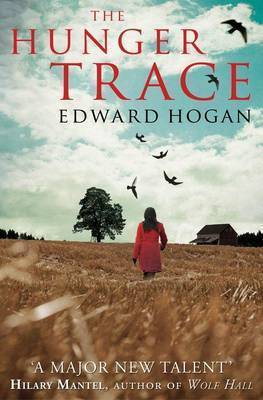
The Hunger Trace by Edward Hogan

The Hunger Trace is set in a small English village where three very different people are all trying to cope with the death of wildlife park owner David Bryant. There’s David’s wife, Maggie; his son from a previous marriage, Christopher; and their neighbour, Louisa. Throughout the pages of this novel we see how each character comes to terms with losing David and how they gradually learn to get along with each other.

Although there are some moments of drama when a fourth character, Adam, is introduced and when Derbyshire is hit by the worst floods in years, The Hunger Trace is definitely more of a character-driven novel but despite it being quite slow paced I was never bored. All of the main characters are interesting, three-dimensional people each with his or her own set of problems and secrets.

As David’s widow, Maggie is left to run his business which has been having financial difficulties, to take responsibility for the welfare of his animals, and to look after her stepson Christopher. Feeling lonely and isolated, she tries to befriend Louisa, a falconer who lives alone with her birds of prey. However, Louisa has never liked Maggie, who she sees as just one of a long series of women who have passed in and out of David’s life over the years. Louisa herself was connected to David by a terrible secret the two had shared since they were teenagers and now that he’s gone she has little interest in anything apart from her hawks.

Christopher, although it wasn’t actually stated in the book, seems to have a form of autism or something similar which he is taking medication for. He sometimes has trouble relating to other people (including his stepmother) and is often misunderstood; he’s also obsessed with Robin Hood and spends most of his time at college trying to prove that his hero was a real historical figure! Christopher has a habit of saying ‘erm’ before almost every word, which did get a bit irritating to read, but it’s this kind of attention to detail that made all of Edward Hogan’s characters feel so realistic and believable. I initially found Maggie the easiest to like of the three, but eventually I began to warm to the others, particularly Louisa, who I thought was a wonderful character and so much more complex than just the unfriendly, hostile woman she appeared to be at the beginning of the book.

If you’re wondering what the title of the book means, it’s a term relating to falconry and its significance is explained during the course of the story. I loved the whole falconry aspect of the book, which is surprising as it’s not something I would have expected to find so fascinating to read about. This was quite an unusual novel and maybe not one that I would normally have chosen to read, but I’m glad I did as I was very impressed by The Hunger Trace and by the quality of Edward Hogan’s writing!

Thanks to Simon & Schuster for providing a review copy of this book

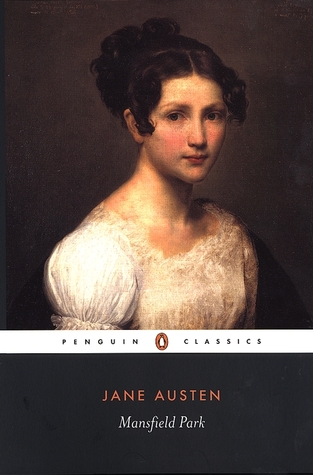
Mansfield Park by Jane Austen (re-read)

Mansfield Park is the story of Fanny Price who, at the age of ten, goes to live with her uncle and aunt, Sir Thomas and Lady Bertram. For Fanny, who has spent her early years in Portsmouth as part of a large working-class family, the Bertrams’ estate, Mansfield Park, is like a different world. While Fanny is grateful for the new opportunities she’s been given, she is made to feel inferior and insignificant by her cousins, Maria and Julia, and another aunt, Mrs Norris (surely one of the nastiest characters in any Austen novel). Only her cousin Edmund offers her any real kindness and friendship, and as the years go by Fanny begins to fall in love with him, although she doesn’t admit it and everyone, including Edmund, is unaware of it. And when Mary Crawford and her brother Henry come to stay at the nearby parsonage, Fanny’s peaceful life at Mansfield Park is suddenly thrown into turmoil.

I first attempted to read Mansfield Park when I was fifteen, immediately after finishing Pride and Prejudice, which I had loved. Compared to Pride and Prejudice I found this one very dry and boring, and gave up after a couple of chapters. Returning to it ten years later, I managed to read it through to the end but still didn’t like it very much. My recent re-read has been an entirely different experience and this time I found that I really enjoyed it!

Fanny Price is a shy, quiet person and seems to be Jane Austen’s least popular heroine, but I’ve never really had a problem with her personality. Not everyone can be witty and lively after all, and since arriving at Mansfield Park Fanny has constantly been reminded that she will never be equal to her cousins and treated almost like a servant, so it’s not surprising that she doesn’t have the confidence of some of the other Austen heroines. I would agree that she’s maybe not the most interesting of characters to read about, and I suppose I can understand why other readers might prefer Mary Crawford, but I personally don’t mind Fanny. I do think she has an inner strength and complexity which wasn’t really apparent to me the first time I read the book but which I could appreciate more this time – one of the reasons I think re-reads are so worthwhile!

I still didn’t like Edmund though, apart from at the beginning when he seems to be the only person who genuinely cares about Fanny. Without him her early days at Mansfield Park would have been a lot more miserable, but later in the book, particularly after the arrival of the Crawfords, he starts to really annoy me.

While Mansfield Park is never going to be my favourite Jane Austen novel, I’m glad I’ve given it another chance. If you’re new to Austen, though, I don’t think I would recommend starting with this one.

February Reading Summary

I read nine books in February which is less than I normally read, but it’s been such a busy month for me I’m quite happy with the number of books I’ve read!

My favourite book read in February was The Game of Kings. I’m so glad I’ve finally discovered Dorothy Dunnett!

Mariana by Susanna Kearsley was another great book I read last month – I loved the setting, the characters and the atmosphere. I also enjoyed The Virgin Queen’s Daughter, a very entertaining historical fiction novel by Ella March Chase.

Also in February, I read both of S.J. Bolton’s two Lacey Flint crime novels, Now You See Me and Dead Scared. I enjoyed them both but I thought the first one was slightly better.

I read Macbeth as part of my plan to read one of Shakespeare’s plays every month of 2012. It’s not the first time I’ve read it, but I think I appreciated it more this time round and will be posting my thoughts on it soon. And I also read Great Expectations by Charles Dickens. It took me nearly the whole month to read it, but it was worth the time and effort!

Two more books I read in February were A Small Circus by Hans Fallada and The Land of Decoration by Grace McCleen, and I found them both disappointing in different ways. I thought A Small Circus was confusing and I didn’t like any of the characters, and although I could definitely see the appeal of The Land of Decoration, it just wasn’t for me.

How was February for you?