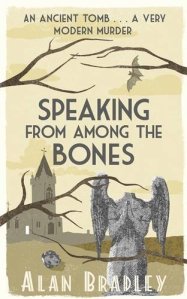
Speaking from Among the Bones by Alan Bradley

Speaking from Among the Bones Speaking from Among the Bones is Alan Bradley’s fifth novel featuring the wonderful Flavia de Luce. Flavia’s intelligence, her passion for chemistry (particularly poisons), and the fact that she is still only eleven years old makes her one of the most fascinating and unusual detectives in fiction. The series is set in the 1950s in the small English village of Bishop’s Lacey where Flavia lives with her father and two sisters, Ophelia and Daphne, at the family’s ancestral home, Buckshaw. In each book Flavia investigates a murder mystery, torments (and is tormented by) her sisters, conducts experiments in her chemical laboratory, and desperately searches for information about the mother she has never known.

Flavia’s fifth adventure begins as she excitedly awaits the removal of St Tancred’s bones from his tomb in the church crypt to commemorate the five-hundredth anniversary of his death. She is hoping to be the first person in Bishop’s Lacey to see the saint’s bones, but what she eventually discovers when the tomb is opened is something quite different: the body of the church organist, Mr Collicutt, who had disappeared a few weeks earlier. Who murdered him and what was their motive? And why is he wearing a gas mask? These are the questions Flavia must try to answer – hopefully before Inspector Hewitt solves the mystery first! Accompanied by her trusty old bicycle, Gladys, Flavia begins to search for clues, but as well as making some discoveries regarding the organist’s death and the possible identity of his killer, she also starts to uncover some of the secrets of her mother’s past.

I’ve enjoyed every book in the series so far, but I think this one might be my favourite (either this or the Christmas-themed one, I am Half-Sick of Shadows). As I’ve mentioned in my previous Flavia reviews, I love this series because I love Flavia, the supporting characters, and the setting of Bishop’s Lacey. The actual murder mysteries are not usually very complex or difficult to solve and are not the attraction of these books for me, but I thought this was an improvement on the previous ones. It was tightly plotted with lots of clues, suspects and red herrings and during her investigations Flavia finds herself crawling through underground tunnels, entering secret locked rooms, encountering a wooden effigy that appears to have started weeping blood in the church, and discovering that she is not the only amateur detective in Bishop’s Lacey!

While Flavia is still just eleven and has only aged slightly over the course of the series, I do think we’ve seen her grow up and mature since the first book. There has been development with some of the other characters too, particularly Ophelia (Feely) and Daphne (Daffy), Flavia’s two sisters, who are not quite as horrible to Flavia in this book as they have been previously – or maybe Flavia is just learning to deal with them better. Also in this book, their father is continuing to have financial difficulties, forcing him to consider putting Buckshaw up for sale and this shared trauma helps to bring the whole family together for once. By ‘family’ I’m including the servants, Mrs Mullet and Dogger. Dogger is a great character and a true friend to Flavia – I like him more and more with every book!

If you’re new to this series, beginning with book five probably wouldn’t be a problem, but if possible I would recommend starting with the first one, The Sweetness at the Bottom of the Pie, and enjoying all of Flavia’s adventures in order. This is the only one to finish with a cliffhanger ending, which means I now can’t wait to read the sixth book, The Dead in Their Vaulted Arches!
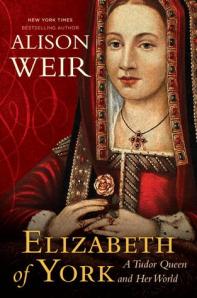
Elizabeth of York: A Tudor Queen and Her World by Alison Weir

Elizabeth of York Elizabeth of York’s story is a fascinating one. As the eldest daughter of King Edward IV and Elizabeth Woodville (the alternate spelling of Wydeville is used in this book), Elizabeth lived during one of the most turbulent periods of English history, the Wars of the Roses. She was the sister of the two young princes who it is believed may have been murdered in the Tower of London, she married the first Tudor king, Henry VII, who defeated her uncle Richard III at the Battle of Bosworth, and she was also mother to another king, Henry VIII. Despite all of this, Elizabeth is not usually given as much attention as other figures of the period. This new biography, Elizabeth of York: A Tudor Queen and Her World, explores Elizabeth’s life and her historical significance.

Alison Weir is an author of both historical fiction and non-fiction. Although I have read one of her novels, Innocent Traitor, this is the first of her biographies I’ve read and I was very impressed. The book is written in a style that I found engaging and easy to read but it’s also a very thorough, long and detailed account of Elizabeth’s life. An incredible amount of research must have gone into the writing of this book and it contains an absolute wealth of information…I read it on my Kindle and was constantly bookmarking interesting facts and passages.

As well as taking us, in chronological order, through Elizabeth’s entire life from her birth to her death and its aftermath, we are also given lots of details on the social history of the period and what life was like for people who lived during that time: what they ate and drank, the clothes they wore, and the way children were treated and expected to behave. There are lists of dishes served at banquets, descriptions of the duties of ladies-in-waiting and even an appendix giving a full description of every known portrait of Elizabeth. Sometimes there’s too much detail (I didn’t really feel the need to know the names of the nurses of each of Elizabeth’s younger sisters, for example, and the lists of her privy purse expenses and all the gifts she bought and received were a bit overwhelming) but it all helps to build up a full and vivid picture of Elizabeth’s world.

Less is known about Elizabeth than other Tudor figures, so there are times when the focus of the book switches to important political events, conspiracies and other things taking place in the wider world, rather than on Elizabeth herself. The only drawback here is that with so few primary sources remaining to give us information on Elizabeth’s life, Weir can only assume what Elizabeth may have thought or how she felt. This is not really the author’s fault but it would have been interesting to know Elizabeth’s true thoughts on some of these issues, such as the pretenders to the throne who appeared during Henry VII’s reign claiming to be Elizabeth’s lost brothers.

Much as I enjoyed this book, I did have a problem with the portrayal of Richard III. I was aware before I started reading that Alison Weir has a negative opinion of Richard and believes him guilty of all the crimes that he has been accused of, but I still thought there was too much speculation and personal bias in her discussions of him. In the absence of any real evidence, we are told that ‘maybe Elizabeth hated him’ and ‘maybe Cecily was furious with him’, for example. These are not really historical facts, are they? The opinions of other authors and historians who take a more sympathetic view of Richard are dismissed as ‘wishful theories evolved by revisionists’. Anyway, this is just a small criticism of what is otherwise a wonderfully entertaining and informative book. For anyone interested in learning more about this important but often forgotten Tudor queen and her world, I would highly recommend reading Elizabeth of York. It really is a fascinating period of history and Elizabeth deserves to be remembered!

I received a copy of this book for review via Netgalley.

After the Sunday Papers #13

newspaper-clip-art-4 This week has been devoted to reading my Classics Club Spin book, A Tale of Two Cities by Charles Dickens. I admit that when my spin book was revealed on Monday, I didn’t feel very enthusiastic about it but decided to start reading it immediately as I anticipated it taking a long time to read. It actually took less than a week and I finished it last night! I’ve had mixed experiences with Dickens in the past…there have been some of his books that I’ve enjoyed and some that I struggled with, but this is the first one I’ve really loved and have found truly ‘unputdownable’. Definitely one of my books of the year!

Also this week I’ve been reading Quicksilver, the first in Neal Stephenson’s Baroque Cycle, a historical fiction series set in the 17th and 18th centuries. I’ve been curious about this book for a while but have been putting off reading it because of the length. I’m enjoying it so far (despite not having understood half of what I’ve read) but at nearly 1,000 pages it’s going to be a long and challenging read and I’m hoping it will be worth it in the end.

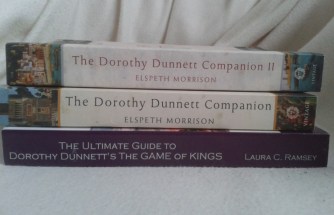
Dunnett Companions With no other reading commitments at the moment (until Wilkie in Winter in the middle of December), I’ve taken this opportunity to start a re-read of the Lymond Chronicles by Dorothy Dunnett. It’s been nearly two years since I first read The Game of Kings and I know that if it wasn’t for blogging throwing other tempting books in my way I would probably have re-read the whole series as soon as I finished it. There was so much I missed on my first read and this time I’m armed with the Dorothy Dunnett Companions I and II and the new book by Laura Caine Ramsey, The Ultimate Guide to The Game of Kings, which will hopefully enhance the experience. I probably won’t post ‘reviews’ again as I did review them all in 2012, but I’ll give you an update in another Sunday post in a few week’s time.

Also this week, I’ve signed up for a reading challenge for next year: the What’s In A Name? challenge. This has been hosted for the last few years by Beth Fish Reads but has now been taken over by Charlie at The Worm Hole. I don’t sign up for many challenges anymore but I wanted to support Charlie’s first year of hosting and this is a fun challenge which I’ve taken part in once before. The idea is to read five books, each with a title that fits one of the five categories below:

challenge_2014whatsinaname A reference to time
A position of royalty
A number written in letters
A forename or names
A type or element of weather

I already have one or two books in mind for each category, but the challenge doesn’t start until January so I have plenty of time to think about what to read. To find out more please visit The Worm Hole!

Something else I’m looking forward to is starting my first course with FutureLearn tomorrow. The course is called England in the time of King Richard III, which, as followers of my blog will know, is a period of history I’m particularly interested in. FutureLearn is a new UK-based company offering free online courses from a selection of universities; this will be the first of their courses I’ve tried, so I’m not sure what to expect. I’ll let you know how I get on!

Rediscovering Elric of Melniboné

This is a tale of tragedy, this tale of Melniboné, the Dragon Isle. This is a tale of monstrous emotions and high ambitions. This is a tale of sorceries and treacheries and worthy ideals, of agonies and fearful pleasures, of bitter love and sweet hatred. This is the tale of Elric of Melniboné. Much of it Elric himself was to remember only in his nightmares.

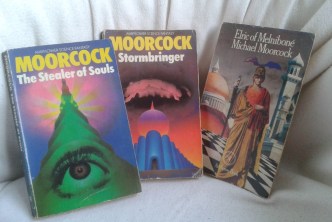
Elric I have my father to thank for introducing me, as a teenager, to Elric of Melniboné. I would almost certainly never have thought about reading these books otherwise and probably wouldn’t have even heard of them, as I’ve never had a lot of interest in reading fantasy, especially of the ‘swords and sorcery’ type. Michael Moorcock’s Elric books (and to a lesser extent, his Corum series) are among the small number of fantasy novels I’ve actually read and enjoyed. I hadn’t thought about them for years but when I was tidying my shelves one day a couple of weeks ago I came across my old copies (or rather, my dad’s old copies, some of which I’ve pictured above) and decided it might be fun to re-read them.

I only meant to re-read the first one but couldn’t resist reading most of the series again. This is not such an impressive feat as it sounds – there are six core books in the series, if you don’t count the sequels published later, and most of them are less than 200 pages long. Because they are so short (and some of them are collections of short stories rather than full-length novels) the pace is quick – there’s always something happening and the plot moves forward with every page. There seems to be some debate over the correct reading order for the series but as a general guide, Elric of Melniboné should be read first, followed by The Sailor on the Seas of Fate, The Weird of the White Wolf, The Sleeping Sorceress, The Bane of the Black Sword and finally, Stormbringer. Some of the individual stories in these books are also collected together in different orders in other volumes such as The Stealer of Souls.

The series follows the story of Elric of Melniboné, the four hundred and twenty-eighth Emperor to sit upon the Ruby Throne. Melniboné, or the Dragon Isle, is an island nation of sorcerers who once ruled the world but have seen their power gradually diminished as their human neighbours from the Young Kingdoms grow stronger and the gods of Law and Chaos battle for supremacy over the world. Some of the Melniboneans, including Elric’s ambitious cousin Yrykoon, believe Elric is not strong enough to rule as Emperor and to restore Melniboné to its former glory – because Elric is an albino, born with a deficiency of the blood which forces him to rely on magic potions to maintain his strength and prevent him from becoming weak and lethargic. When Yrykoon attempts to kill him and take both the throne and Elric’s lover, Cymoril, for himself, Elric enters into a bargain with Arioch, the Lord of Chaos. Arioch will come to his assistance whenever possible, but in return Elric will be bound to the enchanted black sword, Stormbringer, which steals the souls of its victims and often seems to have a mind of its own.

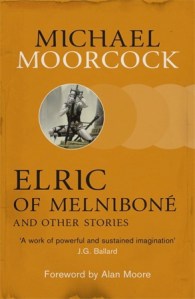
Elric of Melnibone and Other Stories Although Elric is the character around whom the whole series revolves, his actions are not always very heroic and in fact, he is much more of an anti-hero than a hero. He is not evil, but not ‘good’ either and it is often unclear whether he is fighting on the side of Chaos or of Law. I think the reason I found Elric so appealing when I was younger was because, not having read a lot of adult fiction at that time, I’d rarely encountered a fictional character with so much darkness and complexity and who didn’t always do what the reader wanted or expected him to do. From what I’ve read, Moorcock was trying to create an antithesis to other more traditional fantasy heroes such as Conan the Barbarian and so, rather than succeeding through physical power, Elric is brooding and melancholy, relying on sorcery rather than strength. Other characters come and go throughout the series – enemies such as Jagreen Lern, the Theocrat of Pan Tang, and the sorcerer, Theleb K’aarna, and friends including Rackhir the Red Archer, Dyvim Slorm, the Dragon Master, and my favourite, Moonglum of Elwher.

I’ll admit that you probably couldn’t describe these books as great literature, but they are not badly written and are very entertaining – and for such short books, the level of world building is very impressive. Moorcock’s style is not overly descriptive, but he manages to paint vivid images in only a few words: gold-plated battle-barges negotiating the rocks and grottos of the Melnibonean sea-maze; the underwater kingdom of Straasha and his water elementals; the dragons slumbering in their caves below the Dreaming City of Imrryr. Reading these books again, as an adult, I found that the quality of the writing seems to vary quite a lot from book to book, possibly because their chronological order is not the same as the order in which they were written and published. Elric of Melniboné and Stormbringer, in my opinion deserve to be considered classics of the fantasy genre, but some of the stories in between are much less satisfying.

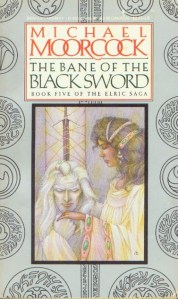
The Bane of the Black Sword The Elric series is part of a much larger cycle of books known as The Eternal Champion, the idea being that Elric is just one incarnation of a hero who has existed in many different times and on different planes. There are other books and series featuring other incarnations of the Eternal Champion and at times their stories cross or intersect – for example, in the second Elric book, The Sailor on the Seas of Fate, Elric briefly meets three of his other selves, Corum, Erekose and Hawkmoon. I have read a few of the books featuring these other characters, but the only ones I enjoyed were the Corum books – a more straightforward fantasy series than Elric, but with a less interesting protagonist.

If I’ve convinced anyone to give Michael Moorcock a try (and I know these are entirely different from the books I usually write about on this blog) Elric of Melniboné, in my opinion, is the best place to start!

The Herbalist by Niamh Boyce

The Herbalist by Niamh Boyce The Herbalist is set in a small unnamed town in Ireland in the 1930s and tells the story of four women whose lives are affected by the arrival of a stranger – a travelling herbalist who appears from nowhere one day and begins selling his lotions and tonics in the marketplace. Nobody knows anything about the herbalist or his history and initially they are suspicious, but slowly he starts to cast a spell over the women of the town, including sixteen-year-old Emily. Lonely and vulnerable after losing her mother, Emily convinces herself that she and the herbalist are in love, but when she makes a shocking discovery she finds herself with a difficult decision to make.

Another of our main characters is Carmel, who runs a small shop in the town. Having suffered a recent tragedy, Carmel is depressed and insecure and she feels that the only person who understands is the herbalist. Her brother, a teacher, suggests she should find an assistant to help her in the shop and recommends a former student, Sarah, for the job – but how will Carmel react to Sarah’s arrival?

We also follow Sarah, who is having problems of her own. The night before she leaves home to start her new job, her beloved aunt Mai throws a party for her and something that happens at that party will have a big impact on Sarah’s future. Finally, there’s Aggie, a ‘woman of ill repute’ and a fortune-teller. Aggie is an outsider, but through watching and listening to what is going on around her she seems to know more about the herbalist than anyone else in the town. The stories of Emily, Carmel and Sarah are told in alternating chapters, with occasional contributions from Aggie, and gradually the truth about the herbalist is revealed.

I was very impressed with this book and found it hard to believe that it’s Niamh Boyce’s first novel! The writing is beautiful, the setting and the characters feel completely believable and the story itself is fascinating – inspired by true events, according to the author’s note at the front of the book.

Something I found particularly intriguing was the fact that two of the women’s stories are told in the third person (Carmel’s and Sarah’s) and two in the first person (Emily’s and – in question and answer format – Aggie’s). The only problem with this was that while Emily and Aggie both have distinctive narrative voices of their own, the other two feel very similar. One way in which the use of multiple viewpoints works very well in this novel, though, is that it allows us an opportunity to see things from the perspectives of women from different social backgrounds whose lives are confined by the class system of their small, narrow-minded community.

The herbalist himself remains a mysterious, shadowy figure and although he is at the centre of everything that is happening throughout the novel, the focus is always on the female characters and the various ordeals they are going through. I should mention that this is not a happy story and really delves deeply into the darker side of life in 1930s Ireland. I would like to be able to tell you more about some of the issues the book raises, but then I would be giving away the herbalist’s secrets!

I loved The Herbalist and hope there will be more books from Niamh Boyce in the future.

I received a copy of this book from Penguin Ireland for review.

It was the best of times, it was the worst of times…

The Classics Club

The result of the Classics Club Spin has been announced today! The Spin number is…

Number 10!

This means I have to read the book at number 10 on the list I posted last week.

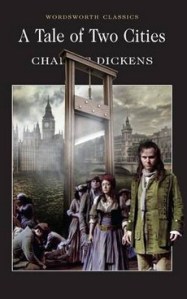
A Tale of Two Cities

A Tale of Two Cities by Charles Dickens

This is not one of the books I was hoping would be chosen, but I’m happy enough with this result as it’s been a while since I last read anything by Dickens.

Have you read it? What did you think of it?

If you participated too, I hope the Spin has selected something you’ll love!

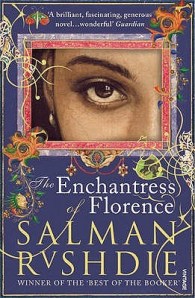
The Enchantress of Florence by Salman Rushdie

A More Diverse Universe I’ve never read anything by Salman Rushdie before and have always felt slightly intimidated by him, but when I was looking for something to read for the A More Diverse Universe blog tour (hosted by Aarti of Booklust) I came across this title on Aarti’s list of suggestions and thought it sounded intriguing.

The Enchantress of Florence is a very imaginative mixture of history and fantasy, with a plot that is almost impossible to describe – though I’ll do my best! The story begins in 16th century India when a mysterious yellow-haired stranger calling himself the Mogor dell’Amore arrives by bullock-cart at the court of the Emperor Akbar in Sikri. Claiming to be related to Akbar, he begins to tell the Emperor the story of the lost Mughal princess, Qara Köz, or Lady Black Eyes, who is captured and after a series of adventures ends up in Florence where she falls in love with the soldier Antonino Argalia. Qara Köz is the enchantress of the title, believed to have powers of sorcery, as well as great beauty, and the entire city of Florence becomes captivated by her presence. In a separate, but connected, storyline we also learn of Argalia’s childhood, growing up in Florence with his friends Ago Vespucci and Il Machia (Niccolò Machiavelli). Will Akbar believe the stories he is told and what effect will they have on the Emperor and his court?

The Enchantress of Florence There are lots of themes and ideas in The Enchantress of Florence and I’m sure I didn’t fully understand all of them. However, one of the main themes, to me, seems to be the power and the magic of storytelling. The novel is made up of lots of separate interlocking stories, not just the three main ones I’ve mentioned above. One character will begin to tell a story and then a character within that story will begin to tell another story and so on, until you almost begin to forget who the original storyteller was and who the listeners are. These stories may or may not be true and all of them are rich in magical realism – we meet the emperor’s favourite wife Jodha, for example, who is imaginary but also seems to have a life of her own; a slave girl who has become a ‘Memory Palace’ (or a device to aid the memory); and an artist hiding inside one of his own paintings.

The fantasy elements and the abundance of princesses, emperors, giants and witches gives the book a fairy tale feel (I was reminded of The Arabian Nights) and there are beautiful, lavish descriptions of both Mughal India and Renaissance Florence, two settings which are very different but also surprisingly alike. I did enjoy this book, especially the sections set in India, and I thought it was beautifully written, but I did find it very complicated and difficult to follow and I think I would probably have needed to read it twice to be able to really appreciate it. People often talk about books having multiple layers, and that’s usually a good thing, but this one has so many layers I was a bit overwhelmed!

I won’t be immediately rushing out to buy the rest of Salman Rushdie’s books but I’m glad I chose to read this one – it was a challenge, but worth the effort, I think.