My favourite books of 2014

I always enjoy putting together my list of favourites at the end of the year and reminding myself of all the great books I’ve read during the previous twelve months. Of course there have also been some that weren’t so great, but I prefer not to focus on those and concentrate instead on the books that I loved or that I found special or memorable in some way.

And here they are, my favourite books of 2014, in the order I read them. I apologise in advance for the length of this list!

Little Man What Now

Little Man, What Now? by Hans Fallada

From my review: “I’ll be very surprised if this one is not on my list in December! I loved every minute of this funny and charming yet dark and poignant German novel from 1932.”
Falls the Shadow

Falls the Shadow by Sharon Penman

From my review: “Long, complex and emotionally intense…this is the story of Simon de Montfort, 6th Earl of Leicester, the French nobleman who ruled England for more than a year. I didn’t realise quite how much Penman had made me love Simon until I reached the end of his story.”

Can You Forgive Her

Can You Forgive Her? by Anthony Trollope

From my review: “As usual with a Trollope novel, I was completely drawn into the lives of the characters and enjoyed all 690 pages! This is definitely one of my favourite Trollope novels so far and I’m now looking forward to reading the rest of the Pallisers.”
The Convictions of John Delahunt

The Convictions of John Delahunt by Andrew Hughes

From my review: “A wonderfully moody and sinister historical crime novel…I loved this dark and atmospheric book and was completely gripped by John Delahunt’s fascinating story.”

The Moon in the Water

The Moon in the Water by Pamela Belle

From my review:The Moon in the Water follows the story of Thomazine Heron and her family, and is set during the English Civil War. I loved it from the first page to the last…it was a joy to discover this one and to know that I have many more Pamela Belle books still to look forward to.”
Insurrection - Robyn Young

Insurrection by Robyn Young

From my review:Insurrection is exactly the sort of historical fiction I love…I found it to be a fascinating, atmospheric tale of kings and knights, witches and soldiers, treachery, murder and war.”

The Mayor of Casterbridge - Thomas Hardy

The Mayor of Casterbridge by Thomas Hardy

From my review: “I loved this book as much as I expected to and enjoyed being back in Hardy’s Wessex. The plot is a great one, with lots of twists and turns and plenty of drama; I was never bored once.”
The Second Duchess

The Second Duchess by Elizabeth Loupas

From my review: “A fascinating historical novel set in Renaissance Italy and narrated by Barbara of Austria. Although the back cover of this book promised “conspiracy, intrigue and murder”, I was still surprised that the story had such a strong mystery element.”

The Devil in the Marshalsea

The Devil in the Marshalsea by Antonia Hodgson

From my review: “I found The Devil in the Marshalsea very entertaining and fun to read. As a mystery novel, it kept me guessing right until the end..as a work of historical fiction it’s equally impressive.”
Harristown Sisters

The True and Splendid History of the Harristown Sisters by Michelle Lovric

From my review: “I loved this book, the first I’ve read by Michelle Lovric, and I would agree that it really is a ‘splendid history’. One of my favourite books of the year so far.”
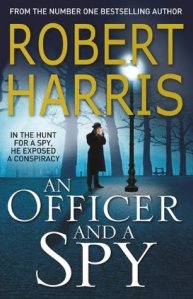
An Officer and a Spy

An Officer and a Spy by Robert Harris

From my review: “This is the first book I’ve read by Robert Harris…and guess what? I loved it! An Officer and a Spy really is a fascinating novel and took me through a range of emotions from shock to frustration to absolute outrage!”

Assassin's Apprentice

Assassin’s Apprentice by Robin Hobb

From my review: “Yet again I have book blogging to thank for helping me to discover an author who I think is going to become a favourite…Assassin’s Apprentice, the first book of The Farseer Trilogy seemed the logical place to start, and what a great book it turned out to be!”
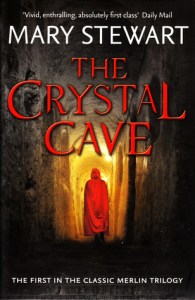
The Crystal Cave

The Crystal Cave by Mary Stewart

From my review:The Crystal Cave introduces us to Myrddin Emrys, better known as Merlin…A great book and now one of my absolute favourites by Mary Stewart.”
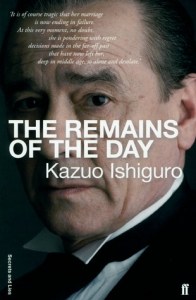
The Remains of the Day

The Remains of the Day by Kazuo Ishiguro

From my review: “It’s a gentle, slow-paced novel but completely compelling and, despite the lack of drama, I found it difficult to put down…The ending is perfect too.”
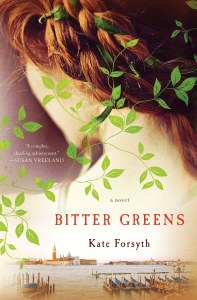
Bitter Greens

Bitter Greens by Kate Forsyth

From my review: “There’s just so much packed into this novel: the scandals and intrigues of the 17th century French court, a version of Rapunzel much darker and more compelling than the one I remember from my childhood, a vivid depiction of Renaissance Italy, magic and witchcraft, religious persecution, stories within stories, and much more.”
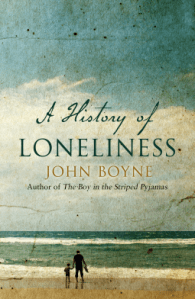
A History of Loneliness

A History of Loneliness by John Boyne

From my review: “A very insightful and thought-provoking novel and my favourite John Boyne book so far. I loved this book and am so glad I still have so many of his earlier novels left to explore!”

Zemindar

Zemindar by Valerie Fitzgerald

From my review: “What a great book! A wonderful setting, a beautiful romance, characters I really cared about, an exciting story and lots of fascinating historical detail…definitely one of my favourite books of the year.”
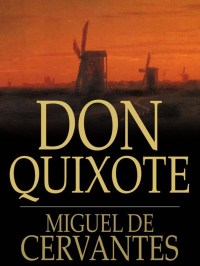
Don Quixote

Don Quixote by Miguel de Cervantes

From my review: ” It’s fun and imaginative and entertaining – and I loved it… I’m going to miss Don Quixote and Sancho after spending so much time with them this year!”

***

What about you? What are the best books you’ve read this year? Have you read any of the books on my list?
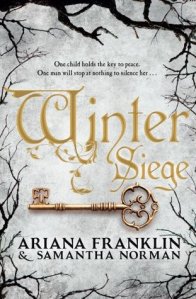
Winter Siege by Ariana Franklin and Samantha Norman

Winter Siege I hope everyone had a good Christmas! I have an appropriately wintry book to tell you about today before I get round to posting my end-of-year list, probably on Tuesday or Wednesday.

Ariana Franklin (a pen name of Diana Norman) was the author of the Adelia Aguilar mystery series, of which I’ve still only read the first, Mistress of the Art of Death. As you may know, she sadly died in 2011, leaving Winter Siege unfinished, but the book has now been completed by her daughter, Samantha Norman. Winter Siege is not part of the Adelia Aguilar series, but a standalone novel set during the period of English history known as the Anarchy.

It’s 1141 and the country is in the grip of a civil war as King Stephen and his cousin, the Empress Matilda, are battling for the English crown. In the Cambridgeshire Fens, an eleven-year-old girl is captured by a passing band of soldiers, raped and left for dead. The child’s way of dealing with her trauma is to wipe the whole incident entirely from her mind, so that by the time she is discovered by Gwil, a kind-hearted mercenary, she can’t remember her name, where she lives or anything about her past. Gwil renames her Penda and allows her to accompany him, disguised as a boy, while he builds a new career for himself as a travelling entertainer.

Moving from place to place, the two of them impress the crowds with their displays of archery while Gwil continues to search for any signs of Penda’s attackers – his only clues being a scrap of parchment carrying a message in Greek and the knowledge that the soldiers were accompanied by a monk smelling strongly of an unusual herb. Eventually, fate will take Gwil and Penda to Kenniford Castle, home of Maud, a sixteen-year-old ward of King Stephen.

To ensure the safety of her castle and her people, Maud has been forced to marry a man much older than herself – the brutal, drunken Sir John of Tewing, a supporter of Stephen’s. But when Sir John is struck down by illness and the Empress Matilda arrives at Kenniford asking for protection, Maud must decide whether to switch sides. This is a decision that will place the castle at the heart of the civil war and all of Gwil’s and Penda’s archery skills will be needed to help defend it.

I really enjoyed this entertaining medieval novel. As with Mistress of the Art of Death, I found it very atmospheric and evocative of the time period. The mystery aspect of the novel following Gwil’s search for the evil monk was slightly disappointing, but there was a second mystery that I found more interesting – and this involved the identity of an old abbot who is dictating the story of the Anarchy to his scribe, several decades into the future (in 1180). These sections provide a sort of framework for the rest of the novel and help to explain some of the historical background, while also making us curious as to who the abbot really is and how he knows so much about what happened at Kenniford Castle.

The book is called Winter Siege and so far I haven’t mentioned either winter or sieges, but I can assure you that both do play a part in the story. Snow is falling throughout much of the novel and one particularly snowy night forms the backdrop for one of the book’s most memorable scenes, when Gwil and Penda meet Matilda for the first time. Later in the book, our characters find themselves trapped in a besieged castle, which is when the various threads of the story are brought together.

Bearing in mind that this novel was written by both Ariana Franklin and Samantha Norman, it all seemed like the work of one author to me; it never felt uneven or disjointed. I don’t know how much Franklin had managed to complete before her death or if she would have taken the story in a different direction…but I think she would be pleased if she could read the finished version.

Nora Bonesteel’s Christmas Past by Sharyn McCrumb

Nora Bonesteels Christmas Past Sharyn McCrumb is a name I remember from about fifteen years ago when I read two of the books in her Ballad mystery series, She Walks These Hills and The Ballad of Frankie Silver, both set in the Appalachian Mountains and steeped in history and folklore. I know that I enjoyed those two books, but the details have faded from my mind now, so when I saw this new novella available on NetGalley I couldn’t wait to read it and reacquaint myself with Sharyn McCrumb’s work. I hadn’t even realised that she had been continuing to write Ballad novels and that there are ten in the series now!

Nora Bonesteel’s Christmas Past is described as a novella, but it’s really two separate short stories which alternate with each other throughout the book. In the first, we join Sheriff Spencer Arrowood and his deputy Joe LeDonne who have been given the unwelcome task of arresting a man on Christmas Eve. Arriving at the alleged criminal’s home – a remote mountain farm – they encounter problems they had never expected and end up spending Christmas Eve in a very unusual way.

Meanwhile, Nora Bonesteel, an elderly woman with the gift of ‘the Sight’, is being visited by her new neighbour, Shirley Haverty, who has moved into the house Nora still thinks of as ‘the old Honeycutt place’. The Havertys have bought the house as a summer home but have decided to stay on this year and experience a traditional Christmas in the mountains. After a few unexplained mishaps Shirley has become convinced that the house is haunted…and that the ghost doesn’t seem to approve of their bright pink artificial Christmas tree! Can Nora use her psychic abilities and her memories of the house in days gone by to lay the ghost to rest?

This is a short book and could easily be read in one or two sittings (though I didn’t manage that due to choosing a busy time to start reading it). It’s not necessary to have read any of Sharyn McCrumb’s previous books, though I did remember the characters of the Sheriff, Joe LeDonne and Nora Bonesteel.

The two stories in the book are, as I’ve said, completely independent of each other and never come together at all, not even at the end. I found this a bit disappointing and I think it might have been better if they had been presented as two entirely separate stories rather than giving us a few pages of one followed by a few of the other. What the stories do have in common is the Appalachian setting and the fact that they both deal with the subjects of Christmas traditions and the mountain lifestyle.

Nora Bonesteel’s Christmas Past doesn’t have the depth or complexity of the longer novels in the Ballad series and unlike the full-length books there’s no mystery to be solved, but it’s an enjoyable, undemanding read and perfect for the Christmas season.

And now I’m going to end this post on an appropriate note by wishing everyone a Merry Christmas! I should be back between Christmas and New Year with another winter-themed review and my end-of-year lists.

England, Arise by Juliet Barker

England Arise After reading Dan Jones’ The Hollow Crown recently, I moved straight on to another non-fiction book on English history while I was still in the right mood! But while The Hollow Crown looked at the Wars of the Roses, a period I’m starting to become very familiar with, this book deals with an entirely different subject and one that I previously knew very little about: the Peasants’ Revolt of 1381.

The first thing I discovered on beginning Juliet Barker’s England, Arise was that even the little I thought I did know about the revolt was incorrect. To call it the ‘Peasants’ Revolt’ is inaccurate because the people involved actually came from a range of different backgrounds and included craftsmen, artisans and apprentices as well as agricultural workers. Peasants’ Revolt was a label used by 19th century historians; Barker replaces it in this book with other terms such as ‘Great Revolt’, which is a more accurate description. I also hadn’t realised that there was not just one single revolt, but a whole series of uprisings, riots and rebellions taking place across large areas of the country.

In the first few chapters of the book, Barker puts things into context for us and explains some of the possible causes and motives for the revolt. First, she provides some political background by discussing the final years of the reign of Edward III and the challenges faced by his successor, his grandson Richard II, who came to the throne at the age of ten. The ongoing war with France meant that money was urgently needed and the solution was to tax the English people…three times, in quick succession. There was widespread discontent and resentment over the collection of the taxes and this is what sparked the rebellion. Of course, it wasn’t quite as simple as that – in some cases the anger was directed at the church or at corrupt officials, and this is also discussed in the book.

Next, we are given some information on living conditions in England at that time: the feudal system and why it was starting to break down, the effects of the plague on the population, the differences and similarities between rural and urban societies, and the types of employment people could expect to find. The author also tries to dispel some popular perceptions of medieval life, suggesting that literacy levels were higher than we tend to think and that travel from one place to another was much more common. People were becoming increasingly literate and well informed but still had little say in how the country was run. All of these things may have contributed to the circumstances that led to the revolt.

I loved reading about the lifestyles of medieval people, but the part of the book dealing with the revolt itself was actually of less interest to me. I found it too detailed for the general reader, describing countless incidents that occurred in each county and giving names of dozens of individuals who rebelled and who they were rebelling against. I didn’t feel that I really needed all of this information and it quickly started to become repetitive. The book does seem to be very sympathetic towards the rebels. At first I thought this was fair but as I read one account after another of their burning and looting, stealing from churches and plundering palaces, beheading the Archbishop and Chancellor, storming prisons, destroying legal documents and murdering Flemish immigrants, I wasn’t so sure!

The only individual name I had ever heard of in connection with the revolt (or the only one whose name has stuck in my mind, at least) was Wat Tyler, but it seems that Wat Tyler played a much smaller part in the revolt than I had imagined. He and two other names commonly associated with the period – Jack Straw and John Balle – are each given their own appendix at the end of the book, but there were many, many other participants in the revolt whose roles are also discussed throughout the text. The reaction of Richard II and the way he tried to respond to the rebels is examined too, and the final chapters of the book look at the aftermath and consequences of the revolt.

England, Arise was a fascinating read and I do recommend it but, as I didn’t find the actual revolt as interesting to read about as I’d hoped, I think a more general social history of the 14th century would probably have been a better choice for me. I would still like to read Juliet Barker’s biography of the Brontës, though – it’s only the length that has been putting me off that one!

I received a copy of this book for review via NetGalley.

Classics Club Group Check-in #13

group-check-ins

Tell us what you’ve read, how you’re feeling about your progress, how much you love the classics or the community — any struggles, a favorite read so far. Really, whatever you feel like sharing!

I think this is the first time I’ve participated in one of the Classics Club Group Check-ins but as it’s nearly the end of the year I thought I would take this opportunity to look back on the classics I’ve read in 2014. It seems I’ve read thirteen books from my Classics Club list, which is better than I thought because I don’t feel that I’ve been making much progress with my list at all.

Before I start to talk about the classics I’ve read this year, I want to list the other Classics Club activities I’ve taken part in over the last twelve months. These are:

The Classics Club 50 Question Survey
July Meme: Biographies of classic authors
March Meme: Literary Periods

There have also been four Classics Club Spins this year (for those of you who don’t know what a Spin is, we list twenty books, number them 1-20, a number is announced and we have to read the corresponding book on our list). I participated in all four and have been quite lucky with the results:

Can You Forgive Her? by Anthony Trollope
The Mayor of Casterbridge by Thomas Hardy
The Idiot by Fyodor Dostoevsky
Bellarion by Rafael Sabatini (reading now)

I’ve enjoyed/am enjoying all of these, even The Idiot which I’d had my doubts about before I actually started reading it. The spins usually seem to work well for me, so I’m sure I’ll be tempted into joining in with them again next year.

I participated in two readalongs of classic novels this year: Madame Bovary by Gustave Flaubert and The Haunting of Hill House by Shirley Jackson. I can’t really say that I loved either of these books, but I’m glad I’ve now read them both and it was interesting to see the thoughts of other readalong participants as well.

A long-term reading project for me in 2014 was Don Quixote by Miguel de Cervantes. I started it in January, broke it down into small segments throughout the year and finished it in November. This was one of the longest books on my Classics Club list, so I really felt I’d accomplished something when I reached the end!

I read one of the modern classics on my list – The Remains of the Day by Kazuo Ishiguro, which I loved – and one that you could probably call a forgotten classic – Family Roundabout by Richmal Crompton.

I also read another two books which weren’t on my original Classics Club list but which I added when I decided to make some changes to my list at the beginning of the year. The first was Coming Up For Air by George Orwell – I read it in January and it really surprised me because it was entirely different from the other Orwell books I’ve read. The second was Tender is the Night by F. Scott Fitzgerald. I had wanted to give Fitzgerald another chance because I wasn’t very impressed by The Great Gatsby, but I didn’t like this one either so I’ve decided he probably just isn’t my type of author.

Elizabeth Gaskell is my type of author and so is Anthony Trollope. I read Gaskell’s Cranford in July and enjoyed it (and then followed it with her novella Mr Harrison’s Confessions, though I’m not counting that book for the Classics Club) and I read the second of Trollope’s Palliser novels, Phineas Finn, in November. I’m looking forward to continuing with the series soon.

The only book I haven’t mentioned yet is Victor Hugo’s The Hunchback of Notre-Dame. I loved that one too, so overall I’m very pleased with the selection of classics I’ve read this year!

I haven’t gone into any detail about the books above, but if you want to know more you can click on the titles to read my reviews and I’m sure a few of these will be appearing on my end-of-year list later in the month!

The Girl Who Couldn’t Read by John Harding

The Girl Who Couldn't Read Three years ago I read John Harding’s Florence and Giles and loved it, so I was pleased to find a copy of The Girl Who Couldn’t Read in the library. It’s a sequel and will make more sense if you’ve read Florence and Giles first, but don’t worry if you haven’t because it should still work perfectly well as a standalone.

The story is set in the 1890s and is narrated by Doctor Shepherd, who has just arrived at his new job in a women’s mental hospital on an isolated island in New England. Taking a tour of the hospital’s facilities with his new colleague, Doctor Morgan, he is appalled by some of the methods being used to control the patients. When he tells the other doctor of his concerns, Morgan agrees to an experiment: Shepherd can choose one of the women to work with using his own methods in an attempt to prove whether gentle, humane treatment can be as effective as harshness and brutality.

The patient Doctor Shepherd picks for his experiment is a young girl known as Jane Dove – she says she can’t remember her real name, her age or anything about her past. She is also unable to read (and claims that she has never been allowed to learn) and, according to Doctor Morgan, she can’t even use the English language correctly. It seems Shepherd’s task could turn out to be a lot harder than he’d expected! After spending some time with Jane, though, he begins to realise that while the girl’s speech is unconventional, the way she uses nouns and verbs actually makes perfect sense.

She invented new words from old, often by changing the way they were used. She said “we outsided” rather than “we went outside”, or “I downstairsed” in place of “I went downstairs”, both of which I found perfectly clear and actually more economical than the conventional expression.

Jane immediately reminded me of a character from Florence and Giles – another girl who used language in a creative and unusual way. As Doctor Shepherd continues to work with her, encouraging her to search her memory and giving her books to look at, the connection between Jane and that other girl becomes clear. But what about Shepherd himself? It’s obvious from the very first chapter that he is not who he says he is either…and possibly not even a doctor at all!

I love books with unreliable narrators and Doctor Shepherd is a very intriguing one. We know that he is unreliable, we know that he is not being honest with us – but we don’t know why and we don’t know who he really is. The truth about Shepherd isn’t revealed until near the end of the novel, but along the way there are plenty of plot twists and surprises! And to make things even more interesting, Doctor Shepherd and Jane Dove aren’t the only people in the story with secrets to hide; there’s also a third mystery and this one made me think of a classic Victorian novel – an impression that grew stronger as the story progressed.

The Girl Who Couldn’t Read is a great book – it’s maybe not quite as good as Florence and Giles but it comes very close! I did wonder whether the setting might make it too similar to The Asylum by John Harwood, which I read just a few weeks ago, but fortunately they are two very different novels with very different plots and characters. I thoroughly enjoyed them both!

The Hollow Crown by Dan Jones

The Hollow Crown A rare non-fiction review here today! Having loved Dan Jones’ book on the Plantagenets, I was curious to see how he would approach the Wars of the Roses, which is one of my favourite periods of English history. I was looking forward to another well written, thoroughly researched book that would make a complex subject accessible and easy to understand – and that’s what I got, although there were one or two problems which prevented me from enjoying this book as much as the previous one.

The Hollow Crown: The Wars of the Roses and the Rise of the Tudors begins with the marriage of Henry V and Catherine of Valois, laying the foundation for the years of conflict that would follow. Best known for his victory over the French at Agincourt, Henry V was considered one of England’s great medieval kings, but when he died in 1422 of a sudden illness with his only heir still a baby, the scene was set for decades of uncertainty and instability. As Henry’s son, Henry VI, grew into an adult it became obvious that he was unfit to rule. Suffering from an unspecified mental illness, he was a weak and ineffectual king, and this paved the way for rival claimants to the throne – Richard of York and his son, the future Edward IV.

From the 1450s to the 1480s a series of battles were fought between the two rival branches of the royal house – York and Lancaster. This book takes us through the entire period in chronological order, detailing each battle and its outcome and examining the reigns of Henry VI, Edward IV, Richard III and finally Henry VII, who defeated Richard at the Battle of Bosworth and founded a new royal dynasty – the Tudors. Naturally a lot of the focus is on the male figures of the period – the kings and dukes and earls – but Jones shows understanding and sympathy for some of the women too: Margaret Beaufort who gave birth to Henry Tudor at the age of thirteen and according to Jones may have been left physically and mentally traumatised by the experience, and Henry VI’s wife, Margaret of Anjou, who found herself with the responsibility of trying to maintain some sort of control of the kingdom during her husband’s long spells of illness.

This is a shorter book than The Plantagenets (and focuses more intensely on a shorter period of history) and, like the previous volume, it’s very readable and even quite gripping in places. There was one area, though, where I felt that this book was not as good as the first one. In The Plantagenets I felt that Jones had given a fair and balanced account of the historical people and events concerned but The Hollow Crown feels very biased towards the Lancastrian/Tudor point of view. The bias is most noticeable, maybe not surprisingly, in the sections dealing with Richard III where Jones makes it clear where he stands on the questions of what happened to the Princes in the Tower and how Henry VI met his death. Now, I know Richard is a controversial figure and it would be difficult for any historian not to have an opinion of him one way or the other, but it would have been nice if some alternative theories could have been explored here as well instead of just being dismissed in one or two sentences!

I did enjoy The Hollow Crown, though. Dan Jones’ writing style is lively and entertaining, which means his books are good choices for someone like myself who prefers fiction to non-fiction. I feel that I’m starting to have quite a good knowledge of the Wars of the Roses now but there was still some information here that was new to me (particularly near the end of the book, where he looks at the fate of the de la Poles, the final Yorkist claimants). This book could also be a good place to start if you know nothing about the Wars of the Roses – it’s a very complex and confusing period but Jones does a good job of making it as easy to understand as possible…I hope you’ll find it as fascinating as I do!

I received a copy of The Hollow Crown for review via NetGalley.