Historical Musings #14: Close to home or far away

Historical Musings One of the things I love about reading historical fiction is that it gives me an opportunity to learn about times and places about which I previously knew nothing at all.

In the last few years I have read about subjects as diverse as the Narváez expedition to the New World (The Moor’s Account by Laila Lalami), the Siege of Constantinople (Master of Shadows by Neil Oliver) and the Opium Wars (the Ibis Trilogy by Amitav Ghosh). I have visited, through fiction, 17th century Mughal India (The Twentieth Wife by Indu Sundaresan), 18th century Portugal (The Devil on her Tongue by Linda Holeman) and 15th century Iceland (To Lie with Lions by Dorothy Dunnett).

Much as I enjoy reading about new places, it can also be nice to read books with a more familiar setting. As I’m English I tend to read a lot of historical fiction novels set in England but most of them focus on London and the South. Living in the North East of England, it’s not often that I come across historical fiction set in my part of the country, which is a shame as it’s an area with plenty of history to write about! Here are a few historical novels I’ve thought of that are set at least partly in Northumberland or County Durham:

Edwin High King of Britain Edwin: High King of Britain and Oswald: Return of the King by Edoardo Albert – These are the first two books in a fascinating trilogy telling the story of the 7th century kings of Northumbria.

Lion of Alnwick by Carol Wensby-Scott (and the sequels Lion Dormant and Lion Invincible, which I haven’t read yet) – Set in the 14th and 15th centuries, this trilogy follows the story of the Percy family, Earls of Northumberland in the years leading up to the Wars of the Roses.

The Lymond Chronicles by Dorothy Dunnett – This series takes us all over 16th century Europe, North Africa and beyond, but Northumberland also features in several of the books as some of the main characters live near Hexham on the fictional estate of Flaw Valleys.

The Queen’s Promise by Lyn Andrews – This is a novel about the relationship between Anne Boleyn and Henry Percy, son of the 5th Earl of Northumberland. The book focuses more on Henry than Anne, so large sections of the story are set in Northumberland.

Devil WaterRed Rose, White Rose by Joanna Hickson – Cecily Neville (mother of Edward IV and Richard III) was known as the Rose of Raby and the early chapters of this novel are set in the area surrounding Raby Castle in County Durham.

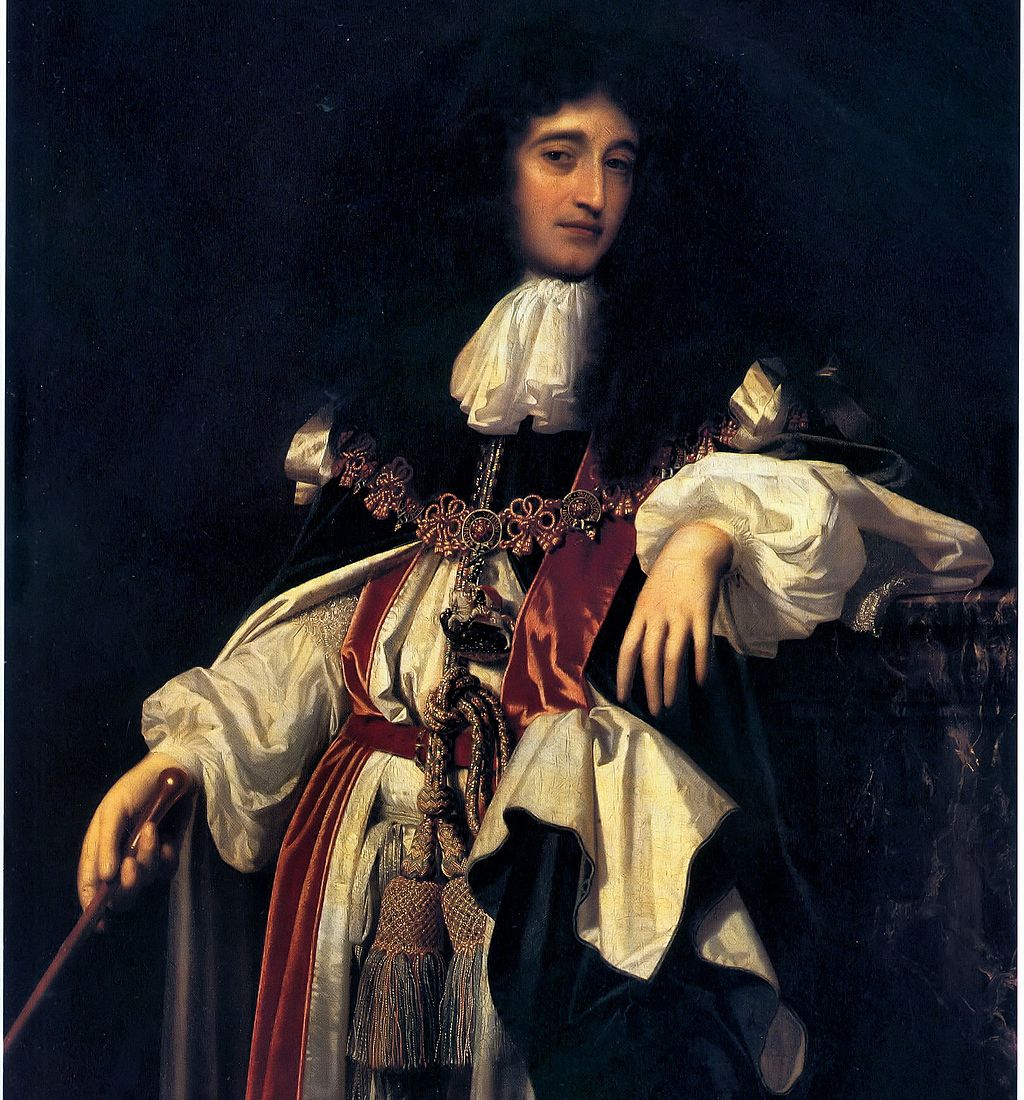
Devil Water by Anya Seton – This is the story of Charles Radcliffe, brother of the Earl of Derwentwater, who marries a Northumberland girl called Meg Snowdon. The Radcliffes were real historical figures and were involved in the Jacobite rebellion of 1715.

If anyone knows of any more examples, I would love to hear what they are.

And now it’s your turn to tell me:

Do you prefer to read books set in places you know or places you don’t know?

Can you think of any historical fiction novels set in your own town/city or part of your country? If you live somewhere like London there will be hundreds, so in that case – which is your favourite?
Fire by C. C. Humphreys

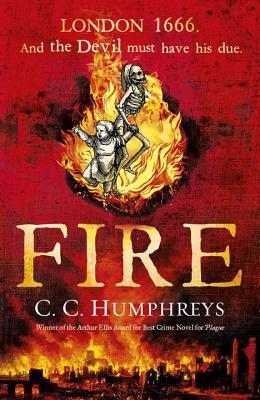
Fire 1666 is famous for being the year of the Great Fire of London. For the religious sect known as the Fifth Monarchists it was also the year in which they believed the monarchy would be overthrown, clearing the way for the kingdom of Jesus. These two events form the basis of C.C. Humphreys’ new novel, Fire, a sequel to Plague, which I read in 2014. Don’t worry if you haven’t had the opportunity to read Plague yet – you will still be able to understand and enjoy Fire, which works as an exciting historical thriller in its own right as well as being a sequel.

As the novel opens we are reacquainted with our old friends, Captain Coke, a reformed highwayman, and Pitman, a ‘thief-taker’. These two men fought on opposite sides in the recent Civil War, but have now formed an unlikely partnership to fight crime in the London area. With Charles II the target of a plot by the Fifth Monarchists, Coke and Pitman have been given the task of foiling the attempt on the king’s life. Assisted by Dickon, a young homeless boy rescued by Coke from a life on the streets, the pair begin to investigate, determined to save the king even if it means putting their own lives in danger.

It’s not only themselves they need to worry about, of course. Pitman is a married man with children, while Coke’s lover, the actress Sarah Chalker, is pregnant. Acting is not considered a suitable career for a respectable woman, but Sarah enjoys it and relies on it as a source of income. Unable to work because of her pregnancy, Sarah is left alone and penniless when Coke finds himself the victim of a cruel betrayal. And then, in the early hours of a September morning, a fire breaks out at Thomas Farriner’s bakery on Pudding Lane…

Fire is an enjoyable read and a fascinating journey through 17th century London life. I’ll have to be honest and say that it’s maybe not the deepest or most literary of historical novels but, like Plague, it’s entertaining and fun to read. Before I started reading I had been afraid that it might be too similar to another book I read earlier this year – The Ashes of London by Andrew Taylor – which is also set during the Great Fire of London and features a plot by the Fifth Monarchists, but the two books are actually completely different.

This is an action-packed novel, taking us to a variety of different settings. We visit the theatre for a production of Hamlet, we find out what conditions were like for those unlucky men pressed into the navy against their will, and we see inside a debtors’ prison, where women and children live in squalor praying that their fortunes will change soon. A map is provided at the front of the book to help us locate each of the London sites mentioned in the story and to show how the fire spreads and progresses day by day.

Something that surprised me about this novel is that the Great Fire itself doesn’t start until we are more than halfway through the book. Instead, Humphreys spends most of the novel setting the scene, moving the characters into place, so that by the time the fire breaks out we are already emotionally invested in the story and are desperate to find out whether our heroes and heroines can find their way out of the dangerous situations they are in.

If C.C. Humphreys brings some of these characters back for a third adventure, I would love to read it; otherwise I’ll investigate his earlier books – I’ve already read Vlad: The Last Confession, but some of his others look interesting too.

Thanks to Century for providing a copy of this book for review.

Prince Rupert: The Last Cavalier by Charles Spencer

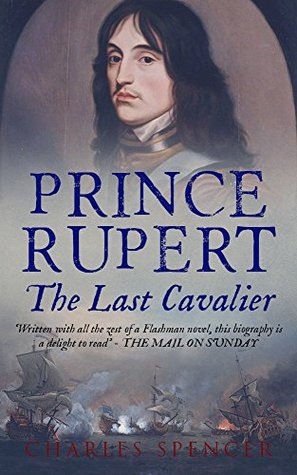
Prince Rupert As someone who prefers to learn through fiction, I often struggle to find the motivation to start reading a long non-fiction book, especially one by an author I’ve never tried before. I’ve had this one on my Kindle since last year waiting until it was the right time to read it – and that time came a couple of weeks ago after I read The White Witch by Elizabeth Goudge, a novel in which one of the main characters fights alongside Prince Rupert in the English Civil War. Rupert has a relatively minor role in that novel, and in others that I’ve read, but I thought it would be interesting to find out more about him.

Prince Rupert of the Rhine, as he is usually known, was born in Prague in 1619. His mother, Elizabeth, was the sister of King Charles I of England, while his father, Frederick, was the Elector Palatine and – briefly – the King of Bohemia. When Frederick lost his crown to the Habsburg Emperor, his wife and young children were forced to flee Prague and take refuge in The Hague. Growing up in exile, Rupert gained military experience in the Thirty Years War before coming to England and joining his uncle, Charles I, at the beginning of the Civil War.

As the commander of the Royalist cavalry, Rupert was one of the most colourful characters of the Civil War. When most of us think of a ‘cavalier’ we probably form a mental image of someone very like Prince Rupert: young, tall and handsome, with long, flowing hair and dressed in the latest court fashions. To the Parliamentarians, however, the cavaliers were villains, guilty of theft, rape, drunkenness and all sorts of debauchery. As the most iconic of the cavaliers, and the King’s most famous general, Rupert was the main target of enemy propaganda – he was even accused of witchcraft and his beloved white poodle, Boye, was suspected of being his familiar.

Rupert Earlier in the conflict, Rupert led the Royalists to some impressive victories, before suffering defeats at Marston Moor and Naseby. While Charles Spencer’s portrayal of Rupert is generally very favourable, I do think he does a good job here of showing why the Royalist cause ultimately failed and why rivalries and divisions between Rupert and his fellow commanders, as well as some very poor decisions, contributed to their downfall. Spencer does seem to like and admire Rupert (which must be an advantage when writing historical biography) but at the same time, he is aware of Rupert’s negative points and not just his positive ones.

The Civil War years only take up about a third of the book, but Prince Rupert’s military career continued after his part in the war ended. After being banished from England in 1646, he became a Royalist pirate, attacking Parliament’s shipping in the Caribbean. Then, following the Restoration of his cousin, Charles II, in 1660, he returned to England and fought in the Second and Third Anglo-Dutch Wars as a senior naval commander. Both of these episodes of the Prince’s life are given a lot of attention in this book, as are his final years (he died in 1682).

I thoroughly enjoyed this fascinating biography – Charles Spencer’s writing is clear and easy to follow, and I even found the descriptions of battle tactics and military strategies compelling, which is unusual for me! The only time I thought it began to drag a little bit was during the naval sections (I always seem to struggle with books set at sea, which I accept is usually my fault rather than the authors’).

What I found particularly interesting was the information on Rupert’s other accomplishments away from his army and navy career: his scientific work and the part he played in the founding of the Royal Society; his role in the development of the mezzotint printing technique; and his governorship of the Hudson’s Bay Company (Rupert’s Land in Canada was named after him). I wasn’t aware of any of this and hadn’t appreciated just how much Prince Rupert had achieved in his lifetime.

I would be happy to read more non-fiction by Charles Spencer but I’m not sure that any of his other books really appeal to me. He is the younger brother of the late Princess Diana (something I didn’t know when I first started reading) and most of his work seems to be concerned with his family history. If anyone has read any other books on Prince Rupert, though – either fiction or non-fiction – I would love some suggestions.

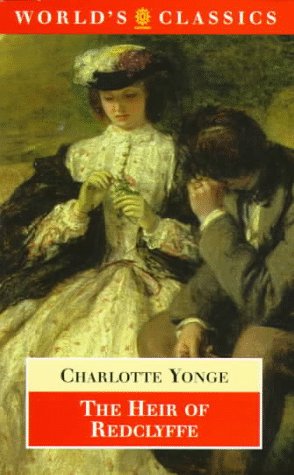
The Heir of Redclyffe by Charlotte M Yonge

The Heir of Redclyffe I was supposed to be writing about Kristin Lavransdatter today – it was the book chosen for me in the last Classics Club Spin and today is the deadline for reading it – but there’s been a change of plan. For the last few weeks I’ve been engrossed in a completely different classic novel, so Kristin has had to wait. I’ve started reading it at last (and like what I’ve read so far) but for today, I’m going to talk instead about The Heir of Redclyffe.

When the elderly Sir Guy Morville dies, his title and his estate of Redclyffe pass to his grandson, another Guy. Being only seventeen years old, the new Sir Guy is taken in by another branch of the family, the Edmonstones, who provide him with a home and an education. With his generous, warm-hearted nature, Guy quickly wins the respect of Mr and Mrs Edmonstone, the friendship of three of his cousins – Charles (crippled with a disease in the hip), the beautiful Laura, and little Charlotte – and the love of the fourth, Amabel (known as Amy). In fact, the only person who doesn’t seem to like Guy is Philip Morville, another cousin.

To Guy’s dismay, Philip – who happens to be the next heir to Redclyffe – makes no secret of his dislike for him. Philip is a well-educated, confident and accomplished young man, and based on a long-ago family rivalry, is determined to disapprove of Guy, finding fault with everything he does. After Guy and Amy declare their love for each other, Philip decides to do everything he can to put a stop to their marriage. Meanwhile, he himself has fallen in love with Amy’s sister, Laura, but due to his financial situation he is reluctant to make their romance public and so he asks Laura to keep their relationship secret from her parents.

And that’s really all I want to say about the story, as it does become quite convoluted and I wouldn’t want to spoil things for future readers. I knew very little about this novel before I started it (although I remember that Lisa enjoyed it a few years ago) and part of the pleasure in reading it was wondering how things would turn out for Guy and Amy, Philip and Laura, and the others. Yonge took me completely by surprise once or twice with some plot developments that I hadn’t expected, one of which was very sad – although I would have been prepared for that if only I’d remembered that in Little Women, Jo March is found “eating apples and crying over The Heir of Redclyffe”!

I liked Guy – it would probably be difficult not to – and I also liked Amabel, although it irritated me that she is always referred to (by herself and others) as ‘silly little Amy’ when it’s obvious that she has far more sense and strength of character than anybody gives her credit for. I never felt that I really knew or understood Laura, but as for Philip, I found him completely annoying, arrogant and overbearing. He’s not a villain exactly (there are no villains in this book – only flawed human beings) and he does seem to believe that he’s acting with the best intentions, but those actions cause a lot of unnecessary misery for a lot of people. My favourite character, though, was probably Charles, one of the few people prepared to stand up to Philip and say what he thinks, while also trying to come to terms with his own illness and disability.

First published in 1853, The Heir of Redclyffe was a popular bestseller throughout the 19th century, yet how many people still read this book today? It seems that Charlotte Mary Yonge’s novels haven’t stood the test of time as well as books by other female Victorian authors, which is a shame as I found a lot to like about The Heir of Redclyffe. Maybe it’s too sentimental for modern tastes and with too much emphasis on faith and spirituality – not that any of those things stopped me from enjoying this book. I would definitely consider reading more of Yonge’s work in the future!