My Commonplace Book: November 2016

A summary of this month’s reading, in words and pictures.

commonplace book
Definition:
noun
a notebook in which quotations, poems, remarks, etc, that catch the owner’s attention are entered

Collins English Dictionary

~

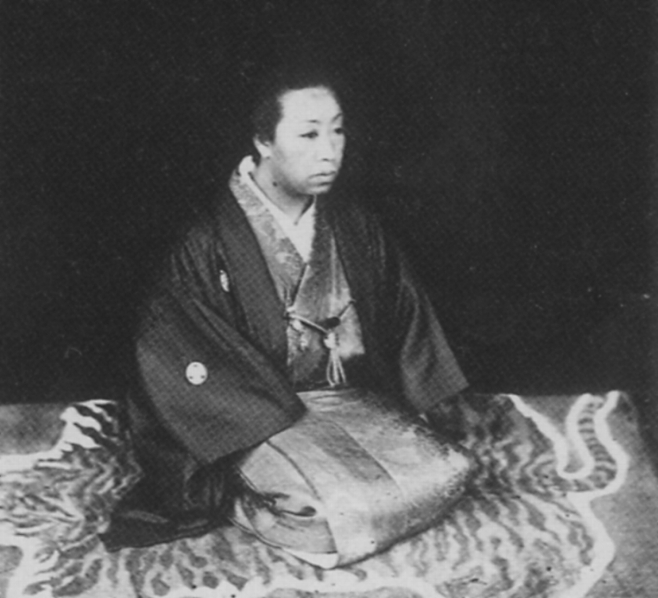
tensyoin

“Barbarians,” she murmured in tones of disbelief. “Barbarians.” Perhaps if she said the word often enough she could defuse the threat. “But in that case…we’re finished. We’re all dead.” It was just as Lord Nariakira had warned. These were not gentle Hollanders. These were other beings, those nameless hordes who’d rampaged across China. Barbarians like those didn’t come in peace. They threatened their lives, their world, everything they knew.

Things were spinning around her. The world was turning upside down. But she couldn’t help feeling curious as well. She wished she could catch a glimpse of these exotic creatures with her own eyes.

The Shogun’s Queen by Lesley Downer (2016)

~

“And then do ye wait and see more; there’ll be plenty of opportunity. Time enough to cry when you know ’tis a crying matter; and ’tis bad to meet troubles half-way.”

The Woodlanders by Thomas Hardy (1887)

~

My family were not readers, but Xavier Mountstuart’s writings had inspired and transported me. I had devoured The Courage of the Bruce and The Black Prince, then graduated to the Indian writings: The Lion of the Punjab, of course, and the tales of bandits and rebels in the foothills of Nepal. I had read of white forts and marble palaces and maharajas’ emeralds; of zenanas and nautch girls in the Deccan; of the sieges and jangals. I had even read a short tract about Hindooism, vegetarianism and republicanism, which had left me a little confused. Mountstuart seemed to me the very acme of Byronic manhood. It was not simply that he was a poet and writer of genius, but that he had lived his writings.

The Strangler Vine by MJ Carter (2014)

~
highwayman

“Now, what mean you by that?”

“Just that I am a common highwayman, Miss Betty.”

She stared at him for a moment, and then resumed her work.

“You look it.”

John cast a startled glance down his slim person.

“Is that so, madam? And I rather flattered myself I did not!”

The Black Moth by Georgette Heyer (1921)

~

“No, I don’t care for novels,” she said, shaking her head. “I’ve never really understood them, if I’m honest.”

“In what way?” I asked, confused by how the concept of the novel could be a difficult one to understand. There were some writers, of course, who told their stories in the most convoluted way possible — many of whom seemed to send their unsolicited manuscripts to the Whisby Press, for instance — but there were others, such as Jack London, who offered their readers such a respite from the miserable horror of existence that their books were like gifts from the gods.

The Absolutist by John Boyne (2011)

~

britannia

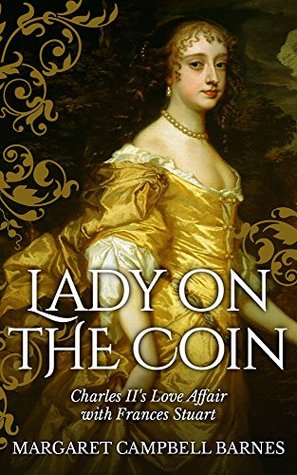
Frances struck an attitude, sitting upright with head poised high and left hand outstretched as though she grasped an invisible weapon. “Of course, when I am really posing for Roettier, the engraver, I shall wear a helmet and hold a trident and I shall have flowing, Grecian robes. It was altogether the King’s idea, but James of York thought it should be called Britannia. To represent the nation’s might.”

Lady on the Coin by Margaret Campbell Barnes (1963)

~

“My thoughts are my own,” I answered: “and though you keep my person prisoner, these are beyond your control.”

Redgauntlet by Sir Walter Scott (1824)

~

“Not to my knowledge, sir,” said the Viscount.

“I’m glad to hear it! But if you had agreed to the marriage I planned for you a son of yours might have been sitting on my knee at this moment!”

“I hesitate to contradict you, sir, but I find myself quite unable to believe that any grandchild attempting — at this moment — to sit on your knee would have met with anything but a severe rebuff.”

Charity Girl by Georgette Heyer (1970)

~
aemilia-lanyer-poetry

She has a soft spot for little Peter; he had asked why he needed to learn to read when he first arrived.

“Because without reading you only have half a life,” she’d said, watching his puzzled face. “Reading will open doors for you to new worlds.” He had looked at her in wonder then.

“Like the men who sail to the Americas?”

“Yes, something like that.”

The Girl in the Glass Tower by Elizabeth Fremantle (2016)

~

Favourite books this month: The Woodlanders and The Strangler Vine
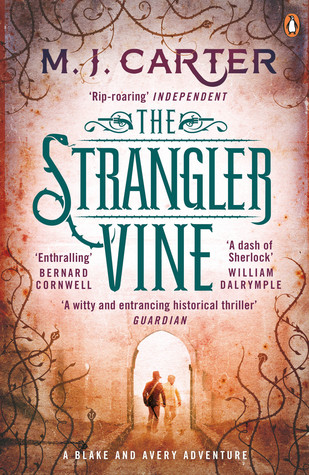
The Strangler Vine by MJ Carter

the-strangler-vine I love a good historical mystery and when this one was recommended to me recently (thank you, Pam!) I remembered that I already had a copy on my Kindle and couldn’t leave it to languish there any longer. Having read it, I wish I’d found time for it earlier – it’s an excellent book – but on the positive side, there are now two more in the series which I can read sooner rather than later.

The Strangler Vine is set in India in 1837, when large areas of the country were ruled by the British East India Company. Our narrator is William Avery, a young officer with the Company’s army. Originally from Devon, he has grown up reading the work of Xavier Mountstuart, a fictional author and poet whose writings sound similar to Rudyard Kipling’s and which have given him a romanticised view of India. Having spent nine months in Calcutta, however, he is starting to feel disillusioned with “the monstrous climate, the casual barbarities of the native population and the stiff unfriendliness of the European society”.

Disappointed that he still hasn’t been summoned to join his cavalry regiment in North Bengal, Avery is growing frustrated and bored – until the day he is asked to accompany an older officer, Jeremiah Blake, on a special mission. It seems that his literary hero, Mountstuart, has gone missing while carrying out research for a new poem and Avery and Blake have been given the task of finding him.

The Strangler Vine is a wonderful, fascinating novel; there are so many things I enjoyed about it that I’m not sure where to start! First of all, there’s the relationship between the two main characters, Avery and Blake, who, like all good mystery-solving duos, are two very different people who complement each other perfectly. Young, naïve and loyal to the Company, Avery is more instantly likeable and although he can be slow to pick up on clues, the fact that he never seems to know any more than the reader does makes him the perfect character to guide us through the novel. There’s a sense that where Indian culture, politics and history are concerned, Avery is learning as he goes along, which means background information tends to be given in large chunks rather than being lightly woven into the story. This style won’t appeal to every reader, but I found it all so interesting that it didn’t bother me.

Jeremiah Blake is a more unusual and intriguing character; although he still has connections to the East India Company, he no longer actively works for them – his knowledge of Indian languages and marriage to an Indian woman have aroused the distrust of the other officers who consider him to have ‘gone native’. His attitude towards Avery is abrupt, rude and dismissive and because we only see him through Avery’s eyes, he is a complete enigma at first. Eventually his true character starts to be revealed, but I was still left with the feeling that we have more to discover about Blake.

The mystery element of the novel is quite complex and what seems to Avery at first to be a straightforward search for a missing man soon develops into something with much deeper implications. It all revolves around the cult of Thuggee – organised gangs of thieves and murderers who worship the Goddess Kali and who are causing widespread fear and panic amongst the British in India. Mountstuart is thought to have been researching the Thugs at the time of his disappearance and so Avery and Blake, following his trail, also become drawn into the mystery and controversy surrounding the cult.

I loved The Strangler Vine; apart from the aspects of the novel I’ve already mentioned, I also really liked MJ Carter’s writing; it’s intelligent and detailed, she brings the setting vividly to life and, while I can hardly claim to be an expert on the India of the 1830s, if there were any inaccuracies or anachronisms I didn’t notice them. I can’t wait to join Avery and Blake for another adventure in The Printer’s Coffin.

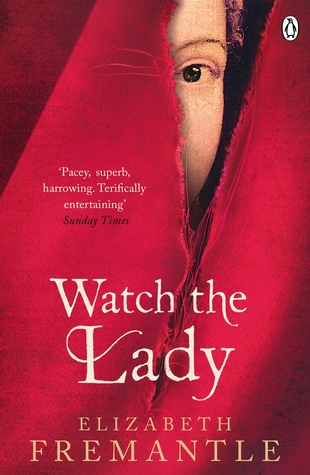
Watch the Lady by Elizabeth Fremantle

watch-the-lady I’ve fallen behind with Elizabeth Fremantle’s books; having read Queen’s Gambit and Sisters of Treason shortly after they came out, the publication of her next book – Watch the Lady – seemed to escape my notice and now there’s also a fourth novel, The Girl in the Glass Tower. I discovered that my library had both and decided that Watch the Lady, her novel about the 16th century noblewoman Penelope Devereux, would be the next one I read.

Penelope’s story is one that is not often told; she has appeared as a minor character in other books I’ve read set during the Elizabethan period, such as Elizabeth I by Margaret George, but this is the first novel I’ve come across in which she is the main character.

Penelope is related to Elizabeth I through her mother, Lettice Knollys, a granddaughter of Mary Boleyn, Elizabeth’s aunt. Lettice has incurred the Queen’s displeasure by secretly marrying Robert Dudley, the man said to be Elizabeth’s own love interest, and has been exiled from court. Lettice’s children, however, are still welcome and Penelope’s handsome, dashing brother, Robert Devereux, Earl of Essex, has become a particular favourite of Elizabeth’s. As Essex rises higher and higher in the Queen’s favour, his enemies plot to pull him down and Penelope must do everything in her power to protect her brother and keep the family’s ambitions alive.

While Essex’s turbulent career, which is marked by military defeats, trials and banishments and ends in the Essex Rebellion of 1601, is followed in detail, Penelope herself is the real focus of the novel. Penelope is considered to be one of the beauties of the Elizabethan court and the inspiration for the poet Philip Sidney’s Astrophil and Stella sonnet sequence. The real nature of her relationship with Sidney is uncertain, but Fremantle gives one interpretation here. Penelope’s unhappy marriage to Lord Rich and her later love for Charles Blount are also described, but I was less interested in these parts of the story and I don’t think the balance between the romance and the politics in this book was quite right for me.

I did like the way Penelope is portrayed – a strong, intelligent and ambitious woman, but one who is still convincing as an Elizabethan woman, rather than feeling like a modern day character dropped into a historical setting – and Essex, if not very likeable, is always interesting to read about. Elizabeth’s adviser, Robert Cecil, however, is very much the villain of the novel; there are several chapters written from his perspective and from the beginning he is shown to be working against Essex and his family, acting on his father’s advice that people need someone to hate and that if he can learn to be that hated person he will be indispensable. I think Cecil does a good job of making himself hated, and it wasn’t until near the end of the book that I began to have some sympathy for him.

I enjoyed reading Watch the Lady and getting to know Penelope Devereux, but this is not my favourite of the three Elizabeth Fremantle novels I’ve read so far, partly because, as I’ve mentioned, Penelope’s love life didn’t interest me all that much, and also because I prefer the periods of Tudor history covered in Queen’s Gambit and Sisters of Treason. I’ve now moved on to The Girl in the Glass Tower and am finding it a much stronger novel; my full thoughts on that one should be coming soon.

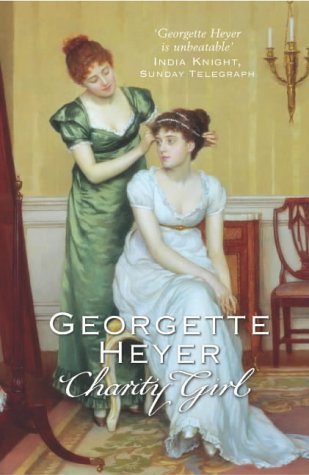
Charity Girl by Georgette Heyer

charity-girl Continuing to work through my library’s selection of Heyer novels, I came home last Saturday with both her earliest book and one of her last. The first one I decided to read was Charity Girl, which was published in 1970, towards the end of Heyer’s career. It doesn’t seem to be one of her more popular Regency romances; I’ve seen other readers describe it as a recycling of Sprig Muslin and The Foundling, but that wasn’t a problem for me as I haven’t read either of those yet. While I did find a lot to enjoy, though, I would agree that this isn’t one of her best.

The hero of Charity Girl is Viscount Desford who, as the novel opens, is being berated by his father for not marrying his childhood friend, Henrietta Silverdale, and providing him with grandchildren. Desford and Hetta have been insisting for years that, although they are the best of friends, they are not in love – and nothing has changed now that they are both in their late twenties. Following this uncomfortable interview with his father, Desford goes to visit family and ends up attending a party at which he meets a vulnerable young girl called Charity – or Cherry – Steane.

Cherry’s mother is dead and her father has abandoned her, leaving her at the mercy of an aunt and cousins who treat her like a servant. The next day, Desford encounters Cherry walking along the road to London with a suitcase, determined that she is running away from her aunt. Unable to persuade her to go back, Desford accompanies her to London to find her grandfather, Lord Nettlecombe. However, the old man is away from home, so Desford turns to Hetta Silverdale for help. Cherry goes to stay with the Silverdales while he continues to look for her grandfather and absent father, but people soon begin to talk – why is Desford so concerned for Cherry’s welfare? Has he fallen in love at last?

I found Charity Girl an entertaining read, as have been all of the Heyer novels I’ve read, with plenty of the witty dialogue, peppered with Regency slang, which I love in her work. There are some funny scenes too, especially whenever one of Cherry’s disreputable family members makes an appearance. Despite this, though, Charity Girl has not become a favourite Heyer. I liked Desford, but he isn’t a particularly strong or memorable hero, and instead of having so much focus on his search for Cherry’s family, I would have preferred more time spent on his interactions with Cherry and Hetta. I couldn’t tell, at first, which of them was going to be his love interest and, when it eventually became clear, I didn’t feel that I’d seen enough of them on the page together.

Still, I didn’t think this was a bad book at all, so I don’t want to sound too negative about it. I have just started to read the other Heyer novel on my library pile – The Black Moth – and am so far finding it very different from this one!

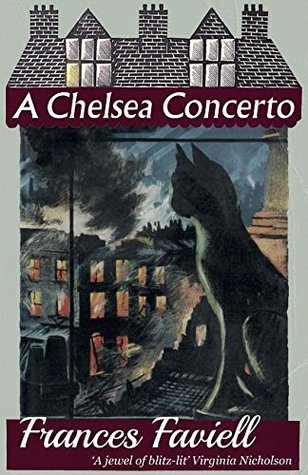
A Chelsea Concerto by Frances Faviell

a-chelsea-concerto I had a nice surprise a few months ago when I unexpectedly received two ebooks from Dean Street Press who were launching their new imprint, Furrowed Middlebrow (in conjunction with Scott from the Furrowed Middlebrow blog). The first one I chose to read was A Chelsea Concerto, a Second World War memoir originally published in 1959.

Frances Faviell lived at 33 Cheyne Place in Chelsea – one of the most heavily bombed areas of London during the war due to its location, close to the Royal Hospital and to several bridges over the River Thames. Her memoir opens in the early days of the war, a period known as the Phoney War because it seemed as though very little was actually happening. During this time, as well as continuing her work as an artist, Frances becomes a Red Cross volunteer, taking part in air-raid drills and trying to ensure that the people of Chelsea are as fully prepared as they can possibly be for whatever may follow.

What follows, of course, is the Blitz, which Faviell describes in vivid detail. Night after night, people living in Chelsea are subjected to one bombing raid after another, emerging from the shelters each morning in fear of what they might find: their home destroyed; a friend or neighbour dead; the roads blocked; an unexploded bomb in the street. With her work as a volunteer, Frances is often at the centre of the action, experiencing and witnessing the most horrifying things, while throughout it all, the Green Cat – her most treasured possession – sits in her window as a symbol of safety and prosperity.

Serene and aloof he sat in the window in the sunlight, surveying with contempt the activities in the street. Everyone begged me to put him down in the cellar with some of the paintings which I had stored there now. But I would not move him. Was he not the Guardian of the Home? He must be treated with respect.

Before the war, Frances had travelled widely and learned to speak several languages, something which enables her to offer help and support to the refugees who have fled to Britain as the Nazis sweep across Europe. There are some real characters amongst the refugees – in particular ‘The Giant’, a large and outspoken Belgian fisherman – and some funny moments, such as the story of Monsieur D, who is suspected of being a spy when mysterious lights show from his window during a blackout. Many of these people, though, are frightened and traumatised and look to Frances for advice and protection. She becomes particularly close to Ruth, a Jewish refugee from Germany, who attempts to kill herself, leaving her young daughter in need of Frances’ care. Nineteen-year-old Catherine, who arrives in London pregnant and unmarried, is another troubled young woman whom Frances finds herself taking under her wing.

Despite the terrible things going on around her – and the terrible things she experiences herself – Frances keeps her sense of humour and often manages to see the funny side (when she remembers a government information leaflet on what to do if German parachutists land, for example, or when she talks about her dachshund, Vicki, known as Miss Hitler).

The wording of the pamphlet which we knew was designed to try and avoid the same panic flight as in Belgium and France caused such hilarity everywhere that every current show included some skit on the arrival of parachutists. In the FAP we went about chivvying one another with the words of the clauses about seeing anything suspicious and “Be calm, be quick, be exact” became a joke in every place of work or exercise which we had to carry out with the Civil Defence.

Most of her memories are quite harrowing, though, such as when she describes the horrors of trying to reassemble pieces of bodies blown apart by bombs and the time she was lowered headfirst into a hole in a collapsed building to assist an injured man. But the most vivid and dramatic episode of all comes near the end when Faviell’s own home is bombed – and although we know that Frances must have survived to be able to write this book, the tension and the sense of danger come across so strongly in her writing that we worry for her anyway.

I haven’t read many wartime memoirs and I couldn’t help comparing this one to the few that I have read. It didn’t have quite the emotional impact that Vera Brittain’s Testament of Youth had on me, for example, but I still found it a fascinating and moving read. Frances Faviell wrote several other books which are also available from Dean Street Press; has anyone read any of them, and if so, which would you recommend?

The Shogun’s Queen by Lesley Downer

the-shoguns-queen Japan, as I discussed in my recent Historical Musings post, is a country whose history I know very little about. Lesley Downer has written several books about Japan, including a quartet of novels set in the 19th century; I remember reading about one of the others on The Idle Woman’s blog a few months ago, so I was pleased to have the opportunity to read Downer’s latest book, The Shogun’s Queen. This is the final book in the quartet to be published, but it’s the first chronologically so even though I haven’t read the other three I didn’t expect to be at any disadvantage.

After a brief prologue, the novel opens in 1853 with Japan on the cusp of change. Until now, the country has been largely insulated from the outside world and apart from some limited contact with Dutch traders, Japanese ports have been closed to the west. The sight of barbarian ships approaching, then, causes panic, fear and confusion. What do the barbarians (westerners) want and what will they do if Japan refuses to agree to their demands?

It’s during this turbulent period that our heroine, Okatsu, is adopted by the ambitious Lord Nariakira of Satsuma and taken into his household, where she is renamed Atsu. Adoption, in Japan at this time, is a way of raising a woman’s rank and improving her marriage prospects, so a few years later Nariakira arranges for Atsu to be adopted again, this time by his brother-in-law Prince Konoe. His ultimate aim is to marry Atsu to Iesada, the 13th Tokugawa Shogun, and in 1856 this aim is achieved. Nariakira hopes Atsu can use her position as Iesada’s wife to influence the Shogun’s choice of a successor – but as Atsu gets to know her new husband she discovers how difficult that task will be.

The approach of western ships means Japan is facing a new set of threats, dangers and opportunities, so strong leadership is desperately needed. I’m not going to say too much about the character of Iesada, but as soon as he appears on the page it is obvious that he can’t possibly be that strong leader. Poor Atsu; although she does begin to feel affection and even love, of a sort, for the Shogun, it is not a normal or happy marriage and it would be difficult not to have sympathy for her. Iesada’s mother is a cruel, manipulative woman who resents having to relinquish any of her control over her son, and this makes it almost impossible for Atsu to carry out the instructions she has been given by Nariakira.

As if Atsu’s situation wasn’t already bad enough, she has been forced to separate from the man she truly loves, Kaneshige, and doesn’t expect to see him again, knowing that once she enters Edo Castle as the Shogun’s wife she will never be allowed to leave. As I’ve said, I knew nothing about this period of Japanese history before I started reading, and I was fascinated by the descriptions of Atsu’s life, both before her marriage, when she lived in the Satsuma domain, and later, in the confines of the Women’s Palace in Edo (the former name for Tokyo). It was also fascinating to read about the ‘barbarians’ – Americans and Europeans – and how they and their culture appeared when seen through Japanese eyes.

I would have no hesitation in recommending The Shogun’s Queen to readers who, like myself, are looking for an accessible introduction to the history of 19th century Japan. A lack of familiarity with the period is not a problem as Lesley Downer makes everything easy to follow and understand; the book also includes a map, a list of characters and a detailed afterword in which the author provides more information on the historical background and gives us an idea of which parts of the novel are based on fact and which are largely fictional (such as the relationship between Atsu and Kaneshige). First and foremost, though, this is a gripping and entertaining story with characters to love and characters to hate. I enjoyed it and will be exploring Lesley Downer’s other books, as well as continuing to look out for more novels set in Japan.

I received a copy of The Shogun’s Queen from the publisher for review.

Lady on the Coin by Margaret Campbell Barnes

lady-on-the-coin One of the many things I enjoy about reading historical fiction is seeing how different authors choose to interpret the same historical events and people. This is the second novel I’ve read about Frances Stuart, one of the prominent figures at the court of Charles II, and as I remembered being disappointed in Marci Jefferson’s Girl on the Golden Coin, I was curious to find out how Margaret Campbell Barnes had approached the same subject in this novel from 1963.

Lady on the Coin opens with Frances Stuart (or Stewart, but I have gone with the spelling used by Barnes) and her family in exile in Paris where they have been living since the Royalists were defeated in England’s recent civil war. In 1660, the monarchy is finally restored and Charles II, to whom Frances is distantly related, takes the throne. After saying goodbye to her close friend, Henrietta – Charles’ beloved sister, ‘Minette’ – who has married the brother of Louis XIV of France, Frances returns to England to join the household of the new queen, Catherine of Braganza.

With her appealing combination of beauty, enthusiasm and youthful innocence, Frances soon finds herself with many friends and admirers at court, and Charles himself is one of them. Although she enjoys the attention, Frances has no desire to hurt Catherine, so she does her best to resist the King’s attempts to make her his mistress. As she comes under more and more pressure to agree to his demands, a rumour begins to circulate that he is planning to make her his wife should anything happen to Catherine. A chance of escape arrives when she falls in love with the King’s cousin, the Duke of Richmond and Lennox, but there will be more obstacles to overcome before they can find happiness together.

I found this book better written and more satisfying than Marci Jefferson’s. Although the two are very similar in terms of plot (I suppose there’s a limit as to how much could be written about Frances Stuart, after all), I felt that Margaret Campbell Barnes did a much better job of forming a compelling story from the material available and giving her characters depth. Frances is portrayed as frivolous and immature, but she also has a kind heart and I couldn’t help liking her, as did most of the people around her. I say ‘most’ because her popularity at court earns Frances some enemies as well as friends and puts her at the mercy of those who wish to manipulate her for their own ends, such as Barbara Palmer, Lady Castlemaine, the King’s mistress of many years.

Later in the novel, when Frances’ relationship with Lennox begins to develop and she has some important decisions to make, we see a stronger, more serious side to her character. I don’t know enough about the real Frances or Lennox to be able to say whether their relationship has been romanticised here, but I expect it probably has; he is described, by his own admission, as a gambler and heavy drinker, but these problems seem to be brushed aside very easily once he and Frances get together. I did find their romance quite moving, though, and much more interesting to read about than the King and his mistresses!

Frances Stuart’s story is played out during an eventful period of history, but important events such as the plague, the Great Fire of London and the Anglo-Dutch Wars seem to pass by in the background without having much of an effect on the life of our heroine. It’s probably true that Frances would have been very insulated from the outside world by her position at court, but I would still have liked a better balance between her personal story and the wider history of the period in general.

Now, you may be wondering why the title of the book refers to the ‘lady on the coin’. Well, one of Frances Stuart’s claims to fame is that she was apparently the model for Britannia, appearing on a commemorative medal produced after the war with the Dutch and then on various British coins until as recently as 2006.

Lady on the Coin is the second book I’ve read by Margaret Campbell Barnes; the first was Mary of Carisbrooke, which told the story of Charles I’s imprisonment in Carisbrooke Castle on the Isle of Wight. I’m sure I’ll be reading more of her books and the next logical choice is With All My Heart, her novel about Catherine of Braganza.

I received a copy of this book via NetGalley for review.