Appleby’s End by Michael Innes

I’ve read quite a few of Michael Innes’ Inspector Appleby mysteries now; I think this is my sixth, and although I enjoyed it more than my last one, The Daffodil Affair, it doesn’t compare to my two favourites, Hamlet, Revenge! and Lament for a Maker. While I love the imaginativeness of his plots, some of them are a bit too bizarre and outlandish for me, and this is one of them.

The novel opens with Inspector John Appleby falling into conversation with a man sitting opposite on the train. His name is Everard Raven, an eccentric lawyer and writer of encyclopedias who is on his way home to his family’s country estate, Long Dream Manor. When Appleby discovers that he has made a mistake with the train timetable and won’t be able to reach his own destination until the following day, Everard offers to give him a room for the night at Long Dream. Meanwhile, they have been joined by the other members of the Raven family – Everard’s brothers, Luke and Robert, and two younger cousins, Judith and Mark – who are also returning home. They all disembark from the train together at a station which, to Appleby’s surprise, happens to be called Appleby’s End.

The eventful journey is not over yet, however. The horse-drawn carriage which has been sent to transport them from the station to Long Dream Manor gets stuck crossing a river and Appleby and Judith Raven find themselves separated from the rest of the party. Making their own way back to the house, they make a gruesome discovery – the head of one of the family servants half-buried in a snowdrift. When Appleby begins to investigate, he uncovers a possible connection between the servant’s death and a series of strange happenings in a nearby village. Strangest of all is the fact that these occurrences closely resemble plots from the long-forgotten works of Ranulph Raven, the late father of Everard, Luke and Robert. Can Ranulph’s novels really be starting to come true?

The story quickly becomes more and more surreal, as Appleby encounters a woman who believes she is a cow, animals turning into marble statues and rumours of witchcraft and magic. There are characters with names like Heyhoe and Rainbird and villages called Snarl, Drool, Sneak and Linger. At the heart of the novel there is an interesting and clever mystery taking place, but, for me, it gets lost beneath the sheer ridiculousness of it all. I’m sure it was intended to be a parody of rural life, and I could see some similarities with Cold Comfort Farm at times, but the humour didn’t really work for me. The only other notable thing to say about this book is that Appleby falls in love – I think. It’s not a particularly romantic romance – although he and his love interest do spend a night in a haystack together, which leads to a proposal of marriage.

Based on what I’ve read so far, all of Michael Innes’ novels do seem to be a bit quirky, but I prefer the ones that are slightly more serious. I’ll continue to read his books but I hope the next one I pick up will be a better choice for me.
Six Degrees of Separation: From Atonement to Something Wicked This Way Comes

It’s the first Saturday of the month which means it’s time for another Six Degrees of Separation, hosted by Kate of Books are my Favourite and Best. The idea is that Kate chooses a book to use as a starting point and then we have to link it to six other books of our choice to form a chain. A book doesn’t have to be connected to all of the others on the list – only to the one next to it in the chain.

The starting point this month is Atonement by Ian McEwan. As usual, I haven’t read it – but I do at least own a copy, which is a step in the right direction. Even without having read it, I know that it is often described as ‘metafiction’, which Wikipedia defines as ‘a form of literature that emphasizes its own constructedness in a way that continually reminds the reader to be aware that they are reading or viewing a fictional work’.

Taking metafiction novels as the first link in my chain this month, I could think of plenty of other examples, but the one I have chosen is The French Lieutenant’s Woman by John Fowles.

The French Lieutenant’s Woman is set in Lyme Regis, which is where Louisa Musgrove in Jane Austen’s Persuasion falls and injures herself on the harbour steps. I struggled to think of where to take the chain next from Persuasion, though, so I decided to pick another book with a Lyme Regis setting instead – and that book is Remarkable Creatures by Tracy Chevalier

Remarkable Creatures is a fictional account of the lives and careers of two real-life 19th century fossil-collectors, Mary Anning and Elizabeth Philpot. Another 19th century woman, fictional this time, who is trying to make her way in the male-dominated world of natural sciences, is Cora Seaborne, the amateur naturalist in Sarah Perry’s The Essex Serpent. Mary Anning is one of Cora’s heroines, forming a strong link between these two books!

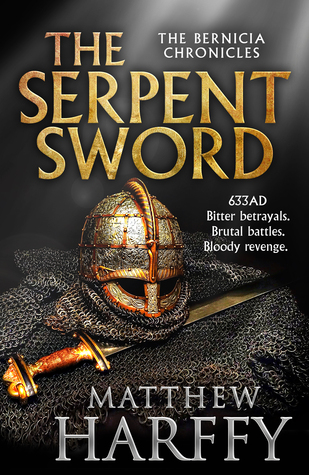
Moving on from The Essex Serpent, I have selected another novel with the word ‘serpent’ in the title. The Serpent Sword by Matthew Harffy is also historical fiction, but it’s a very different type of story, following the adventures of young warrior Beobrand, who sets out to avenge his brother’s death in 7th century Northumbria.

Northumbria was the name of the medieval kingdom which once encompassed a large part of northern England and the south-east of Scotland, and included the area now known as Northumberland. My next choice is a crime novel set in contemporary Northumberland: Dead Woman Walking by Sharon Bolton.

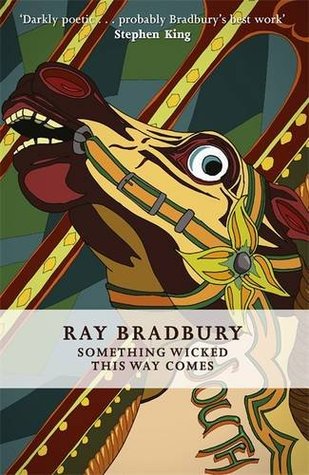
Dead Woman Walking opens with a group of people enjoying an early morning flight in a hot air balloon over the Northumberland National Park. And that leads me to my final link in the chain – Something Wicked This Way Comes by Ray Bradbury, in which a very creepy character known as the Dust Witch flies above the rooftops of Green Town in a balloon.

And that’s my chain for August! Have you read any of these books?

Next month we will be starting with Where Am I Now? by Mara Wilson.

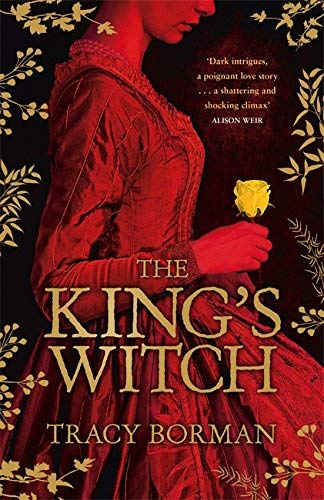
The King’s Witch by Tracy Borman

This is the first novel by historian Tracy Borman, although she has previously written several non-fiction books, none of which I have read. The King’s Witch is set in England in the early 17th century, during the reign of James I (who was also James VI of Scotland), and from the title I was expecting something similar to The Witchfinder’s Sister or Widdershins – a story of witch trials and burnings, and of innocent women persecuted because of a gift for healing. Well, The King’s Witch does cover those topics, but there is much more to the book than that and I wasn’t surprised to learn that this is the first in a trilogy and another two novels will be needed to finish the storylines begun in this one.

Our heroine – the ‘witch’ of the title – is Frances Gorges, a young noblewoman whom we first meet in 1603 at the bedside of Elizabeth I, helping her mother to nurse the dying queen through her final days. Frances knows how to use herbs to treat illness and provide comfort, but when Elizabeth is succeeded by James, her skills are no longer appreciated. The new king is determined to stamp out witchcraft in his kingdom and women like Frances could become a target. It is decided that she will be safer away from court, so she is sent home to the peace and quiet of Longford, her family’s manor house in Wiltshire.

It’s not long, however, before Frances is summoned back to court where her ambitious uncle, the Earl of Northampton, has secured her a position as maid to the king’s daughter, the young Princess Elizabeth. But court has become a very dangerous place and Frances almost immediately finds herself in conflict with the king’s Lord Privy Seal, Robert Cecil, who is hoping to please the king by hunting down a witch. It’s not just women healers who are under suspicion, though; James also sees Catholics as possible conspirators – and he is right, because a secret plot is taking shape that could bring his reign to an early end.

As I’ve said, the title of this book is slightly misleading. Frances’s knowledge of the properties of herbs and plants and the danger this puts her in with Cecil is certainly an important part of the story, but this is not really a book about witches and witchcraft. I would describe it more as a book about a young woman trying to make her way in a world full of treachery, lies and conspiracies. Most of the second half of the novel is devoted to one of these conspiracies – the Gunpowder Plot of 1605 – and Frances’s own involvement in it. This is what I will remember about this book rather than the witch-hunting aspect, which doesn’t really come to anything.

Although I enjoyed the book overall, the pacing seemed to be a problem for me. The story gets off to a slow start and I felt that I’d been reading for a long time with very little happening; somewhere around the middle of the book when the Gunpowder Plot begins to take shape, I started to find it much more compelling. There is also a romance for Frances with the lawyer Thomas Wintour and I thought this was handled well, especially as Frances – and the reader – begins to have doubts as to whether he can or cannot be trusted.

Frances Gorges was a real historical figure, but she and her family are not characters I have come across before in historical fiction. It seems that very little factual information is available about Frances – I could only find a few basic details online – although more is known about her parents, Thomas Gorges and Helena Snakenborg. The lack of information on Frances must have given Tracy Borman the freedom to use her imagination in building a story around her, without being too restricted by historical fact.

By the end of the novel, there is a lot going on in Frances’s life and I will be interested to see how her story continues in the next two books in the trilogy.

Thanks to Hodder & Stoughton for providing a copy of this book for review via NetGalley.

This is book 7/20 for my 20 Books of Summer challenge.

Classics Club Spin #18: The Result

The result of the latest Classics Club Spin has been revealed today!

The idea of the Spin was to list twenty books from my Classics Club list, number them 1 to 20, and the number announced today (Wednesday) represents the book I have to read before 31st August 2018. The number that has been selected is…

9

And this means the book I need to read is…

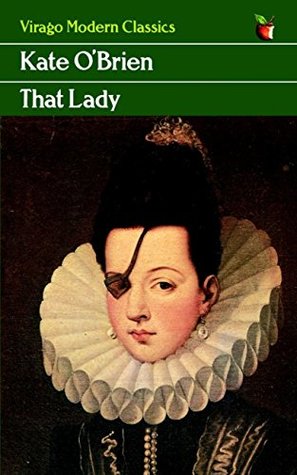
That Lady by Kate O’Brien

From Goodreads: Spain in the years before the Armada, and high passion meets high politics. Ana, Princess of Eboli is a remarkable woman. Married at thirteen and losing an eye in a duel a year later, Ana is also heiress of Spain’s leading family, widow of Philip II’s wisest cousellor and rumoured to be the King’s mistress. Unexpectedly – and unwisely – she falls in love with Don Antonio Perez, dandy, adulterer, skilled politician. With her unusual looks, her aristocratic arrogance and the simplicities of her faith, Ana cannot understand why her private life should become entangled with the affairs of state and, finally, incur the terrible vindictiveness of the King himself…

Kate O’Brien’s understanding and love of Spain enhance the beauty of this passionate and intelligent novel.

~

I included this on my Classics Club list as it was first published in 1946 and is a Virago Modern Classic. I’ve never read anything by Kate O’Brien and I know very little about this particular book except that a few other bloggers whose opinion I trust have enjoyed it. The setting sounds appealing, though, and I think it should be my type of book.

Have you read That Lady? Did you take part in the Classics Spin? What will you be reading?