Six Degrees of Separation: From The French Lieutenant’s Woman to Death in Cyprus

It’s the first Saturday of the month (and of the year!) which means it’s time for another Six Degrees of Separation, hosted by Kate of Books are my Favourite and Best. The idea is that Kate chooses a book to use as a starting point and then we have to link it to six other books of our choice to form a chain. A book doesn’t have to be connected to all of the others on the list – only to the one next to it in the chain.

The book we are starting with this month is The French Lieutenant’s Woman by John Fowles, a book I read a few years ago and didn’t enjoy as much as I had thought I would. Published in 1969 but set in 1867, the style is an unusual blend of the Victorian and the modern, which didn’t quite work for me.
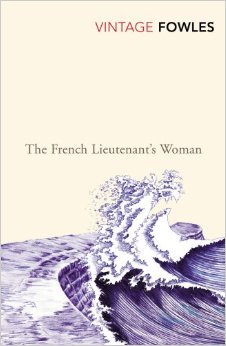
When I have read the first book in the chain, it usually makes it easier to get started, but not this time! I included The French Lieutenant’s Woman in a previous chain a few months ago where I linked it from another metafiction novel and to another book set in Lyme Regis. As I didn’t want to use the same links again, I had to think of something different and all I’ve been able to come up with is books with ‘French’ in the title. This leads me to Frenchman’s Creek by Daphne du Maurier.
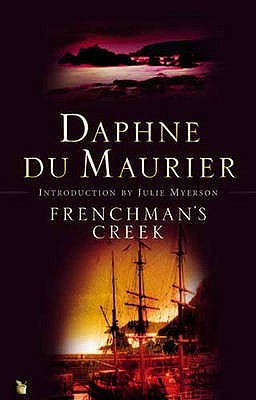
The Frenchman of the title is the pirate Jean-Benoit Aubéry. A novel I read last year which also involves pirates (although these pirates are not as charming as Jean-Benoit) is The Sealwoman’s Gift by Sally Magnusson. Set in the 17th century, the novel tells the story of a group of people abducted during a Barbary pirate raid on Iceland and taken in captivity to Algeria.
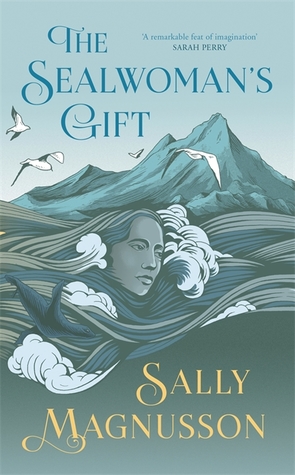
Iceland and Algeria are both fascinating countries to read about and I enjoyed the contrast between both settings in The Sealwoman’s Gift. I’ve read a few other books set in Iceland and the one I’m going to link to here is Burial Rites by Hannah Kent, a beautifully written novel about an Icelandic woman, Agnes Magnúsdóttir, who is found guilty of murder and sentenced to death.

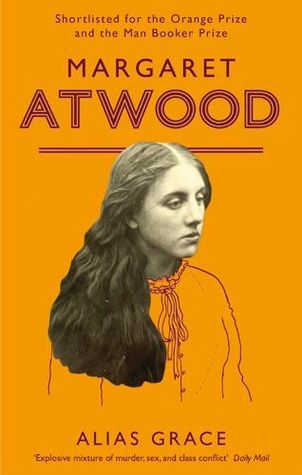
Thinking about Burial Rites reminds me of Alias Grace by Margaret Atwood. Alias Grace is set in Canada, not Iceland, but otherwise the two books have a lot in common. They both give fictional accounts of real women who were convicted of murder (Grace Marks, in the case of Atwood’s novel).
I have read a few of Atwood’s other books, most recently Hag-Seed, which is a clever re-telling of Shakespeare’s The Tempest. Also inspired, at least in a small part, by The Tempest is This Rough Magic, one of my favourite books by Mary Stewart. The title comes from a line spoken by Prospero in the play (“this rough magic I here abjure”).

Mary Stewart’s books (apart from her Arthurian series) are a combination of suspense, romance and mystery and feature young heroines in exotic or atmospheric settings. M.M. Kaye’s Death In… novels from the same era remind me of Stewart’s in many ways, although I find them slightly darker. I have read three, including Death in Cyprus, and still have the rest to look forward to.
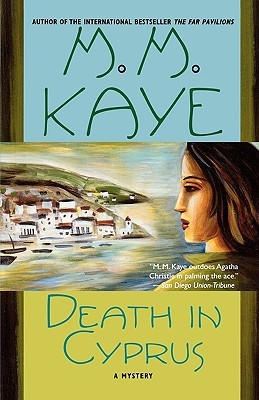
And that’s my chain for this month…Frenchmen, pirates, Iceland, female prisoners, The Tempest and romantic suspense!

In February, we will be starting with Fight Club by Chuck Palahniuk.
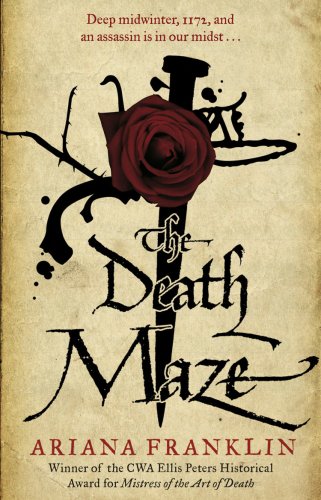
The Death Maze by Ariana Franklin

This is the second novel in Ariana Franklin’s Adelia Aguilar mystery series, set in the 12th century. My feelings about the first book – Mistress of the Art of Death – were quite mixed (I liked the medieval setting but found the dialogue and the main character too modern), but I wanted to try at least one more in the series and came across this one in the library a few weeks ago.

If you’re new to these books, I don’t think it’s necessary to have read the previous one before reading this one. The Death Maze, which has also been published under the title The Serpent’s Tale, begins with the poisoning of Rosamund Clifford, Henry II’s mistress. Henry’s estranged queen, Eleanor of Aquitaine, is immediately suspected, being the person with the most obvious motive for wanting The Fair Rosamund dead. If this is true, the repercussions could be huge and could lead the country into civil war. The king needs someone to investigate on his behalf – and so he summons Adelia Aguilar, his ‘mistress of the art of death’.

Adelia, before coming to England, had studied medicine at the famous medical school in Salerno which accepted female students as well as men. Since solving her first case for Henry II (a series of child murders which formed the basis of the previous novel), she has been living a quiet life in the countryside with her baby daughter, Allie, and it is with some reluctance that she agrees to undertake this new task. The king cannot be refused, of course, so Adelia soon finds herself setting off for Rosamund’s castle, escorted by Rowley Picot, her former lover, now the Bishop of St Albans. During their investigations, they are taken captive by Eleanor and her supporters, but when snow begins to fall the whole party become trapped for the winter at the nunnery in Godstow, where the mystery deepens as more murders take place.

In some ways, I enjoyed this book more than the first one. I thought the mystery was more complex – and certainly not as dark and disturbing as the previous one. I didn’t guess who the murderer was, although I had my suspicions, but I think we were given enough clues to work it out with no unfair surprises or information being withheld.

This is a period of history I always find interesting to read about and I felt that the portrayals of real historical figures in this book, such as Henry II and Eleanor of Aquitaine, were very different from the way they have been depicted in other novels I’ve read. Eleanor is certainly not the sympathetic, admirable character she is in Elizabeth Chadwick’s The Summer Queen trilogy, for example – she comes across as quite selfish and petulant. Most of the other characters, though, are fictional – as is most of the plot, including many of the details of Rosamund Clifford’s story. I did like the descriptions of the maze of hedges surrounding Rosamund’s tower; the scene where Adelia and her friends try to find their way through it reminded me of the famous Hampton Court Maze episode in Three Men in a Boat.

‘I’m sorry, I’m sorry,’ Adelia shouted. She faced Rowley. ‘Don’t you see, if a maze is continuous, if there aren’t any breaks, and if all the hedges are connected to each other and you follow one of them and stick rigidly to it wherever it goes, you’ll traverse it eventually, you must, it’s inevitable, only…’ Her voice diminished in misery, ‘I chose the left-hand hedge. It was the wrong one.’

As for Adelia herself, I can’t make up my mind about her. I do like her as a character because she has all the qualities I admire in a heroine – intelligence, courage and independence, as well as a passion for her career which made her turn down the chance of marriage to Rowley as she knew that would bring her medical work to an end. However, she is the sort of heroine I would expect to find in a much more modern setting; her behaviour and attitudes make her very unconvincing as a medieval woman. I could say the same about the language Ariana Franklin uses, which I think also often feels far too modern for the time period. I suppose whether or not you will enjoy these books depends on how important those things are to you, but I always struggle to overlook them.

I’m not sure if I will read any more of the Adelia Aguilar books, but I might try one of Ariana Franklin’s earlier novels published under her real name, Diana Norman.

New plans for the New Year

Happy New Year! I can’t believe it’s 2019 – that means in October my blog will be ten years old! I’m sure I’ll be reflecting on that later in the year and finding some way to mark the occasion. For now though, like many other book bloggers, I wanted to use my first post of the year to look at my reading and blogging plans for the next twelve months.

Challenges and events

I prefer to have as much freedom in my reading choices as possible, so I’m not signing up for any year-long reading challenges this year, with the exception of the Historical Fiction Challenge hosted at Passages to the Past. I read a lot of historical fiction anyway so that one is not really a challenge for me, but I still like to take part as it helps me to connect with other like-minded readers and to keep a list of my historical fiction reads in one place.

I do enjoy participating in shorter events hosted by other bloggers such as 20 Books of Summer, the R.I.P. event and Nonfiction November so I will join in with some of those in 2019. I’ll also keep working through my Classics Club list and participating in any associated Classics Club events.

Blogging plans

The same as last year, really. I will continue with my Commonplace Book posts at the end of every month and my Historical Musings posts in the middle of the month, as well as participating in Six Degrees of Separation and Top Ten Tuesday now and then.

Personal projects

My Walter Scott Prize Project has been neglected recently, so I would like to make some progress on that in 2019. I also want to devote more time to re-reading old favourites – I say that at the beginning of every year and never manage to do it. Sadly, I only re-read one book in 2018, but I’m determined to improve on that number in 2019 so have started off my year’s reading with a re-read of Cashelmara by Susan Howatch. I also want to make progress with some of the series I’m in the middle of reading and find time for some of those long-anticipated books I’ve been putting off reading for years because I wanted to have ‘something to look forward to’.

Most of all, I just want to enjoy the books I read in 2019.

What plans do you have for the year ahead?