It’s the first Saturday of the month which means it’s time for another Six Degrees of Separation, hosted by Kate of Books are my Favourite and Best. The idea is that Kate chooses a book to use as a starting point and then we have to link it to six other books of our choice to form a chain. A book doesn’t have to be connected to all of the others on the list – only to the one next to it in the chain.

This month we’re starting with We Have Always Lived in the Castle by Shirley Jackson. For once, this is a book that I’ve actually read – and also one that I enjoyed. Here’s my synopsis of the plot, taken from my review posted in 2011:
The book is narrated by eighteen-year-old Mary Katherine Blackwood, or ‘Merricat’, who lives with her sister Constance, their Uncle Julian, and Jonas the cat in a big house on the edge of town. Near the beginning of the story we see Merricat walking home with some shopping, being taunted and chanted at by everyone she passes. It seems the Blackwoods are very unpopular, but at first we don’t know why.
When Merricat returns home, it becomes even more apparent that something is wrong. Merricat herself does not seem like a normal eighteen-year-old – she likes to bury things in the grounds of the Blackwood house and believes that using magic words and rituals will protect her home and family. Constance is agoraphobic and afraid to walk any further than the garden. Uncle Julian, confined to a wheelchair, is obsessed with the book he’s writing about a tragedy that occurred six years earlier. And what exactly has happened to the rest of the Blackwood family?
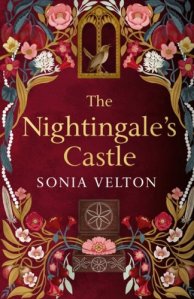

We Have Always Lived in the Castle is a dark, unsettling novel. My first link is to another dark novel with the word ‘castle’ in the title: The Nightingale’s Castle by Sonia Velton (1). This is a reimagining of the story of Countess Erzsébet Báthory (often anglicised to Elizabeth Bathory), thought to be a possible inspiration behind Bram Stoker’s Dracula. Bathory and her servants were accused of murdering hundreds of Hungarian peasant girls, making her one of the most notorious serial killers in history.
The Angel Makers by Patti McCracken (2) is a nonfiction book about another Hungarian serial killer. Zsuzsanna Fazekas, known in the book as Auntie Suzy, was a midwife and the ringleader of a circle of women responsible for the deaths of over one hundred men between 1914 and 1929. Suzy was the one who sold bottles of arsenic to the other women in her village and, in the absence of a village doctor, the one who dictated the causes of death to be put on the death certificates.
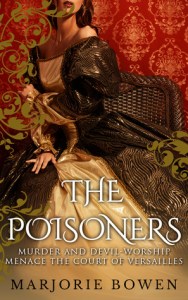
Poisoning also plays a big part in Marjorie Bowen’s The Poisoners (3), originally published in 1936. The book is set in 17th century Paris during the reign of the Sun King, Louis XIV, and revolves around a famous murder scandal known as L’affaire des poisons. I described it in my review as a story featuring “fortune tellers and spies, counterfeiters and apothecaries, an empty house which hides sinister secrets, mysterious letters marked with the sign of a pink carnation, and a society thought to be involved in black magic.”
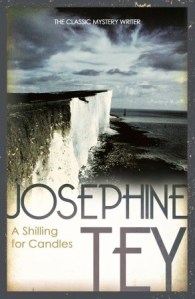

I don’t want a whole chain full of serial killers, so I’ll try to send things in a slightly different direction now. Another book published in 1936 is A Shilling for Candles by Josephine Tey (4). This is one of Tey’s Alan Grant mysteries (of which I’m sorry to say I’ve still only read two) and was adapted for film by Alfred Hitchcock under the title Young and Innocent.
A shilling is a coin, so that leads me to Sugar Money by Jane Harris (5). This novel is set in the Caribbean in the year 1765. Our narrator, teenage Lucien, and his older brother Emile are slaves working on a sugar plantation in French-ruled Martinique. It’s a fascinating book exploring some aspects of slavery I had never read about before – and it’s also partly based on a true story.
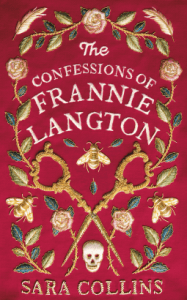
The final book in my chain is The Confessions of Frannie Langton by Sara Collins (6). The book begins with Frannie, a former slave, awaiting trial in London for the murder of her employers (sorry, it seems I couldn’t get away from murderers this month after all). However, the crime element is only one small part of the story – a large part of the novel is devoted to Frannie remembering her childhood on a sugar plantation in Jamaica and her experiences on arriving in England.
~
And that’s my chain for November! My links have included: The word ‘castle’, Hungary, female poisoners, 1936, money and sugar plantations.
In December we’ll be starting with Seascraper by Benjamin Wood.
 She Reads Novels
Great chain. Just added The Nightingale’s Castle to my wishlist.
It’s an interesting book. I had heard of Elizabeth Bathory but knew almost nothing about her.
Who would have thought there were so many historical Hungarian serial killers? Very interesting!
I can’t believe I’ve actually read two books about Hungarian serial killers! It wasn’t a topic I deliberately set out to look for!
🤣
I’d like to read more books set in Hungary but maybe not about serial killers!
I have read all of Tey multiple times but never knew that particular book had been made into a Hitchcock movie. He was never that careful about sticking to the plot but I will definitely have to investigate.
Constance
I watched Young and Innocent a few years after reading the book and found it very different, although the basic outline of the plot was the same. I thought it was worth watching in its own right, though.
Oh, murder and slavery. Heavy chain you built here, but fascinating. Well done!
Thanks! I didn’t intend to put such a dark chain together this month!
But it works for Halloween.
I thought you were going for the serial killer jackpot! I enjoyed Sugar Money, too.
I could probably have found a few more serial killer books to link to, but thought the chain was already dark enough! I’ve enjoyed everything I’ve read by Jane Harris – it’s a shame there’s been nothing new from her for a long time.
It’s a great bookish chain. And I see several books on it that I wouldn’t mind reading myself. 😀
They are all interesting books!
I liked that dark start to your chain: I wouldn’t mind trying them but not too many serial killers/poisoners all at once. A Shilling for Candles was a fun one, I especially liked the young lady Erica (?) and her car tinny!
I didn’t intend to have so many books about serial killers in my chain! Yes, I loved Erica in A Shilling for Candles too. I need to read more Josephine Tey books.
Great chain Helen … I’ve seen a few covers used for the Jackson though so far I like mine best (though it was the first one I saw so not a careful choice!) I notice that we both had books in Eastern Europe though I went to the Czech and Latvian countries.
Yes, I like the cover you used in your chain – it really suits the tone of the book.
Great chain!
A Shilling for Candles: this one didn’t work too well for me. I prefered #1: The Man in the Queue
And loved #5: The Daughter of Time
I was a bit disappointed with A Shilling for Candles too – The Daughter of Time was much better! I still haven’t read any of the others in the series but will look forward to them.
What a gruesome, yet interesting chain! Good work! I didn’t know any of Tey’s books were films.
I’m not sure if there are films of any of the others or just that one. I enjoyed watching it but found it very different from the book.
Excellent if slightly murderous chain!
I didn’t mean for it to be so murderous – I’m not sure how that happened!
I have only read Daughter of Time of the Alan Grant series. Maybe one day I will read more.
Fun chain!
I would like to read more from the Alan Grant series too. Daughter of Time is my favourite so far.
that was dark but I love it. Mine went a bit dark too. I will check out the Hungarian poisoner.book, sounds interesting
The book about the Hungarian poisoners was fascinating and I found it as easy to read as fiction.