Black Plumes by Margery Allingham

Margery Allingham, one of the four Golden Age ‘Queens of Crime’, was best known for her Albert Campion detective series, but she also wrote several standalone crime novels. I have previously read and enjoyed The White Cottage Mystery, so had high hopes for this one, Black Plumes.

First published in 1940, Black Plumes is set almost entirely in the London home of the Ivory family and the art gallery they own in the building next door. The family matriarch is the elderly Mrs Gabrielle Ivory and the story is written from the perspective of her granddaughter, Frances. As the novel opens, Frances’ father, Meyrick, is on business abroad and has left his son-in-law Robert Madrigal (who is married to Frances’ half-sister Phillida) to run the gallery while he is away. In his absence, however, strange things have been happening: a broken vase, a slashed painting – and finally, an argument between Robert Madrigal and the artist David Field, after which Robert disappears.

A few weeks later, Robert’s dead body is discovered and suspicion quickly falls upon David – leaving Frances in a difficult situation, as David is the man she has just agreed to marry. She tells herself that he must be innocent, but how can she be sure?

As I’ve said, there is no Albert Campion to solve the mystery in this book, which could be a good or a bad thing depending on whether you’re a Campion fan. Instead, there’s Detective Inspector Bridie, an elderly Scotsman from Orkney who is brought in to investigate. However, we don’t really get to see any of his investigations and he doesn’t have a large part to play in the story. I didn’t solve the mystery myself – although I had narrowed it down to two suspects and one of them was correct – but since we see everything through Frances’ eyes rather than the detective’s, I think that made it more complicated.

There’s a touch of romance in the story too, particularly at the beginning where Frances and David agree to announce a fake engagement in order to prevent Frances having to marry someone else, but this storyline turned out not to be as much fun as it promised to be at first (Georgette Heyer does that sort of thing much better). It didn’t help that I found David so annoying; in fact, I didn’t like any of the characters much at all, although I enjoyed most of Gabrielle Ivory’s scenes and the contrast between her Victorian values and her granddaughter’s more modern ones.

After finishing this book, I looked at some other reviews and was confused when I saw everyone complaining about the use of a certain racist term to describe one of the suspects. It seems that this word has been edited out of the new edition I read and replaced with a less offensive term, which I think was a good idea in this case. The racist sentiment is still there, but it’s clear that it’s supposed to be the view of one of the characters rather than Allingham herself.

I think Black Plumes is worth reading if you like Allingham’s writing, but if it had been the first book I’d read by her, I’m not sure that I would have wanted to read more.

Top Ten Tuesday: Authors I discovered in 2021

This week’s Top Ten Tuesday (hosted by That Artsy Reader Girl) gives us a chance to look back at our 2021 reading and pick out ten authors we read for the first time last year. I have listed below a mixture of new-to-me authors I loved and others I’m still not sure about.

~

1. Kate Quinn – I read The Rose Code in 2021 and loved it; in fact it was one of my books of the year. I want to read her new one, The Diamond Eye, which is being published in March, but she also has plenty of earlier novels for me to explore.

2. Leïla Slimani – I chose to read The Country of Others because I thought it would be interesting to read a book set in 1940s Morocco written by a French-Moroccan author. I did find it interesting, but it was also very bleak and depressing. I’m not sure whether I’ll try more of Slimani’s books.

3. Jennifer Saint – I really enjoyed Ariadne and am looking forward to starting my review copy of Jennifer Saint’s new book, Elektra, in which she tells the stories of three more women from Greek mythology.

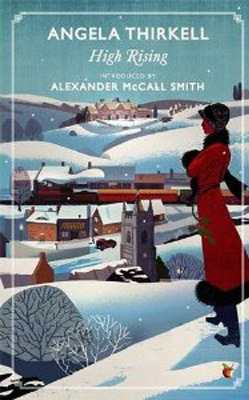
4. Angela ThirkellHigh Rising had been on my Classics Club list for years and I eventually picked it up last summer. I don’t think Thirkell is going to become a favourite author, but I found a lot to like in this book and will try to read the second one in the series soon.

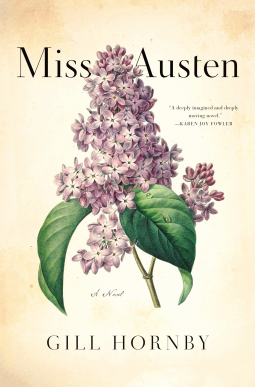
5. Gill Hornby – I read Miss Austen just before Christmas and really enjoyed it. Her earlier novels don’t appeal to me, but her next one, due out this year, is also Austen-inspired so I’m definitely interested in reading it.

6. Joan Aiken – I had been meaning to try Joan Aiken’s books for years and finally got round to it in 2021 with her 1976 Gothic novel Castle Barebane. I’m hoping to read more of her work soon.

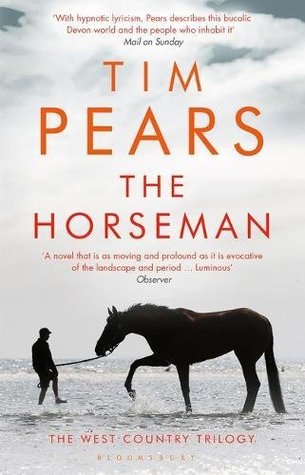
7. Tim Pears – I read The Horseman, the first in Tim Pears’ West Country Trilogy, in 2021 and hoped that I would love it and want to read the rest of the trilogy immediately. However, although I thought it was beautifully written I found it very slow and am unsure whether to continue.

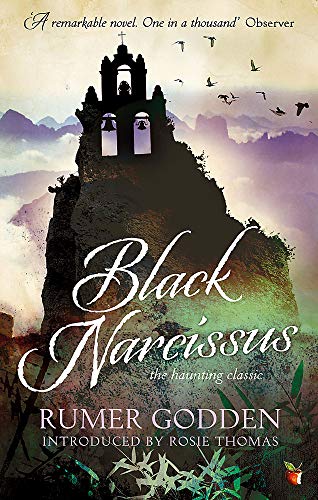
8. Rumer GoddenBlack Narcissus was one of my final reads of 2021. Although I didn’t love it as much as I’d hoped to, I found it interesting and atmospheric and I’m planning to read more by Rumer Godden.

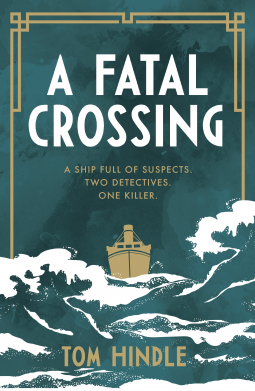
9. Tom Hindle – I loved Tom Hindle’s debut novel, A Fatal Crossing, which I reviewed last week but read towards the end of 2021, hence its inclusion on this list. I can’t wait to see what he writes next.

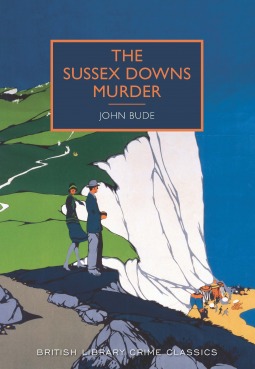
10. John Bude – I read The Sussex Downs Murder last year and enjoyed it, although I found the mystery too easy to solve. British Library Crime Classics have published a lot of Bude’s other crime novels, so I will probably try another one.

~

Have you read any of these authors? Which new (or new-to-you) authors did you discover last year?

A Terrible Kindness by Jo Browning Wroe

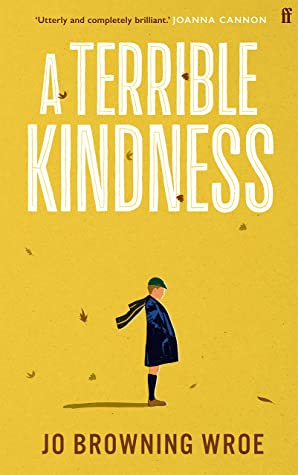
The Welsh village of Aberfan is a place many of us associate with the 1966 mining disaster where a landslide of coal waste collapsed onto the village school, killing 116 children and 28 adults. Among the many volunteers who arrived in Aberfan to help deal with the aftermath of the tragedy were several hundred embalmers. A Terrible Kindness imagines the story of one of these embalmers, the fictional William Lavery.

William is just nineteen years old and newly qualified when the disaster happens, but he works tirelessly alongside older and more experienced embalmers to help identify and tend to the bodies of the victims. Not surprisingly, this will have a profound effect on him and leave him psychologically damaged for years to come. It also brings back memories of other traumatic moments that occurred earlier in William’s life – including one particular incident that led to the breakdown of his relationship with his mother. This incident is only hinted at throughout the book and it’s not until the final chapters that we find out what happened.

The Aberfan disaster is something that is still within living memory for a lot of people, so it’s important that authors handle things like this with care and sensitivity – and I think Jo Browning Wroe does this very well. These scenes are naturally very sad and moving, but also filled me with admiration for these people who voluntarily carried out such an unpleasant, difficult but essential task. However, Aberfan is only the starting point for William’s story and apart from two or three chapters, the rest of the book is set elsewhere.

A lot of time is spent on William’s years as a young chorister at a choir school in Cambridge, the friendships he made there and the events that made him abandon his promising singing career and go into the family embalming business instead. The complex relationships between William, his mother, his uncle and his uncle’s partner are also explored and this is the real focus of the book rather than what happened at Aberfan. I did have a lot of sympathy for William, who was clearly struggling, but I wished he had been able to get help and find a way to move on rather than making life so unhappy for himself and his loved ones for so many years. His mother, Evelyn, also frustrated me with her inability to consider other people as well as herself and I felt that the revelation of the incident that caused her estrangement from William was a bit of an anticlimax.

I think the inclusion of the Aberfan storyline will draw a lot of readers to this book, but will also put other readers off and I do wonder whether a fictional tragedy would have served the purpose of the plot just as well. As an exploration of grief and forgiveness, though, it’s an excellent read and an impressive first novel by Jo Browning Wroe.

Thanks to Pigeonhole for the opportunity to read this book.

This is book 2/50 read for the Historical Fiction Reading Challenge 2022.

A Fatal Crossing by Tom Hindle

I was drawn to A Fatal Crossing first by the cover, then when I saw that it was a Golden Age-style mystery novel set at sea in the 1920s, I was even more interested. I read the book in October and loved it, but have waited to post my review until publication day, which is today (here in the UK).

The whole story takes place over a four day period in November 1924 as the cruise liner Endeavour approaches New York from Southampton with two thousand passengers and crew on board. When an elderly man is found dead at the bottom of a staircase, the ship’s captain assumes – and hopes – that it’s an accident. However, James Temple, a Scotland Yard inspector, happens to be one of the passengers on the voyage and, after examining the body, he is convinced that the old man has been murdered. The captain gives Temple permission to investigate the crime, but only if he agrees to be accompanied by one of the ship’s officers, Timothy Birch.

Birch has no experience as a detective but follows Temple around the ship as he looks for clues, speaks to suspects and establishes alibis. They quickly discover a link between the dead man and a priceless painting stolen from another passenger, but the mystery deepens when more deaths occur and Temple and Birch find themselves racing against time to uncover the truth before the ship reaches its destination.

This is a complex and engaging mystery novel, with plenty of suspects, lots of red herrings and a strong sense of time and place. Although I felt that there were times when the plot was starting to become quite convoluted and I was struggling to keep track of who was who and who did what, I kept going and was rewarded by some spectacular plot twists near the end which I thought I had worked out in advance, but most definitely hadn’t!

Temple and Birch make an interesting partnership, particularly as it’s a very reluctant one! As an intelligent, competent and experienced detective, Temple is not at all happy about having an inept and bumbling ship’s officer shadowing his every move, saying the wrong things and interfering with the investigation. Birch is our narrator, and as we only see things from his point of view, Temple comes across as bad-tempered, rude and hostile, but there are hints that there’s more to each character than meets the eye. While Temple’s past and his reasons for boarding the Endeavour are shrouded in mystery, we learn that Birch is haunted by the disappearance of his young daughter Amelia and the breakdown of his marriage.

As well as the unusual detecting duo and that unexpected ending, I also loved the setting and the atmosphere. A ship on a long sea voyage is the ideal location for a murder mystery, as all of the suspects are confined in one place with nobody able to arrive or depart until the destination is reached. There’s some wonderful attention to detail as the action moves around the ship from the elegant first class decks to the less luxurious third class areas and the officer’s quarters.

A Fatal Crossing is Tom Hindle’s first novel; having enjoyed it so much, I’m already looking forward to his next one!

Thanks to Century for providing a copy of this book for review via NetGalley.

The Twyford Code by Janice Hallett

Stolen gold, Chinese jewels, nuclear weaponry, oil, Nazi treasure, a secret portal to a parallel utopian society, an underground bunker full of priceless artworks, an airtight library of valuable books, evidence of alien visitation, a cure for cancer, a time machine, a device to contact the spirit world, a map of the human genome from fifty years before modern science discovered it. You name it, someone, somewhere, at some time, has suspected Edith Twyford hid clues to it in her books.

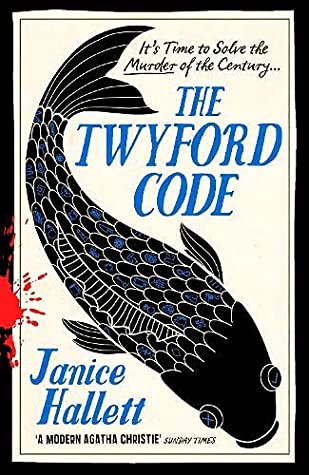
It’s always a nice feeling when you start to read a book and can tell after just a few pages that it’s going to be one of your books of the year. It’s a particularly nice feeling when that happens in January! The Twyford Code is one of those books; I loved it and before I’d even finished I was adding Janice Hallett’s previous novel The Appeal to my TBR.

The Twyford Code is such an unusual book it’s been difficult for me to decide how much I can say about it without spoiling the fun for other readers. I’m probably not going to do it justice here, but this is the best I can do!

In 1983, Steven Smith finds a book by children’s author Edith Twyford on a bus in London. Unable to read the book himself, he takes it to school and gives it to his Remedial English teacher, Miss Isles, completely unaware of what he is setting in motion – because Miss Isles believes that this book, and the rest of Twyford’s Super Six series, contains a secret code that will lead to a hidden treasure. Then, on a school trip to Bournemouth, Miss Isles disappears without trace, an incident which will haunt Steve for the rest of his life.

In 2019, Steve has just been released from prison after serving an eleven-year sentence. He now has no memory of what happened to Miss Isles on that long-ago day, but he is convinced that her disappearance had something to do with the Twyford Code. Now that he is free, Steve decides that the time has come to uncover the truth about Miss Isles, Edith Twyford and the code.

Using an old iPhone given to him by his estranged son, Steve records the details of his investigations in audio form and most of the novel is presented as a series of transcripts of these audio files. The voice recognition software used to transcribe the recordings often ‘mishears’ words or spells them phonetically, which makes for a challenging but entertaining reading experience! It’s probably something you’ll either love or hate, but my advice is to try to stick with it as it does become less distracting after a while and the format really is an important part of the story.

This was the perfect book for me in many ways. I have always enjoyed puzzles and word games and there are plenty of those incorporated into The Twyford Code in various forms. I also read a lot of Enid Blyton as a child and Edith Twyford is clearly supposed to be a fictional version of Blyton (her Super Six books are obviously the equivalent of Blyton’s Famous Five and we are told that, like Blyton, Twyford’s books are now seen as outdated, racist and sexist, and have been edited to make them suitable for a modern audience). But I think what I actually enjoyed most about this novel was Steven Smith’s personal story – the details of his troubled, impoverished childhood in the 1980s, how he drifted into a life of crime, and how he sets out to solve the code and find out what happened to Miss Isles.

I loved this book and on reaching the end, I wanted to go back to the beginning and read it all again to look for all the clues I’d missed the first time. I didn’t do that, because I have so many other books waiting to be read, but it was very tempting and I’m sure I’ll be picking up The Appeal before much longer!

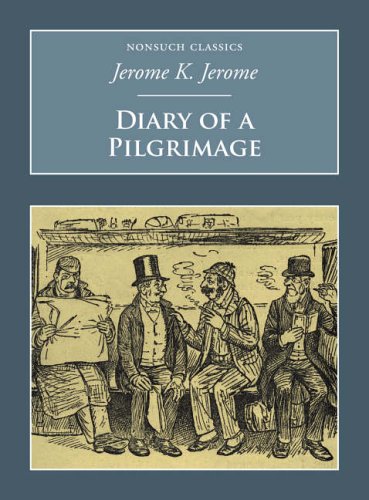
Diary of a Pilgrimage by Jerome K. Jerome

I ought, of course, to sit down in front of this diary at eleven o’clock at night, and write down all that has occurred to me during the day. But at eleven o’clock at night, I am in the middle of a long railway journey, or have just got up, or am just going to bed for a couple of hours. We go to bed at odd moments, when we happen to come across a bed, and have a few minutes to spare. We have been to bed this afternoon, and are now having another breakfast; and I am not quite sure whether it is yesterday or to-morrow, or what day it is.

Jerome K. Jerome’s hilarious Three Men in a Boat is one of my favourite novels from the late Victorian period. I have since tried several of his other books – Three Men on the Bummel, The Idle Thoughts of an Idle Fellow and now this one, Diary of a Pilgrimage – hoping to find another one as good, and although I’ve found them slightly disappointing in comparison, they are still amusing and entertaining. His books also tend to be much shorter than the average Victorian classic and are perfect if you need something light and uplifting between longer, more challenging reads.

Diary of a Pilgrimage, first published in 1891, is very similar to the Three Men books in structure and style. Our narrator, J, is off on his travels again, this time on a ‘pilgrimage’ to Germany to see the famous Passion Play at Oberammergau, a performance which has been regularly taking place there since the 17th century. Accompanied by his friend, known only as B, J travels first from London to Dover, then across the English Channel to Ostend and on to their destination by train. Along the way they stay in several hotels, visit some places of interest including Cologne Cathedral and, of course, find themselves in plenty of ridiculous and embarrassing situations.

Only a short section of the book is devoted to the Passion Play itself because, as J tells us, it has already been written about many times before. He spends much more time describing the places they pass through on the journey, the funny things that happen to them and the people they meet – such as the very boring man who never stops talking:

After the dog story, we thought we were going to have a little quiet. But we were mistaken; for, with the same breath with which he finished the dog rigmarole, our talkative companion added:

“But I can tell you a funnier thing than that -”

We all felt we could believe that assertion. If he had boasted that he could tell a duller, more uninteresting story, we should have doubted him; but the possibility of his being able to relate something funnier, we could readily grasp.

But it was not a bit funnier, after all. It was only longer and more involved. It was the history of a man who grew his own celery; and then, later on, it turned out that his wife was the niece, by the mother’s side, of a man who had made an ottoman out of an old packing-case.

A lot of J’s anecdotes involve his struggles to make himself understood in various foreign languages (he finds it particularly difficult to order an omelette) and the cultural differences he notices between Germany and England. The train journey also poses lots of problems, such as buying the right tickets, finding that other passengers have taken the best seats, and trying to interpret confusing timetables:

“Drat this 1.45! It doesn’t seem to go anywhere. Munich depart 1.45, and that’s all. It must go somewhere!”

Apparently, however, it does not. It seems to be a train that starts out from Munich at 1.45 and goes off on the loose. Possibly, it is a young, romantic train, fond of mystery. It won’t say where it’s going to. It probably does not even know itself. It goes off in search of adventure.

“I shall start off,” it says to itself, “at 1.45 punctually, and just go on anyhow, without thinking about it, and see where I get to.”

Diary of a Pilgrimage is not what I would describe as a ‘must-read classic’ but it’s a bit of light-hearted fun, which I think we all need now and then!

The Key in the Lock by Beth Underdown

The Key in the Lock is Beth Underdown’s second novel. Her first, The Witchfinder’s Sister, was a fascinating historical novel set during the Manningtree witch trials of 1645; this new book sounded very different, but I still wanted to give it a try.

The novel opens in 1918, with Ivy Boscawen trying to come to terms with the death of her son, Tim, shot dead in the trenches of the Western Front. Ivy is desperate to know exactly what happened to Tim, but after speaking to some of his fellow soldiers what she discovers about her son’s death makes her feel even more distressed. Worse still, the loss of Tim triggers memories of another boy, William Tremain, who died thirty years earlier in a fire at the Great House in Polneath, Cornwall. Ivy, whose father was the Polneath doctor at the time, has been haunted by William’s tragic death ever since and has never been able to shake off her feelings of guilt about her actions in the aftermath of the fire.

With Ivy as the narrator, the novel moves back and forth in time between 1918 and 1888, gradually shedding light on the mysteries surrounding both deaths. Family secrets are uncovered, wills are read, inquests are held, clandestine meetings take place and identities are revealed – yet this is not really the exciting, suspenseful Gothic novel I had been hoping for. It moves along at a very slow pace and although I was enjoying it enough to want to read on to the end, I never felt fully engaged with either the plot or the characters.

There is an advantage to the slow pace, however, which is that it gives the reader a chance to try to solve some of the mysteries and guess some of the secrets before Ivy does. It’s a complex story, with lots of pieces that only begin to fall into place towards the end and there were points where I felt confused, particularly as the two timelines often seem to merge together. A chapter heading may indicate that we are in 1918, but after a few paragraphs Ivy starts to remember the events of 1888 again and it’s not always clear which period we are reading about. Also, the ‘key in the lock’ of the title turns out to be several keys to several locks in several doors and I struggled to keep track of the significance of them all.

I did like the atmosphere Beth Underdown creates and the attention to period detail; I never felt that the language or attitudes were too modern. She also writes very convincingly about Ivy’s grief for her lost son, her sense of guilt over what happened at the Great House, and the terrible misunderstandings and assumptions that have persisted for thirty years. It’s a very sad story, where lives are taken too early, acts of kindness go unappreciated until it’s almost too late and wicked deeds go unpunished for too long. An interesting read, but with a tighter focus I think it could have been a much better book.

Thanks to Pigeonhole for the opportunity to read this book.

This is book 1/50 read for the Historical Fiction Reading Challenge 2022.