Six Degrees of Separation: From Black Lamb and Grey Falcon to The Map of Lost Memories

It’s the first Saturday of the month which means it’s time for another Six Degrees of Separation, hosted by Kate of Books are my Favourite and Best. The idea is that Kate chooses a book to use as a starting point and then we have to link it to six other books of our choice to form a chain. A book doesn’t have to be connected to all of the others on the list – only to the one next to it in the chain.
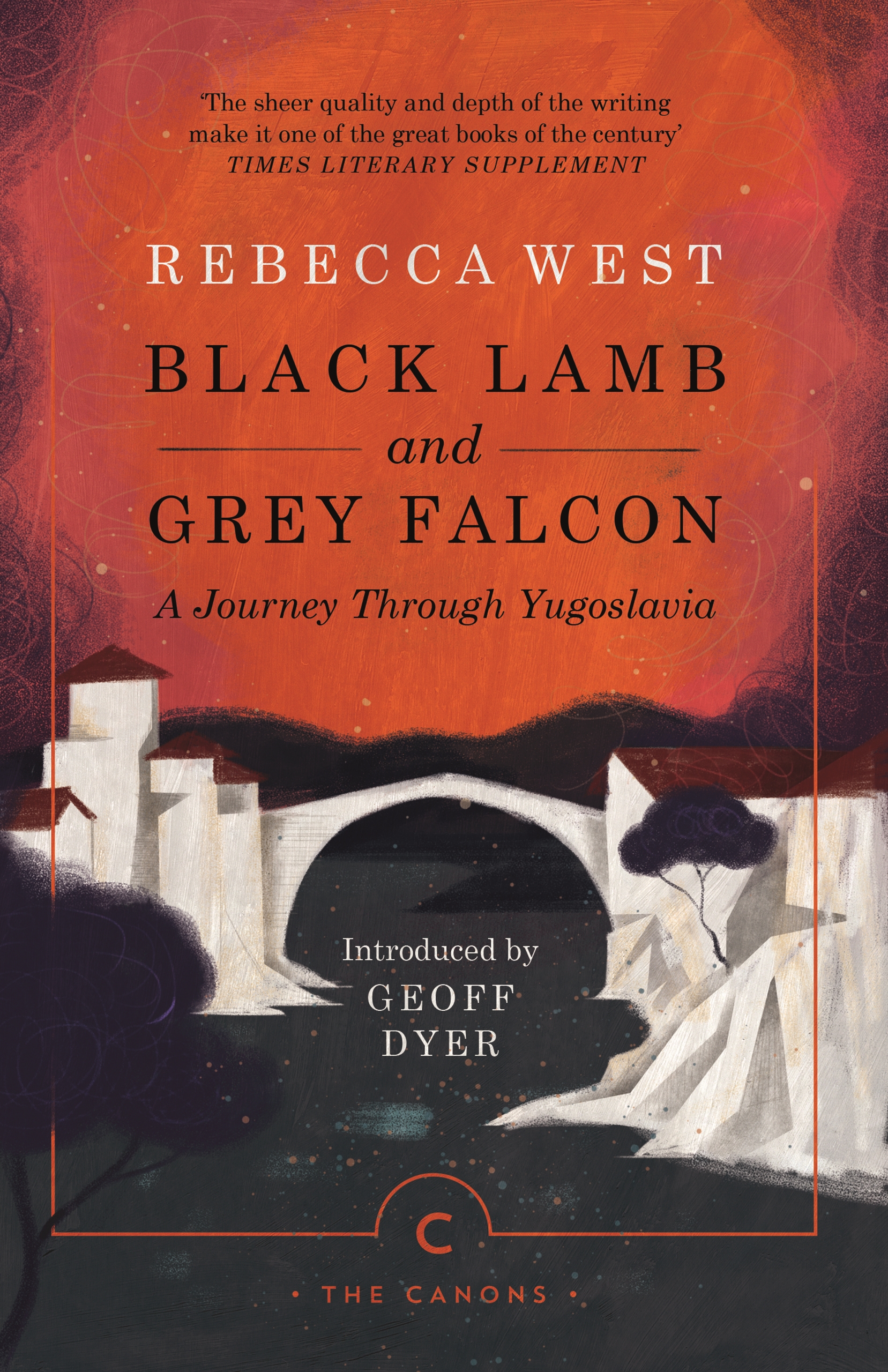
This month we were told we could begin with any travel guide of our choice. Coincidentally, I have just begun reading Black Lamb and Grey Falcon, Rebecca West’s 1941 travel book about her journey through the former Yugoslavia. I’ve wanted to read this for years and have been put off by the length, but I’ve finally decided to just plunge in.

Rebecca West’s epic masterpiece not only provides deep insight into the former country of Yugoslavia; it is a portrait of Europe on the brink of war. A heady cocktail of personal travelogue and historical insight, this product of an implacably inquisitive intelligence remains essential for anyone attempting to understand the history of the Balkan states, and the wider ongoing implications for a fractured Europe.

Girl at War by Sara Nović (1) is set in Croatia in 1991, during the breakup of Yugoslavia. As the country descends into war, we see events unfold through the eyes of a ten-year-old girl. I found this a very moving and emotional novel and enjoyed reading it during a trip to Dubrovnik.

A book with a shared word in the title is War Horse by Michael Morpurgo (2). It’s a children’s book, but can also be appreciated by adults; I read it in preparation for going to see the Steven Spielberg film version in 2012. The story is narrated by Joey, a young horse who serves in the cavalry on the battlefields of World War I.

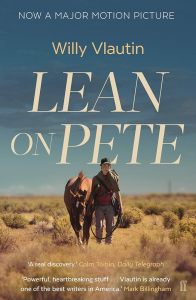
Lean on Pete by Willy Vlautin (3) is also a book about a horse. It’s the story of fifteen-year-old Charley, who gets a job at the Portland Meadows race track in Oregon and forms a close bond with the racehorse, Lean on Pete.
As well as being an author, Vlautin is currently the guitarist and vocalist with the American country soul band The Delines.

Another author who is also a musician is Mat Osman, the bassist in the band Suede (and brother of author and TV presenter Richard Osman). I have read his second novel, The Ghost Theatre (4), which is set in an alternate history version of Elizabethan London, where one of our protagonists belongs to a community of bird-worshippers known as Aviscultans.

Birds provide the link to my next book, The Bird King by G Willow Wilson (5), in which a mapmaker accused of sorcery and the ability to draw magical maps flees across 15th century Spain in search of the legendary island of Qaf, said to be the home of the King of the Birds. I found this a very unusual novel, combining history, myth and fantasy.

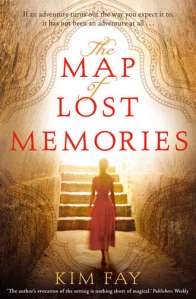
In Kim Fay’s novel, The Map of Lost Memories (6), a woman dreams of making an important historical discovery and establishing her own museum. Setting off on an expedition to Cambodia, she begins a search for ten lost copper scrolls recording the history of the Khmer people. I think this is possibly the only book I’ve read set in Cambodia!

~

And that’s my chain for April. My links have included: books set in the former Yugoslavia, books with war in the title, horses, authors who are musicians, birds and maps. Staying with the ‘travel’ theme, my chain this month has taken me to Croatia, France, USA, England, Spain and Cambodia.

In May we’ll be starting with a novel longlisted for the 2024 Stella Prize – The Anniversary by Stephanie Bishop.
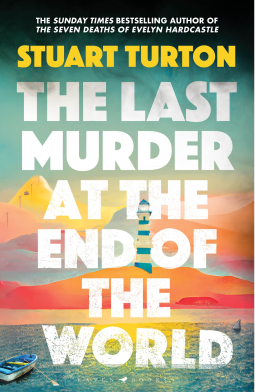
The Last Murder at the End of the World by Stuart Turton

Stuart Turton is, in my opinion, one of the most original and imaginative authors writing today; although I know his style doesn’t work for everyone, I loved his first book, The Seven Deaths of Evelyn Hardcastle, which was unlike anything else I’ve ever read. His second novel, The Devil and the Dark Water, a mystery set aboard a 17th century Dutch trading ship, disappointed me, but I recently read his short story, The Master of the House and loved that one too, so I was curious to see what this, his newest novel, would be like.

The Last Murder at the End of the World combines a murder mystery with a post-apocalyptic setting. The world as we know it has been destroyed by a black toxic fog that has swept across the planet, killing everyone it touches. The only place the fog hasn’t reached is a small Greek island, home to the Blackheath scientific research facility. The island is inhabited by one hundred and twenty-two villagers and three scientists from Blackheath, who have become known as the Elders. While the scientists continue their research into the fog and the security system that is holding it back from the island, the villagers farm the land and obey the rules set out for them by the scientists, while being discouraged from thinking too deeply for themselves.

Disaster strikes when one of the scientists is murdered and the barrier keeping the fog at bay is broken down. If the islanders can solve the murder within ninety-two hours, the barrier will be restored – if not, the fog will envelop the entire island. One of the villagers, Emory, is more resourceful than the others; rather than just accepting the situation and her place in society, she has always been curious and eager to learn. The task of investigating the crime, then, falls mainly to Emory – but to make her job even more difficult, the security system has also wiped the memories of the villagers, so someone could be a murderer without even knowing it.

The Last Murder at the End of the World is a difficult book to write about without spoiling too much. From the beginning, we are faced with lots of intriguing questions. Why do none of the villagers live past the age of sixty? Who or what is ‘Abi’, the omniscient voice who is present in everyone’s mind? Are the three Elders working with the villagers or against them? Everything is explained eventually but I won’t discuss the plot in any more depth here. I think if you’ve read other dystopian/post-apocalyptic novels you’ll already have an idea of the sort of things being explored, such as why some people survived and not others and whether society can be rebuilt to make the new world a better place than the last one.

The murder mystery element is interesting mainly because of the limitations that are placed upon it – the short period of time in which Emory has in which to solve the mystery and the fact that nobody can remember anything they may have done or witnessed on the night of the crime. There are also some surprising plot twists and revelations that meant I was constantly questioning and re-evaluating everything I thought I had figured out. However, this is definitely a book where the characters take second place to the plot; the three scientists are particularly difficult to like and, apart from Emory, the villagers are bland and not easily distinguished from each other. For this reason, The Last Murder at the End of the World is a novel I enjoyed from an intellectual perspective but not from an emotional one.

Thanks to Raven Books for providing a copy of this book for review via NetGalley.

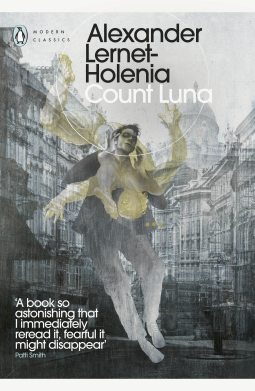
Count Luna by Alexander Lernet-Holenia

Translated by Jane B. Greene

What a strange book this is! I enjoyed it, but I’m not sure I fully understood everything the author was trying to say. It’s the first book I’ve read by Alexander Lernet-Holenia and I’m definitely now interested in reading more.

Count Luna was first published in German in 1955 (Lernet-Holenia was an Austrian author) and appeared in an English translation by Jane B. Greene a year later. It has recently been published in a new edition by Penguin Classics.

The novel begins with Alexander Jessiersky, an Austrian aristocrat, entering the Catacombs of Praetextatus in Rome, apparently in search of two French priests believed to have vanished somewhere in the underground passageways. When Jessiersky himself also fails to emerge from the catacombs, his disappearance is reported to the police, who link him with a series of incidents which occurred in Austria and are still under investigation. The rest of the book is presented as an account of Jessiersky’s life leading up to the disappearance, based on reports by the Italian and Austrian authorities.

We learn that at the start of World War II, Jessiersky is the head of a large Viennese transport company. When the company tries to purchase some land belonging to Count Luna, who refuses to sell, the board of directors come up with a plan to confiscate the land and have Luna sent to a Nazi concentration camp. Jessiersky himself is not involved in this, but does nothing to prevent it from happening – and so, when the war is over, he begins to worry that Luna has survived the camp and is coming back to take his revenge.

On one level, Count Luna could be described as a psychological thriller; told mainly from Jessiersky’s perspective, there’s a growing sense of paranoia and fear as he becomes convinced that Count Luna is following him around Vienna, watching from the shadows, breaking into his house and even trying to poison his children. Whether any of these things are true or only exist in Jessiersky’s imagination I’ll leave you to discover for yourself. The atmosphere becomes very dark and the feeling of tension increases as the novel heads towards its conclusion and Jessiersky enters the catacombs – and from this point the story becomes quite bizarre and even more nightmarish.

At 160 pages, Count Luna is a short novel, but took longer than I expected to read as there are some long, detailed digressions into subjects such as the lineage of the Jessiersky family, which need some concentration from the reader (and don’t really add a lot to the story as a whole). Apart from the references to the war, it felt more like a book written in the 19th century than one written in the 1950s. The war is a crucial part of the story, however, and I’ve seen reviews suggesting that Lernet-Holenia was drawing parallels between Jessiersky’s guilt over Luna’s fate and Austria’s own post-war guilt, which does make a lot of sense. I also think the name Luna (the moon) is no coincidence, as Jessiersky discovers that trying to escape from Luna – and therefore from his guilt – is as useless as trying to escape from the moon.

Although I didn’t love this book as much as I thought I was going to at the beginning, I did find it completely fascinating and it left me with a lot to think about.

Thanks to Penguin Classics for providing a copy of this book for review via NetGalley.

My Commonplace Book: March 2024

A selection of quotes and pictures to represent March’s reading:

commonplace book
noun
a book into which notable extracts from other works are copied for personal use.

~

“If one is young enough one can love anything. I expect that is why people cry when youth confronts them suddenly. It is envy.”

Deadly Duo by Margery Allingham (1949)

~

“Everyone always has to have the rational, scientific explanation for something, even if it’s so obviously wrong you could scream.”

Deep Secret by Diana Wynne Jones (1997)

~

‘Aqua Tofana’ poison (by Pierre Méjanel)

There are different kinds of human nature, some approaching good, some bad, just as there are different plants in her garden for different needs. Some plants are healing, some are toxic. So it is with humans.

The Book of Secrets by Anna Mazzola (2024)

~

Any woman who has ever tried will know without explanation what an unpalatable task it is to dismiss, even when she does not love him, a man who has all the natural and moral qualities she would desire, and only fails in the social. Would-be lovers are not so numerous, even with the best women, that the sacrifice of one can be felt as other than a good thing wasted, in a world where there are few good things.

The Trumpet-Major by Thomas Hardy (1880)

~

Lord Edward Fitzgerald

They could always take lessons, I told him. As could you yourself.

Do you think it would help?

Immeasurably. To live in an ocean of incomprehension is not only terrifying. Dangerous, too.

The Ballad of Lord Edward and Citizen Small by Neil Jordan (2021)

~

It is ridiculous to do a thing merely because others have become the slaves of the idea that one has to be “active”. Are there not a thousand things to be attended to which, though much more important, are left undone?

Count Luna by Alexander Lernet-Holenia (1955)

~

The strange thing about good people, Eliza had noticed, was the manner in which they saw that same quality everywhere and in everyone, when in truth it is vanishingly rare.

The Fraud by Zadie Smith (2023)

~

Makoko, Nigeria (photo by Collins okoh)

Of course, I’m always thinking about the future, but without money or guidance, the future isn’t something you choose but rather something that happens.

Water Baby by Chioma Okereke

~

“In our job we have to think of everything,” said Welby. “If we miss anything, it’s always the things we miss which matter.”

Impact of Evidence by Carol Carnac (1954)

~

Favourite books read in March:

Deep Secret and Count Luna

Authors read for the first time in March:

Diana Wynne Jones, Neil Jordan, Chioma Okereke, Alexander Lernet-Holenia, Zadie Smith

Places visited in my March reading:

England, the Koryfonic Empire, Italy, USA, Wales, Ireland, Nigeria, Jamaica, Austria

~

Reading notes: I’m pleased to have read two books for Reading Wales and one for Reading Ireland, as well as trying Diana Wynne Jones for the first time for the March Magics event! 1937 Club is coming up in April – I’ve started one book already and hope to read more. I would also like to join in with Lory’s Reading the Theatre, but that will depend on whether I can find anything suitable on the TBR and how much time I have. I have several NetGalley review copies with April publication dates as well, which I really need to get to before I start falling behind again.

How was your March? What are you planning to read in April?

The Ballad of Lord Edward and Citizen Small by Neil Jordan

March is Reading Ireland Month, hosted by Cathy at 746 Books, so I looked at my unread books by Irish authors and decided on this one, The Ballad of Lord Edward and Citizen Small. Neil Jordan is better known as a film director (his directing credits include Interview with the Vampire and The Company of Wolves) but has also written several novels and short story collections. This is the first of his books that I’ve read.

The Lord Edward of the title is a real person – Lord Edward Fitzgerald, an 18th century Irish aristocrat and revolutionary. His life has been well documented but little is known about his relationship with his servant, Tony Small. At the beginning of the novel, Fitzgerald is fighting for the British Army in the American Revolution when he is wounded at the Battle of Eutaw Springs in September 1781. Small, an escaped slave, rescues him from the battlefield and saves his life, and in return Fitzgerald frees him from slavery. Small then chooses to remain in Fitzgerald’s service when he leaves America and travels first to London, then home to Dublin, and later to France.

As time goes by, Small becomes Fitzgerald’s constant companion and close friend, but never loses sight of the fact that he is a servant and their racial and class differences mean that society will never consider him the equal of his lord. While Fitzgerald enters into a romantic liaison with Elizabeth Sheridan, wife of the famous playwright Richard Sheridan, before becoming involved in revolutionary politics and working towards an independent Irish republic, Small gets to know the other servants in the grand houses they reside in and takes steps to learn about his own heritage.

This could have been a great novel – it covers a period of Irish history not written about very often and seeing things through the eyes of a former slave provides an interesting perspective – but I didn’t like the writing style at all. I have no idea why it seems to have become the fashion for authors to ignore conventional punctuation, in this case speech marks. I found it very difficult to tell where the dialogue began and ended or who was speaking to whom and I had to keep going back to read the same sections more than once before I could follow what was being said. Punctuation was invented to help the reader; choosing not to use it just makes things unnecessarily confusing.

I do appreciate having had the opportunity to learn about the life of Lord Edward Fitzgerald and the significance of Tony Small and there were some parts of the book that I enjoyed. It was interesting to see other well known historical figures such as Richard Sheridan and Thomas Paine making appearances in the story and I loved the way Jordan showed Small developing a passion for theatre and literature (obviously two passions of Jordan’s own). However, the book felt uneven, with too much time spent on some episodes and not enough on others – the last few months of Fitzgerald’s life seemed particularly rushed.

I had mixed feelings about this one, then, and I’m not sure whether I would read anything else by Neil Jordan, but I’m pleased I managed to fit in a Reading Ireland book this month, as well as the Welsh ones I’ve read for Reading Wales!

Book 14/50 for the Historical Fiction Reading Challenge 2024

Impact of Evidence by Carol Carnac

“The snow and the floods have been abnormal even for these parts,” said Rivers. “I’ve had several investigations in country areas, but I admit I’ve never struck anything quite like St Brynneys. It has a secret quality, and its remoteness affects all the people who live in it.”

First published in 1954, Impact of Evidence has recently been reissued as a British Library Crime Classic. It’s my first Carol Carnac book – I haven’t read Crossed Skis, the other one currently in print – but she also published as E.C.R. Lorac and I’ve read her before under that name. This one is subtitled A Welsh Borders Mystery and is part of a series featuring Chief Inspector Julian Rivers and his sidekick, Inspector Lancing.

The novel begins with a car accident near the village of St Brynneys in the hills of the Welsh borders. Elderly Dr Robinson – whom everyone agrees was too old to be driving – has collided with Bob Parsons’ jeep, with both vehicles being thrown off the road by the impact. Parsons has been lucky and escaped with minor injuries and concussion, but the doctor, whose car has ended up in a stream, has been killed. The Lambton family, who live on a farm nearby, hear the crash and hurry to the rescue, but after retrieving the doctor’s body from the car, they make a shocking discovery. There’s a second body in the back of the car – a man none of the local people have seen before, and as St Brynneys has been cut off from the world for the last few days due to extreme winter weather, nobody knows where he came from.

A local police inspector visits the doctor’s house to try to get to the bottom of the mystery, but when he suffers a fatal accident on the stairs, the mystery only deepens. Chief Inspector Julian Rivers and Inspector Lancing are called in from Scotland Yard, and with the roads still impassable they require the help of the army to access the area. Once they reach St Brynneys, Rivers and Lancing begin their investigations and uncover tensions between the local farming families, the possibility of blackmail and a range of theories to explain the presence of the unidentified corpse.

As my first Carol Carnac book, I’m not sure if there’s anything significantly different between these and her books published as E.C.R. Lorac. The writing style feels very much the same but I haven’t really read enough of her under either name to be able to comment on any other differences. What struck me most about this particular book was the setting and the wonderful atmosphere Carnac creates. The novel is set in a place that has experienced several days of very heavy snowfall, followed by a thaw that has caused flooding, destroying bridges and blocking roads. Carnac’s descriptions of the flooded countryside, the damaged infrastructure and the effect all of this has on a small community really convey a sense of isolation and remoteness. Also, with no routes in or out, this means the suspects (and for that matter, the victims) are limited to people who were already in the area when the snow began.

The actual mystery, I felt, took second place to the setting – which is not to say that it wasn’t interesting, because it was, but I think the descriptions of the snow and the thaw and a society severed from the outside world are what I’ll remember about this book rather than the plot. I’ll try to get round to Crossed Skis at some point and hopefully some more of the Lorac books as well.

The Reckoning by Sharon Penman – #Dewithon24

My second book for this year’s Reading Wales Month, or Dewithon, hosted by Book Jotter, is not actually by a Welsh author (Sharon Kay Penman – or simply Sharon Penman as she is published here in the UK – was an American historical novelist) but it’s set in Wales and is the third and final part of the Welsh Princes Trilogy, following Here Be Dragons and Falls the Shadow. I loved both of those books, so I expected to love this one too and I wasn’t disappointed.

Although I would recommend reading all three books in order, it’s not essential and it’s been such a long time since I read Falls the Shadow that I had forgotten a lot of the details anyway. I did remember the dramatic descriptions of Simon de Montfort’s defeat at the Battle of Evesham that ended that book; The Reckoning begins more than five years later in January 1271, but the effects of the battle are still being felt. Simon de Montfort’s surviving family members have fled England to take refuge elsewhere in Europe and his daughter Ellen’s planned marriage to Llewelyn ap Gruffydd, Prince of Wales, now seems in doubt. With de Montfort defeated, Henry III of England’s position on the throne is now much more secure and when he dies in 1272 his eldest son, Edward, succeeds him as king.

Meanwhile, the situation across the border in Wales is less stable. Prince Llewelyn is determined to continue the work of his grandfather Llewelyn the Great and keep Wales independent and united, but with his own younger brother Davydd conspiring against him it’s not going to be easy. When England’s new king, Edward I, turns his attentions to bringing Wales under English rule, Llewelyn finds that he can’t rely on the support of Davydd and the other Welsh lords – and to complicate things further, his bride Ellen de Montfort has been captured by Edward on her way to Wales for the wedding.

The Reckoning is a wonderful, thorough account of the final years of an independent Wales. Reading the book from a modern perspective, knowing that Edward will succeed in conquering Wales and that Llewelyn will become known as ‘Llewelyn the Last’, it’s impossible not to feel a sadness as the story approaches its end and it becomes clear even to Llewelyn himself that defeat is inevitable. What makes it particularly sad is that divisions between the Welsh nobility and even within Llewelyn’s own family play such a big part in their defeat and by the time war actually breaks out, Llewelyn has already had to concede so much Welsh territory and political power that he knows there’s little hope of succeeding.

A book of this size – around 600 pages – takes a long time to read when the story is so detailed and needs a lot of concentration, but I thought it was worth every minute. I loved Ellen and Llewelyn (although having read several of Penman’s books now, I’ve found that her brave, honourable heroes all seem to be cast in the same mold) and found the ‘villains’ equally interesting. Some sections of the novel are written from the perspectives of Edward and other members of the English court, which adds some nuance to the story – and I was particularly intrigued by the complex character of Davydd, who spends the entire book switching between supporting his brother and plotting to betray him, but has a personal charm that makes him difficult to actually dislike.

I learned a lot about Wales from this book, and from the first two in the trilogy – not just about Welsh history, but also Welsh laws and customs and how life in medieval Wales differed from life in medieval England. Although I had to read it in small doses due to the length and the small print in my edition, the story held my interest from beginning to end – and the ending, when it came, was heartbreaking, but that was to be expected!

Have you read this or any other books about the English conquest of Wales?

Book 13/50 for the Historical Fiction Reading Challenge 2024