Classics Club Spin #36: My List

It’s time for the first Classics Club Spin of 2024. I wasn’t sure whether to join in this time as I only have eight books left to read from my Classics Club list and I haven’t even finished my book from the last Spin, but in the end I haven’t been able to resist taking part. Ideally, I would like to read all of these eight books within the first half of the year, so this should help motivate me.

If you’re not sure what a Spin is, here’s a reminder:

The rules for Spin #36:

* List any twenty books you have left to read from your Classics Club list.
* Number them from 1 to 20.
* On Sunday 21st January the Classics Club will announce a number.
* This is the book you need to read by 3rd March 2024.

And here’s my list. I’ve had to repeat all of the books at least once as I don’t have twenty left.

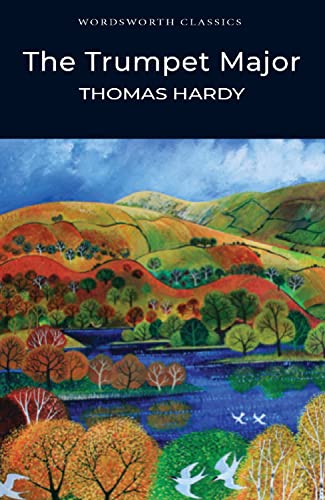
1. The Trumpet-Major by Thomas Hardy
2. The White Guard by Mikhail Bulgakov
3. The Silver Branch by Rosemary Sutcliff
4. Moonfleet by John Meade Falkner
5. The Black Lake by Hella S. Haasse
6. The Elusive Pimpernel by Baroness Orczy
7. Fire from Heaven by Mary Renault
8. The End of the Affair by Graham Greene
9. The Trumpet-Major by Thomas Hardy
10. The Silver Branch by Rosemary Sutcliff
11. The Black Lake by Hella S. Haasse
12. The Elusive Pimpernel by Baroness Orczy
13. The End of the Affair by Graham Greene
14. Fire from Heaven by Mary Renault
15. The Elusive Pimpernel by Baroness Orczy
16. The Black Lake by Hella S. Haasse
17. Moonfleet by John Meade Falkner
18. The Silver Branch by Rosemary Sutcliff
19. The White Guard by Mikhail Bulgakov
20. The Trumpet-Major by Thomas Hardy

~

Have you read any of these? Which number do you think I should be hoping for?

2024 Reading Resolutions

Happy New Year! I hope your 2024 reading gets off to a good start. As I do every January, I have listed below some reading resolutions for the year ahead. I don’t do very well with numerical targets and goals or anything that restricts my reading choices too much, so these are just some loose plans to help shape my year of reading.

Read Christie 2024
I will be taking part in the Read Christie challenge again and this year’s theme is Agatha Christie: Through the Decades. Each quarter will focus on a different decade – 20s, 30s, 40s/50s and 60s/70s. The aim of the challenge is to read one book every month, but you can read as many or as few as you like. For the 1920s, the only unread Christies I have are The Secret of Chimneys, The Seven Dials Mystery and The Big Four, plus the short story collection Poirot Investigates, so I will be reading at least one or two of those between January and March.

Historical Fiction Reading Challenge
I’ll also be taking part in the Historical Fiction Reading Challenge (see my sign-up post here) with the aim of reading 50 historical fiction novels in 2024. I participate in this every year and usually complete it very easily, so I’m going to make it slightly more ‘challenging’ this time by trying to focus on historical fiction in translation. As I’ve said, I don’t really like setting targets, but I’ll aim for 10 out of the 50 books and see how I do. I already have several translated historical novels on the TBR, including the final two books in Maurice Druon’s Les Rois maudits series, which I think would be a good place to start and I’m also considering the new translation of Sigrid Undset’s Olav Audunssøn.

Classics Club list
There are currently eight books remaining on my Classics Club list, so I’m hoping I can finish the list in the first half of the year. It should be manageable as most of the books are short! I’m already starting to put a new list together – there are still so many classics I want to read.

Re-reads
Every year I say I’m going to do some re-reading, but usually never actually get round to it. In 2023, I managed to re-read one book – The Scapegoat by Daphne du Maurier – but there are lots of other old favourites on my shelves that I want to read again as well. Maybe 2024 will be the year!

Reading the Walter Scott Prize
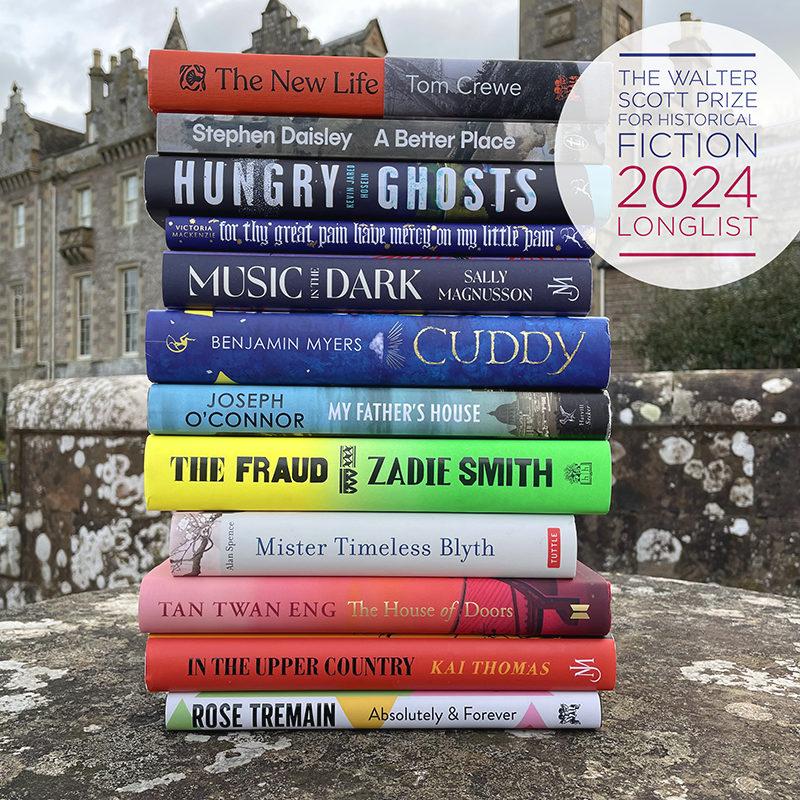
I really need to start making some progress with my Reading the Walter Scott Prize project. I only managed to read three of the seven books on the 2023 shortlist, so still have the other four to catch up with, as well as several more books from the previous years’ shortlists that I haven’t read yet. I’ve already discovered lots of great new books and authors through following this particular prize and am looking forward to discovering more.

Otherwise, I just want 2024 to be a year of reading whatever I want to read, whenever I want to read it – and hopefully getting through more of the books that are already on my shelves rather than acquiring more. My ultimate resolution, as always, is to make every book I read a potential book of the year!

~

What about you? Do you have any reading resolutions or plans for 2024?

My favourite books of 2023

I know 2023 is not quite over yet, but with only a few days remaining I think it’s safe to post my books of the year list now. I’ve enjoyed putting this post together, looking back over the last twelve months and picking out some favourites. This hasn’t been a particularly great year of reading for me; it got off to a good start, but for various reasons my reading slowed down in the middle of the year and I struggled to get back on track. However, I’ve still read some great books in 2023 and here they are, in no particular order:

~

The Square of Sevens by Laura Shepherd-Robinson (2023)

From my review: “It’s not really possible for me to say much more about the story without spoiling it, but if I tell you it includes family secrets, disputed inheritances, stolen documents, and lots of surprising twists and turns you’ll get the idea! It’s very entertaining, with the feel of a Charles Dickens novel at times, and I was often reminded of Charles Palliser’s The Quincunx (another great Dickensian novel with an inheritance at the heart of the plot).”

Random Harvest by James Hilton (1941)

From my review: “This book wasn’t quite what I’d expected; I thought it was going to be more of a romance, but although it does have a very moving love story at its heart, there’s much more to Random Harvest than that. It can be considered an anti-war novel, with it’s theme of loss that runs through the story from beginning to end – not just the obvious loss of memory, but also lost opportunities, lost or broken relationships, lost innocence and, on a wider scale, a way of life that has been lost forever as the world moves on from one war and heads straight for another.”

The Empty World by D.E. Stevenson (1936)

From my review: “It’s sad that The Empty World seems to have been almost forgotten and has never received the attention or acclaim of other dystopian novels. Maybe it was just too different from Stevenson’s other work to appeal to her existing readers while her reputation as an author of gentle, domestic fiction may have led to the book being overlooked by science fiction fans. I loved it anyway and found it a fascinating, thought provoking read.”

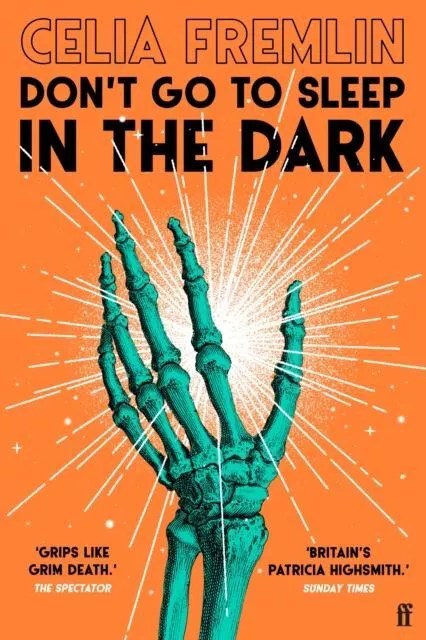
Uncle Paul by Celia Fremlin (1959)

From my review: “I know they say never to judge a book by its cover, but I have to confess, the cover is what made me want to read this book before I even knew what it was about! Luckily, the story lived up to the cover and you can expect to see Uncle Paul on my books of the year list in December, without a doubt.”

The Black Spectacles by John Dickson Carr (1939)

From my review: “By the time Fell is brought into the story, most of the clues are in place, but Elliot and the local Sodbury Cross police have failed to interpret them correctly. I’m not surprised they were struggling, because this is a very clever mystery with lots of twists and turns and an ingenious solution. I certainly couldn’t solve it and had to wait for Fell to explain it all, which he does bit by bit as each piece of the puzzle falls into place.”

The Bird in the Tree by Elizabeth Goudge (1940)

From my review: “Goudge’s descriptive writing is always beautiful and in this novel she brings the fictional Hampshire village of Fairhaven to life with details of local customs, history and legends, basing it on the real village of Buckler’s Hard on the banks of the Beaulieu River. She makes the setting feel almost dreamlike, especially as there are a few elements of the story that are nearly, but not quite, supernatural.”

The Whispering Muse by Laura Purcell (2023)

From my review: “It certainly sounded good – a Gothic novel set in the theatres of Victorian London – and I wasn’t disappointed at all. I was gripped from start to finish…I loved the insights we are given into what goes on behind the scenes and the descriptions of Lilith’s powerful stage performances are so vivid I could almost imagine I was watching them from a seat in the front row.”

The Scapegoat by Daphne du Maurier (1957)

This was a re-read for me and the second time it has appeared on my books of the year list!

From my review: “And as always with a du Maurier novel, you can expect beautiful descriptions, a strong sense of place and interesting, if not necessarily very likeable, characters…It really is a fascinating novel and still one of my favourites by du Maurier. Now I just need to find time to revisit some of her others!”

The Wolves of Willoughby Chase by Joan Aiken (1962)

From my review: “Now that I’ve read this book I can see why it is considered a children’s classic and has been so popular with generations of younger readers over the years. It has an exciting plot, child protagonists to relate to, kindly adult characters to love and villainous ones to hate, and an atmospheric setting with snowy, icy landscapes and packs of wolves roaming the countryside…I thoroughly enjoyed this book and just wish I hadn’t come to it so late!”

The Other Side of Mrs Wood by Lucy Barker (2023)

From my review: “The Other Side of Mrs Wood is Lucy Barker’s debut novel and a very enjoyable one! It took me a few chapters to get into the story as the beginning was quite slow, but by the middle of the book I had been completely drawn in… this is not really a book that tackles a lot of deep issues and I enjoyed it primarily for its entertainment value. However, that doesn’t mean it’s a silly, frothy book in any way – it’s well written, evocative of the Victorian era, and I learned a huge amount about the 19th century fascination with spiritualism.”

The New Magdalen by Wilkie Collins (1873)

From my review: “Wilkie Collins was known for his sensation novels, a genre that takes elements of Gothic melodrama and places them in an ordinary, often domestic setting…The New Magdalen is less sensational than some of his others, but still falls firmly into the genre so you can expect a very entertaining novel. I’ve always found Collins’ writing to be the most readable of all the Victorians and that, in addition to this being a relatively short book for a 19th century classic, makes it a gripping and surprisingly quick read.”

~

And that’s my list for this year! What did you enjoy reading in 2023?

Classics Club Spin #35: The result

The result of the latest Classics Club Spin has been revealed today.

The idea of the Spin was to list twenty books from my Classics Club list, number them 1 to 20, and the number announced by the Classics Club represents the book I have to read before 3rd December 2023. The number that has been selected is…

2

And this means the book I need to read is…

Nicholas Nickleby by Charles Dickens

The hero of Dickens’s flamboyantly exuberant novel, Nicholas Nickleby, is left penniless after his father’s death and forced to make his own way in the world. His adventures give Dickens the opportunity to portray an extraordinary gallery of rogues and eccentrics: Wackford Squeers, the tyrannical headmaster of Dotheboys Hall; the tragic orphan Smike, rescued by Nicholas; and the gloriously theatrical Mr and Mrs Crummle and their daughter, the ‘infant phenomenon’. Nicholas Nickleby is characterized by Dickens’s outrage at social injustice, but it also reveals his comic genius at its most unerring.

~

I’ll confess that I was hoping for one of the shorter books on my list, but I’m still quite happy with my result. It’s been a few years since I last read anything by Dickens, so I’m looking forward to this one!

Have you read this book? What did you think of it?

Classics Club Spin #35: My List

I wasn’t sure whether to take part in the latest Classics Club Spin as I only have nine books left to read from my Classics Club list, but I decided it would be a good way to motivate myself to pick up one of those remaining nine books and move a step closer to finishing my list at last!

If you’re not sure what a Spin is, here’s a reminder:

The rules for Spin #35:

* List any twenty books you have left to read from your Classics Club list.
* Number them from 1 to 20.
* On Sunday 15th October the Classics Club will announce a number.
* This is the book you need to read by 3rd December 2023.

And here’s my list. I’ve had to repeat all of the books at least once as I don’t have twenty left.

1. The White Guard by Mikhail Bulgakov
2. Nicholas Nickleby by Charles Dickens
3. The Silver Branch by Rosemary Sutcliff
4. Moonfleet by John Meade Falkner
5. The Black Lake by Hella S. Haasse
6. The Trumpet-Major by Thomas Hardy
7. The Elusive Pimpernel by Baroness Orczy
8. Fire from Heaven by Mary Renault
9. The End of the Affair by Graham Greene
10. The White Guard by Mikhail Bulgakov
11. Nicholas Nickleby by Charles Dickens
12. The Silver Branch by Rosemary Sutcliff
13. Moonfleet by John Meade Falkner
14. The Black Lake by Hella S. Haasse
15. The Trumpet-Major by Thomas Hardy
16. The Elusive Pimpernel by Baroness Orczy
17. Fire from Heaven by Mary Renault
18. The End of the Affair by Graham Greene
19. The Silver Branch by Rosemary Sutcliff
20. The Black Lake by Hella S. Haasse

~

I don’t mind which of these books I get as I need to read all of them soon anyway. Have you read any of them?

The Walter Scott Prize Shortlist 2023

The shortlist for the 2023 Walter Scott Prize for Historical Fiction has been announced today! Thanks to this prize, I have discovered lots of great books and authors over the last few years and always look out for the longlists and shortlists; in fact, trying to read all of the shortlisted titles since the prize began in 2010 is a personal project of mine (you can see my progress here).

From the longlist of twelve books which was revealed in February, I have managed to read four of them: The Romantic by William Boyd, These Days by Lucy Caldwell, Act of Oblivion by Robert Harris and The Second Sight of Zachary Cloudesley by Sean Lusk. I also have a few of the others waiting on my TBR. But did any of the books I’ve read make the shortlist? Let’s find out…

The 2023 Walter Scott Prize Shortlist

These Days by Lucy Caldwell (Faber)

Two sisters. Four nights. One City.

April, 1941. Belfast has escaped the worst of the war – so far. Following the lives of sisters Emma and Audrey – one engaged to be married, the other in a secret relationship with another woman – as they try to survive the horrors of the Belfast Blitz, These Days is an unforgettable novel about lives lived under duress, about family, and about how we try to stay true to ourselves.

*

The Geometer Lobachevsky by Adrian Duncan (Tuskar Rock Press)

It is 1950 and Nikolai Lobachevsky, great-grandson of his illustrious namesake, is surveying a bog in the Irish Midlands, where he studies the locals, the land and their ways. One afternoon, soon after he arrives, he receives a telegram calling him back to Leningrad for a ‘special appointment’.

Lobachevsky may not be a great genius but he is not foolish: he recognises a death sentence when he sees one and leaves to go into hiding on a small island in the Shannon estuary, where the island families harvest seaweed and struggle to split rocks. Here Lobachevsky must think about death, how to avoid it and whether he will ever see his home again.

*

Act of Oblivion by Robert Harris (Hutchinson Heinemann)

1660. Colonel Edward Whalley and his son-in-law, Colonel William Goffe, cross the Atlantic. They are on the run and wanted for the murder of Charles I. Under the provisions of the Act of Oblivion, they have been found guilty in absentia of high treason.

In London, Richard Nayler, secretary of the regicide committee of the Privy Council, is tasked with tracking down the fugitives. He’ll stop at nothing until the two men are brought to justice. A reward hangs over their heads – for their capture, dead or alive.

Act of Oblivion is an epic journey across continents, and a chase like no other. It is the thrilling new novel by Robert Harris.

*

The Chosen by Elizabeth Lowry (Riverrun)

One Wednesday morning in November 1912 the ageing Thomas Hardy, entombed by paper and books and increasingly estranged from his wife Emma, finds her dying in her bedroom. Between his speaking to her and taking her in his arms, she has gone.

The day before, he and Emma had exchanged bitter words – leading Hardy to wonder whether all husbands and wives end up as enemies to each other. His family and Florence Dugdale, the much younger woman with whom he has been in a relationship, assume that he will be happy and relieved to be set free. But he is left shattered by the loss.

Hardy’s bewilderment only increases when, sorting through Emma’s effects, he comes across a set of diaries that she had secretly kept about their life together, ominously titled ‘What I Think of My Husband’. He discovers what Emma had truly felt – that he had been cold, remote and incapable of ordinary human affection, and had kept her childless, a virtual prisoner for forty years. Why did they ever marry?

He is consumed by something worse than grief: a chaos in which all his certainties have been obliterated. He has to re-evaluate himself, and reimagine his unhappy wife as she was when they first met.

*

The Sun Walks Down by Fiona McFarlane (Allen & Unwin Australia)

In September 1883, a small town in the South Australian outback huddles under strange, vivid sunsets. Six-year-old Denny Wallace has gone missing during a dust storm, and the entire community is caught up in the search for him. As they scour the desert and mountains for the lost child, the residents of Fairly – newlyweds, landowners, farmers, mothers, artists, Indigenous trackers, cameleers, children, schoolteachers, widows, maids, policemen – confront their relationships with each other and with the ancient landscape they inhabit.

The colonial Australia of The Sun Walks Down is unfamiliar, multicultural, and noisy with opinions, arguments, longings and terrors. It’s haunted by many gods – the sun among them, rising and falling on each day in which Denny could be found, or lost forever.

*

Ancestry by Simon Mawer (Little, Brown)

Almost two hundred years ago, Abraham, an illiterate urchin, scavenges on a Suffolk beach and dreams of running away to sea… Naomi, a seventeen-year-old seamstress, sits primly in a second class carriage on the train from Sussex to London and imagines a new life in the big city… George, a private soldier of the 50th Regiment of Foot, marries his Irish bride, Annie, in the cathedral in Manchester and together they face married life under arms. Now these people exist only in the bare bones of registers and census lists but they were once real enough. They lived, loved, felt joy and fear, and ultimately died. But who were they? And what indissoluble thread binds them together?

Simon Mawer’s compelling and original novel puts flesh on our ancestors’ bones to bring them to life and give them voice. He has created stories that are gripping and heart-breaking, from the squalor and vitality of Dickensian London to the excitement of seafaring in the last days of sail and the horror of the trenches of the Crimea. There is birth and death; there is love, both open and legal but also hidden and illicit. Yet the thread that connects these disparate figures is something that they cannot have known – the unbreakable bond of family.

*

I Am Not Your Eve by Devika Ponnambalam (Bluemoose)

I Am Not Your Eve is the story of Teha’amana, Tahitian muse and child-bride to the painter Paul Gauguin. She shares her thougths as he works on one of his masterpieces, The Spirit of The Dead Keeps Watch, a work so important to Gauguin that it haunts his later self-portrait. As Teha’amana tells her story, other voices of the island rise: Hina goddess of the moon, a lizard watching from the eaves, Gauguin’s mask of Teha’amana carved from one of the trees.

Woven in are the origin myths that cradled Polynesia before French colonists brought the Christian faith. Distant diary entries by Gauguin’s daughter Aline – the same age as her father’s new ‘wife’ – recall the other hemisphere of his life. This is the novel that gives Teha’amana a voice; one that travels with the myths and legends of the island, across history and asks to be heard.

~

First of all, it’s unusual to have seven books on the shortlist! Recently there have been five or six and last year only four. I liked but didn’t particularly love either of the two I’ve read – These Days and Act of Oblivion – so I hope there’ll be something I enjoy more amongst the other five. I was disappointed not to see The Romantic on the shortlist as it was by far the best of the longlisted books I had read and probably my favourite book of 2022. However, I’m not entirely surprised as prize judges tend to go for books that are more ‘literary’, whereas I’m happy with good storytelling and strong characters. Anyway, well done to the seven shortlisted authors! I’ll see how many more of these I can read before the winner is revealed.

What do you think? Have you read any of these or would you like to read them?

The winner will be announced at the Borders Book Festival in Melrose, Scotland in June.

Classics Club Spin #33: The result

The result of the latest Classics Club Spin was revealed today.

The idea of the Spin was to list twenty books from my Classics Club list, number them 1 to 20, and the number announced by the Classics Club represents the book I have to read before 30th April 2023. The number that has been selected is…

18

And this means the book I need to read is…

Rogue Male by Geoffrey Household

An Englishman plans to assassinate the dictator of a European country. But he is foiled at the last moment and falls into the hands of ruthless and inventive torturers. They devise for him an ingenious and diplomatic death but, for once, they bungle the job and he escapes.

But England provides no safety from his pursuers – and the Rogue Male must strip away all the trappings of status and civilization as the hunter becomes a hunted animal.

~

I’m very happy with this result and glad I’ve avoided some of the longer books on my list! I’ve seen the excellent 1976 BBC adaptation of this book and am looking forward to reading it.

Have you read this? What did you think of it? And if you took part in the Spin which book did you get?