The Walter Scott Prize Shortlist 2024

The shortlist for the 2024 Walter Scott Prize for Historical Fiction has been announced today! Thanks to this prize, I have discovered lots of great books and authors over the last few years and always look out for the longlists and shortlists; in fact, trying to read all of the shortlisted titles since the prize began in 2010 is a personal project of mine (you can see my progress here).

From the longlist of twelve books which was revealed in February, I had previously read Cuddy by Benjamin Myers, Music in the Dark by Sally Magnusson, For Thy Great Pain Have Mercy on My Little Pain by Victoria MacKenzie and My Father’s House by Joseph O’Connor. Since the longlist announcement, I have also now read The Fraud by Zadie Smith and Hungry Ghosts by Kevin Jared Hosein (not yet reviewed). But did any of the books I’ve read make the shortlist? Let’s find out…

The 2024 Walter Scott Prize Shortlist

The New Life by Tom Crewe (Chatto & Windus)

London, 1894. John and Henry have a vision for a new way of life. But as the Oscar Wilde trial ignites public outcry, everything they long for could be under threat.

After a lifetime spent navigating his desires, John has finally found a man who returns his feelings. Meanwhile, Henry is convinced that his new unconventional marriage will bring freedom. United by a shared vision, they begin work on a revolutionary book arguing for the legalisation of homosexuality.

Before it can be published however, Oscar Wilde is arrested and their daring book threatens to throw them, and all around them, into danger. How high a price are they willing to pay for a new way of living?

***

Hungry Ghosts by Kevin Jared Hosein (Bloomsbury)

On a hill overlooking Bell Village sits the Changoor farm, where Dalton and Marlee Changoor live in luxury unrecognisable to those who reside in the farm’s shadow. Down below is the barrack, a ramshackle building of wood and tin, divided into rooms occupied by whole families. Among these families are the Saroops – Hans, Shweta, and their son, Krishna, who live hard lives of backbreaking work, grinding poverty and devotion to faith.

When Dalton Changoor goes missing and Marlee’s safety is compromised, farmhand Hans is lured by the promise of a handsome stipend to move to the farm as watchman. But as the mystery of Dalton’s disappearance unfolds their lives become hellishly entwined, and the small community altered forever.

Hungry Ghosts is a mesmerising novel about violence, religion, family and class, rooted in the wild and pastoral landscape of 1940s colonial central Trinidad.

***
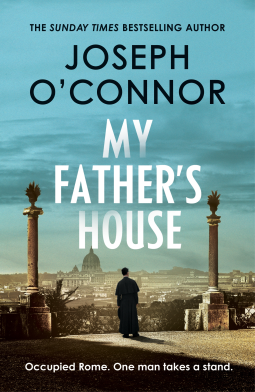
My Father’s House by Joseph O’Connor (Harvill Secker)

September 1943: German forces occupy Rome. SS officer Paul Hauptmann rules with terror.

An Irish priest, Hugh O’Flaherty, dedicates himself to helping those escaping from the Nazis. His home is Vatican City, a neutral, independent country within Rome where the occupiers hold no sway. He gathers a team to set up an Escape Line.

But Hauptmann’s net begins closing in and the need for a terrifyingly audacious mission grows critical. By Christmas, it’s too late to turn back.

Based on a true story, My Father’s House is a powerful thriller from a master of historical fiction. It is an unforgettable novel of love, sacrifice and what it means to be human in the most extreme circumstances.

***
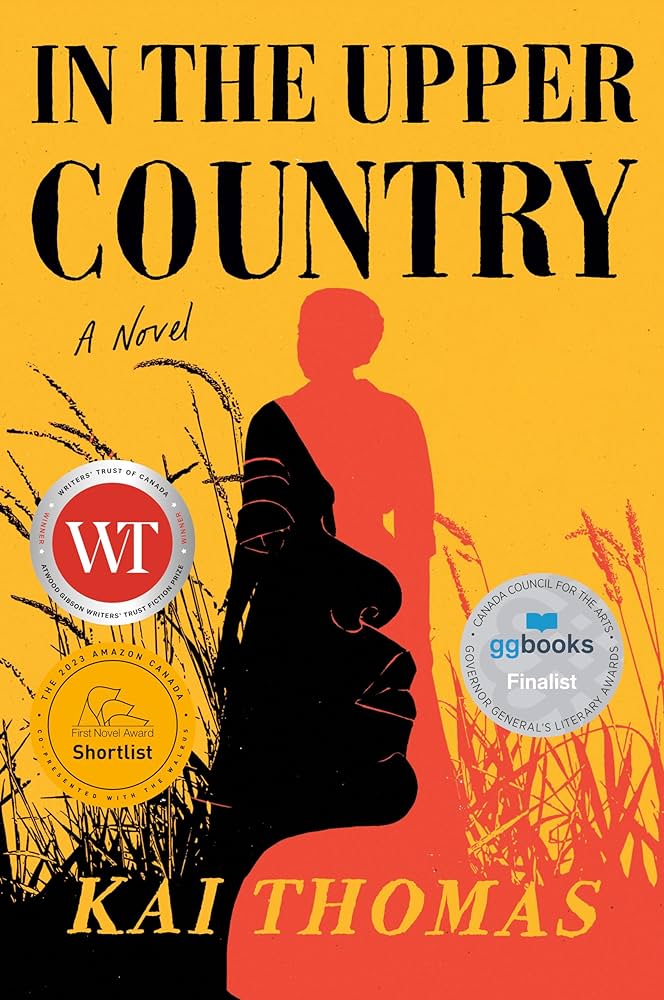
In the Upper Country by Kai Thomas (Penguin Canada)

In 1859, deep in the forests of Canada, an elderly woman sits behind bars. She came to Dunmore via the Underground Railroad to escape enslavement, but an American bounty hunter tracked her down. Now she’s in jail for killing him, and the fragile peace of Dunmore, a town settled by people fleeing the American south, hangs by a thread.

Lensinda Martin, a smart young reporter, wants to gather the woman’s testimony before she can be condemned, but the old woman has no time for confessions. Instead she proposes a barter: a story for a story.

As the women swap stories – of family and first loves, of survival and freedom against all odds – Lensinda must face her past. And it seems the old woman may carry a secret that could shape Lensinda’s destiny.

***
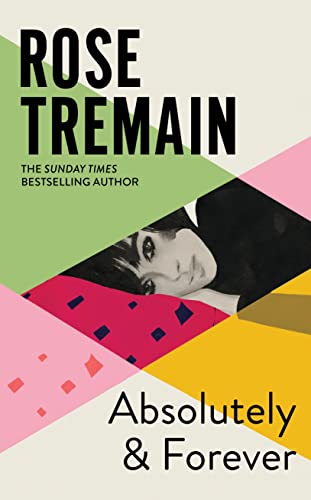
Absolutely and Forever by Rose Tremain (Chatto & Windus)

Marianne Clifford, teenage daughter of a peppery army colonel and his vain wife, falls helplessly and absolutely for eighteen-year-old Simon Hurst, whose cleverness and physical beauty suggest that he will go forward into a successful and monied future, helped on by doting parents. But fate intervenes. Simon’s plans are blown off course, he leaves for Paris and Marianne is forced to bury her dreams of a future together.

It is Marianne who tells this piercing story of first love, characterising herself as ignorant and unworthy, whilst her smart, ironic narration tellingly reveals so much more. Finding her way in 1960s Chelsea, and supported by her courageous Scottish friend, Petronella, she continues to seek the life she never stops craving. And in Paris, beneath his blithe exterior, Simon Hurst continues to nurse the secret which will alter everything.

***

The House of Doors by Tan Twan Eng (Canongate)

It is 1921 and at Cassowary House in the Straits Settlements of Penang, Robert Hamlyn is a well-to-do lawyer and his steely wife Lesley a society hostess. Their lives are invigorated when Willie, an old friend of Robert’s, comes to stay.

Willie Somerset Maugham is one of the greatest writers of his day. But he is beleaguered by an unhappy marriage, ill-health and business interests that have gone badly awry. He is also struggling to write. The more Lesley’s friendship with Willie grows, the more clearly she see him as he is – a man who has no choice but to mask his true self.

As Willie prepares to leave and face his demons, Lesley confides secrets of her own, including how she came to know the charismatic Dr Sun Yat Sen, a revolutionary fighting to overthrow the imperial dynasty of China. And more scandalous still, she reveals her connection to the case of an Englishwoman charged with murder in the Kuala Lumpur courts – a tragedy drawn from fact, and worthy of fiction.

~

So, of the six books I’ve read from the longlist, only two of them have appeared on the shortlist! I’m very surprised not to see Cuddy here as I thought it was the sort of book the judges would have gone for – but obviously not. Of the two that I’ve read, I enjoyed My Father’s House but didn’t like Hungry Ghosts very much, for reasons I’ll explain when I post my review. I’ve also just started reading The House of Doors, but it’s too early to say what I think of it yet.

What do you think? Have you read any of these or would you like to read them?

The winner will be announced at the Borders Book Festival in Melrose in June.
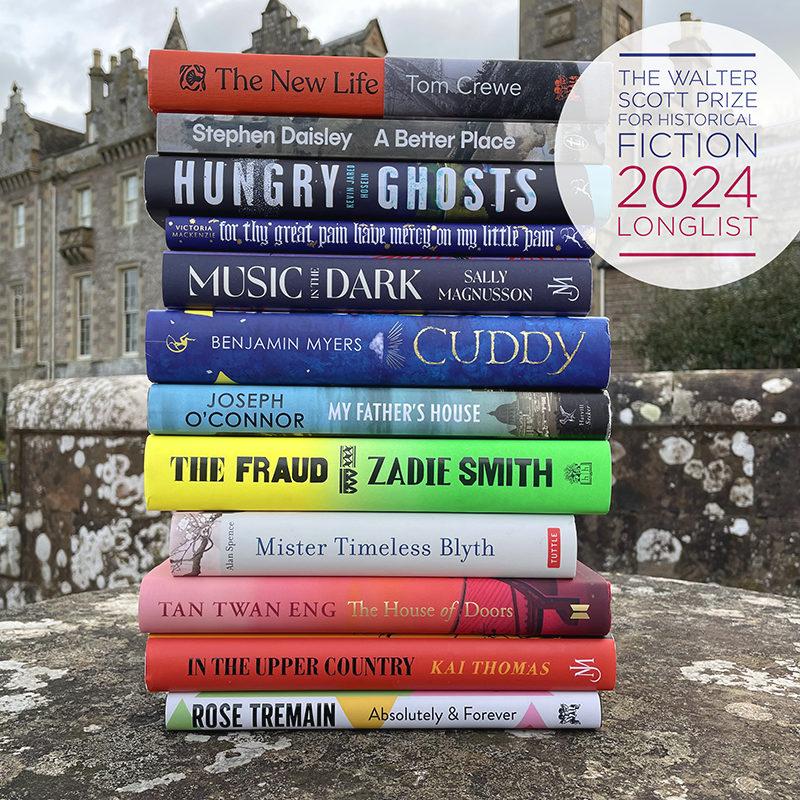
The Walter Scott Prize Longlist 2024

The longlist for the 2024 Walter Scott Prize for Historical Fiction has been announced today! Thanks to this prize, I have discovered lots of great books and authors and always look out for the longlists and shortlists; in fact, trying to read all of the shortlisted titles since the prize began in 2010 is a personal project of mine (you can see my progress here).

There are twelve books on this year’s longlist and here they are:

The New Life by Tom Crewe (Chatto & Windus)

A Better Place by Stephen Daisley (Text Publishing)

Hungry Ghosts by Kevin Jared Hosein (Bloomsbury)

For Thy Great Pain Have Mercy on My Little Pain by Victoria MacKenzie (Bloomsbury)

Music in the Dark by Sally Magnusson (John Murray)

Cuddy by Benjamin Myers (Bloomsbury)

My Father’s House by Joseph O’Connor (Harvill Secker)

The Fraud by Zadie Smith (Hamish Hamilton)

Mister Timeless Blyth by Alan Spence (Tuttle)

The House of Doors by Tan Twan Eng (Canongate)

In the Upper Country by Kai Thomas (Penguin Canada)

Absolutely and Forever by Rose Tremain (Chatto & Windus)

~

I’m delighted to see Cuddy on the longlist as I read it just a few weeks ago and predicted that it could be nominated. I’ve also read three others – Music in the Dark, For Thy Great Pain Have Mercy on My Little Pain and My Father’s House – and I’m not surprised to see any of these on the list either. Of those three, I particularly enjoyed My Father’s House. The Zadie Smith, Tan Twan Eng and Rose Tremain were already on my radar, but I’m not familiar with any of the others. Lots to investigate!

Have you read any of these books? Which do you think should win the prize?

The shortlist will be announced in May and the winner will be revealed in June at the Borders Book Festival in Melrose.

Classics Club Spin #36: The Result

The result of the latest Classics Club Spin has been revealed today.

The idea of the Spin was to list twenty books from my Classics Club list, number them 1 to 20, and the number announced by the Classics Club represents the book I have to read before 3rd March 2024. The number that has been selected is…

20

And this means the book I need to read is…

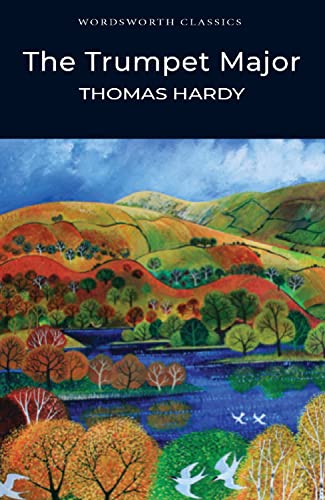
The Trumpet Major by Thomas Hardy

Thomas Hardy’s only historical novel, The Trumpet Major is set in Wessex during the Napoleonic Wars. Hardy skilfully immerses us in the life of the day, making us feel the impact of historical events on the immemorial local way of life – the glamour of the coming of George III and his soldiery, fears of the press-gang and invasion, and the effect of distant but momentous events like the Battle of Trafalgar.

He interweaves a compelling, bitter-sweet romantic love story of the rivalry of two brothers for the hand of the heroine Anne Garland, played out against the loves of a lively gallery of other characters. While there are elements of sadness and even tragedy, The Trumpet-Major shows Hardy’s skills of story-telling, characterisation and description in a novel of vitality, comedy and warmth.

~

This wasn’t one I was particularly hoping for – I would have liked something shorter and lighter – but I always love Hardy, so I’m not unhappy with this result!

Have you read this book? What did you think of it?

Classics Club Spin #36: My List

It’s time for the first Classics Club Spin of 2024. I wasn’t sure whether to join in this time as I only have eight books left to read from my Classics Club list and I haven’t even finished my book from the last Spin, but in the end I haven’t been able to resist taking part. Ideally, I would like to read all of these eight books within the first half of the year, so this should help motivate me.

If you’re not sure what a Spin is, here’s a reminder:

The rules for Spin #36:

* List any twenty books you have left to read from your Classics Club list.
* Number them from 1 to 20.
* On Sunday 21st January the Classics Club will announce a number.
* This is the book you need to read by 3rd March 2024.

And here’s my list. I’ve had to repeat all of the books at least once as I don’t have twenty left.

1. The Trumpet-Major by Thomas Hardy
2. The White Guard by Mikhail Bulgakov
3. The Silver Branch by Rosemary Sutcliff
4. Moonfleet by John Meade Falkner
5. The Black Lake by Hella S. Haasse
6. The Elusive Pimpernel by Baroness Orczy
7. Fire from Heaven by Mary Renault
8. The End of the Affair by Graham Greene
9. The Trumpet-Major by Thomas Hardy
10. The Silver Branch by Rosemary Sutcliff
11. The Black Lake by Hella S. Haasse
12. The Elusive Pimpernel by Baroness Orczy
13. The End of the Affair by Graham Greene
14. Fire from Heaven by Mary Renault
15. The Elusive Pimpernel by Baroness Orczy
16. The Black Lake by Hella S. Haasse
17. Moonfleet by John Meade Falkner
18. The Silver Branch by Rosemary Sutcliff
19. The White Guard by Mikhail Bulgakov
20. The Trumpet-Major by Thomas Hardy

~

Have you read any of these? Which number do you think I should be hoping for?

2024 Reading Resolutions

Happy New Year! I hope your 2024 reading gets off to a good start. As I do every January, I have listed below some reading resolutions for the year ahead. I don’t do very well with numerical targets and goals or anything that restricts my reading choices too much, so these are just some loose plans to help shape my year of reading.

Read Christie 2024
I will be taking part in the Read Christie challenge again and this year’s theme is Agatha Christie: Through the Decades. Each quarter will focus on a different decade – 20s, 30s, 40s/50s and 60s/70s. The aim of the challenge is to read one book every month, but you can read as many or as few as you like. For the 1920s, the only unread Christies I have are The Secret of Chimneys, The Seven Dials Mystery and The Big Four, plus the short story collection Poirot Investigates, so I will be reading at least one or two of those between January and March.

Historical Fiction Reading Challenge
I’ll also be taking part in the Historical Fiction Reading Challenge (see my sign-up post here) with the aim of reading 50 historical fiction novels in 2024. I participate in this every year and usually complete it very easily, so I’m going to make it slightly more ‘challenging’ this time by trying to focus on historical fiction in translation. As I’ve said, I don’t really like setting targets, but I’ll aim for 10 out of the 50 books and see how I do. I already have several translated historical novels on the TBR, including the final two books in Maurice Druon’s Les Rois maudits series, which I think would be a good place to start and I’m also considering the new translation of Sigrid Undset’s Olav Audunssøn.

Classics Club list
There are currently eight books remaining on my Classics Club list, so I’m hoping I can finish the list in the first half of the year. It should be manageable as most of the books are short! I’m already starting to put a new list together – there are still so many classics I want to read.

Re-reads
Every year I say I’m going to do some re-reading, but usually never actually get round to it. In 2023, I managed to re-read one book – The Scapegoat by Daphne du Maurier – but there are lots of other old favourites on my shelves that I want to read again as well. Maybe 2024 will be the year!

Reading the Walter Scott Prize
I really need to start making some progress with my Reading the Walter Scott Prize project. I only managed to read three of the seven books on the 2023 shortlist, so still have the other four to catch up with, as well as several more books from the previous years’ shortlists that I haven’t read yet. I’ve already discovered lots of great new books and authors through following this particular prize and am looking forward to discovering more.

Otherwise, I just want 2024 to be a year of reading whatever I want to read, whenever I want to read it – and hopefully getting through more of the books that are already on my shelves rather than acquiring more. My ultimate resolution, as always, is to make every book I read a potential book of the year!

~

What about you? Do you have any reading resolutions or plans for 2024?

My favourite books of 2023

I know 2023 is not quite over yet, but with only a few days remaining I think it’s safe to post my books of the year list now. I’ve enjoyed putting this post together, looking back over the last twelve months and picking out some favourites. This hasn’t been a particularly great year of reading for me; it got off to a good start, but for various reasons my reading slowed down in the middle of the year and I struggled to get back on track. However, I’ve still read some great books in 2023 and here they are, in no particular order:

~

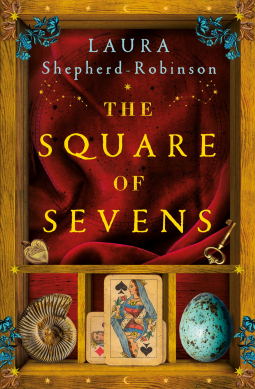
The Square of Sevens by Laura Shepherd-Robinson (2023)

From my review: “It’s not really possible for me to say much more about the story without spoiling it, but if I tell you it includes family secrets, disputed inheritances, stolen documents, and lots of surprising twists and turns you’ll get the idea! It’s very entertaining, with the feel of a Charles Dickens novel at times, and I was often reminded of Charles Palliser’s The Quincunx (another great Dickensian novel with an inheritance at the heart of the plot).”

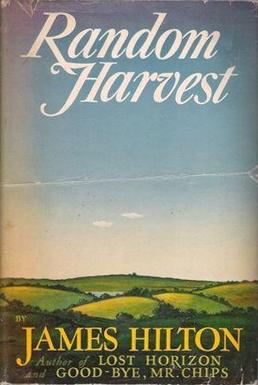
Random Harvest by James Hilton (1941)

From my review: “This book wasn’t quite what I’d expected; I thought it was going to be more of a romance, but although it does have a very moving love story at its heart, there’s much more to Random Harvest than that. It can be considered an anti-war novel, with it’s theme of loss that runs through the story from beginning to end – not just the obvious loss of memory, but also lost opportunities, lost or broken relationships, lost innocence and, on a wider scale, a way of life that has been lost forever as the world moves on from one war and heads straight for another.”

The Empty World by D.E. Stevenson (1936)

From my review: “It’s sad that The Empty World seems to have been almost forgotten and has never received the attention or acclaim of other dystopian novels. Maybe it was just too different from Stevenson’s other work to appeal to her existing readers while her reputation as an author of gentle, domestic fiction may have led to the book being overlooked by science fiction fans. I loved it anyway and found it a fascinating, thought provoking read.”

Uncle Paul by Celia Fremlin (1959)

From my review: “I know they say never to judge a book by its cover, but I have to confess, the cover is what made me want to read this book before I even knew what it was about! Luckily, the story lived up to the cover and you can expect to see Uncle Paul on my books of the year list in December, without a doubt.”

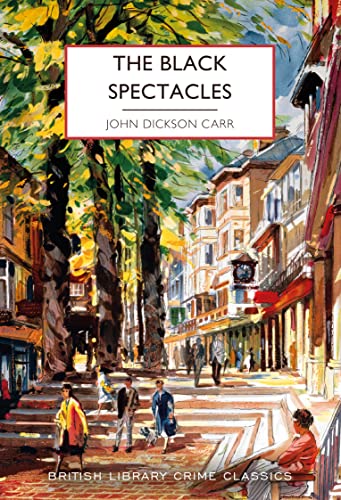
The Black Spectacles by John Dickson Carr (1939)

From my review: “By the time Fell is brought into the story, most of the clues are in place, but Elliot and the local Sodbury Cross police have failed to interpret them correctly. I’m not surprised they were struggling, because this is a very clever mystery with lots of twists and turns and an ingenious solution. I certainly couldn’t solve it and had to wait for Fell to explain it all, which he does bit by bit as each piece of the puzzle falls into place.”

The Bird in the Tree by Elizabeth Goudge (1940)

From my review: “Goudge’s descriptive writing is always beautiful and in this novel she brings the fictional Hampshire village of Fairhaven to life with details of local customs, history and legends, basing it on the real village of Buckler’s Hard on the banks of the Beaulieu River. She makes the setting feel almost dreamlike, especially as there are a few elements of the story that are nearly, but not quite, supernatural.”

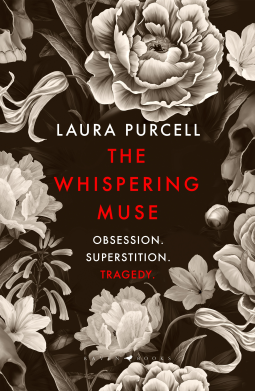
The Whispering Muse by Laura Purcell (2023)

From my review: “It certainly sounded good – a Gothic novel set in the theatres of Victorian London – and I wasn’t disappointed at all. I was gripped from start to finish…I loved the insights we are given into what goes on behind the scenes and the descriptions of Lilith’s powerful stage performances are so vivid I could almost imagine I was watching them from a seat in the front row.”

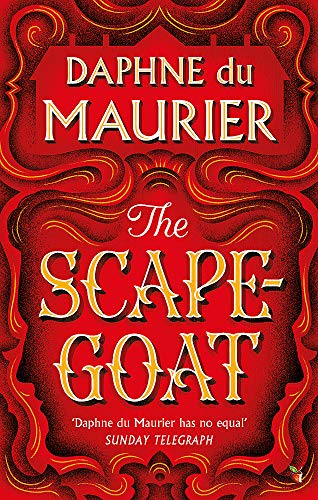
The Scapegoat by Daphne du Maurier (1957)

This was a re-read for me and the second time it has appeared on my books of the year list!

From my review: “And as always with a du Maurier novel, you can expect beautiful descriptions, a strong sense of place and interesting, if not necessarily very likeable, characters…It really is a fascinating novel and still one of my favourites by du Maurier. Now I just need to find time to revisit some of her others!”

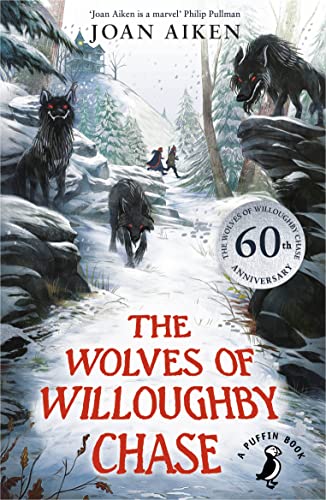
The Wolves of Willoughby Chase by Joan Aiken (1962)

From my review: “Now that I’ve read this book I can see why it is considered a children’s classic and has been so popular with generations of younger readers over the years. It has an exciting plot, child protagonists to relate to, kindly adult characters to love and villainous ones to hate, and an atmospheric setting with snowy, icy landscapes and packs of wolves roaming the countryside…I thoroughly enjoyed this book and just wish I hadn’t come to it so late!”

The Other Side of Mrs Wood by Lucy Barker (2023)

From my review: “The Other Side of Mrs Wood is Lucy Barker’s debut novel and a very enjoyable one! It took me a few chapters to get into the story as the beginning was quite slow, but by the middle of the book I had been completely drawn in… this is not really a book that tackles a lot of deep issues and I enjoyed it primarily for its entertainment value. However, that doesn’t mean it’s a silly, frothy book in any way – it’s well written, evocative of the Victorian era, and I learned a huge amount about the 19th century fascination with spiritualism.”

The New Magdalen by Wilkie Collins (1873)

From my review: “Wilkie Collins was known for his sensation novels, a genre that takes elements of Gothic melodrama and places them in an ordinary, often domestic setting…The New Magdalen is less sensational than some of his others, but still falls firmly into the genre so you can expect a very entertaining novel. I’ve always found Collins’ writing to be the most readable of all the Victorians and that, in addition to this being a relatively short book for a 19th century classic, makes it a gripping and surprisingly quick read.”

~

And that’s my list for this year! What did you enjoy reading in 2023?

Classics Club Spin #35: The result

The result of the latest Classics Club Spin has been revealed today.

The idea of the Spin was to list twenty books from my Classics Club list, number them 1 to 20, and the number announced by the Classics Club represents the book I have to read before 3rd December 2023. The number that has been selected is…

2

And this means the book I need to read is…

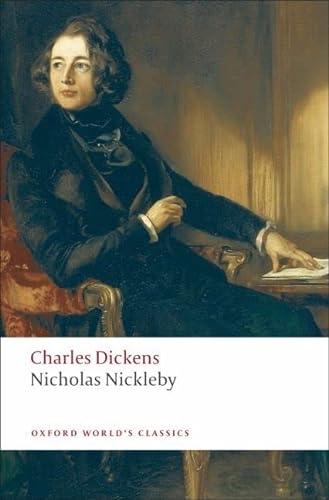
Nicholas Nickleby by Charles Dickens

The hero of Dickens’s flamboyantly exuberant novel, Nicholas Nickleby, is left penniless after his father’s death and forced to make his own way in the world. His adventures give Dickens the opportunity to portray an extraordinary gallery of rogues and eccentrics: Wackford Squeers, the tyrannical headmaster of Dotheboys Hall; the tragic orphan Smike, rescued by Nicholas; and the gloriously theatrical Mr and Mrs Crummle and their daughter, the ‘infant phenomenon’. Nicholas Nickleby is characterized by Dickens’s outrage at social injustice, but it also reveals his comic genius at its most unerring.

~

I’ll confess that I was hoping for one of the shorter books on my list, but I’m still quite happy with my result. It’s been a few years since I last read anything by Dickens, so I’m looking forward to this one!

Have you read this book? What did you think of it?