Nonfiction November starts today and Week 1 is hosted by Heather of Based on a True Story who has posted the following questions for us to answer:
Week 1 November 2-8 – My Year in Nonfiction – Celebrate your year of nonfiction. What books have you read? What were your favorites? Have you had a favorite topic? Is there a topic you want to read about more? What are you hoping to get out of participating in Nonfiction November?
So far in 2026 I have read seven nonfiction books, which I know isn’t many for a lot of people, but it’s a decent number for me as I usually read fiction. I’ve listed the seven books below:
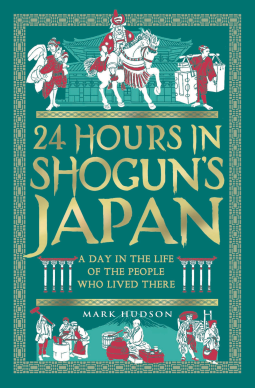
1. 24 Hours in Shogun’s Japan by Mark Hudson
Using a mixture of fiction and nonfiction, this book takes us hour by hour through a typical day in 1614 Japan, the era known as the Tokugawa shogunate. Each chapter is devoted to one hour and one character, drawn from all walks of life. It’s a good introduction to the subject and I learned a lot from it, although it’s a short book and doesn’t go into a huge amount of depth.

2. The Eagle and the Hart by Helen Castor
A dual biography of Richard II and Henry IV, two English kings who were also cousins. The book gives a detailed, well-researched account of each king’s reign, although I was hoping it would look more closely at the relationship and connections between the two. Instead, it feels more like two separate biographies, but is still an interesting read.
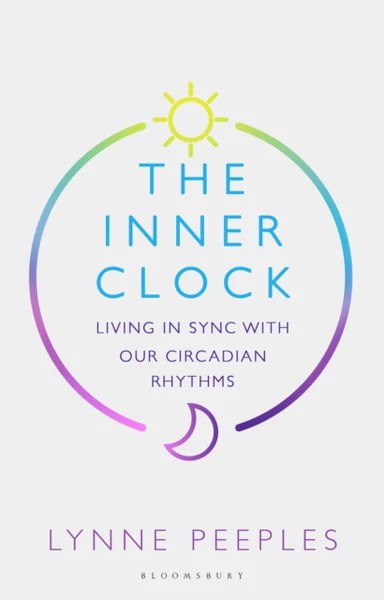
3. The Inner Clock: Living in Sync With Our Circadian Rhythms by Lynne Peeples
This is a fascinating book about the science behind our body’s circadian clock, the part of the brain controlling our sleeping patterns. Peeples looks at the effects that light, food, drink and other factors have on our inner clock and what we can do to improve our sleep.
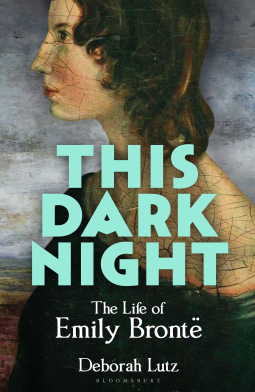
4. This Dark Night by Deborah Lutz
A new biography of Emily Brontë. I found this an enjoyable read and think it would be a good place to start for people wanting an introduction to the lives of the Brontës. I didn’t really learn much that I didn’t already know, but that’s because there’s just not a lot of information available about Emily, which isn’t the author’s fault.
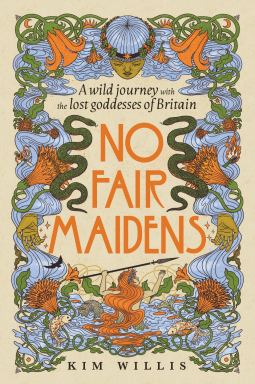
5. No Fair Maidens by Kim Willis
A memoir of the author’s travels around Britain in search of information on eight mythological women and how she took inspiration from these women to help deal with her own mental health issues. I didn’t learn as much about the myths as I would have liked – the focus is more on the author herself – but it was still an interesting book overall.

6. The Story of Tudor Art by Christina J Faraday
An exploration of the history of Tudor England through its art and objects, ranging from paintings, sculptures, tapestries and clothing to jewels, embroideries and furnishings. It’s a good introduction to the subject and succeeds in showing the overall scope of Tudor art and how things changed between the beginning of the period and the end.
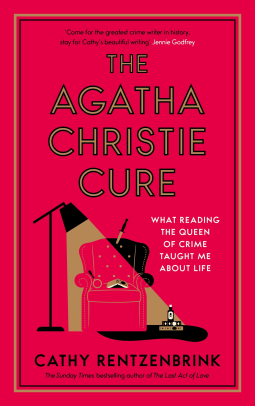
7. The Agatha Christie Cure by Cathy Rentzenbrink
A fascinating book in which the author describes how she embarked on a personal project to read all of Agatha Christie’s novels in order of publication. As a Christie fan myself, who has been working through her books at random, it was interesting to see Rentzenbrink discuss the pros and cons of reading chronologically.
~
Most of these are either history or memoirs/biographies, the same topics I’m usually drawn to – although I did also read a science book this year, The Inner Clock, which I think was probably my favourite.
As for what I’m hoping to get out of Nonfiction November I’m simply hoping that it will encourage me to pick up nonfiction more often and that I’ll discover some new books and authors to look out for.
Do you like to read nonfiction books? Which ones have you read this year?


I think you did very well for someone who doesn’t normally read non-fiction. I always say I will, and even have some on my shelves somewhere, but it just never happens.
Thanks! Six or seven non-fiction books a year seems to be my limit – I don’t think I’ve ever read more than that and often less.
That’s an interesting mix of books and I’m definitely interested in the Tudor Art one. It’s a bit disappointing that The Eagle and the Hart didn’t quite deliver what you expected.
Yes, I was quite disappointed with The Eagle and the Hart, especially as I enjoyed one of Helen Castor’s other books. I hope you have a chance to read the Tudor Art book!
I’m posting my list tomorrow since I’m trying to do Nonfiction November, too, but that bio of Emily Brontë looks interesting.
Yes, I enjoyed the Emily Brontë biography. I find her the most interesting personality of the three sisters.
Certainly the most unusual.
I don’t think I’ve read any non fiction this year, not even a travel diary, even though I’ve taken note of (I think) all the titles you’ve reviewed!
I was pleased to see how many non-fiction books I’d read this year – often I only read one or two or none at all!
I do really like nonfiction books! I just finished one by Terry Karger about Marilyn Monroe and I loved Adam Shoalts’ Vanished Beyond the Map. 😀
Vanished Beyond the Map sounds great!
Oh, The Story of Tudor Art sounds so interesting. I’ve been meaning to read This Dark Night. Also very interested in The Eagle and the Hart–everything I know about both kings, I learned from Shakespeare!
The Eagle and the Hart is very thorough and well researched – you’ll definitely learn a lot from it!
The Agatha Christie Cure sounds really interesting!
It was fascinating! I love Agatha Christie but have just been picking up her books at random.
I’ve read seven nonfiction books too this year – I think it’s a good total. A new biography of Emily Brontë sounds intriguing. Thanks for taking part in the challenge.
I’m happy with seven books – it may not seem a lot compared to some people, but it’s a lot for me! I enjoyed the Emily Brontë biography. She’s my favourite of the Brontë sisters.
As you know I’m a BIG non-fiction reader and usually hit around 50% or more in an average year. That’s mostly History, but I’m open to read just about anything these days. I think that non-fiction has changed quite a lot in the last 30 years or so. There’s much more narrative non-fiction about and some of the authors producing it are VERY good. I’m presently just about to finish a history of the End of the World which is turning out to be a highlight of the year. SO much good stuff out there.
Yes, I’m always impressed by how much non-fiction you read. I’m most drawn to history too, but next year I would like to branch out more and try other topics. As you say, there’s such a lot of great stuff out there to explore!
I do like reading nonfiction, and Im always promising myself to read more.
24 Hours in Shogun’s Japan sounds interesting, I read something along similar lines about Pompeii before the eruption.
Thanks for sharing and happy Nonfiction November
Yes, 24 Hours in Shogun’s Japan was a fascinating book. I can see how a similar format would work well for a book about Pompeii too.
I’m impressed you have read 7. I have managed only three which is about two more than a normal year!. I have my eye on the Cathy Rentzenbrink as a gift for my sister who is an agatha christie fan
Seven is a lot for me. Two or three is a more normal number, but I’ve been making more of an effort this year. The Cathy Rentzenbrink is fascinating and made me wish I had tried to read Christie chronologically rather than at random.
I love books about sleep, so I’m curious about “The Inner Clock.” “No Fair Maidens” also sounds interesting; I’ve been reading a lot more about myths this year, including a year-long read of “Women Who Run with the Wolves.”
I really enjoyed The Inner Clock. Sleep is a fascinating subject! I need to read more books about myths.
I’ll have to try the Agatha Christie Cure. I’ve been reading the novels chronologically at the rate of one per year, to celebrate the 100th anniversary of each publication. Unfortunately, to finish that project, I have to live to be 111 and still be reading and blogging!
Christie wrote such a lot of books! I’ve found that her earlier ones tend to be stronger, though, so even if you don’t finish your project you should still have time to read most of the better books.
A nice variety here. I’ve added The Inner Clock to my TBR list.
The Inner Clock was fascinating and I picked up some useful tips from it. I hope you enjoy it!
All of these are new to me, and I like that. I read a little more nonfiction than I do fiction, and I honestly would like to read even more. Thank you for sharing what you read with us.
I have always been much more of a fiction reader, but taking part in Nonfiction November every year is motivating me to pick up more nonfiction as well.
I saw the movie about the Bronte Sisters and I decided I really wanted to read more about them. The book about Emily Bronte might be right up that alley. Thanks for pointing it out to me.
https://headfullofbooks.blogspot.com/2026/11/nonfiction-november-week-one.html
I enjoyed the Emily Brontë biography – it would be a great place for you to start reading about the Brontë sisters. I hope you have a chance to read it.
The Agatha Christie Cure is going straight to my wishlist. That sounds like a very enjoyable read. Thanks!
Yes, I really enjoyed it. I love Christie and it was fascinating seeing someone work through all of her books in order. It made me wish I’d done that myself!
I remember really liking something else by Helen Castor, I should check that one out!
Here’s my year in non-fiction: https://breathesbooks.com/2026/11/08/my-year-in-non-fiction-2/
I enjoyed She-Wolves by Helen Castor, which is about four medieval queens. I need to look for more of her books.
You read such an interesting variety of nonfiction this year. TI just added The Inner Clock to my TBR.
I loved The Inner Clock. I learned a lot of interesting facts about sleep from it.
That’s a lovely set of books!