Persephone Readathon: Some past reviews

This is just a quick post to let you know, if you don’t already, that Jessie of Dwell in Possibility is hosting a Persephone Readathon which runs from 1-11 February. I should have posted about this yesterday but haven’t been very organised recently!
You can find everything you need to know at Jessie’s blog, but the idea of the Readathon is to read and write about books published by Persephone (there’s a complete list on the Persephone website here). I am currently reading The Crowded Street by Winifred Holtby, which also happens to be on my Classics Club list.

For now, though, here are the Persephones I have already read and reviewed on my blog:

~
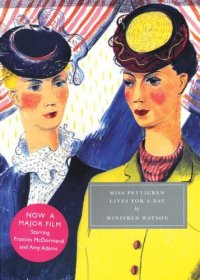
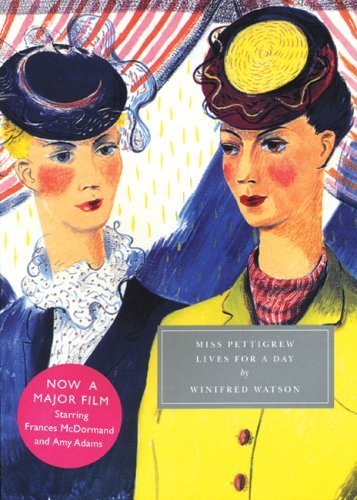
Miss Pettigrew Lives for a Day by Winifred Watson

From my review: “I found Miss Pettigrew Lives for a Day very easy to read, and with the entire story taking place in a day, it moved along at a fast pace. The perfect choice if you’re in the mood for something light hearted, fun and frivolous. Although it didn’t immediately become a favourite book, it was a lively, entertaining read full of amusing scenes and witty dialogue that made me smile.”

Alas, Poor Lady by Rachel Ferguson

From my review: “I loved this book but I know it won’t appeal to everyone. It’s slow and detailed, doesn’t have a lot of plot, and it did seem to take me a long time to read it. And yet without anything really ‘happening’ there’s still so much going on in this book that this post could easily have been twice as long as it is. So, for anyone with an interest in feminism and the differing roles of men and women in society, I can’t recommend Alas, Poor Lady highly enough.”

The Blank Wall by Elisabeth Sanxay Holding

From my review: “The pages of The Blank Wall are filled with tension and suspense. The plot is exciting and fast-paced and I could never guess what might happen next…I haven’t read many stories of the American Home Front during the war, so this was another interesting aspect of the book for me. A great story and one of my favourite Persephones so far.”
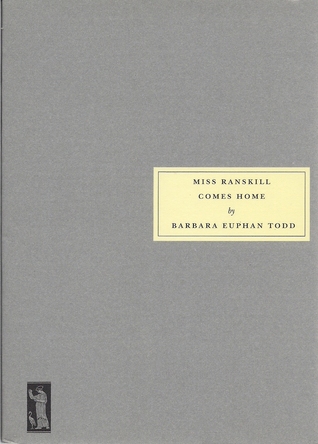
Miss Ranskill Comes Home by Barbara Euphan Todd

From my review: “I thought the whole idea of someone being cut off from the world and returning home only to find themselves suddenly thrown into the middle of a war was absolutely fascinating. This book has the perfect blend of humour and poignancy and gives us an opportunity to explore World War II from a unique perspective.”

Good Evening, Mrs Craven: The Wartime Stories of Mollie Panter-Downes

From my review: “These stories are not particularly dramatic or sensational in any way. They are realistic stories that focus not so much on the war itself, but on the effects of the war on the women (and a few of the men) who were left behind at home. We read about women attending sewing parties, worrying about loved ones who are away fighting, preparing for their husbands to go to war, coping with being pregnant during the war and experiencing almost any other wartime situation you can think of.”

The Victorian Chaise-longue by Marghanita Laski

From my review: “I’ve seen this book described as a horror story – ‘a little jewel of horror’. For me, though, it wasn’t so much frightening as unsettling and creepy… At only 99 pages, this book can easily be read in an hour, but there’s so much packed into those 99 pages that the story will stay in your mind for a lot longer than that.”

Princes in the Land by Joanna Cannan

From my review: “This novel has very little plot but like most Persephone books it raises a lot of interesting issues including marriage, parent/child relationships and class differences. The book itself is well written and I liked the setting and the time period, but unfortunately this is the first Persephone I’ve read that I didn’t enjoy much at all.”
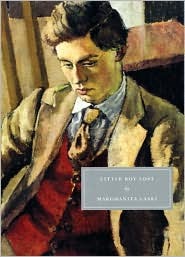
Little Boy Lost by Marghanita Laski

From my review: “There are so many great books that are let down by a weak ending, but this is certainly not one of them. The tension throughout the final few chapters was nearly unbearable, so much so that I was almost afraid to reach the end. And I imagine most readers, like I did, will have tears in their eyes when they reach the very last sentence. Nicholas Lezard of The Guardian, who is quoted on the back cover, says it best: If you like a novel that expertly puts you through the wringer, this is the one.

Family Roundabout by Richmal Crompton

From my review: “Family Roundabout is a very character-driven novel and fortunately almost every character in the story is well drawn and interesting. There were some that I didn’t like (Belle has to be one of the most horrible, vile people I’ve come across in fiction for quite a long time) but I enjoyed following all of their stories through to the end of the book. I loved the portrayal of the self-absorbed author, Arnold Palmer, and I thought the child characters were very well written too, which is maybe not surprising from a writer who wrote so many successful children’s books!”

And two more which are also available as Persephones, although my editions were from other publishers:

Miss Buncle’s Book by DE Stevenson

From my review: “Delightful, charming, warm, cosy – those are the type of words I would use to describe Miss Buncle’s Book. Written in the 1930s, D.E. Stevenson captures perfectly the atmosphere of life in a small English village at that time – a place where everybody knows everybody else, where freshly baked breakfast rolls are delivered to the villagers every morning, where people meet for tea parties or musical evenings and gossip with the neighbours over the garden fence.”

Flush by Virginia Woolf

From my review: “Flush is a wonderfully creative combination of fiction and non-fiction. For factual information, Woolf draws on Elizabeth Barrett Browning’s two poems about her dog and also the letters of Elizabeth and Robert, some of which she quotes from in the text. From a fictional point of view, the book is written from Flush’s perspective, imagining how a dog might feel and behave in a variety of different situations. The result is a book which is fascinating, unusual and a delight to read!”

~

Have you read any of these? I know many of you have read a lot more Persephone books than I have!
Shadow of the Moon readalong

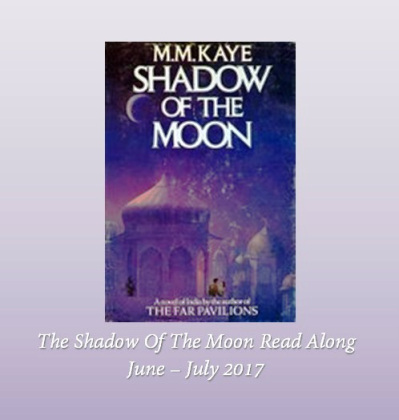
Just a quick post today to tell you about a readalong I’m going to be participating in this summer. I know I’ve mentioned before that The Far Pavilions by MM Kaye is one of my favourite historical fiction novels. I have also enjoyed two of her mysteries – Death in Kashmir and Death in Berlin – but for some reason still haven’t read her other historical novels, Shadow of the Moon and Trade Wind, despite having had a copy of the former on my shelf for a while now. When I saw that Cirtnecce of Mockingbirds, Looking Glasses and Prejudices and Cleo of Classical Carousel were planning a Shadow of the Moon readalong starting in June this seemed the perfect opportunity to finally pick up my copy and start reading.

Like The Far Pavilions, this book is set in India, a country Kaye really seemed to understand and wrote about beautifully. It was published in 1957, much earlier than The Far Pavilions (1978), so I’m curious to see what it is like and, from what I’ve heard about it, I’m anticipating another great read!

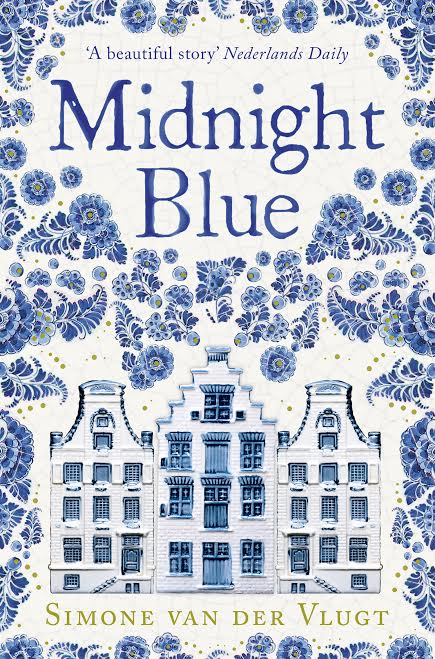
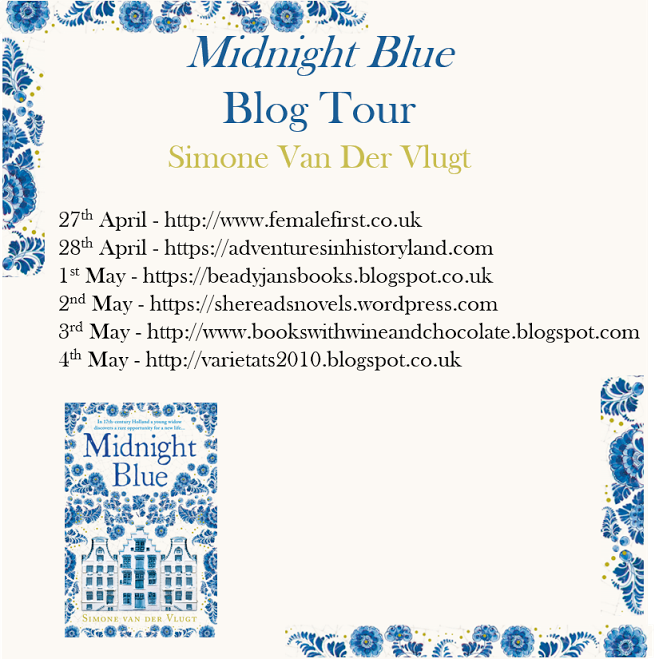
Midnight Blue by Simone van der Vlugt

Midnight Blue is a novel set in the Netherlands in the 17th century and written by Dutch author Simone van der Vlugt. Originally published in Dutch, this edition from HarperCollins features an English translation by Jenny Watson.

As the novel opens in 1654, we meet Catrin, a young woman who lives in the village of De Rijp and who has recently been widowed. Hoping to make a new start, Catrin says goodbye to her family and sets out on the long journey to Amsterdam, where she has been offered work. Arriving in the city, she takes up her new position as housekeeper to the merchant Adriaan van Nulandt.

As she settles into her job and gets to know the family, an attraction forms between Catrin and Adriaan’s younger brother, the charismatic and adventurous Matthias. She also watches with envy and fascination as Adriaan’s wife, Brigitta, is encouraged to pursue her passion for painting, something for which Catrin also has a talent. It’s not long, however, before a face Catrin thought she had left behind reappears, threatening to tear apart the new life she has built for herself – and so she decides it’s time to move on again, this time to Delft and the home of another Van Nulandt brother, Evert. Evert owns a pottery workshop and it is here that Catrin finds an opportunity to put her artistic abilities to good use at last…

Although Catrin’s personal story is fictional, the world in which Simone van der Vlugt places her is grounded in historical fact. My knowledge of Dutch history is very limited, picked up mainly from the few other novels I’ve read set in the country, and it’s always good to have the opportunity to learn something new! The period covered by the novel includes such notable events as the Delft Explosion of 1654 and an outbreak of the plague. Life in Catrin’s home village of De Rijp and the cities of Amsterdam and Delft is vividly described, and as Catrin spends so much time travelling from one place to another, we are also given descriptions of the scenery seen from the canals and rivers which link her various destinations.

The time during which the novel is set – known as the Dutch Golden Age – saw art, science, trade and industry flourishing in the Netherlands, including the pottery industry which forms such an important part of the story. You can expect to learn a lot about mixing chemicals, painting designs, glazing pots and firing them in kilns…and you’ll come away from the novel with an admiration for Delft Blue, the blue and white pottery produced at Evert’s workshop. Several historical figures from the art world are incorporated into the story too, although I found it difficult to believe that Catrin would have come into contact with so many famous artists of the period – Rembrandt, Vermeer, Nicolaes Maes and Carel Fabritius all make an appearance and all have words of advice or encouragement for Catrin.

Catrin herself is an interesting character. The novel is written in first person present tense, which is not my favourite for historical fiction, but it does mean that we get to know our narrator quite well. Even so, we don’t know everything about her immediately; Catrin keeps some parts of her past hidden to be revealed later on – and when the past does begin to catch up with her, this introduces a thriller element to the novel which adds another layer of interest. I was occasionally pulled out of the 17th century by the use of a word or phrase which felt too modern, but it’s difficult to say how much of this was due to the translation and how much to the original text.

Midnight Blue is a light and entertaining novel which I would recommend to readers who have enjoyed other books with Dutch settings such as Girl with a Pearl Earring or The Miniaturist. I read this as part of a blog tour, so if you would like to see more reviews, you can find the rest of the schedule below. And thanks to the publisher for providing a copy of the book for review!

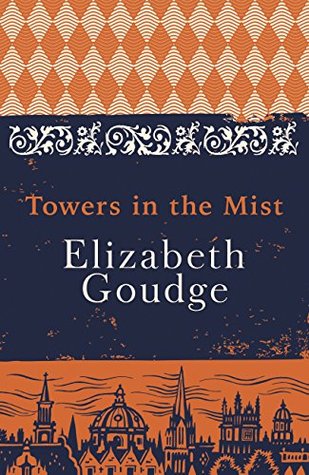
Elizabeth Goudge Day: Towers in the Mist

I have Lory of The Emerald City Book Review to thank for introducing me to the work of Elizabeth Goudge. Last year, for her Elizabeth Goudge Day (hosted on the author’s birthday, 24th April) I read The White Witch, and the year before I read The Child from the Sea. I loved both so there was no question of not taking part again this year – and I had high hopes for my third Goudge novel, Towers in the Mist, which was first published in 1937.

Not all of Goudge’s novels are historical, but it’s the historical ones that I’ve been drawn to first. Towers in the Mist is set in Oxford in the Elizabethan period and, like the other two I’ve read, it’s a truly beautiful novel. It begins on May Day with Faithful Crocker’s first sight of the “fragile city spun out of dreams, so small that he could have held it on the palm of his hand and blown it away into silver mist”. At the age of fourteen, Faithful has found himself alone in the world and has made his way to Oxford where he hopes to achieve his ambition of becoming a scholar and attending university. With no money, no friends and not even any decent clothes to wear, this may seem unlikely, but Faithful’s fortunes improve when he catches the eye of Canon Leigh of Christ Church, who takes him into his household and treats him as one of the family.

Following the death of his wife several years earlier, Canon Leigh has been left to raise his children alone and most of the responsibility has fallen on his eldest daughter, Joyeuce. Joyeuce is devoted to her younger brothers and sisters, but when student Nicolas de Worde enters her life, she will have to decide what is more important to her. We also follow the stories of the domestically-minded Grace, who longs to step out of her sister Joyeuce’s shadow and take control of the Leigh household, and of four-year-old Diccon, who is thought to have been switched at birth as he is so different in looks and temperament to the rest of the family. These are the people with whom Faithful will build his new life, sharing in their small everyday dramas – such as the chaos of the Spring Wash – as well as the larger ones which affect the entire city and university.

I loved getting to know Faithful and the Leighs (and Nicolas, who ended up being one of my favourite characters after undergoing a bit of a transformation which I hadn’t expected at the beginning) but there are also several real historical figures from the Elizabethan age who play a part in the story. The most prominent are the poet Philip Sidney and the poet/explorer Walter Raleigh who, at the time during which the novel is set, are both young men attending university along with Faithful, Nicolas and Giles Leigh. I loved the contrast between the two characters – the flamboyant, daring Raleigh and the quiet, sensitive Sidney – and I enjoyed the little insights we are given into the work of a poet: “The loveliest phrases are winged, and when the poet opens the door of the place where he put them he finds that the tiresome creatures have flown away.”

Each chapter opens with a passage from a poem by Sidney, Raleigh or another 16th century poet and I thought this was a nice touch which helped to set the mood for the story. Goudge admits in her note at the beginning that not everything in the book will be entirely accurate historically, but I think she is very successful at capturing the overall feel of the Elizabethan period even if it may not be correct in every detail.

Towers in the Mist is a lovely book, but it does have a few flaws and could be too sentimental for many modern day readers. Although the descriptions of Oxford are beautiful and Goudge’s own love for the place shines through, sometimes she goes into long digressions on the history of the city and university which add very little to the plot – you either have the patience for that sort of thing or you don’t. As with the other Goudge novels I’ve read, there’s also a strong religious element which won’t be for everyone either (in fact, it’s not really for me, although it didn’t bother me at all when there was so much else to enjoy).

So, that’s three books by Elizabeth Goudge that I’ve read now and three that I’ve loved. Which one should I read next?

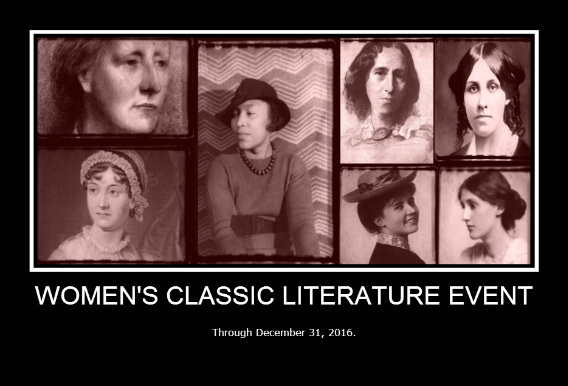
The Women’s Classic Literature Event

Womens Classic Literature Event

The Classics Club have announced an exciting new reading event: The Women’s Classic Literature Event! Between now and December 2016 we will be reading and writing about classic works by female authors. There are no other rules and there’s no upper or lower limit to the number of books we need to read – as long as a book is written by a woman and (preferably) published before 1960, it counts towards this event. By ‘book’ I don’t just mean novels, because letters, poetry, plays, essays, journals, short stories and biographies all count too.

I will definitely be participating, but I’m not sure how I want to approach this event. I still have a lot of classics by women left to read on my Classics Club list, which I’m listing below:

Shirley by Charlotte Brontë
Jane Eyre by Charlotte Brontë (re-read)
Wuthering Heights by Emily Brontë (re-read)
My Antonia by Willa Cather
Rebecca by Daphne du Maurier (re-read)
Frenchman’s Creek by Daphne du Maurier
Mary Anne by Daphne du Maurier
The Mill on the Floss by George Eliot
Wives and Daughters by Elizabeth Gaskell
Excellent Women by Barbara Pym
The Romance of the Forest by Ann Radcliffe
Kristin Lavransdatter by Sigrid Undset
The House of Mirth by Edith Wharton
The Heir of Redclyffe by Charlotte M. Yonge

I’ll take this list as a starting point and read some of these books for the event, but I would like to do more than that. I would like to also read books by women who are not on my list, by women who are new to me, by women I’ve never thought about reading before – and maybe some children’s classics by women too.

The Classics Club have also posted an introductory survey. Here are my answers to the questions:

1. Introduce yourself. Tell us what you are most looking forward to in this event.
I’m Helen and I joined the Classics Club in 2012. I’m looking forward to discovering some new female authors through this event and I’m also hoping it will encourage me to pick up some of the books on my existing list that I’ve been putting off reading.

2. Have you read many classics by women? Why or why not?
Yes, I’ve read quite a lot of classics by women (including some of my absolute favourite classics) – but probably not as many as I’ve read by men.

3. Pick a classic female writer you can’t wait to read for the event, & list her date of birth, her place of birth, and the title of one of her most famous works.
I’m looking forward to finally reading Charlotte M. Yonge. I’ve been meaning to read The Heir of Redclyffe for such a long time, but for some reason have never got round to doing it. Yonge was born in Otterbourne, Hampshire, England on August 11, 1823. As well as the title I’ve already mentioned, her other works include The Daisy Chain and The Clever Woman of the Family.

4. Think of a female character who was represented in classic literature by a male writer. Does she seem to be a whole or complete woman? Why or why not? Tell us about her. (Without spoilers, please!)
I’ve chosen a character from a classic I read earlier this year and who I certainly didn’t consider to be a whole or complete woman: Dora Spenlow from David Copperfield by Charles Dickens. I often find Dickens’ female characters irritating (although there are a few exceptions) and Dora is probably the worst – a woman who is happy to describe herself as ‘a silly little thing’.

5. Favorite classic heroine? (Why? Who wrote her?)
I can think of lots of great heroines in classic literature, but one of my favourites is the wonderful Marian Halcombe from The Woman in White by Wilkie Collins. I know Collins has been criticised for making Marian unattractive and unfeminine while the beautiful but much less interesting Laura Fairlie is the romantic interest of the novel, but I still think it’s great to see a male Victorian author create such a strong, intelligent, courageous heroine.

6. We’d love to help clubbers find great titles by classic female authors. Can you recommend any sources for building a list? (Just skip this question if you don’t have any at this point.)
This list of Virago Modern Classics should be a good place to start (be careful as there are a few male authors on there too).
http://www.librarything.com/wiki/index.php/User:Christiguc

7. Recommend three books by classic female writers to get people started in this event. (Again, skip over this if you prefer not to answer.)
Rebecca by Daphne du Maurier
Pride and Prejudice by Jane Austen
Jane Eyre by Charlotte Brontë

8. Will you be joining us for this event immediately, or will you wait until the new year starts?
I’ll be joining immediately. I’m sure I’ll be reading some classics by women during the remainder of this year and I would like those to count.

9. Do you plan to read as inspiration pulls, or will you make out a preset list?
Apart from reading some of the remaining books on my current Classics Club list, I’m not planning to make any other preset lists. I never stick to them anyway, so I’m just going to read whatever I feel like reading.

10. Are you pulling to any particular genres? (Letters, journals, biographies, short stories, novels, poems, essays, etc?)
I expect that I’ll be reading mostly novels (there’s a reason why I didn’t call my blog She Reads Letters or She Reads Journals) but I would like to be adventurous and read some other formats as well, particularly short stories and poetry.

11. Are you pulling to a particular era or location in literature by women?
No, not really. I’ve already read a lot of classics from the Victorian era, though, so I’m going to try to read more books from the twentieth century for this event.

12. Do you hope to host an event or readalong for the group? No worries if you don’t have details. We’re just curious!
I don’t think so, but I haven’t ruled it out.

13. Is there an author or title you’d love to read with a group or a buddy for this event? Sharing may inspire someone to offer.
Nothing in particular, but I’ll look out for any group reads that interest me.

14. Share a quote you love by a classic female author — even if you haven’t read the book yet.
“And certainly, the mistakes that we male and female mortals make when we have our own way might fairly raise some wonder that we are so fond of it.” – George Eliot, Middlemarch

~

Will you be taking part in the Women’s Classic Literature Event?

Upcoming reading events

A More Diverse Universe 2015

Beginning today, Aarti of BookLust is hosting A More Diverse Universe, her annual reading event designed to encourage people to read more diversely. There’s still plenty of time to join in – the sign-up post is here and you’ll find lots of suggestions and recommendations on Aarti’s blog.

I’m currently reading A God in Every Stone by Kamila Shamsie, which I chose because it was also on the shortlist for the Walter Scott Prize this year (I am slowly working my way through all of the shortlisted titles since the prize began). Two other books I’ve been considering reading are Flood of Fire by Amitav Ghosh and The Japanese Lover by Isabel Allende. I haven’t read anything by Allende before but received a review copy of The Japanese Lover through NetGalley and am looking forward to trying it. Flood of Fire is the third book in Ghosh’s Ibis Trilogy and I enjoyed the previous two when I read them earlier this year.

1924-club

The 1924 Club is being hosted by Karen of Kaggsy’s Bookish Ramblings and Simon of Stuck in a Book and the idea is for everyone to read and review books originally published in 1924. I was sure I must have something on my shelves from that year, so I had a look and found two books: Precious Bane by Mary Webb and Beau Geste by P.C. Wren. I’m going to try to read both of those for the club – I think I’ll probably enjoy Beau Geste and I’m curious about Precious Bane, having seen very mixed opinions of it!

Simon and Karen (and others) have provided plenty of other suggestions: it seems that a lot of great books were published in 1924 and I’ll look forward to seeing what everyone chooses to read.

Witch Week

From October 31 to November 6, Lory of The Emerald City Book Review will be celebrating Witch Week. Her theme this year is New Tales from Old, which involves reading fiction based on fairy tales, folklore, myths and legends – not necessarily including witches! I’m thinking of reading The Last Enchantment, the third of Mary Stewart’s Arthurian novels. Lory will also be hosting a readalong of The Bloody Chamber by Angela Carter, though I won’t be taking part as I’ve already read it.

German Literature Month

November is also German Literature Month at Beauty is a Sleeping Cat and Lizzy’s Literary Life. This event is now in its fifth year but it will be the first time I’ve participated. I haven’t decided what to read yet, but I do have two Hans Fallada books on my TBR (Wolf Among Wolves and Once a Jailbird) as well as Death in Venice by Thomas Mann. There will also be some themed weeks and readalongs throughout the month of November.

Will you be taking part in any of these events?  Do you know what you’ll be reading?

It’s time for R.I.P. X

rip10300Banner by Abigail Larson

R.I.P. (R.eaders I.mbibing P.eril) is one of my favourite reading events. I have taken part in it every year since 2010, with varying levels of success, and it’s now something I automatically associate with the beginning of September and the shortening of the days. The challenge has previously been hosted by Carl of Stainless Steel Droppings but this year (the 10th anniversary) it is being hosted by someone else: Andi and Heather of The Estella Society.

As usual, the idea of R.I.P. is that during the months of September and October we will be reading books that fit one or more of the following categories:

Mystery
Suspense
Thriller
Dark Fantasy
Gothic
Horror
Supernatural

There are different levels of participation to choose from, but I am signing up for this one:

ripnineperilfirst

Peril the First: Read four books, any length, that you feel fit (the very broad definitions) of R.I.P. literature. It could be King or Conan Doyle, Penny or Poe, Chandler or Collins, Lovecraft or Leroux…or anyone in between.

Part of the fun of R.I.P. is making a list of books you could read. I don’t expect to read all of these – and I usually find that once I’ve made a list I end up wanting to read something else entirely – but here are a few possibilities.

From my Classics Club list:
The Romance of the Forest by Ann Radcliffe

For my TBR Project:
The Bones of Avalon by Phil Rickman

Next in a series:
The Mummy Case by Elizabeth Peters
Sovereign by CJ Sansom
The Lady of Sorrows by Anne Zouroudi
The Dead in their Vaulted Arches by Alan Bradley

First in a series:
What Angels Fear by CS Harris
The Queen’s Man by Sharon Penman

Books left over from previous R.I.P. lists:
Blood Harvest by Sharon Bolton
Bleeding Heart Square by Andrew Taylor
Ten Second Staircase by Christopher Fowler
Savage Magic by Lloyd Shepherd

~

Are you taking part in R.I.P. this year? What will you be reading?