Historical Musings #11: A post for Valentine’s Day

Historical Musings I had a few topics in mind for this month’s Historical Musings post, but as it’s Valentine’s Day today I thought it would be appropriate to talk about romance…specifically, historical romance.

In one of last year’s posts I discussed the negative impressions and misconceptions some readers have of historical fiction as a genre. It seems that historical romance suffers from a worse reputation: often when I look at reviews of historical novels I see remarks like, “This is so badly written and poorly researched I consider it to be historical romance, not historical fiction.” Is this fair? Surely just because a novel is a romance it doesn’t necessarily mean it’s badly written or that the author hasn’t carried out their research. Of course, it depends on what type of books you think about when you hear the words ‘historical romance’ – and that is what I want to discuss in this post.

I have read some wonderful books over the years which I suppose could be described as historical romance (although I think I probably just thought of them as historical fiction at the time). Yet I am also sometimes guilty of complaining that books are too “romance-orientated and lacking the depth I prefer”. I said something to that effect just a few days ago when writing about Philip Lindsay’s Here Comes the King. So why do I enjoy some types of romance and not others – and why do so many of us seem to dislike reading (or admitting to reading) romance?
April Lady I’ve noticed that a lot of people talk about historical romance (and sometimes historical fiction too) as something they read as a teenager or young adult, the implication being that they consider the books they used to read as being less relevant, less important or simply less appealing than the books they read now. I’m certainly not criticising anybody who may have said or felt that; I just think it’s interesting that tastes change so much over time and that people sometimes seem to grow out of reading certain genres (in my case it’s contemporary crime and horror that I rarely read these days). I don’t feel ashamed that, as an adult, I enjoy reading Georgette Heyer’s Regency romances or that I had fun working through the first three books in Philippa Carr’s Daughters of England series a few years ago. I missed out on those types of books when I was younger, so if I don’t read them now I never will.

So what exactly is historical romance and how is it different from historical fiction? It seems to me that there are several different types of romance to think about here:

1 – Books which are specifically marketed as ‘historical romance’ and targeted at a particular readership. These books tend to follow certain conventions which readers of romance will expect; the focus will be on the relationship between the hero and heroine, and there will usually be a happy ending. The Flame and the Flower by Kathleen E. Woodiwiss, published in 1972, is thought to have been one of the first of this type of book. More recent examples could be The Duchess War by Courtney Milan, The Viscount Who Loved Me by Julia Quinn and Again the Magic by Lisa Kleypas. I haven’t read any of these novels or anything similar, but I’m sure that, as with any genre, there are some good ones and some bad.

2 – Historical fiction novels which include romance as part of the plot but not as the main focus of the story. Now, I do read a lot of this type of book. In fact, I would argue that most historical fiction does include some sort of romantic aspect. Even Patrick O’Brian’s Aubrey-Maturin novels contain a certain amount of romance – but don’t worry, I’m not suggesting that they should be considered historical romance! At the other end of the scale there are authors like Philippa Gregory, whose books often have a strong romantic element, but because they are usually based on the life of a real historical woman and follow the whole course of that woman’s life, I wouldn’t consider them to be romances in the traditional sense either.

3 – ‘Romances’ in the old-fashioned sense of the word. This would include 19th century novels like The Three Musketeers by Alexandre Dumas and Ivanhoe by Sir Walter Scott. I love to read these books, but they are not really the kind of romances I’m talking about in this post.
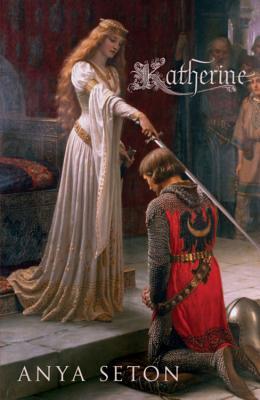
Katherine Of course, there are plenty of books that I would have trouble fitting into any of these categories. There are novels I’ve read and loved, such as Katherine by Anya Seton and Forever Amber by Kathleen Winsor, which could be described as either historical fiction or historical romance but don’t, in my opinion, belong in either category 1 or category 2 above. Then there are gothic romances by authors like Victoria Holt and Jane Aiken Hodge. And what about a classic novel like Gone with the Wind?

My conclusion, then, after all of this, is that trying to give books labels or to make them fit neatly into one genre or subgenre is a waste of time – for me, anyway. I know what sort of romances I like to read and what sort I’m not at all interested in reading and surely that’s all that matters.

What are your opinions on this month’s topic?

Do you – or have you ever – read any historical romances? Are there any you would recommend?

What do you think makes historical romance different from historical fiction?

Have your reading tastes changed over time?

Historical Musings #10: Possible reads for 2016

Historical Musings For my first Historical Musings post of the year I’ve decided to keep things very simple. The questions I’m asking this month are:

Will you be reading any historical fiction in 2016? If so, which books are you hoping to read? Are there any new historical fiction novels being published this year which you’re looking forward to, or will you be reading books already on your shelves? I’d love to hear your plans for the year ahead!

If you’re interested in books being released this year, the Historical Fiction 2016 list at Goodreads or the Historical Novel Society’s list of Forthcoming Historical Novels for 2016 might give you some ideas, but there are not many upcoming books that I feel excited about this year, if I’m honest. I’ve received a few of the books on those lists as review copies from NetGalley (The Queen’s Choice by Anne O’Brien, Jane Steele by Lyndsay Faye and For the Most Beautiful by Emily Hauser) and I’m sure I’ll end up picking up some new releases in the library too, but otherwise there are plenty of older books that I would like to read in 2016. I want to try more books by authors like Margaret Campbell Barnes, Cecelia Holland, E. Barrington, Valerie Anand, Marjorie Bowen and Martha Rofheart, all of whom have been recent discoveries for me.

This year, as one of my Reading Resolutions, I’m determined to make time to re-read some of my old favourites (which naturally include a lot of historical novels) but I do also have a lot of unread books on my shelves.

Here are some books which I would like to get to in 2016:

histmusings2

The Ashes of London by Andrew Taylor (reading now)
Some Luck by Jane Smiley
A Dark and Distant Shore by Reay Tannahill
The Walls of Byzantium by James Heneage
The Rose of Sebastopol by Katherine McMahon
Shadow of the Moon by MM Kaye
Red Sky at Night by Jane Aiken Hodge
The Kingmaking by Helen Hollick
Prince of Foxes by Samuel Shellabarger
The Love Knot by Elizabeth Chadwick
The Reckoning by Sharon Penman
Renegade by Robyn Young
Daughter of Siena by Marina Fiorato
Queen of Silks by Vanora Bennett
The Heaven Tree by Edith Pargeter

I also still have a lot of Walter Scott Prize nominees to get through. And of course, I haven’t forgotten about all the wonderful recommendations left in the comments on previous Historical Musings posts (including books about Ancient Rome, women’s classics, books set in Africa and books for younger readers).

As you can see, there are more than enough books to keep me busy in 2016!
What about you? What will you be reading?

Historical Musings #9: Reading broadly or reading narrowly?

Historical Musings In my fourth Historical Musings post back in July, I asked about favourite time periods in historical fiction. This month’s post is on a similar theme: when you read historical fiction, do you stick to one or two periods or are you happy to try anything and everything?

I am genuinely interested in most historical periods (I’ve always been less drawn to Ancient history, although that may be starting to change) and I feel that I read about a wide range of them. Looking back at the historical fiction I’ve read so far this year, I have read novels set during both World Wars, the English Civil War, the French Revolution, the Napoleonic Wars and the fall of Constantinople. I have read books set in Renaissance Italy, medieval England, 16th century Scotland and 19th century China – and too many others to list here.

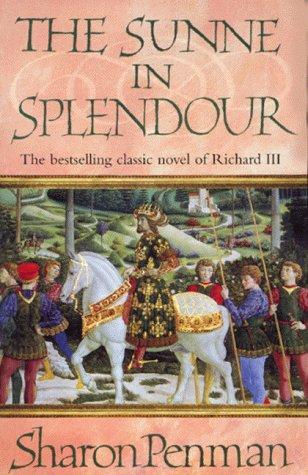
Sunne in Splendour I certainly don’t claim to be an expert on any of the historical periods or subjects that I like to read about, but there are some that I find myself reading more often than others – particularly the Tudors and the Wars of the Roses. To take the latter as an example, according to the list I have compiled here, I have read and reviewed 22 books on the Wars of the Roses since I started blogging in 2009 (19 fiction and 3 non-fiction). However, when I read other people’s reviews of the same books, I am often amazed and impressed by other readers’ depth of knowledge and their ability to spot minor historical errors that I hadn’t even noticed. This leads me to wonder whether some people (assuming they are not actually historians or students of the period) are simply better at retaining and remembering information than I am, or whether they have been focusing their reading on that one particular period to a greater extent than I have.

Sea of Poppies I can see the advantages of reading with a ‘narrow’ focus – gaining different perspectives on the same subjects, seeing how different authors portray the same characters, and adding to and expanding on existing knowledge. But while I do enjoy – and will continue to search out – books on the Wars of the Roses and my other favourite periods, I would get bored if I read about them all the time. I also love to discover new times and places about which I previously knew little or nothing. Some of my favourite new discoveries in 2015 have been the First Opium War (Amitav Ghosh’s Ibis Trilogy), the reigns of the 7th century kings of Northumbria (Edoardo Albert’s Northumbrian Thrones Trilogy), 18th century Portugal (The Devil on her Tongue by Linda Holeman) and the life of Cicero (Imperium and Lustrum by Robert Harris).

If some readers like to read ‘narrowly’, as I have described it here, I’m sure there are others who prefer to read very ‘broadly’ as far as historical fiction is concerned – and once they have read one or two novels with a particular setting, are happy with the knowledge they’ve gained and are ready to move on to something else. For me, though, neither reading narrowly nor broadly is enough: I like to do a mixture of both, which is probably why I always feel that there aren’t enough hours in the day!

What about you? Do you like to read as much as possible on one historical period or topic – or do you prefer to read about as many different ones as you can?

Historical Musings #8: Women’s Classic Literature

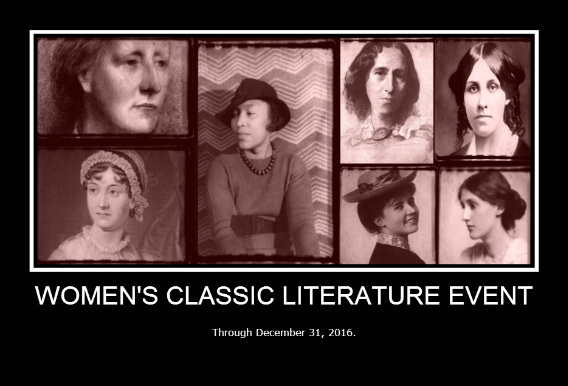
Historical Musings From now until December 2016 I am participating in the Women’s Classic Literature Event hosted by The Classics Club. You can read more about it in this post (which includes my answers to the introductory survey) and I have already made a good start, having read My Ántonia by Willa Cather a few weeks ago. I’m hoping to read lots of other women’s classics over the next year – and as historical fiction is my favourite genre, I’m particularly interested in reading historical novels by classic female authors.

I have already read several, many of which I have reviewed on my blog, and I thought I would list some of them below.

Romola George Eliot

Most of George Eliot’s novels were set in her recent past, so not quite contemporary but not truly historical either (Middlemarch, for example, was published in the 1870s but set in 1829-32). She did, however, write one novel set in Florence during the Italian Renaissance – this was Romola, which I read earlier this year. It wasn’t an easy read but I did enjoy it.

Daphne du Maurier:

Du Maurier is usually associated with gothic suspense, but many of her novels are historical fiction. The King’s General is set in seventeenth century Cornwall during the English Civil War and follows the story of Honor Harris and her relationship with the King’s General in the West, Richard Grenvile. Jamaica Inn, one of du Maurier’s best known novels, is set in the early 1800s and is an atmospheric story of smugglers, shipwrecks, and the inhabitants of a lonely inn on Cornwall’s Bodmin Moor. Hungry Hill is a family saga covering five generations of the Brodrick family who live at Clonmere Castle in Ireland and whose fortunes revolve around the copper mine on Hungry Hill.

And there are others: The House on the Strand is a dual timeline novel in which part of the action takes place in the 14th century and The Glass-Blowers is based on the lives of du Maurier’s own ancestors who lived through the French Revolution. Mary Anne, which I haven’t read yet, is set during the Regency, and Frenchman’s Creek, also still to be read, is set during the reign of Charles II.

Sylvia's Lovers Madame de Lafayette

Published in 1678, The Princess of Cleves is thought to be the first French historical novel. It is set between 1558 and 1559 at the court of Henri II. I found the writing quite dry (although that could be the fault of the translation) but I loved the portrayal of the French court. It’s worth reading if you’re interested in French history or the early development of the novel form.

Elizabeth Gaskell

Sylvia’s Lovers is set in the 1790s in Monkshaven (a fictional English town based on Whitby, North Yorkshire). The story of Sylvia Robson and the two men who hope to marry her is played out against a backdrop of the Napoleonic Wars. I haven’t read all of Gaskell’s other books yet, but I think this is the only historical one. It’s also, in Gaskell’s own words, “the saddest story I ever wrote”.

Orlando Baroness Emmuska Orczy

Baroness Orczy wrote many historical fiction novels, the most famous being The Scarlet Pimpernel, her adventure novel set during the French Revolution. I have tried two of the many Pimpernel sequels (there are at least ten, plus some prequels and short story collections) but so far they haven’t lived up to the original.

Virginia Woolf

The only Virginia Woolf novel I have read so far is Orlando. It could be described as historical fiction, though not in the conventional way: the protagonist, Orlando, lives for four hundred years and experiences the Elizabethan era, the Great Frost of 1608, the Restoration, the 18th century, and the Victorian period. I found this book a lot easier to read than I’d expected.

Margaret Mitchell

It’s been years since I last read it, but this list wouldn’t be complete without Gone With the Wind, Margaret Mitchell’s classic story of Scarlett O’Hara and Rhett Butler set in the American South during the Civil War.

***

Womens Classic Literature Event

These are all I can think of at the moment, though I’m sure I’ve probably read more. There are plenty of other books that I consider to be ‘classic historical fiction’ but maybe not ‘classics’ in the usual sense of the term.

Can you think of any other historical fiction novels by classic women authors? Just to clarify, the Classics Club’s definition of a classic is a book published before 1960 (although this is just a guideline and would rule out some of the du Maurier titles I’ve mentioned above). I do already have Kristin Lavransdatter by Sigrid Undset on my list to be read, but I would love some more suggestions.

And for those of you who are also taking part in the Women’s Classic Literature Event, I hope I’ve given you some ideas to consider!

Historical Musings #7: Exploring Africa

Historical Musings It’s very easy to find historical fiction set in Europe or America. If you’re looking for a book on the wives of Henry VIII, the Italian Renaissance, the US Civil War or the French court, there are literally hundreds of novels to choose from – but historical fiction set in other parts of the world is not as well represented.

I’m participating in A More Diverse Universe at BookLust this month and will have two books to tell you about soon: the first is Kamila Shamsie’s A God in Every Stone, set partly in 1930s Peshawar, and the other is Flood of Fire, the final part of Amitav Ghosh’s Ibis Trilogy set in India and China during the First Opium War. Last year, for the same event, I read The Garden of Evening Mists by Tan Twan Eng, set in Malaya in the 1940s and 1950s, and The Twentieth Wife by Indu Sundaresan, a story of Mughal India. It seems, then, that when I do choose to read more diversely within the historical fiction genre, I tend to pick up books set in Asia (particularly in India and China) rather than in other areas of the world.

The Sultans Wife A quick look through my blog archives has shown me that I have read a very small number of historical novels set in Africa over the last few years – and even fewer that were actually written by African authors. Several of Dorothy Dunnett’s novels are set partly in Africa (the journey to Timbuktu in Scales of Gold is particularly fascinating), Wendy Wallace’s The Sacred River is set in 19th century Egypt – and of course, there’s Elizabeth Peters’ Amelia Peabody series which is set in Egypt too. I can also recommend three novels set partly or entirely in Morocco: Linda Holeman’s The Saffron Gate (1930s), Jane Johnson’s The Sultan’s Wife (17th century) and Laila Lalami’s The Moor’s Account (16th century).

half of a yellow sun If we can include the 1960s as historical fiction, then I have also read The Memory of Love by Aminatta Forna (Sierra Leone) and Half of a Yellow Sun by Chimamanda Ngozi Adichie (Nigeria) – and Cutting for Stone by Abraham Verghese, which covers the history of Ethiopia from around 1950-1980. I do prefer to stick to Walter Scott’s definition of historical fiction, though, which would rule out anything set less than sixty years before publication! Before I started blogging, I read Roots by Alex Haley and the Ramses series by Christian Jacq, but beyond these I’m struggling to think of anything else.

Can you recommend some good historical fiction novels set in Africa? Which are your favourites?

Historical Musings #6: Non-Fiction

Historical Musings As my previous Historical Musings posts have all concentrated on historical fiction, I thought it would make a nice change to discuss historical non-fiction this month. As you can probably guess from the title of my blog, I would rather be reading a novel than any other type of book, but I have been making an effort lately to read more non-fiction and some of the books I have read in the last few months include She-Wolves by Helen Castor, a book on the lives of four medieval queens; An Accidental Tragedy by Roderick Graham, a biography of Mary, Queen of Scots; and Rebellion by Peter Ackroyd, the third volume of his History of England series (this one covers the English Civil War and the Restoration).

I find most periods of history interesting, but I tend to be drawn to subjects that I’ve previously read about in historical fiction. I picked up She-Wolves, for example, after reading Colin Falconer’s novel, Isabella, because I wanted to know more about Isabella of France. Similarly, I chose to read Blood Sisters by Sarah Gristwood and The Hollow Crown by Dan Jones to add to the knowledge of the Wars of the Roses I have gained by reading fiction. It can be fun and often quite enlightening to read a factual account of a character or an event I’m only familiar with through fiction and to see how closely (or not) the fictional version had followed historical fact.

However, it’s not very often that I finish reading a work of non-fiction feeling as satisfied as I would have done at the end of a novel. The only non-fiction book I can think of that I truly loved and that I connected with emotionally in the same way I would with fiction was Wild Swans by Jung Chang. Of course, Chang was writing about her own experiences and those of her family so although Wild Swans can still be considered historical (it covers a whole century of Chinese history) it is in a different category from the other books I’ve mentioned so far in this post – and in general, I just don’t find non-fiction as engaging as fiction.

My questions for you this month, then, are these:

Do you enjoy reading non-fiction or do you prefer to gain historical knowledge through fiction? Do you choose your non-fiction reads based on subject or author (or both)? Which historical non-fiction books and authors are your favourites?

Historical Musings #5: Books for younger readers

Historical Musings Historical fiction is my favourite genre, but that hasn’t always been the case. I only really started to read historical novels when I was in my late teens and at that age I was naturally drawn to books written for adults, which meant I missed out on most of the historical fiction available for younger readers.

I have been giving this a lot of thought and am surprised to find that I can only think of two historical fiction books I read as a child that were actually aimed at a young audience. The first is a book I remember reading at school: The Children of the New Forest, Frederick Marryat’s novel about four children orphaned during the English Civil War. It was published in 1847 and is thought to be one of the first historical novels written specifically for young readers. The only other book that has come to mind is Twist of Gold by Michael Morpurgo, the story of two children from Ireland who sail to America in search of their father during the Irish potato famine. I think I was about ten when I read it and all I can remember was that it made me cry!

Of course, just because I didn’t read a lot of historical fiction as a child doesn’t mean that there aren’t plenty of historical novels out there for children to read. Last week I read a great review by Yvonne of John Meade Falkner’s Moonfleet and I have found a whole list of other books for children and young adults at www.historicalnovels.info sorted by time period and location. I’m also aware that Rosemary Sutcliff wrote a lot of historical novels for children and although she’s not an author I’ve ever read, I do have one or two of her books on my shelf which I’m hoping to read soon.

Did you read any historical novels as a child or young adult? Which would you recommend? Do you think they can still be enjoyed by adult readers?