Historical Musings #6: Non-Fiction

Historical Musings As my previous Historical Musings posts have all concentrated on historical fiction, I thought it would make a nice change to discuss historical non-fiction this month. As you can probably guess from the title of my blog, I would rather be reading a novel than any other type of book, but I have been making an effort lately to read more non-fiction and some of the books I have read in the last few months include She-Wolves by Helen Castor, a book on the lives of four medieval queens; An Accidental Tragedy by Roderick Graham, a biography of Mary, Queen of Scots; and Rebellion by Peter Ackroyd, the third volume of his History of England series (this one covers the English Civil War and the Restoration).

I find most periods of history interesting, but I tend to be drawn to subjects that I’ve previously read about in historical fiction. I picked up She-Wolves, for example, after reading Colin Falconer’s novel, Isabella, because I wanted to know more about Isabella of France. Similarly, I chose to read Blood Sisters by Sarah Gristwood and The Hollow Crown by Dan Jones to add to the knowledge of the Wars of the Roses I have gained by reading fiction. It can be fun and often quite enlightening to read a factual account of a character or an event I’m only familiar with through fiction and to see how closely (or not) the fictional version had followed historical fact.

However, it’s not very often that I finish reading a work of non-fiction feeling as satisfied as I would have done at the end of a novel. The only non-fiction book I can think of that I truly loved and that I connected with emotionally in the same way I would with fiction was Wild Swans by Jung Chang. Of course, Chang was writing about her own experiences and those of her family so although Wild Swans can still be considered historical (it covers a whole century of Chinese history) it is in a different category from the other books I’ve mentioned so far in this post – and in general, I just don’t find non-fiction as engaging as fiction.

My questions for you this month, then, are these:

Do you enjoy reading non-fiction or do you prefer to gain historical knowledge through fiction? Do you choose your non-fiction reads based on subject or author (or both)? Which historical non-fiction books and authors are your favourites?
Historical Musings #5: Books for younger readers

Historical Musings Historical fiction is my favourite genre, but that hasn’t always been the case. I only really started to read historical novels when I was in my late teens and at that age I was naturally drawn to books written for adults, which meant I missed out on most of the historical fiction available for younger readers.

I have been giving this a lot of thought and am surprised to find that I can only think of two historical fiction books I read as a child that were actually aimed at a young audience. The first is a book I remember reading at school: The Children of the New Forest, Frederick Marryat’s novel about four children orphaned during the English Civil War. It was published in 1847 and is thought to be one of the first historical novels written specifically for young readers. The only other book that has come to mind is Twist of Gold by Michael Morpurgo, the story of two children from Ireland who sail to America in search of their father during the Irish potato famine. I think I was about ten when I read it and all I can remember was that it made me cry!

Of course, just because I didn’t read a lot of historical fiction as a child doesn’t mean that there aren’t plenty of historical novels out there for children to read. Last week I read a great review by Yvonne of John Meade Falkner’s Moonfleet and I have found a whole list of other books for children and young adults at www.historicalnovels.info sorted by time period and location. I’m also aware that Rosemary Sutcliff wrote a lot of historical novels for children and although she’s not an author I’ve ever read, I do have one or two of her books on my shelf which I’m hoping to read soon.

Did you read any historical novels as a child or young adult? Which would you recommend? Do you think they can still be enjoyed by adult readers?

Historical Musings #4: Time Periods

Historical Musings I find history fascinating and am happy to read books set in any historical period, but there are some I seem to be drawn to more than others. While it’s good to discover new eras and new subjects, it can also be very rewarding to read several novels set during the same period, each one adding to your knowledge and helping to build up a bigger picture. It’s interesting to see how different authors approach the same topics, interpret the same historical sources and portray the same historical figures.

At the moment my favourite historical period, without a doubt, is the Wars of the Roses. My interest in this period is relatively recent. It began five years ago when I read The White Queen by Philippa Gregory and since then I’ve been reading everything I can find on the subject, from the better known books such as The Sunne in Splendour and The Daughter of Time to the more obscure ones such as The Adventures of Alianore Audley. A list of the Wars of the Roses books I’ve reviewed on this blog is available here and I still have lots of others waiting to be read!

Other time periods I love reading about are:

* Renaissance Italy
* The 19th Century
* Plantagenet England (the period before the Wars of the Roses)
* The First and Second World Wars
* The French Revolution
* The English Civil War and Restoration
* The Tudor and Elizabethan periods

I’m starting to develop an interest in Anglo-Saxon England as well, but I think I’ll need to read a few more books set in this era before I can decide whether it is a ‘favourite’. I also enjoy reading historical fiction set in Scotland and in India, China and Russia, to name just a few other countries, but not necessarily during any particular period which is why I haven’t listed them above. And then, of course, there are authors like Edward Rutherfurd who write novels that span centuries and other authors – Susanna Kearsley and Kate Morton, for example, whose books are often set in dual or multiple time periods.

As I mentioned in my Historical Musings post a couple of months ago, the historical periods I struggle with tend to be the Ancient ones – Ancient Rome, Ancient Greece, Ancient Egypt. I’m hoping it’s just a case of finding the right books to spark my enthusiasm for these subjects.

What about you? Which periods of history do you like – or not like – to read about? Can you recommend any good books set in your favourite period?

Historical Musings #3: Perceptions of the genre

Historical Musings Before I introduce this month’s Historical Musings topic, this is probably a good time to mention that the winner of the Walter Scott Prize for Historical Fiction was announced yesterday. The winner is The Ten Thousand Things by John Spurling, a novel set in 14th century China, which I haven’t read but am looking forward to as I love reading about Chinese history. As you may know, I am slowly working my way through all the titles shortlisted for the Walter Scott Prize since it began in 2010. You can follow my progress here. Kay of What Me Read is doing the same and I hope other readers will consider joining us! I have found the winners and shortlisted books that I’ve read so far to be of a consistently high quality, which leads nicely into this month’s discussion topic…

Can a novel be both historical and literary?

My answer, unsurprisingly, is yes, of course it can…but for a lot of people, the answer doesn’t seem to be as simple as that. Here are some examples of the sort of comments I often see and hear when people talk about historical fiction:

* I don’t read historical fiction but I enjoyed this book and consider it to be literary fiction anyway.

* To describe this as a historical novel is doing a disservice to the author’s writing skills.

* This is very well written and explores some interesting themes, but it’s historical fiction so it’s hardly literature, is it?

* I’m not interested in historical fiction, but this is more of a literary novel set in the past so I was happy to read it.

* This was surprisingly good; it went beyond any expectations I had for historical fiction.

I respect other people’s points of view, of course, but I do think it’s disappointing that so many people have such a low opinion of a genre I love. I read a wide range of historical fiction and while I think the lighter ones can often be perfectly enjoyable and entertaining, I can think of many authors who have successfully managed to write novels that are historical and could also be considered to have literary merit: Hilary Mantel, Umberto Eco, Dorothy Dunnett, Patrick O’Brian, A.S. Byatt, Amitav Ghosh and countless others. Charles Dickens, George Eliot and Victor Hugo have all written historical fiction too; are their novels not literature?

This makes me wonder why historical fiction is sometimes viewed in a negative way. Is it because people have had bad experiences in the past? I know there are some badly written, poorly researched historical novels out there, but you could say the same about any genre (and there are also plenty of books classed as literary fiction that haven’t impressed me at all). Or is it that people sometimes associate the term ‘historical fiction’ with a certain type of book that doesn’t appeal to them – family sagas, maybe, or books with a lot of battle scenes, or romances with women in pretty dresses on the cover – and aren’t aware of how large the genre is and how many different sub-genres it encompasses?

It does seem that there are some readers who will avoid a book because it’s described as ‘historical fiction’ but who will happily read that same book if the term ‘literary fiction’ is used instead. As someone who never gives a lot of thought to genre labels and has always read whatever I want to read regardless of how other people might perceive it, I find this a bit difficult to understand. The Historical Novel Society website has an excellent article on this subject written by Sarah Johnson in 2002. I think the reputation of historical fiction has improved since then and so has its popularity, but she still makes some interesting points.

What are your thoughts on this? Do you have low expectations of certain genres or certain types of book? Is there a difference between a well-written ‘historical fiction novel’ and a ‘literary novel set in the past’?

I would also like to know if anyone has read John Spurling’s The Ten Thousand Things – and if so, what did you think of it?

Historical Musings #2: Books about Ancient Rome

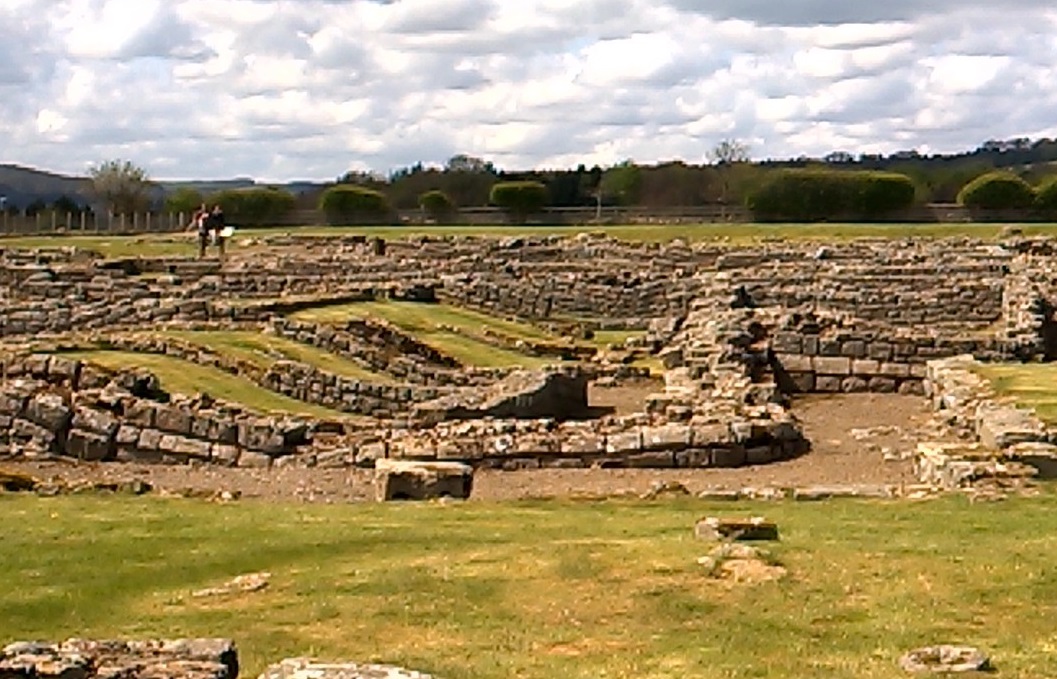
Historical Musings For my second monthly post on history and historical fiction (see last month’s here) I’m going to focus on a topic I know very little about: Ancient Rome. Despite living close to Hadrian’s Wall, I’ve never been particularly interested in Roman history and have only ever explored one or two of the many sites along the wall, but last weekend I decided to take advantage of my English Heritage membership and visit Corbridge Roman Town.

The granary at Corbridge Roman Town

The granary at Corbridge Roman Town

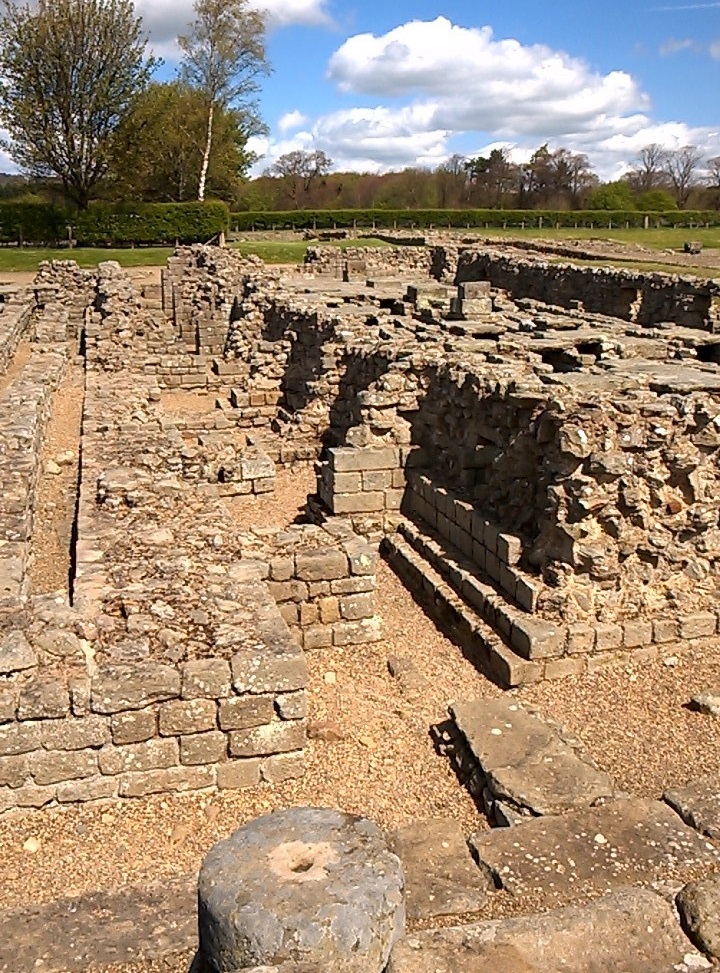
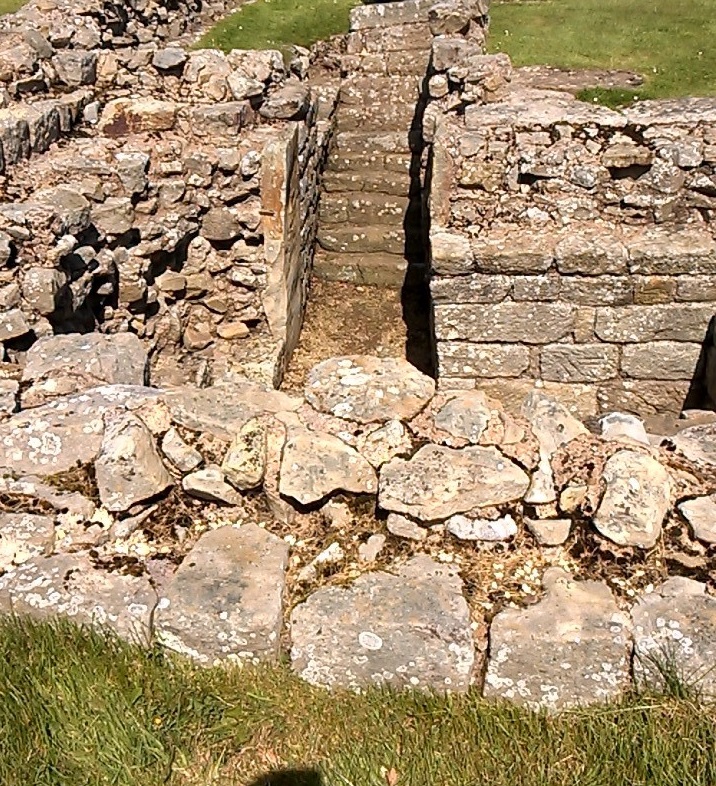
Hadrian’s Wall was built in AD122-30 during the reign of the Emperor Hadrian and stretches for 73 miles across the north of England. It does not separate England from Scotland, as many people believe! Corbridge, in Northumberland, was the site of a busy Roman town and supply base and the remains of the streets and buildings can still be seen today. As well as walking around the ruins, there’s also a museum where you can see a display of some of the items excavated from the site, including the Corbridge Hoard (a collection of Roman weapons and armour found buried in a chest) and the Corbridge Lion (a large stone statue which was originally an ornament from a tomb).

Steps leading to the 'Strongroom'

Steps leading to the ‘Strongroom’

This brief sojourn into Roman history made me wonder why it is that I so rarely choose to read books about the Romans. It’s just not a time period I’ve ever felt drawn to, though I’m not sure why that should be. A quick search for posts using the ‘Ancient Rome’ tag on my blog brings up only two novels set in Rome that I’ve read in the last few years – Colossus: The Four Emperors by David Blixt and Cleopatra’s Daughter by Michelle Moran – and I’m having trouble thinking of any others that I may have read before I started blogging. I would love some recommendations!

Corbridge Roman Town

Corbridge Roman Town

I already have copies of The Eagle of the Ninth by Rosemary Sutcliff and I, Claudius by Robert Graves. Do you think I would like either of these or is there something else you would recommend? Fiction or non-fiction, books set in Rome itself or in other parts of the Roman Empire – all suggestions are welcome!

What are your favourites?

Historical Musings #1: Do you read historical fiction?

Historical Musings Something a bit different today – and hopefully on the second Sunday of every month to come. I am conscious that my blog is, and always has been, very review-dominated and that despite experimenting with different types of weekly or monthly features in the past I have never managed to keep posting them regularly. I’m hoping that I’ll be more successful if I stick to a book-related topic that I’m particularly interested in and passionate about – and one of those topics, as will be obvious to any visitor to my blog, is historical fiction!

I have a whole list of potential ideas for future posts (and I know not everyone shares my interest in historical fiction, so some posts will be less specific to the genre than others) which include discussions, lists and recommendations. For my first post in the series, though, I just want to ask a very simple question:

Do you read historical fiction?

If you answered yes, what is it that attracts you to this genre? And if you answered no, can you tell me why not?

I enjoy reading historical fiction for many reasons. If I’m honest, one of them is purely escapism. I spend every day living in the 21st century and as I unfortunately don’t possess a time machine, I rely on books to take me somewhere different. The term ‘historical fiction’ encompasses a huge variety of books covering almost any time period, person or event you can think of, so I can usually find a book that will take me wherever and whenever I want to go!

Another reason is that reading historical fiction gives me an opportunity to learn about other times and places while also enjoying an entertaining story. I often struggle with non-fiction and find that I’m more likely to retain historical facts if they are presented to me in the form of a novel. Also, many of the themes and ideas in historical fiction are universal and timeless; understanding the past can sometimes help us to understand the present.

There are many, many other things I love about historical fiction but I’ll talk about some of those in future posts.

Now, what about you?