Six in Six: the 2015 edition!

Jo’s meme is the perfect way to look back at the books we’ve read during the first six months of the year. The idea is to choose six categories and for each one list six books that you’ve read so far this year. Six in six! If you need inspiration, Jo has provided a selection of category headings from previous years but you can also create new ones to fit your own reading.

6

I’ve been musing over my categories and lists for a few weeks now and this is what I’ve come up with:

Six books with a person’s name in the title:

1. Fair Helen by Andrew Greig
2. David Copperfield by Charles Dickens
3. Edwin: High King of Britain by Edoardo Albert
4. Ross Poldark by Winston Graham
5. Mary of Carisbrooke by Margaret Campbell Barnes
6. Jakob’s Colours by Lindsay Hawdon

Six books set during a war:

1. If You Go Away by Adele Parks (World War I)
2. Girl at War by Sara Novic (Yugoslav Wars)
3. The Book Thief by Markus Zusak (World War II)
4. The Royalist by S.J. Deas (English Civil War)
5. Red Rose, White Rose by Joanna Hickson (Wars of the Roses)
6. HMS Surprise by Patrick O’Brian (Napoleonic Wars)

Six books that are not novels:

1. The League of the Scarlet Pimpernel by Baroness Orczy (short stories)
2. The Gothic: A Very Short Introduction by Nick Groom (non-fiction)
3. The Importance of Being Earnest by Oscar Wilde (play)
4. Rebellion by Peter Ackroyd (non-fiction)
5. Cyrano de Bergerac by Edmond Rostand (play)
6. The Idle Thoughts of an Idle Fellow by Jerome K. Jerome (essays)

Six books with a mystery to investigate:

1. Peril at End House by Agatha Christie
2. Death in Kashmir by MM Kaye
3. One Good Turn by Kate Atkinson
4. Dark Fire by CJ Sansom
5. Little Black Lies by Sharon Bolton
6. The Silent Boy by Andrew Taylor

Six books about historical women:

1. The Chosen Queen by Joanna Courtney (Edyth of Mercia)
2. The Child from the Sea by Elizabeth Goudge (Lucy Walter)
3. The King’s Curse by Philippa Gregory (Margaret Pole)
4. Rebel Queen by Michelle Moran (Rani Lakshmibai)
5. Alias Grace by Margaret Atwood (Grace Marks)
6. An Accidental Tragedy by Roderick Graham (Mary, Queen of Scots)

Six cities visited:

1. Rome – City of God by Cecelia Holland
2. London – The Crimson Petal and the White by Michel Faber
3. New York City – The Fatal Flame by Lyndsay Faye
4. Florence – Romola by George Eliot
5. Paris – Pure by Andrew Miller
6. Venice – The Glassblower of Murano by Marina Fiorato

Well, that’s my six in six for this year! Will you be posting yours?

The Classics Club 50 Question Survey

The Classics Club

I can never resist a survey and The Classics Club posted this tempting 50 Question one last week. After spending a few days musing over my answers I think I’m ready!

1. Share a link to your club list.
My list

2. When did you join The Classics Club? How many titles have you read for the club?
I joined in March 2012 and have read 42/100 books so far.

3. What are you currently reading?
For the Classics Club: Don Quixote by Miguel de Cervantes. This has been my long-term reading project for 2014 – I started in January and hope to be finished before Christmas.
Non-club related: Assassin’s Quest by Robin Hobb (which I’m loving; I think I’ve found a new favourite author) and The Hollow Crown by Dan Jones, a non-fiction book on the Wars of the Roses.

4. What did you just finish reading and what did you think of it?
Phineas Finn, the second of Anthony Trollope’s Palliser novels. I loved it, though maybe not quite as much as the first in the series, Can You Forgive Her?

5. What are you reading next? Why?
I’ll be starting Bellarion by Rafael Sabatini soon as it’s my Classics Spin book.

6. Best book you’ve read so far with the club, and why?
I enjoyed my re-read of The Three Musketeers by Alexandre Dumas and my first read of its sequel, Twenty Years After, but I also loved A Tale of Two Cities by Charles Dickens. Oh, and Scaramouche by Sabatini. And The Remains of the Day by Kazuo Ishiguro. You didn’t expect me just to pick one, did you?

7. Book you most anticipate (or, anticipated) on your club list?
Probably The Vicomte de Bragelonne by Alexandre Dumas and Frenchman’s Creek by Daphne du Maurier, given how much I’ve enjoyed everything else I’ve read by those two authors.

8. Book on your club list you’ve been avoiding, if any? Why?
East of Eden by John Steinbeck, though I’m not sure why I’ve been avoiding it. I know a lot of other bloggers have read it and loved it, but I seem to have convinced myself I probably won’t like it.

9. First classic you ever read?
I read lots of classics as a child and can’t remember which was first, but it could have been something like The Secret Garden, Black Beauty, The Wind in the Willows, Alice in Wonderland or The Lion, the Witch and the Wardrobe.

10. Toughest classic you ever read?
Clarissa by Samuel Richardson! It was not necessarily a difficult book to read, but I struggled with the slow pace and the repetitiveness. There were parts of the book that I loved, but there were also times when I just didn’t think I could go on!

11. Classic that inspired you? or scared you? made you cry?
Inspired me: To Kill a Mockingbird by Harper Lee. Scared me: Ligeia by Edgar Allan Poe. Made me cry: Tess of the d’Urbervilles by Thomas Hardy.

12. Longest classic you’ve read? Longest classic left on your club list?
The longest I’ve read is probably Clarissa – I think it’s slightly longer than War and Peace, which I’ve also read. The longest book left on my list (after I’ve finished Don Quixote) is Kristin Lavransdatter by Sigrid Undset.

13. Oldest classic you’ve read? Oldest classic left on your club list?
The Epic of Gilgamesh must surely be the oldest I’ve read. It’s believed to be 4,000 years old! Most of the classics left on my club list are from the 19th and 20th centuries, but The Romance of the Forest by Ann Radcliffe is from 1791.

14. Favorite biography about a classic author you’ve read — or, the biography on a classic author you most want to read, if any?
I don’t read a lot of biographies but I did enjoy Claire Tomalin’s Charles Dickens: A Life. I want to read her biographies of Thomas Hardy and Jane Austen at some point too.

15. Which classic do you think EVERYONE should read? Why?
The Count of Monte Cristo by Alexandre Dumas as it’s my favourite classic and I would like everyone to love it as much as I do!

16. Favorite edition of a classic you own, if any?
The beautiful hardback copy of A Christmas Carol with colour illustrations which I was given for Christmas as a child.

17. Favorite movie adaption of a classic?
I have a few: To Kill a Mockingbird, Rebecca and Gone with the Wind.

18. Classic which hasn’t been adapted yet (that you know of) which you very much wish would be adapted to film.
Something by Wilkie Collins. The Moonstone and The Woman in White have been adapted before (though not recently) but I think both No Name and Armadale would make great films!

19. Least favorite classic? Why?
I’m not sure I really have a least favourite classic, though I didn’t like either The Catcher in the Rye by J.D. Salinger or Catch-22 by Joseph Heller. I know most people love them, but neither of them was my type of book.

20. Name five authors you haven’t read yet whom you cannot wait to read.
Sticking with unread authors on my Classics Club list: Charles Reade, Samuel Shellabarger, Jules Verne, Charlotte M. Yonge, William Makepeace Thackeray

21. Which title by one of the five you’ve listed above most excites you and why?
Prince of Foxes by Samuel Shellabarger as it’s a classic historical fiction novel (my favourite genre) and I’ve read some wonderful reviews.

22. Have you read a classic you disliked on first read that you tried again and respected, appreciated, or even ended up loving? (This could be with the club or before it.)
Emma by Jane Austen. The first time I read it I just didn’t like the character of Emma herself and struggled to see past her superior attitude and the way she treated Harriet Smith. On a second read several years later I found I was much more tolerant of Emma and her faults. By the end of the book I really liked Emma – both the character and the novel – and was so pleased I’d tried again.

23. Which classic character can’t you get out of your head?
Edmond Dantes from The Count of Monte Cristo.

24. Which classic character most reminds you of yourself?
I’m not sure…maybe Elinor Dashwood from Sense and Sensibility.

25. Which classic character do you most wish you could be like?
Melanie Wilkes from Gone with the Wind. I’ve always admired her quiet strength.

26. Which classic character reminds you of your best friend?
It’s not something I’ve ever thought about!

27. If a sudden announcement was made that 500 more pages had been discovered after the original “THE END” on a classic title you read and loved, which title would you most want to keep reading? Or, would you avoid the augmented manuscript in favor of the original? Why?
I would prefer to stick with the original ending but probably wouldn’t be able to resist reading the newly discovered pages! I remember reading Scarlett, the sequel to Gone with the Wind, and while it was nice to get a more satisfying conclusion to the story I did sort of wish I hadn’t read it because, really, the ending was already perfect the way it was.

28. Favorite children’s classic?
Watership Down by Richard Adams, though I don’t consider it specifically a children’s book as it has so much to offer an adult reader too.

29. Who recommended your first classic?
That’s difficult to answer as I can’t actually remember what my first classic was, but it was probably my mother who loves reading as much as I do.

30. Whose advice do you always take when it comes to literature. (Recommends the right editions, suggests great titles, etc.)
I don’t know many people who share my taste in books, so I rely on my favourite book blogs for recommendations!

31. Favorite memory with a classic?
Reading Watership Down for the first time at the age of ten. I started reading it on a Sunday evening when I was feeling miserable about having to go to school the next day and it really cheered me up.

32. Classic author you’ve read the most works by?
I’ve been working my way through Daphne du Maurier’s books over the last few years and have now read sixteen of them.

33. Classic author who has the most works on your club list?
I tried not to include too many books by the same author, but couldn’t resist listing seven by Alexandre Dumas!

34. Classic author you own the most books by?
Wilkie Collins.

35. Classic title(s) that didn’t make it to your club list that you wish you’d included? (Or, since many people edit their lists as they go, which titles have you added since initially posting your club list?)
I’ve edited my list so many times I can’t remember all the changes! There are some books I put on my original list that I just have no desire to read anymore so there was no point in leaving them on there.

36. If you could explore one author’s literary career from first publication to last — meaning you have never read this author and want to explore him or her by reading what s/he wrote in order of publication — who would you explore? Obviously this should be an author you haven’t yet read, since you can’t do this experiment on an author you’re already familiar with. 🙂 Or, which author’s work you are familiar with might it have been fun to approach this way?
That’s an intriguing question but without having already sampled an author’s work I wouldn’t want to commit to reading everything they had written! Of the authors I’m already familiar with, there are a few that I would have liked to approach this way – for example, Jane Austen, Thomas Hardy or Daphne du Maurier – but as I’ve been reading their books out of order it’s too late for that now!

37. How many rereads are on your club list? If none, why? If some, which are you most looking forward to, or did you most enjoy?
I have five re-reads on my list (plus another two which I’ve already re-read for the club). I’m particularly looking forward to re-reading The Count of Monte Cristo and Rebecca, as they’re two of my favourite books, and also Wuthering Heights to see if I still love it as much as I did when I was younger.

38. Has there been a classic title you simply could not finish?
Crime and Punishment by Fyodor Dostoyevsky. I’ve tried twice and couldn’t get past the first few chapters either time. It’s on my Classics Club list as I do want to try it again and I feel more positive about it after reading one of Dostoyevsky’s other books, The Idiot, earlier this year and enjoying it.

39. Has there been a classic title you expected to dislike and ended up loving?
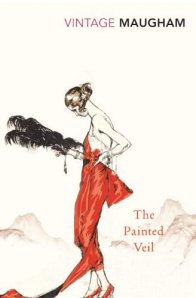
The Painted Veil by Somerset Maugham. For some reason I think I’d formed a preconceived idea that I wouldn’t like it, yet it ended up as one of my favourite books of last year!

40. Five things you’re looking forward to next year in classic literature?
I haven’t started planning for next year yet, but I do want to find time for some of the re-reads on my list and I’m also looking forward to trying some of the authors I’ve never read before.

41. Classic you are DEFINITELY GOING TO MAKE HAPPEN next year?
Vanity Fair by William Makepeace Thackeray, which I do really want to read but keep putting off.

42. Classic you are NOT GOING TO MAKE HAPPEN next year?
None – I don’t want to rule anything out.

43. Favorite thing about being a member of the Classics Club?
The sense of community and being able to easily find other readers who love classic literature. And of course, the classics spin, monthly memes and surveys like this one…

44. List five fellow clubbers whose blogs you frequent. What makes you love their blogs?
The Bookworm Chronicles
Fleur in her World
Lakeside Musing
Heavenali
Tell Me a Story

45. Favorite post you’ve read by a fellow clubber?
I’ve enjoyed lots of my fellow clubbers’ posts and couldn’t pick just one!

46. If you’ve ever participated in a readalong on a classic, tell about the experience? If you’ve participated in more than one, what’s the very best experience? the best title you’ve completed? a fond memory? a good friend made?
I participated in year-long readalongs for both Clarissa (in 2012) and War and Peace (in 2013) and would probably never have made it to the end of either of those books on my own. I’ve taken part in other classic readalongs too and enjoyed them all, but they are the two I’ll never forget as they lasted a whole year!

47. If you could appeal for a readalong with others for any classic title, which title would you name? Why?
Any of the titles on my list that I haven’t read yet.

48. How long have you been reading classic literature?
As long as I can remember!

49. Share up to five posts you’ve written that tell a bit about your reading story. Reviews, journal entries, posts on novels you loved or didn’t love, lists, etc.
Top Ten Tuesday: Needing to read more
Classics Club March Meme: Literary Periods
Best Books of 2013
Classics Club August Meme: A Favourite Classic
Turn of the Century Salon: Introduction

50. Question you wish was on this questionnaire? (Ask and answer it!)
I’m already exhausted after answering so many questions, so let’s just leave it at 49!

Top Ten Tuesday: Needing to read more

I don’t normally take part in Top Ten Tuesday (hosted by The Broke and the Bookish), but this week’s topic is one that I’ve been thinking about a lot recently:

Top Authors I’ve Only Read One Book From But NEED to Read More

There are many, many authors I could include in this list, but I’ve decided just to concentrate on authors I’ve tried for the first time since I started book blogging. After the name of each author, I have given the title of the one book I’ve read…and of course, I would welcome any suggestions as to which books I should read next!

Life After Life

1. Kate Atkinson (Life After Life)
This was one of my favourite books read last year, so it seems ridiculous that I haven’t tried any of her others yet. I’m looking forward to starting the Jackson Brodie series.

2. Margaret Atwood (The Handmaid’s Tale)
I loved this, but I read it for “Advent with Atwood” two Decembers ago and still haven’t picked up any more of her books. That will have to change soon!

3. E.M. Forster (A Room with a View)
Early last year I participated in a “Turn of the Century Salon” reading event and decided to try two authors who were new to me. I liked both but haven’t got round to reading a second book by either of them yet. One of these authors was E.M. Forster (I think Howards End will be the next of his books I read) and the other was #4 below.

The Painted Veil 4. W Somerset Maugham (The Painted Veil)
This is another novel that found its way onto my favourite books of the year list last year, but again, I still haven’t explored Maugham’s other work. I like the sound of The Moon and Sixpence.

5. Barbara Pym (Less than Angels)
This isn’t regarded as one of Barbara Pym’s most successful books, but I did enjoy it and am expecting to love some of her others…especially Excellent Women which I really must read soon!

6. Sir Walter Scott (Ivanhoe)
I was always intimidated by the thought of reading Walter Scott, until I read Ivanhoe and found it much easier to read than I’d expected. As I do love reading classic historical fiction, I’m sure I would like Scott’s other novels too…if I could only find time to read them!

Ethan Frome7. Josephine Tey (The Daughter of Time)
I read this because of my interest in Richard III but I do want to read some of Josephine Tey’s other mystery novels eventually as well.

8. Elizabeth von Arnim (The Enchanted April)
It’s been more than three years since I read this book and I still haven’t read another von Arnim, despite stating in my review that I would “definitely be reading more”.

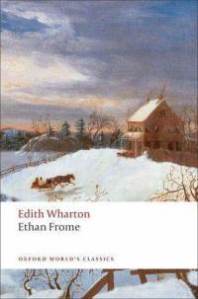
9. Edith Wharton (Ethan Frome)
I didn’t love Ethan Frome, but I’m hoping I’ll love one of Edith Wharton’s other novels. The House of Mirth and The Age of Innocence are both on my Classics Club list.

10. John Wyndham (The Midwich Cuckoos)
I don’t read science fiction very often, but I enjoyed this book when I read it a year ago. I think The Day of the Triffids will probably be next.

***

Do you like any of these authors? Do I need to read more of their work? What would you recommend?

Classics Club July Meme: Biographies

The Classics Club

This month’s Classics Club Meme question is:

Have you ever read a biography on a classic author? If so, tell us about it. If you had already read works by this author, did reading a biography of his/her life change your perspective on the author’s writing? Why or why not? // Or, if you’ve never read a biography of a classic author, would you? Why or why not?

Looking through my list of books reviewed here on my blog, I can only see three or four biographies of classic authors that I’ve read in the last five years. I’ve also read some fictional biographies (such as The Taste of Sorrow by Jude Morgan) but they’re not quite the same thing! When I read a book, classic or otherwise, I do like to know some basic information about the author (whether they are male or female, which country they are from, how old they are, etc) but I can usually get that information from the book cover or ‘about the author’ page. Beyond that, I don’t usually feel any need to know every detail of the author’s life and prefer just to concentrate on enjoying their work.

One biography that I did enjoy was Claire Tomalin’s Charles Dickens: A Life. It didn’t leave me with a very good opinion of Dickens as a person, but it was interesting to see how people and events from his personal life inspired his fictional plots and characters. Having also read Tomalin’s Samuel Pepys: The Unequalled Self, which is another excellent book, I would like to read more of her work at some point, despite my usual lack of interest in reading biographies. Her book on Thomas Hardy sounds the most appealing to me, but I’ve been waiting until I’ve finished reading all of Hardy’s novels first.

Earlier this year I read The Secret Life of Wilkie Collins by William M. Clarke but although Collins is one of my favourite classic authors, I was a bit disappointed with this particular biography. There’s a lot of information on Collins’ private life (though to be fair, you would expect that from the title) but Clarke doesn’t spend much time discussing his writing. He does occasionally show how aspects of Wilkie’s personal life may have related to his work, but there’s not enough of this and when I reached the end of the book I didn’t feel I’d gained any real insights.

While I did learn a lot about Collins’ and Dickens’ lives from these two biographies, I can’t really say that they changed how I feel about their writing. For the purposes of this meme, a better book for me to mention here is probably the biography of Daphne, Angela and Jeanne du Maurier which I read last year – Daphne du Maurier and Her Sisters by Jane Dunn. Although I had a few problems with this biography too (which I’ve explained in my review) I do think Jane Dunn did a good job of explaining how the girls’ childhood experiences and influences shaped their future careers. I’ve never read anything by Angela du Maurier, but I know that Daphne put a lot of herself into her writing and many of her novels include autobiographical elements – reading Dunn’s biography gave me a better appreciation of this.

Well, it seems I’ve found more to say on the subject of biographies than I’d expected! Do you enjoy reading biographies of classic authors? Which ones have you read?

Six in six!

Two years ago Jo of The Book Jotter came up with this fun and simple meme to help us reflect on the books we’ve read in the first six months of the year. The idea is to pick six different categories and then for each one list six books or authors that you’ve read so far this year. Jo has provided lots of category headings to choose from if you need inspiration or you can be creative and think of your own. This time I’ve used some of the same categories that I’ve used in previous years, as well as one or two new ones. I’ve only listed each book once, though some could have been included in more than one category.

6

Six classics read in 2014

1. Can You Forgive Her? by Anthony Trollope
2. Stoner by John Williams
3. The Mayor of Casterbridge by Thomas Hardy
4. Tender is the Night by F. Scott Fitzgerald
5. Coming Up for Air by George Orwell
6. Madame Bovary by Gustave Flaubert

Six novels based on the lives of real people

1. Sisters of Treason by Elizabeth Fremantle (Katherine and Mary Grey)
2. The Summer Queen by Elizabeth Chadwick (Eleanor of Aquitaine)
3. Crippen by John Boyne (Dr Hawley Harvey Crippen)
4. Empress of the Night by Eva Stachniak (Catherine the Great)
5. Girl on the Golden Coin by Marci Jefferson (Frances Stuart)
6. Falls the Shadow by Sharon Penman (Simon de Montfort)

Six books with an element of mystery and suspense

1. The Second Duchess by Elizabeth Loupas
2. Madam, Will You Talk? by Mary Stewart
3. Tropical Issue by Dorothy Dunnett
4. A Dark and Twisted Tide by Sharon Bolton
5. Cat Among the Pigeons by Agatha Christie
6. Watch the Wall, My Darling by Jane Aiken Hodge

Six books that took me to six different locations

1. Beatrice and Benedick by Marina Fiorato (Sicily)
2. Americanah by Chimamanda Ngozie Adichie (Nigeria)
3. The Long Song by Andrea Levy (Jamaica)
4. The Orchard of Lost Souls by Nadifa Mohamed (Somalia)
5. One Night in Winter by Simon Sebag Montefiore (Russia)
6. Ghostwritten by Isabel Wolff (Java)

Six authors new to me this year

1. Jenny Barden (The Lost Duchess)
2. Paul Doherty (Roseblood)
3. Laurie Lee (Cider with Rosie)
4. Deborah Harkness (A Discovery of Witches)
5. Octavia Butler (Kindred)
6. Margaret Irwin (These Mortals)

Six books I loved but didn’t manage to fit into another category above

1. The Moon in the Water by Pamela Belle
2. Insurrection by Robyn Young
3. Family Roundabout by Richmal Crompton
4. The Fortune Hunter by Daisy Goodwin
5. Little Man, What Now? by Hans Fallada
6. The Convictions of John Delahunt by Andrew Hughes

How has your reading been in 2014 so far? Have you or will you be posting your own six in six?

Classics Club March Meme: Literary Periods

The Classics Club
It’s been a while since I last answered one of the Classics Club’s monthly memes, but this one appealed to me and I thought I’d join in. The question this month is:

What is your favorite “classic” literary period and why?

This is a very easy question for me to answer. My favourite literary period is, and always has been, the Victorian period (1837-1901). I love the style of Victorian writing and while I do also enjoy reading books from other periods, I usually feel much more comfortable with a Victorian classic than with a classic from the 20th century. The reasons people sometimes give for disliking Victorian novels – the length, the wordiness, the long descriptive passages, the habit of directly addressing the reader – have never really been a problem for me. And some of the greatest characters and most memorable plots in literature can be found in Victorian fiction too.

One of the first Victorian novels I remember reading was A Christmas Carol by Charles Dickens, which I was given as a Christmas present as a child. It was a lovely illustrated hardback edition which I still have and sometimes re-read at Christmas. This was followed several years later by Emily Bronte’s Wuthering Heights and Charlotte Bronte’s Jane Eyre, both of which I read as a young teenager and loved. It took me a lot longer to get to Anne Bronte’s novels but when I eventually did I enjoyed those as well, particularly The Tenant of Wildfall Hall.

Our Mutual FriendDespite enjoying A Christmas Carol when I first read it all those years ago, it’s only more recently that I’ve come to appreciate Charles Dickens’ other work. Our Mutual Friend found its way onto my books of the year list in 2011 and A Tale of Two Cities did the same in 2013.

Dickens and the Brontes are probably the first names that come to mind for most people when they think of Victorian novelists, but there are so many others that I love too. As the Victorian period covers several decades, it obviously encompasses a wide range of different types of books and authors from Gothic novels such as Bram Stoker’s Dracula and Sheridan Le Fanu’s Uncle Silas to the wonderful Victorian sensation novels of Wilkie Collins, Mary Elizabeth Braddon and Ellen Wood (The Woman in White, Lady Audley’s Secret and East Lynne are some of my favourites) and the comedy of Jerome K. Jerome who wrote the hilarious Three Men in a Boat and Three Men on the Bummel.

Sylvia's LoversAnthony Trollope is another of my favourite Victorians (I have now read all six of his Chronicles of Barsetshire and am currently in the middle of his first Palliser novel, Can You Forgive Her?) and so is Thomas Hardy – I’ve loved all of his books that I’ve read so far, especially Tess of the d’Urbervilles and A Pair of Blue Eyes.

As I come to the end of this post I realise I haven’t even mentioned George Eliot or Elizabeth Gaskell – or any of the non-British authors who I’m never quite sure whether to class as ‘Victorian’ or not but who wrote during the same period. And there were some classic children’s novels published during the Victorian era too. I think Black Beauty may actually have been the very first Victorian novel I ever read!

Do you enjoy reading Victorian literature or is there another period that you prefer?

If you do like the Victorians, do you have any favourite authors or books that I haven’t mentioned here?

Classics Club August Meme: Forewords and Notes

The Classics Club

I haven’t taken part in the Classics Club Meme for a while, but August’s topic is one I feel quite strongly about! This month’s question is:

Do you read forewords/notes that precede many classics? Does it help you or hurt you in your enjoyment/understanding of the work?

I do sometimes read the forewords and notes but I’ve learned from experience to read them at the end rather than the beginning! I’ve never understood why so many publishers think it’s acceptable to give away the entire plot of a novel in the introduction just because it’s a classic. It’s true that many classics have become such a big part of popular culture that most of already know what happens, but that’s not always the case and I hate to think of anyone unsuspectingly reading the introduction first and having the story completely spoiled for them. When I read the Penguin English Library edition of Far from the Madding Crowd recently, I was pleased to find that the ‘introduction’ had been placed at the end of the book as an afterword instead of at the front. I think it would be nice if all publishers could either do the same or at least print a spoiler warning at the beginning the way Wordsworth Classics do.

Personally I like to go into a book knowing as little as possible about the plot and whether it’s a classic or a contemporary novel makes no difference. I might go back to read the introduction after I’ve finished the book, though not always as sometimes I either forget or decide that I’m happy with my understanding of the book and am ready to move straight on to another one. I read classics simply because I enjoy them so I’m not necessarily interested in analysing every little detail. I like to read the information on the author and their life, if any is given, or information that places the story into historical context, but apart from that I don’t usually find the introduction particularly helpful and prefer to interpret a book the way I want to interpret it.

What are your opinions on forewords? Do you like to read them or not?