This week’s Top Ten Tuesday topic (hosted by The Broke and the Bookish) is Ten Books I’ve Added To My To-Be-Read List Lately. This seemed like a good one to participate in, as it gives me a chance to highlight some of the books I’ve acquired recently but don’t know when I’ll get round to reading.
All blurbs are taken from Goodreads.
~
1. Sandokan: The Tigers of Mompracem by Emilio Salgari
I hadn’t heard of this book but was tempted when I was offered a review copy as it’s a classic Italian adventure novel, first published in 1900.
 “Malaysia, 1849. The Tigers of Mompracem are a band of rebel pirates fighting for the defense of tiny native kingdoms against the colonial powers of the Dutch and British empires. They are led by Sandokan, the indomitable “Tiger of Malaysia”, and his loyal friend Yanez De Gomera, a Portuguese wanderer and adventurer. Orphaned when the British murdered his family and stole his throne, Sandokan has been mercilessly leading his men in vengeance. But when the pirate learns of the extraordinary “Pearl of Labuan” his fortunes begin to change…”
~
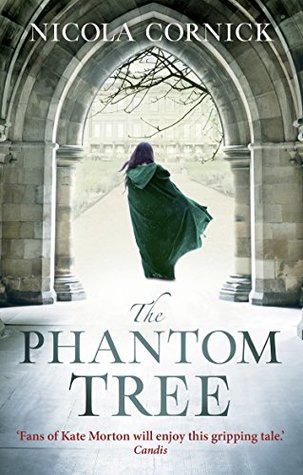
2. The Phantom Tree by Nicola Cornick
I’ve never read anything by this author but I spotted this book on NetGalley and thought it sounded interesting.
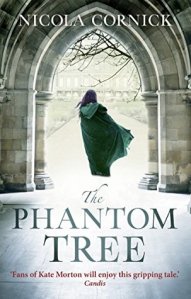 “Browsing antiques shops in Wiltshire, Alison Bannister stumbles across a delicate old portrait – supposedly of Anne Boleyn. Except Alison knows better… The woman is Mary Seymour, the daughter of Katherine Parr who was taken to Wolf Hall in 1557 as an unwanted orphan and presumed dead after going missing as a child.
The painting is more than just a beautiful object for Alison – it holds the key to a past life, the unlocking of the mystery surrounding Mary’s disappearance, and the enigma of Alison’s son. But Alison’s quest soon takes a dark and foreboding turn, as a meeting place called the Phantom Tree harbours secrets in its shadows…”
~
3. The Witchfinder’s Sister by Beth Underdown
Another one from NetGalley. A few weeks ago I was looking for recommendations of historical novels about witches, so this is quite appropriate!
 “1645. When Alice Hopkins’ husband dies in a tragic accident, she has no choice but to return to the small Essex town of Manningtree, where her brother Matthew still lives.
But home is no longer a place of safety. Matthew has changed, and there are rumours spreading through the town: whispers of witches, and of a great book, in which her brother is gathering women’s names. To what lengths will her brother’s obsession drive him? And what choice will Alice make, when she finds herself at the very heart of his plan?”
~
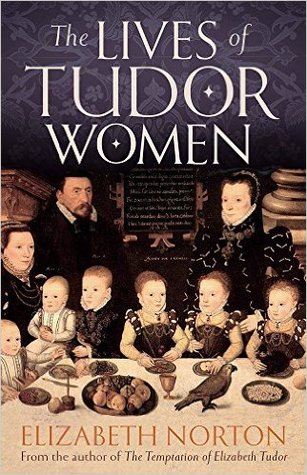
4. The Lives of Tudor Women by Elizabeth Norton
I don’t read a lot of non-fiction books but I think I might find this one interesting.
 “The turbulent Tudor age never fails to capture the imagination. But what was it actually like to be a woman during this period? This was a time when death in infancy or during childbirth was rife; when marriage was usually a legal contract, not a matter for love, and the education of women was minimal at best. Yet the Tudor century was also dominated by powerful and characterful women in a way that no era had been before.
Elizabeth Norton explores the seven ages of the Tudor woman, from childhood to old age, through the diverging examples of women such as Elizabeth Tudor, Henry VIII’s sister who died in infancy; Cecily Burbage, Elizabeth’s wet nurse; Mary Howard, widowed but influential at court; Elizabeth Boleyn, mother of a controversial queen; and Elizabeth Barton, a peasant girl who would be lauded as a prophetess.”
~
5. The Printer’s Coffin by M.J. Carter
I’ve just finished reading the first book in this series and enjoyed it so much I couldn’t wait to order the second one! This was originally published as The Infidel Stain.
 “It’s 1841, and three years after we left them at the close of The Strangler Vine, Blake and Avery are reunited in very different circumstances in London.
There has been a series of dreadful murders in the slums of the printing district, which the police mysteriously refuse to investigate, and Blake and Avery must find the culprit before he kills again.”
~
6. Redgauntlet by Sir Walter Scott
It’s been a while since I’ve read anything by Scott and I liked the sound of this one.
 “Arguably Scott’s finest novel, and the last of his major Scottish novels, Redgauntlet centers around a third, fictitious, Jacobite rebellion set in the summer of 1765. The novel’s hero, young Darsie Latimer, is kidnapped by Edward Hugh Redgauntlet, a fanatical supporter of the Stewart cause, and finds himself caught up in the plot to install the exiled Bonnie Prince Charlie on the British throne.
First published in 1824, this is perhaps Scott’s most complex statement about the relation between history and fiction.”
~
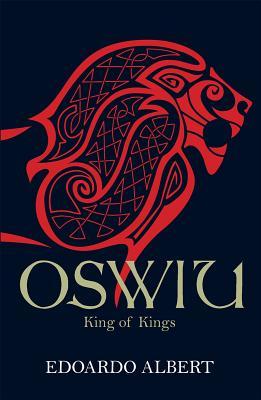
7. Oswiu: King of Kings by Edoardo Albert
I enjoyed the first two books in this trilogy, so I’m looking forward to reading the third.
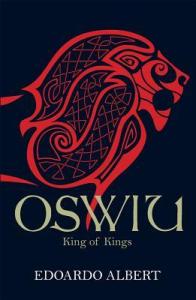 “In the third entry chronicling the rise of Christian kings in Britain, Oswald dies and the great pagan king Penda becomes overlord in his place. To stand against the increasingly powerful Penda, Oswiu, king of Bernicia, tries to unite the smaller neighboring kingdoms by marrying a daughter of Deira. But the struggle for power leads Oswiu to order the assassination of the king of Deira. He wins the throne but loses the approval of the people. In atonement, he establishes a monastery at the site of the slaying. What will happen when Oswiu and High King Penda at last meet in battle? Though the kingdom may become politically one, both the Celtic and Roman strands of Christian faith vie for supremacy, mirroring the king’s own struggle for power.”
~
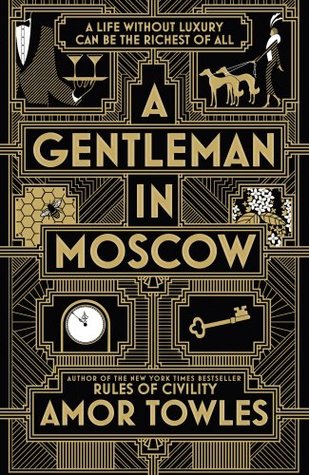
8. A Gentleman in Moscow by Amor Towles
I’m curious about this book as I’ve been hearing a lot about it recently.
 “On 21 June 1922 Count Alexander Rostov – recipient of the Order of Saint Andrew, member of the Jockey Club, Master of the Hunt – is escorted out of the Kremlin, across Red Square and through the elegant revolving doors of the Hotel Metropol. But instead of being taken to his usual suite, he is led to an attic room with a window the size of a chessboard. Deemed an unrepentant aristocrat by a Bolshevik tribunal, the Count has been sentenced to house arrest indefinitely.
While Russia undergoes decades of tumultuous upheaval, the Count, stripped of the trappings that defined his life, is forced to question what makes us who we are. And with the assistance of a glamorous actress, a cantankerous chef and a very serious child, Rostov unexpectedly discovers a new understanding of both pleasure and purpose.”
~
9. The Bear and the Nightingale by Katherine Arden
This appeals to me as I love books based on fairy tales. The cover is beautiful too.
 “A young woman’s family is threatened by forces both real and fantastical in this debut novel inspired by Russian fairy tales.
In a village at the edge of the wilderness of northern Russia, where the winds blow cold and the snow falls many months of the year, a stranger with piercing blue eyes presents a new father with a gift – a precious jewel on a delicate chain, intended for his young daughter. Uncertain of its meaning, Pytor hides the gift away and Vasya grows up a wild, wilful girl, to the chagrin of her family. But when mysterious forces threaten the happiness of their village, Vasya discovers that, armed only with the necklace, she may be the only one who can keep the darkness at bay.”
~
10. The Norman Pretender by Valerie Anand
I loved Valerie Anand’s Gildenford and it’s time I continued with the next book in the series.
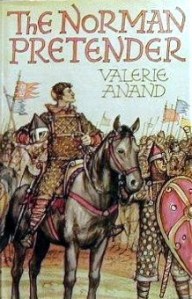 “The Norman Pretender continues the story of the great Godwin family, Earls of Wessex, and the most powerful faction in England. The book opens in 1052 and takes us in a series of brilliantly constructed episodes up to its climax at the Battle of Hastings and its tragic aftermath. Much of the action takes place in Normandy, where Harold Godwinson is rescued by Duke William from captivity, only to be tricked later into swearing an oath securing William’s succession to the English throne.”
~
Have you read any of these or are there any you would be interested in reading? What have you added to your own TBR lately?
 For this week’s Top Ten Tuesday (hosted by The Broke and Bookish) we are asked to list our ten most recent additions to our TBR pile in a genre of our choice. The genre I have chosen is historical fiction – no surprises there! A few of these (books 4, 6 and 9) are also on my 20 Books of Summer list, so I’ll be reading those soon.