
My Commonplace Book: March 2016

commonplace book
Definition:
noun
a notebook in which quotations, poems, remarks, etc, that catch the owner’s attention are entered

Collins English Dictionary

~

A summary of this month’s reading, in words and pictures.

~

He had a narrow, swarthy face with a high forehead, so high he had his cropped dark hair brushed forward – he was losing his hair, then. His eyes slanted downward, sensual, melancholic and secretive. Saints in the churches, painted on panels and murals, had halos of light around their heads and bodies; the prince seemed to have a tracing of darkness, as if he was standing in front of a prince-shaped hole that led into something terrible, and you could just catch glimpses of it when he moved…

The Red Lily Crown by Elizabeth Loupas (2014)

~

Do you keep time in the same place that you save it? If so why is it so difficult to find? It must be in a very safe place.

Human Croquet by Kate Atkinson (1997)

~

Miss Rebecca was not, then, in the least kind or placable. All the world used her ill, said this young misanthropist, and we may be pretty certain that persons whom all the world treats ill, deserve entirely the treatment they get. The world is a looking-glass, and gives back to every man the reflection of his own face. Frown at it, and it will in turn look sourly upon you; laugh at it and with it, and it is a jolly kind companion; and so let all young persons take their choice.

Vanity Fair by William Makepeace Thackeray (1847)

~

Buddhist caves, two hundred and fifty BC…? It was the Emperor Ashoka who had ordered them to be made, he felt almost sure about that. But there was something else, something to do with the shape of the caves, that escaped him. Was it about meditation? He hadn’t been paying close attention, his mind had been preoccupied, and now their purpose remained a mystery – as it seemed so much in this country was destined to, at least for him.

Arctic Summer by Damon Galgut (2014)

~

The children of Dynmouth were as children anywhere. They led double lives; more regularly than their elders they travelled without moving from a room. They saw a different world: the sun looked different to them, and so did Dynmouth’s trees and grass and sand. Dogs loomed at a different level, eye to eye. Cats arched their tiger’s backs, and the birds behind bars in Moult’s Hardware and Pet Supplies gazed beadily down, appearing to speak messages.

The Children of Dynmouth by William Trevor (1976)

~

Days lived, whether full or empty, whether busy or serene, are but days gone by, and the ashes of the past weigh the same in every hand.

The Royal Succession by Maurice Druon (1957)

~

As for the cold, he had never experienced anything like it: a dry, iron clamp upon the land, like death itself, full of unexpected beauty, like the hard crystals that formed on the inside of the windows. The cold did something strange to the quality of sounds around the farm, deadening all background noise so that the smallest scratching or whisper was emphasised. It was easy to see how the unwary settler could die in such a scene, lulled into marvelling at its deadly beauty even as his blood began to freeze.

A Place Called Winter by Patrick Gale (2015)

~
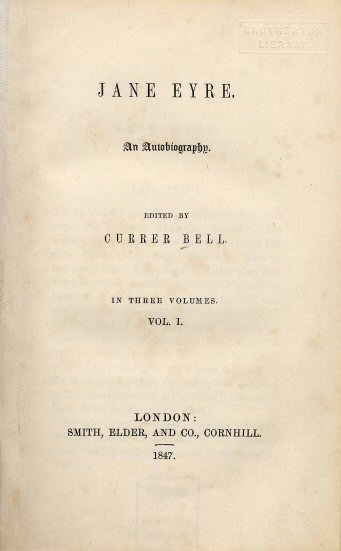
Jane_Eyre_title_page

Under Dad’s philosophy, books were not shape-shifting constructions of a reader’s imagination. Novels, he said, offered the specific clues, maps and guidelines necessary for their own evaluation. By clues, he did not mean metaphors and he did not mean symbolism. He meant actual clues. To him, every book was its own treasure map. A good novel, he said, left the close reader with a useful souvenir. All you needed to do was learn to see what was right under your nose.

The Madwoman Upstairs by Catherine Lowell (2016)

~

“Robert has been led most of his life by his ambition – our family’s ambition – for him to be king. All of us have paid a price, for some the highest price, for him to fulfil that desire, but we have done so because we see in him something that lifts him above most other men; something that makes us hope. He has the iron will of our grandfather and, yes, the hot blood of our father, though he’ll not hear the latter said, but he also has the heart of our mother. It is a true heart. A good heart. You must keep faith, my lady.”

Kingdom by Robyn Young (2014)

~

Sitting at her bureau a short time before, Frances had been picturing her lodgers in purely mercenary terms – as something like two great waddling shillings. But this, she thought, shuffling backward over the tiles, this was what it really meant to have lodgers: this odd, unintimate proximity, this rather peeled-back moment, where the only thing between herself and a naked Mrs Barber was a few feet of kitchen and a thin scullery door.

The Paying Guests by Sarah Waters (2014)

~

“I think you’ll find most women in pursuit of a husband share an interest in appearing less educated than they really are,” said Beatrice. “It is why I have a low opinion of them.”

“Of women, miss?” said Abigail.

“No, of husbands,” said Beatrice.

The Summer Before the War by Helen Simonson (2016)

~
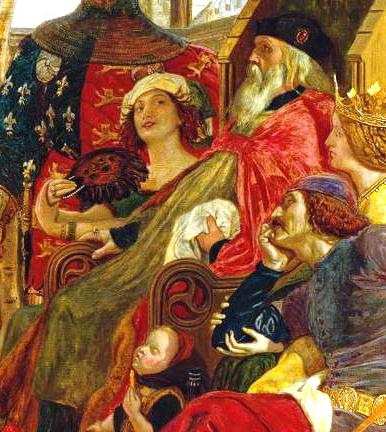
Knighthood’s not for the likes of these people; for Madame Perrers’ brood. He thought she knew her place. But she’s overreached herself; she’s as grasping as the rest of them, after all. Do these people think they can buy or steal everything?

The People’s Queen by Vanora Bennett (2010)

~

Favourite books this month: The Red Lily Crown and The Summer Before the War.

My commonplace book: February 2016

commonplace book
Definition:
noun
a notebook in which quotations, poems, remarks, etc, that catch the owner’s attention are entered

Collins English Dictionary

~

A summary of this month’s reading, in words and pictures.

~

Every sound of the quiet evening came clearly to her ears with an unnatural distinctness; but now each one possessed a different and terrifying meaning. The muffled shouts and laughter of the few remaining bathers from the indoor swimming bath were the cries of fleeing, panic-stricken people. The whisper of the breeze through the pine needles was a frightened man whispering orders in the shadow of fog-shrouded whin bushes. A passing car was the drone of an enemy bomber and the faint lap of water against the sea-green tiles at the far side of the wide pool was the lap of waves against a pebble beach.

Death in Berlin by M. M. Kaye (1955)

~

“The promise of the day!” said Visconti, dreamily and sadly. “Hath it never struck thee how that promise never is fulfilled? Day after day, since the world began, something in the mystery of the dawn is promised – something the sunset smiles to see unfulfilled – something men have ever been cheated of – something men will never know – the promise of the dawn!”

The Viper of Milan by Marjorie Bowen (1906)

~

Louis X

Uncertain health, a clever but overbearing father whose authority had crushed him, an unfaithful wife who had scoffed at him, an empty treasury, impatient vassals always ready to rebel, a famine in the first winter of his reign, a storm which threatened the life of his second wife – beneath what disastrous conjunction of the planets, which the astrologers had not dared reveal to him, must he have been born, that he should meet with adversity in every decision, every enterprise, and end by being conquered, not even nobly in battle, but by the water and mud in which he had engulfed his army?

The Poisoned Crown by Maurice Druon (1956)

~

She looked up as the train passed, and I was almost near enough to catch her eye. She had a round pale face, the usual exhausted face of the slum girl who is twenty-five and looks forty, thanks to miscarriages and drudgery; and it wore, for the second in which I saw it, the most desolate, hopeless expression I have ever-seen. It struck me then that we are mistaken when we say that ‘It isn’t the same for them as it would be for us,’ and that people bred in the slums can imagine nothing but the slums. For what I saw in her face was not the ignorant suffering of an animal. She knew well enough what was happening to her — understood as well as I did how dreadful a destiny it was to be kneeling there in the bitter cold, on the slimy stones of a slum backyard, poking a stick up a foul drain-pipe.”

The Road to Wigan Pier by George Orwell (1937)

~

Flag of Iowa

After all no fledgling had it easy, farmer or crow. Hadn’t he known since he was a boy the way the fledglings had to fall out of the nest and walk about, cheeping and crying, until they grew out their feathers and learned to fly on their own? Their helpless parents flew above them, and maybe dropped them a bit of food, but flying or succumbing belonged to them alone.

Some Luck by Jane Smiley (2014) – review to follow

~

“I must insist upon it,” she continued, “that you shall take me now as I really am — as your dearest friend, your sister, your mother, if you will. I know what I am. Were my husband not still living it would be the same. I should never under any circumstances marry again. I have passed the period of a woman’s life when as a woman she is loved; but I have not outlived the power of loving.”

Phineas Redux by Anthony Trollope (1873)

~

“There is no other way, Robert,” James said quietly, watching the emotions shift across his face. “If Balliol returns you lose everything. At least this way you have a chance to make sure you and your family are protected. Our best hope is that Edward will be able to keep Balliol from the throne. If he succeeds, God willing, you may one day still claim it.”

Renegade by Robyn Young (2012)

~

St Patrick

And so it came to be that they carried me away into bondage, slung over the shoulder of the black-beard while the girl walked, roped behind. I cannot tell you of the voyage, nor of the faces of the many who were taken into captivity with us. I can only say that on that day “…the Lord brought over us the wrath of His anger and scattered us among many nations, even unto the utmost part of the earth, where now my littleness is placed among strangers” in the land known as Eire.

The Lion and the Cross by Joan Lesley Hamilton (1979) – review to follow

~

Everybody was bowing, sliding on to one knee as Henry came into the chamber, leaning on his staff and smiling…Here comes the King, and with the coming of the King, all life must stop, the very air must thicken as if congealed in awe of this gross man who hobbled painfully on his tall staff, nodding and smiling, blinking every second.

Here Comes the King by Philip Lindsay (1933)

~

In a country where so many desire status and wealth, petty annoyances can spark disproportionately violent behaviour. We become frustrated because we feel powerless, invisible, unheard. We crave celebrity, but that’s not easy to come by, so we settle for notoriety. Envy and bitterness drive a new breed of lawbreakers, replacing the old motives of poverty and the need for escape. But how do you solve crimes which no longer have traditional motives?

Ten-Second Staircase by Christopher Fowler (2006) – review to follow

~

Favourite books this month: Phineas Redux and The Viper of Milan

My commonplace book: January 2016

commonplace book
Definition:
noun
a notebook in which quotations, poems, remarks, etc, that catch the owner’s attention are entered

Collins English Dictionary

~

A summary of this month’s reading, in words and pictures.

~

I hated the mountains and the hills, the rivers and the rain. I hated the sunsets of whatever colour, I hated its beauty and its magic and the secret I would never know. I hated its indifference and the cruelty which was part of its loveliness. Above all I hated her. For she belonged to the magic and the loveliness. She had left me thirsty and all my life would be thirst and longing for what I had lost before I found it.

Wide Sargasso Sea by Jean Rhys (1966)

~

Roger had learned from Mr. Gray that this particular kind of rhododendron was called Ponticum, so the secret hiding-place was called Ponticum House. It was used for all sorts of activities and gradually it was furnished with odds and ends of furniture.

Amberwell by D.E. Stevenson (1955)

~

There was the rub: that Julia, who could get intimate with a trapeze artist after five minutes’ conversation – who was intimate with a salesman after buying a pair of shoes – had talked for an hour to her own daughter, about the girl’s own father and lover, without the least intimacy at all.

“I’m a fool,” thought Julia, again. “It’s just because she’s such a perfect lady. And what I need is a good sleep.”

The Nutmeg Tree by Margery Sharp (1937)

~

So fine was the morning except for a streak of wind here and there that the sea and sky looked all one fabric, as if sails were stuck high up in the sky, or the clouds had dropped down into the sea. A steamer far out at sea had drawn in the air a great scroll of smoke which stayed there curving and circling decoratively, as if the air were a fine gauze which held things and kept them softly in its mesh, only gently swaying them this way and that.

To the Lighthouse by Virginia Woolf (1927)

~

Come, Joanna. I can wait no longer.

There it was, Henry’s declaration, as clear as my reflection in my mirror. Neither, I decided, could I wait.

I sent for my uncle of Burgundy. I had an urgent negotiation to undertake.

The Queen’s Choice by Anne O’Brien (2016)

~

Meantime, all around me is violence and robbery, coarse delight and savage pain, reckless joke and hopeless death. Is it any wonder that I cannot sink with these, that I cannot so forget my soul, as to live the life of brutes, and die the death more horrible because it dreams of waking? There is none to lead me forward, there is none to teach me right; young as I am, I live beneath a curse that lasts for ever.

Lorna Doone by R.D. Blackmore (1869)

~

“It is the women who lay clothes to dry on the rooftops of Troy,” I continued. “It is the fishermen who catch the silver fish in the bay,” I gestured out over the plain towards the sea, sparkling blue in the sunlight, “and sell them on the stalls of the marketplace. It is the princes who live in the palaces on the windy heights of the city, and the slaves who draw water from the wells. This, my king – this is Troy. And if we act now, we may still be able to save our city before it is too late.”

For the Most Beautiful by Emily Hauser (2016)

~

The desolation struck me like a blow, fresh and painful, as if all this destruction had been newly made yesterday, and as if this were my first sight of it. It was grief, I think, nothing more or less. I knew it was absurd. But I had noticed this reaction in others as well as in myself: that we mourned for our ravaged city as if for a mother.

The Ashes of London by Andrew Taylor (2016) – Review to follow

~

“And you cannot move at all in Time, you cannot get away from the present moment.”

“My dear sir, that is just where you are wrong. That is just where the whole world has gone wrong. We are always getting away from the present moment. Our mental existences, which are immaterial and have no dimensions, are passing along the Time-Dimension with a uniform velocity from the cradle to the grave. Just as we should travel down if we began our existence fifty miles above the earth’s surface.”

The Time Machine by H.G. Wells (1895)

~

Favourite books this month: Lorna Doone and Amberwell