My Commonplace Book: December 2016

It’s time for my last Commonplace Book post of 2016. I now have twelve lovely collections of quotations and images to look back on from my year’s reading, so I think I’ll be doing this again – or something very similar – in 2017!

A summary of this month’s reading, in words and pictures.

commonplace book
Definition:
noun
a notebook in which quotations, poems, remarks, etc, that catch the owner’s attention are entered

Collins English Dictionary

~

Looking back on the past six months, Margaret realised the chaotic nature of our daily life, and its difference from the orderly sequence that has been fabricated by historians. Actual life is full of false clues and sign-posts that lead nowhere. With infinite effort we nerve ourselves for a crisis that never comes. The most successful career must show a waste of strength that might have removed mountains, and the most unsuccessful is not that of the man who is taken unprepared, but of him who has prepared and is never taken.

Howards End by E.M. Forster (1910)

~

Time is the tricksiest of all tricksters, and I should know. I was a jester by profession, but I never had the skills of Mistress Time. She can stretch herself into a shadow that reaches so far you think it’ll never come to an end or she can shrink to the shortest of mouse-tails.

The Plague Charmer by Karen Maitland (2016)

~

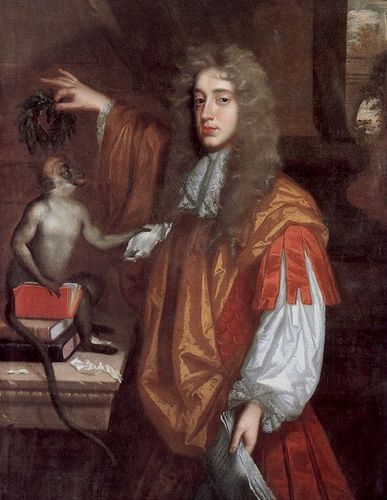
john-wilmot

Talk, inevitably, turned to the projected portrait, and he was able to describe what he wanted. “I have it all quite plain in my mind’s eye: I stand by a table, so, and I’m holding out a laurel wreath over Strephon’s head, while turning to look out of the picture, and Strephon sits on a pile of books on a table, preferably eating them.”

“All highly symbolic. Are you sure you don’t want, say, a dwarf or a blind fiddler or any other accessory? Just yourself, and the monkey?”

Alathea by Pamela Belle (1985)

~

Angel thought: What is this errand I am going on? Perhaps all this girl has told me is false; how do I know? Perhaps all I have heard of her is a lie, too. What is it that I have in common with her? Why do I like and trust her? For the same reason as I was hurt by the death of the manatee – we’re all females, slaves, helpless.

Night’s Dark Secrets by Marjorie Bowen (1936)

~

henry-vii

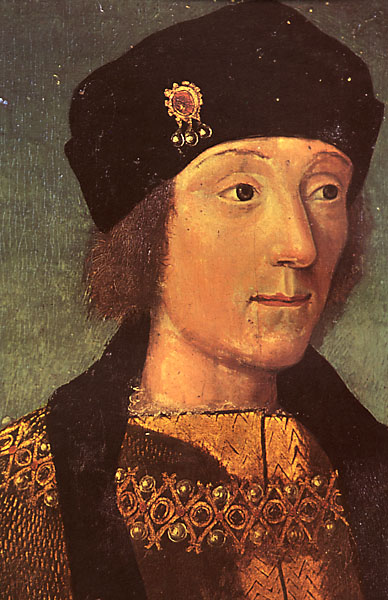
Somehow, he’d thought that as he got older he would achieve a measure of free will. When he was a man, he had often told himself after being chastised or set some complicated task of learning that no one would tell him what to do. Now he lay on his back in the dense forest, aware of the mist rising from the damp earth, the murmuring of men settling in for the night, and knew he was part of a story that had started long before he was born and would continue long after his death.

Accession by Livi Michael (2016)

~

“Nice!” Stella’s anger overflowed suddenly. “And this is a nice bus, and what a lot of nice people we are, this nice morning.”

Marian managed a laugh. “You’re quite right. It’s a terrible word. I used it in an essay once, and my tutor made me read Northanger Abbey before I wrote another one.”

“Oh God, Jane Austen,” said Stella.

Strangers in Company by Jane Aiken Hodge (1973)

~

There are misfortunes in life that no one will accept; people would rather believe in the supernatural and the impossible.

The Man in the Iron Mask by Alexandre Dumas (1850)

~

full-moon

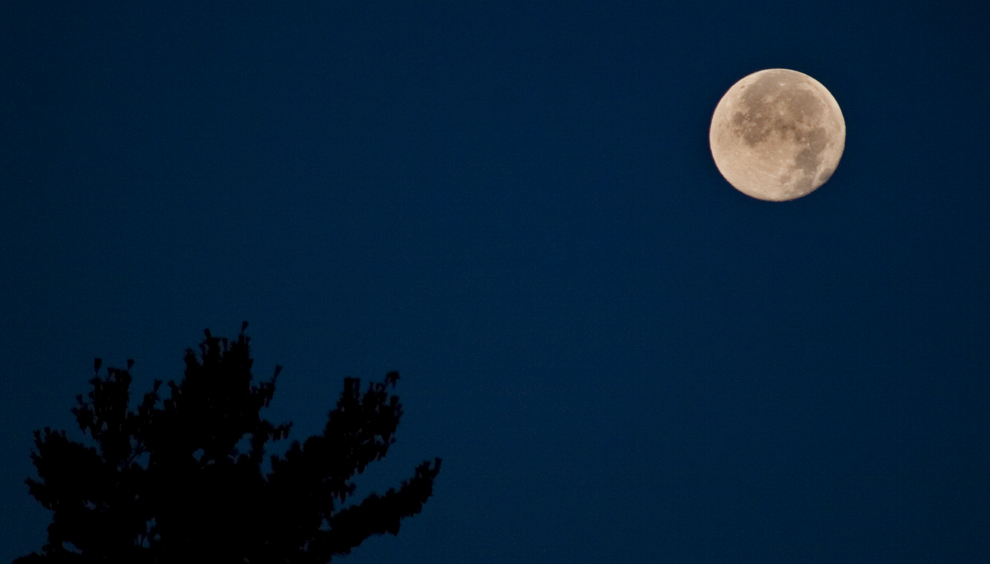
The moon was full and, urged by a restless excitement, she had been unable to remain in her room. She walked without conscious direction through a grove of oleanders and came out on the shore, pale gold sands silvered by the moonlight, a line of slowly curling surf white as ivory, and a sea of violet blue. Above her the Southern moon seemed huge and very near and she felt as if she could catch it in her hand.

Forget Me Not by Marjorie Bowen (1932)

~

“First his secretary, seated in his master’s chair, was shot,” he said slowly. “Then his butler, who was apparently after his master’s Scotch, got poisoned. Then his chauffeur met with a very mysterious accident, and finally a man walking with him down the street got a coping stone on his head.” He sat back and regarded his companion almost triumphantly. “What do you say to that?” he demanded.

“Shocking,” said the young man. “Very bad taste on someone’s part. Rotten marksmanship, too,” he added, after some consideration. “I suppose he’s travelling for health now, like me?”

Mystery Mile by Margery Allingham (1930)

~

jane_shore_-_weir_collection

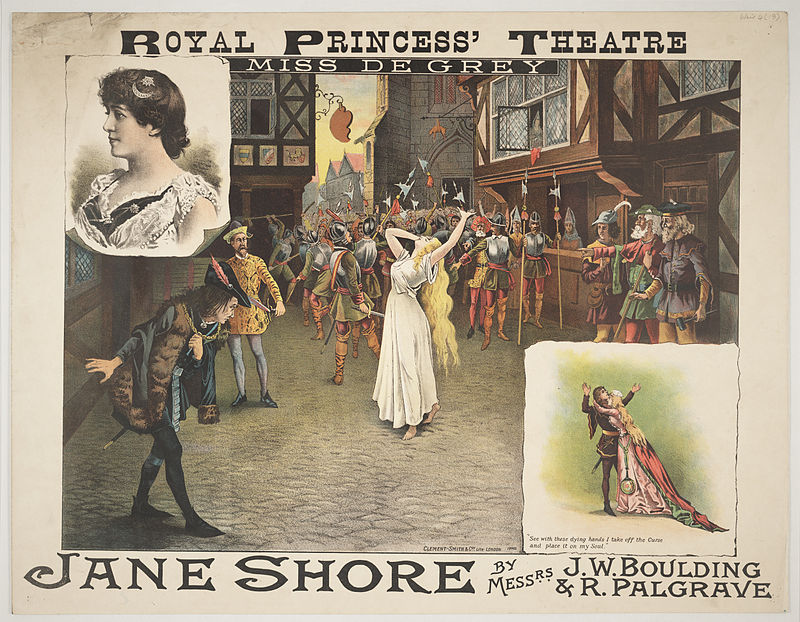
She raised her eyes – they lighted on the masquer. The pressure of the people had forced him so close to her that their hands touched. Shore lent forward to speak to his father. The mysterious personage seized the occasion, pressed that gloved hand with ardour, and whispered in her ear.

“You have done unwisely – you might have been the beloved of a king.”

Jane Shore by Mary Bennett (1869)

~

“There are many forms of love, Violet. One can love a parent in one way, a sibling in another, a lover, a friend, an animal…each in different ways.”

Flora watched Violet’s face as everything it contained seemed to soften and a veil fell from her eyes.

“Yes, yes! But Flora, how can we possibly choose whom we love when society dictates it?”

“Well, even though outwardly we must do as society dictates, the feelings we hold inside us may contradict that completely.”

The Shadow Sister by Lucinda Riley (2016)

~

Favourite books this month: Alathea, The Man in the Iron Mask and The Shadow Sister.

As you can see, I’m very behind with my reviews, which isn’t ideal at the start of a new year. However, I do have most of them written and scheduled to be posted throughout January. For now, I would like to wish you all a Happy New Year!

My Commonplace Book: November 2016

A summary of this month’s reading, in words and pictures.

commonplace book
Definition:
noun
a notebook in which quotations, poems, remarks, etc, that catch the owner’s attention are entered

Collins English Dictionary

~

tensyoin

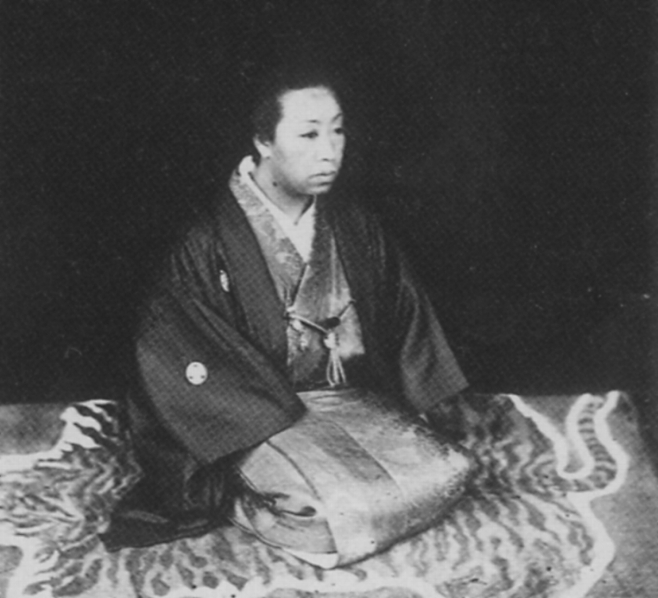
“Barbarians,” she murmured in tones of disbelief. “Barbarians.” Perhaps if she said the word often enough she could defuse the threat. “But in that case…we’re finished. We’re all dead.” It was just as Lord Nariakira had warned. These were not gentle Hollanders. These were other beings, those nameless hordes who’d rampaged across China. Barbarians like those didn’t come in peace. They threatened their lives, their world, everything they knew.

Things were spinning around her. The world was turning upside down. But she couldn’t help feeling curious as well. She wished she could catch a glimpse of these exotic creatures with her own eyes.

The Shogun’s Queen by Lesley Downer (2016)

~

“And then do ye wait and see more; there’ll be plenty of opportunity. Time enough to cry when you know ’tis a crying matter; and ’tis bad to meet troubles half-way.”

The Woodlanders by Thomas Hardy (1887)

~

My family were not readers, but Xavier Mountstuart’s writings had inspired and transported me. I had devoured The Courage of the Bruce and The Black Prince, then graduated to the Indian writings: The Lion of the Punjab, of course, and the tales of bandits and rebels in the foothills of Nepal. I had read of white forts and marble palaces and maharajas’ emeralds; of zenanas and nautch girls in the Deccan; of the sieges and jangals. I had even read a short tract about Hindooism, vegetarianism and republicanism, which had left me a little confused. Mountstuart seemed to me the very acme of Byronic manhood. It was not simply that he was a poet and writer of genius, but that he had lived his writings.

The Strangler Vine by MJ Carter (2014)

~

highwayman

“Now, what mean you by that?”

“Just that I am a common highwayman, Miss Betty.”

She stared at him for a moment, and then resumed her work.

“You look it.”

John cast a startled glance down his slim person.

“Is that so, madam? And I rather flattered myself I did not!”

The Black Moth by Georgette Heyer (1921)

~

“No, I don’t care for novels,” she said, shaking her head. “I’ve never really understood them, if I’m honest.”

“In what way?” I asked, confused by how the concept of the novel could be a difficult one to understand. There were some writers, of course, who told their stories in the most convoluted way possible — many of whom seemed to send their unsolicited manuscripts to the Whisby Press, for instance — but there were others, such as Jack London, who offered their readers such a respite from the miserable horror of existence that their books were like gifts from the gods.

The Absolutist by John Boyne (2011)

~

britannia

Frances struck an attitude, sitting upright with head poised high and left hand outstretched as though she grasped an invisible weapon. “Of course, when I am really posing for Roettier, the engraver, I shall wear a helmet and hold a trident and I shall have flowing, Grecian robes. It was altogether the King’s idea, but James of York thought it should be called Britannia. To represent the nation’s might.”

Lady on the Coin by Margaret Campbell Barnes (1963)

~

“My thoughts are my own,” I answered: “and though you keep my person prisoner, these are beyond your control.”

Redgauntlet by Sir Walter Scott (1824)

~

“Not to my knowledge, sir,” said the Viscount.

“I’m glad to hear it! But if you had agreed to the marriage I planned for you a son of yours might have been sitting on my knee at this moment!”

“I hesitate to contradict you, sir, but I find myself quite unable to believe that any grandchild attempting — at this moment — to sit on your knee would have met with anything but a severe rebuff.”

Charity Girl by Georgette Heyer (1970)

~

aemilia-lanyer-poetry

She has a soft spot for little Peter; he had asked why he needed to learn to read when he first arrived.

“Because without reading you only have half a life,” she’d said, watching his puzzled face. “Reading will open doors for you to new worlds.” He had looked at her in wonder then.

“Like the men who sail to the Americas?”

“Yes, something like that.”

The Girl in the Glass Tower by Elizabeth Fremantle (2016)

~

Favourite books this month: The Woodlanders and The Strangler Vine

My Commonplace Book: October 2016

A summary of last month’s reading, in words and pictures.

commonplace book
Definition:
noun
a notebook in which quotations, poems, remarks, etc, that catch the owner’s attention are entered

Collins English Dictionary

~

“Most people only want a quiet life,” I said. “Even those of us who were once radicals.” I smiled wryly at Roger. He nodded in acknowledgement.

“Fanatics on both sides,” old Ryprose said gloomily. “And all we poor ordinary folk in the middle. Sometimes I fear they will bring death to us all.”

Revelation by CJ Sansom (2008)

~

edward-lear-book-of-nonsense

“Books,” the driver resumed. “I’m a great reader. I am. Not poetry. Love stories and murder books. I joined one o’ them” – he heaved a long sigh; with vast effort his mind laboured and brought forth – “circulatin’ libraries”. He brooded darkly. “But I’m sick of it now. I’ve read all that’s any good in it.”

The Moving Toyshop by Edmund Crispin (1946)

~

“We shall wait upon tomorrow,” he said.

“But – what if tomorrow is worse than today?”

“Then we shall wait upon the day after tomorrow.”

“And so forth?” I asked.

“And so forth,” Dogger said.

The Dead in Their Vaulted Arches by Alan Bradley (2014)

~

In his masterwork, The Landscape of Criminal Investigation, Atticus Pünd had written: ‘One can think of the truth as eine vertiefung – a sort of deep valley which may not be visible from a distance but which will come upon you quite suddenly. There are many ways to arrive there. A line of questioning that turns out to be irrelevant still has the power to bring you nearer to your goal. There are no wasted journeys in the detection of a crime.’

Magpie Murders by Anthony Horowitz (2016)

~

“But seriously Poirot, what a hobby! Compare that to -” his voice sank to an appreciative purr – “an easy chair in front of a wood fire in a long low room lined with books – must be a long room – not a square one. Books all round one. A glass of port – and a book open in your hand. Time rolls back as you read.”

The Labours of Hercules by Agatha Christie (1947)

~

robert-cecil

“Watch and wait,” says Burghley. “You have a valuable nugget of information, but that is all it is at this stage. Watch the lady; watch and wait.” Cecil is reminded of being fleeced by a card trickster once, who had said the very same thing – watch the lady. He lost all the gold buttons from his doublet. That was a lesson learned.

Watch the Lady by Elizabeth Fremantle (2015)

~

Sometimes I would like to cry. I close my eyes. Why weren’t we designed so that we can close our ears as well? (Perhaps because we would never open them.) Is there some way that I could accelerate my evolution and develop earlids?

Behind the Scenes at the Museum by Kate Atkinson (1995)

~

Why the Egyptian, Arabic, Abyssinian, Choctaw? Well, what tongue does the wind talk? What nationality is a storm? What country do rains come from? What color is lightning? Where does thunder go when it dies?

Something Wicked This Way Comes by Ray Bradbury (1962)

~

lantern-clock

And as the seconds and minutes moved on, I pondered Man’s efforts at the representation or ‘capture’ of Time, and I thought how, for Clockmakers like Hollers, the very Commodity with which they were trying to work was a heartless and capricious Enemy, who stole from them all the while and never rested.

Merivel: A Man of His Time by Rose Tremain (2013)

~

A Gothic gate, richly ornamented with fret-work, which opened into the main body of the edifice, but which was now obstructed with brush-wood, remained entire. Above the vast and magnificent portal of this gate arose a window of the same order, whose pointed arches still exhibited fragments of stained glass, once the pride of monkish devotion. La Motte, thinking it possible it might yet shelter some human being, advanced to the gate and lifted a mossy knocker. The hollow sounds rung through the emptiness of the place. After waiting a few minutes, he forced back the gate, which was heavy with iron work, and creaked harshly on its hinges…

The Romance of the Forest by Ann Radcliffe (1791)

~

I could not possibly go home, I reflected, and add as a serious contribution to the study of women and fiction that women have less hair on their bodies than men, or that the age of puberty among the South Sea Islanders is nine — or is it ninety? — even the handwriting had become in its distraction indecipherable. It was disgraceful to have nothing more weighty or respectable to show after a whole morning’s work.

A Room of One’s Own by Virginia Woolf (1929)

~

sappho

Not everyone can write as legibly as I; Father made me spend hours at my tablets, saying that my poems must be written down by me as I myself have composed them, so they will not be distorted in later years by other singers. “For you have great gifts from the Muses,” he said. “I would not have them lost to the world that comes after.”

Burning Sappho by Martha Rofheart (1974)

~

“I ain’t in the habit of picking other folks’ roses without leave,” said she.

As Rebecca spoke she started violently and lost sight of her resentment, for something singular happened. Suddenly the rosebush was agitated violently as if by a gust of wind, yet it was a remarkably still day. Not a leaf of the hydrangea standing on the terrace close to the rose trembled.

“What on earth -” began Rebecca; then she stopped with a gasp at the sight of the other woman’s face. Although a face, it gave somehow the impression of a desperately clutched hand of secrecy.

Small and Spooky edited by M.R. Nelson (2016)

~

Time was not something then we thought of as an item that possessed an ending, but something that would go on forever, all rested and stopped in that moment. Hard to say what I mean by that. You look back at all the endless years when you never had that thought. I am doing that now as I write these words in Tennessee. I am thinking of the days without end of my life.

Days Without End by Sebastian Barry (2016)

~

“You don’t think there’ll really be a war, do you?” she asked anxiously, as her work was for the maimed wrecks of men left by the 1914-18 war – and I could understand her horror of another. But when I looked at the Green Cat I was not sure and I did not reply.

A Chelsea Concerto by Frances Faviell (1959)

~

Favourite books read in October: Revelation, The Moving Toyshop and Magpie Murders

My Commonplace Book: September 2016

A summary of last month’s reading, in words and pictures.

commonplace book
Definition:
noun
a notebook in which quotations, poems, remarks, etc, that catch the owner’s attention are entered

Collins English Dictionary

~

york-minster

Another high wall appeared ahead of us; York seemed a city of walls. Behind it the Minster loomed. Ahead was a large open space crowded with market stalls under brightly striped awnings that flapped in the cool damp breeze. Heavy-skirted goodwives argued with stallholders while artisans in the bright livery of their guilds looked down their noses at the stalls’ contents, and dogs and ragged children dived for scraps. I saw most of the people had patched clothes and worn-looking clogs. Watchmen in livery bearing the city arms stood about, observing the crowds.

Sovereign by CJ Sansom (2006)

~

But whereas the planets are serene in their separateness, knowing any collision with one another likely to destroy them and return them to dust, Fogg remarks that he, along with very many of his race, finds his Separateness the most entirely sad fact of his existence and is every moment hopeful of colliding with someone who will obscure it from his mind.

Restoration by Rose Tremain (1989)

~

elizabeth-of-york

“Do you like history?” he enquired.

“Oh, yes.” She turned eagerly to him, forgetting momentarily the splendour of the pageant. “It is about people, you see. The deeds they performed. The way they thought.”

Elizabeth the Beloved by Maureen Peters (1972)

~

Writing is a kind of magic. One person sits in a room alone and makes marks on a page that represent the images in her mind. Another person looks at those marks, weeks or months or a hundred years later, and similar images appear in that person’s mind. Magic. Plays and choreography hold yet another level of magic and meaning: the marks on the page leap to action in another person’s body, to be seen by thousands of others. The ability to weave that kind of magic paid well in Las Vegas.

The Hawley Book of the Dead by Chrysler Szarlan (2014)

~

He was a good husband. He had comforted her when she’d sobbed violently against his plump chest, then rested dry-eyed against it and tried not to remember all the things she no longer knew about her son. How tall was he now? Had the colour of his hair changed? Did he still wake sometimes in the middle of the night unable to breathe? Did he still like to find beetles in the cracks in a stone wall, or to look for hidden things beneath a rock?
Did he remember her at all?

Rebellion by Livi Michael (2015)

~

king-david

But the stories that grow up around a king are strong vines with a fierce grip. They pull life from whatever surfaces they cling to, while the roots, maybe, wither and rot until you cannot find the place from which the seed of the vine has truly sprung.

The Secret Chord by Geraldine Brooks (2015)

~

Three telephones kept ringing like demented things, and by post, telegram, wireless, and personal appearance the information poured in. Nine-tenths of it quite useless, but all of it requiring a hearing: some of it requiring much investigation before its uselessness became apparent. Grant looked at the massed pile of reports, and his self-control deserted him for a little.

A Shilling for Candles by Josephine Tey (1936)

~

“It is the only thing I know of to his advantage,” Judith said. “I will admit him to be an excellent whip. But for the rest I find him a mere fop, a creature of affectations, tricked out in modish clothes, thinking snuff to be of more moment than events of real importance. He is proud, he can be insolent. There is a reserve, a lack of openness—I must not say any more: I shall put myself in a rage, and that will not do.”

Regency Buck by Georgette Heyer (1935)

~

courbette

I heard the fanfare and recognised it; it was the entrance of Annalisa and her white stallion. The trumpets cut through the air, silver, clear and commanding. Old Piebald stopped grazing and lifted his head, with his ears cocked as one imagines a war horse might at the smell of battle and the trumpets. Then the music changed, sweet, lilting and golden, as the orchestra stole into the waltz from The Rosenkavalier.

Airs Above the Ground by Mary Stewart (1965)

~

In books there were people who were always agreeable or tender, and delighted to do things that made one happy, and who did not show their kindness by finding fault. The world outside the books was not a happy one, Maggie felt; it seemed to be a world where people behaved the best to those they did not pretend to love, and that did not belong to them.

The Mill on the Floss by George Eliot (1860)

~

“I might be wrong, but I fancy that however much a girl may admire, or envy, the heroine of some romance, who finds herself in the most extraordinary situations; and however much she may picture herself in those situations, she knows it is nothing more than a child’s game of make-believe, and that she would not, in fact, behave at all like her heroine.”

Black Sheep by Georgette Heyer (1966)

~

nondescript

“You’re not shy, Julia,” he said. “It’s what I noticed first about you. How calmly you faced the world with that stupendous, utterly unnatural face of yours, and of course – you know the spirit in which I say that, it’s merely a stated fact – I knew then you were a natural. No no, there’s no doubt in my mind, no doubt at all, but that you’ll thrive.”

Orphans of the Carnival by Carol Birch (2016)

~

It happens this way sometimes, we can discover truths about ourselves in a moment, sometimes in the midst of drama, sometimes quietly. A sunset wind can be blowing off the sea, we might be alone in bed on a winter night, or grieving by a grave among leaves. We are drunk at a tavern, dealing with desperate pain, waiting to confront enemies on a battlefield. We are bearing a child, falling in love, reading by candlelight, watching the sun rise, a star set, we are dying…

But there is something else to all of this, because of how the world is for us, how we are within it. Something can be true of our deepest nature and the running tide of days and years might let it reach the shore, be made real there — or not.

Children of Earth and Sky by Guy Gavriel Kay (2016)

~

Favourite books read in September: Sovereign, Airs Above the Ground and Black Sheep

My Commonplace Book: August 2016

A summary of this month’s reading, in words and pictures.

commonplace book
Definition:
noun
a notebook in which quotations, poems, remarks, etc, that catch the owner’s attention are entered

Collins English Dictionary

~

Margaret Beaufort

She could have asked, of course, but she would not get any answers. She thought of all the words that went unspoken in the world, throughout time: what happened to them, where did they go? What would happen if they were all spoken? How different would the world be then?

Succession by Livi Michael (2014)

~

“Molly, I cannot have you speaking so to Lady Harriet,” said Mrs. Gibson, as soon as she was left alone with her stepdaughter. “You would never have known her at all if it had not been for me, and don’t be always putting yourself into our conversation.”

“But I must speak if she asks me questions,” pleaded Molly.

“Well! if you must, you must, I acknowledge. I’m candid about that at any rate. But there’s no need for you to set up to have an opinion at your age.”

“I don’t know how to help it,” said Molly.

Wives and Daughters by Elizabeth Gaskell (1865)

~

I know very little about my mother, and have no family to help me fill in the gaps. I am an only child and my father’s two elder sisters died several years ago. I am intrigued by this photograph and would like to find out more about the people in it…I hope you don’t mind me asking all these questions. Any information you could offer would mean a great deal to me.

The People in the Photo by Hélène Gestern (2011)

~

Penny dreadful

Since cheap magazines were traded on street corners, in playgrounds and factory yards, each issue could have many readers. Penny fiction was Britain’s first taste of mass-produced popular culture for the young, and was often held responsible for the decay of literature and of morality.

The Wicked Boy by Kate Summerscale (2016)

~

It can’t have been much of a life, can it? for a woman of over seventy, living alone in lodgings, in debt to her landlady, wearing our cast-off clothes, trotting round after jobs that never materialised, writing articles that nobody would publish, and eating bread and margarine for supper. There really was something rather pathetic about that awful room of hers – crowded with papers full of impossible schemes…I don’t suppose there can ever have been anyone whose life was much less important, or who had less influence on anybody else.

Poor Caroline by Winifred Holtby (1931)

~

It was something he’d learned in the war: only think about what is directly in front of you. No, that wasn’t quite right. He’d had to plan ahead all the time…but not to feel ahead. For a man of Giles’s far-seeing, intricate temperament that had been a hard lesson. But Simon, he could see, knew it by instinct.

Exposure by Helen Dunmore (2016)

~

Red Cocker Spaniel

Hers was the pale worn face of an invalid, cut off from air, light, freedom. His was the warm ruddy face of a young animal; instinct with health and energy. Broken asunder, yet made in the same mould, could it be that each completed what was dormant in the other? She might have been — all that; and he — But no. Between them lay the widest gulf that can separate one being from another. She spoke. He was dumb. She was woman; he was dog. Thus closely united, thus immensely divided, they gazed at each other.

Flush by Virginia Woolf (1933)

~

“I play,” he once said to me, “for the best musician in the world – he may not be there, but I play as if he were”. I thought to myself that he was always there when Sebastian was playing, but I did not say so, for that was the kind of thing which did not please him.

The Little Chronicle of Magdalena Bach by Esther Meynell (1925)

~

It is quite beautiful, a metaphoric triumph over adversity, with every millimetre of its gnarled trunk proudly displaying its struggle.
I wonder now why humans hate the map of their life that appears on their own bodies, when a tree like this, or a faded painting, or a near-derelict uninhabited building is lauded for its antiquity.

The Olive Tree by Lucinda Riley (2016)

~

I cannot say – I had misjudged him before – yet I do think, in that moment, he had his battle to fight – one fierce as his fiercest charge. Cosmas waited, devouring him with his eyes. And I waited; a sudden, amazing sense springing up in me, that if he yielded, as I had so desired him to yield, this King who might be would never be the Prince whom I had served and loved.

Rupert, by the Grace of God by Dora Greenwell McChesney (1899)

~

louisedelavalliere

“Life, monsieur,” said Planchet, laughing, “is capital which a man ought to invest as sensibly as he possibly can.”

Louise de la Vallière by Alexandre Dumas (1850)

~

Hélène wondered whether the lady was protesting a bit too much in order to convince her, or to convince herself. Could she start a new life at her age? You can start a new game of cards or redecorate the living room, but life itself, can you do that again?

The Travels of Daniel Ascher by Déborah Lévy-Bertherat (2013)

~

And now? Overseas in England, his brethren in the faith were fighting, were dying, to achieve the freedom which he had sought. Before his eyes rose the grey, thronged sea-port town he knew, the richer fields, the narrower skies; and yet here, in this strenuous bleakness, he had found his soul.

Cornet Strong of Ireton’s Horse by Dora Greenwell McChesney (1903)

~

Love for her was to be a slow, ripening process, the fruit of many meetings and mutual interests. She had never believed in love at first sight. That surely, she told herself, was an invention of novelists, whose business it was to make everything slightly larger than life.

The Jewelled Snuff Box by Alice Chetwynd Ley (1959)

~

Fountains Abbey 1

The queen responded a week later. “We are sending a young gentleman up to Yorkshire to resolve the matter. We do not wish to hear from you again.”

It was a measure of Mr Aislabie’s poor standing at court that I was the young gentleman in question.

A Death at Fountains Abbey by Antonia Hodgson (2016)

~

Favourite books this month: Wives and Daughters, Flush and Exposure

My Commonplace Book: July 2016

A summary of this month’s reading, in words and pictures.

commonplace book
Definition:
noun
a notebook in which quotations, poems, remarks, etc, that catch the owner’s attention are entered

Collins English Dictionary

***

He turned his head to smile at her, apologetically; and his face was haggard in the firelight, so that suddenly she cared nothing for kings and wars, nor bishops nor the soul of man, nor for what Thomas did, only for what Thomas was; and she longed to fling her arms round him and hold him close because he was like a lute that was strung too tight.

The Rider of the White Horse by Rosemary Sutcliff (1959)

***

Princes in the Tower

No banners were raised above the company and they wore no livery, anonymity as well as haste their ally this April morning. Where Watling Street cut its blade-straight course towards the Great Ouse, the last of the sentries who had ridden on ahead to silence any word of their coming joined the company and, together, the horsemen thundered towards the small market town of Stony Stratford and the object of their race: the boy who had become king.

Sons of the Blood by Robyn Young (2016)

***

Nash is a follower of the playwrights and knows their best bons mots by heart, but I am fascinated by the actors themselves. I wonder about the life behind the stage and the precariousness of it. The thought of it gives me a shiver. Perhaps my interest stems from the apprehension that actors, whose calling depends on looks and voices and bodies that cannot last, must confront the same hard laws of life that women do. When the brightness of our beauty dies, we are plunged into the dark.

The Revelations of Carey Ravine by Debra Daley (2016)

***

Lizzie Burns

And is it any different with love? Isn’t love the reverse side of the same medal? To love is to have, but rare does it happen that what we have is what we love. Love buys cheap and seeks to sell at a higher price; our greed is for gain that lies outside our reach. We desire those who don’t desire us in return.

Mrs Engels by Gavin McCrea (2015)

***

Before him lay the well-kept grounds, the clipped rose trees already beginning to put forth their glossy leaves, the panes of the glass-house gleaming like ice in the moonlight, the fountain where the water splashed in silver threads, hollow-eyed termini set between yew trees. The windows in the side of the pleasure house facing Desgrez were shuttered; he crept along, however, most warily; he did not know who was posted in the gardens nor what sentries might be placed about the house and grounds.

The Poisoners by Marjorie Bowen (1936)

***

Gondola

They glided away through the spangled water, and he filled his lungs with the haunting sea air. Other gondolas slipped past with lovers or merrymakers. A delicious languor filled the night, lapping of water, wandering of music. He felt a longing, sweeter than possession, for the indescribable, the unattainable. He would return here someday with her; he would occupy one of these palaces; they would live in terms of color – sapphire and silver – in terms of a casement open on the sea-scented night.

Prince of Foxes by Samuel Shellabarger (1947)

***

“Oh, don’t worry, we’re still appalling know-it-alls. We dig things up, but then we photograph and catalogue, record and document, and as often as not we put things back. It’s not the finds so much as the findings. Not the objects but the stories they tell.”

Sandlands by Rosy Thornton (2016)

***

Magna Carta

Under the shade of the pavilion, he noted a table in readiness, stools around it, and parchment and pens and wax all ready, with clerks and knights waiting. They had at least the grace to stand when he entered and, without speaking, took the stool at the table-head. Before him lay the long charter. He knew it by heart, each clause of it had burned into him with rage while impotently he had listened to these rogues’ demands.

The Devil and King John by Philip Lindsay (1943)

***

Favourite books this month: Prince of Foxes and The Revelations of Carey Ravine.

My Commonplace Book: June 2016

A summary of this month’s reading, in words and pictures.

commonplace book
Definition:
noun
a notebook in which quotations, poems, remarks, etc, that catch the owner’s attention are entered

Collins English Dictionary

~

Daisy

“Do you know what, that does interest me. Not the fact that he was popular before he was arrested. He’s a good-looking man, there’s nothing remarkable in that. What fascinates me is the number of women who, by all accounts, write to him in prison. Why would they do that, do you think?”

“All notorious killers have a fan club,” he says.

Daisy in Chains by Sharon Bolton (2016)

~

Oh, there was pomp and pageantry and all the splendour of trumpets and gold brocade and wine flowing from the conduits, but there was something more that I can only think of as passion – the passion of a queen for her people and of the people for their queen. Already Elizabeth had the gift of investing the most ordinary action with an almost symbolic nobility, and, conversely, the ability to draw a touch of humanity from the most solemn ceremony.

The Virgin Queen by Maureen Peters (1972)

~

At heart he could not abide sense in women. He liked to see them as silly, as light-headed, as vain, as open to ridicule as possible, because they were then in reality what he held them to be, and wished them to be — inferior, toys to play with, to amuse a vacant hour, and to be thrown away.

Shirley by Charlotte Brontë (1849)

~

Katherine of Aragon

Katherine thanked him, drew the curtains and huddled back into her furs. She had found Prince Henry a little disturbing. He was a handsome boy, with undeniable charm, and even in those brief moments he had dominated the courtesies. Arthur had been reserved and diffident, and she could not stop herself from wondering how different things would have been had she been betrothed to his brother. Would she have felt more excited? More in awe? She felt disloyal even thinking about it. How could she be entertaining such thoughts of a child of ten? Yet it was so easy to see the future man in the boy. And it was worrying to realise how effortlessly Arthur could be overshadowed by his younger brother. Pray God Prince Henry was not overambitious!

Katherine of Aragon: The True Queen by Alison Weir (2016)

~

He claims to be himself the author of the nickname. Signor Pronto, he says, was a character in a popular farce, — a most obliging person who always turned up in the nick of time to arrange matters for everybody. The catch word of the farce was: Pronto will manage it! Some great lady was lamenting the difficulties of arranging charades at her country house party; ‘But,’ she cried, ‘I expect Mr. Lufton tomorrow and he will manage it for me.’ At which Crockett, who was present, said: ‘Oh ay! Pronto will manage it.’ After that they all called Lufton Pronto behind his back.

Troy Chimneys by Margaret Kennedy (1953)

~

Gate_Of_Hay_Castle

Catrin woke and stared round in the dim light of a flickering fire. Her heart was pounding from the horror of the dream. The dream she had shared, did she but know it, with another woman; a dream she had dreamt recently, at home in Sleeper’s Castle. But she wasn’t at home. She pulled her cloak around her, shivering, confused as to where she was. Then she remembered.

Sleeper’s Castle by Barbara Erskine (2016)

~

She had not come to God with her wreath or with her sins and sorrows, not as long as the world still possessed a drop of sweetness to add to her goblet. But now she had come, after she had learned that the world is like an alehouse: The person who has no more to spend is thrown outside the door.

Kristin Lavransdatter by Sigrid Undset (1920)

~

Favourite books this month: Kristin Lavransdatter, Daisy in Chains and Troy Chimneys