2014 Historical Fiction Reading Challenge…and wrapping up this year’s challenge

2014hf2 This year I’ve been taking part in the Historical Fiction Reading Challenge hosted by Historical Tapestry. I signed up at the Ancient History level, which meant I needed to read 25+ books, and as historical fiction is my favourite genre I actually read 32.

I’m happy to see that Historical Tapestry will be hosting the challenge again next year. The challenge runs from 1 January to 31 December 2014 and you can choose from the following levels:

20th century reader – 2 books
Victorian reader – 5 books
Renaissance Reader – 10 books
Medieval – 15 books
Ancient History – 25 books
Prehistoric – 50+ books

I will be aiming for Ancient History (25 books) again but will see how close I can get to the Prehistoric level!

And now, to wrap up the 2013 challenge, here are the historical fiction novels I’ve read and reviewed this year.

Historical Fiction Reading Challenge 2013 1. The Florentine Emerald by Agustin Bernaldo Palatchi
2. Gemini by Dorothy Dunnett
3. The Forgotten Queen by D.L. Bogdan
4. The King’s General by Daphne du Maurier
5. Master and Commander by Patrick O’Brian
6. The Iron King by Maurice Druon
7. The Chalice by Nancy Bilyeau
8. The Agincourt Bride by Joanna Hickson
9. The Master of Bruges by Terence Morgan
10. Shadow on the Crown by Patricia Bracewell
11. Lady of the English by Elizabeth Chadwick
12. The Poisoned Island by Lloyd Shepherd
13. The Scent of Death by Andrew Taylor
14. Queen’s Gambit by Elizabeth Fremantle
15. She Rises by Kate Worsley
16. The Forbidden Queen by Anne O’Brien
17. The Memory of Lost Senses by Judith Kinghorn
18. King Hereafter by Dorothy Dunnett
19. Paris by Edward Rutherfurd
20. Midnight in St Petersburg by Vanora Bennett
21. The Sacred River by Wendy Wallace
22. Elizabeth I by Margaret George
23. Bring up the Bodies by Hilary Mantel
24. Post Captain by Patrick O’Brian
25. The Wild Girl by Kate Forsyth
26. Wars of the Roses: Stormbird by Conn Iggulden
27. Dragonwyck by Anya Seton
28. Colossus: The Four Emperors by David Blixt
29. Hungry Hill by Daphne du Maurier
30. The Firebird by Susanna Kearsley
31. The Nine Day Queen by Ella March Chase
32. The King Must Die by Mary Renault

I enjoyed most of these books and I’m sure a few of them will be appearing on my best of the year list when I compile it later this month!

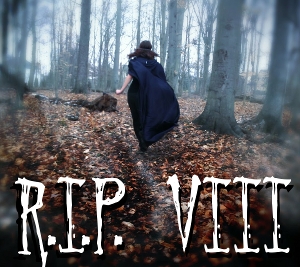
It’s time for R.I.P. VIII

RIP8main300

September is rapidly approaching, the nights are starting to get darker again, and that means it’s time for R.I.P. (R.eaders I.mbibing P.eril), the annual reading event hosted by Carl at Stainless Steel Droppings.

For those of you who are new to R.I.P. the idea is to read books that could fit one of the following categories:

Mystery.
Suspense.
Thriller.
Dark Fantasy.
Gothic.
Horror.
Supernatural.

As always, there are different levels of participation to choose from and I am signing up for Peril the First, which means reading at least four books between now and the end of October.

rip8peril1st

I’ve listed below some of the books I’m thinking about reading for R.I.P. this year. I don’t expect to read all of them, of course, but I like to have lots of books to choose from!

Frankenstein by Mary Shelley
The Haunting of Hill House by Shirley Jackson
The Romance of the Forest by Ann Radcliffe
These first three books are all taken from my Classics Club list so I’m hoping to read at least one of them.

Speaking from Among the Bones by Alan Bradley – I loved the first four Flavia de Luce books and can’t wait to read this one.

What Angels Fear by C.S. Harris – These books have been recommended to me a few times and I’ve finally managed to get a copy of the first one in the series.

Blood Harvest by S.J. Bolton – The only Bolton novel I still haven’t read.

Ten Second Staircase by Christopher Fowler – It’s been too long since I last read a Bryant & May book and this is the next in the series.

The Woman in Black by Susan Hill – This was on my R.I.P list last year but I didn’t have time for it so will try again this year.

Dragonwyck by Anya Seton – Another one I was hoping to read last year and never got round to.

The Curse of the Pharaohs by Elizabeth Peters – Hearing about Elizabeth Peters’ death a few weeks ago reminded me that I really want to continue the Amelia Peabody series!

A Monstrous Regiment of Women by Laurie R. King – I’ve also been meaning to continue this series since reading The Beekeeper’s Apprentice more than a year ago.

The Asylum by John Harwood – I loved both of John Harwood’s two previous books so I’m looking forward to this one.

Bellman & Black by Diane Setterfield – I requested this book from Netgalley and can’t wait to start reading it. I’m sure it will be a perfect R.I.P. book!

I’m also planning to take part in the Mary Stewart Reading Week so will be reading one of Mary Stewart’s suspense novels in September too – I still haven’t decided which one yet!

Are you going to join in with R.I.P this year? What are you planning to read?

Turn of the Century Salon: January – An Introduction

Turn of the Century Salon

During 2013 I am going to be taking part in the Turn of the Century Salon, hosted by Katherine of November’s Autumn. The idea of the salon is to read and discuss classics from the late 1880s to the early 1930s.

This month Katherine has asked a few questions to help us introduce ourselves…

What era have you mainly read? Georgian? Victorian? Which authors?

I’ve definitely read more classics from the Victorian era than any other period. I love Wilkie Collins, the Brontë sisters (all three), Thomas Hardy, Anthony Trollope, Elizabeth Gaskell, Charles Dickens, Mary Elizabeth Braddon and Alexandre Dumas.

What Classics have you read from the 1880s-1930s? What did you think of them?

When I first saw this question, I could think of very few classics I had read from this period (the only one that came instantly to mind was The Great Gatsby). Then I had a look back at my list of books read since I started blogging and discovered that I had actually read a lot more than I thought I had! Here are some of the books from the 1880s-1930s that I’ve read in the last few years (I haven’t listed all of them):

Three Men in a Boat by Jerome K. Jerome (published 1889)
Jude the Obscure by Thomas Hardy (published 1895)
Ann Veronica by H.G. Wells (published 1909)
Ethan Frome by Edith Wharton (published 1911)
The Return of the Soldier by Rebecca West (published 1918)
The Enchanted April by Elizabeth von Arnim (published 1922)
Orlando by Virginia Woolf (published 1928)
A Farewell to Arms by Ernest Hemingway (published 1929)

Name some books you’re looking forward to read for the salon.

I don’t really like making reading plans in advance as I never manage to stick to them, but here are some books I would like to read for the salon, listed in order of publication. I won’t necessarily read all of these and will almost certainly also read other books I haven’t mentioned here.

Germinal by Emile Zola (published 1885)
The Mayor of Casterbridge by Thomas Hardy (published 1886)
The Odd Women by George Gissing (published 1893)
The House of Mirth by Edith Wharton (published 1905)
A Room with a View by E.M. Forster (published 1908)
The Good Soldier by Ford Madox Ford (published 1915)
The Painted Veil by W Somerset Maugham (published 1925)

Is your preference prose? poetry? both?

Definitely prose!

Classics Challenge December Prompt – Wrap-Up

A Classics Challenge
This year I have been taking part in a Classics Challenge hosted by Katherine of November’s Autumn.

The idea of this challenge was to read seven or more classics and participate in some of the monthly prompts Katherine has been posting for us throughout 2012. This is the final prompt of the year and is a chance to wrap up the challenge.

When I signed up last December I posted a list of the seven books I was hoping to read. As usual I completely failed to stick to the list – I read the first two, but the other five are still unread. I do still want to read the books I didn’t get round to and will try to make them a priority in 2013.

Here are the books I was planning to read and the books I ended up reading instead:

1. The Professor by Charlotte Brontë
2. Great Expectations by Charles Dickens
3. The Small House at Allington by Anthony Trollope
– replaced with Three Men on the Bummel by Jerome K. Jerome
4. Aurora Floyd by Mary Elizabeth Braddon
– replaced with Ivanhoe by Sir Walter Scott
5. The Mill on the Floss by George Eliot
– replaced with Sylvia’s Lovers by Elizabeth Gaskell
6. The Return of the Native by Thomas Hardy
– replaced with Emma by Jane Austen
7. Wives and Daughters by Elizabeth Gaskell
– replaced with A Farewell to Arms by Ernest Hemingway

I didn’t manage to answer the prompt every month, but here are the ones I did participate in:

JANUARY: The Author – Charlotte Bronte, author of The Professor
FEBRUARY: Characters – Joe Gargery from Great Expectations by Charles Dickens
APRIL: Book Covers – Ivanhoe by Sir Walter Scott
JUNE: A Visual Tour – Monkshaven from Elizabeth Gaskell’s Sylvia’s Lovers
AUGUST: Quotes – Emma by Jane Austen
OCTOBER: Chapter Musings – Chapter 1 of A Farewell to Arms by Ernest Hemingway
NOVEMBER – My summary of the year’s reading
DECEMBER – Classics Challenge Wrap Up

As I have read at least seven classics and participated in at least four of the prompts, this means I’m entitled to display this beautiful button which shows I’ve completed the challenge!

Completed Classics Challenge

I have enjoyed taking part in the Classics Challenge and am looking forward to joining in with Katherine’s Turn of the Century Salon next year.

Signing up for the 2013 Historical Fiction Challenge

It’s that time of year again when plans are being made for 2013 and next year’s reading challenges are being announced! I prefer not to sign up for too many challenges as in the past I’ve been so bad at actually completing them, but there are one or two I can never resist – and the Historical Fiction Reading Challenge is one of them.

The Historical Fiction Challenge is again being hosted by the wonderful Historical Tapestry and runs from 1 January to 31 December 2013. There are five different levels of participation to choose from:

20th century reader – 2 books
Victorian reader – 5 books
Renaissance Reader – 10 books
Medieval – 15 books
Ancient History – 25+ books

This is one challenge I never have any trouble completing, so I will be signing up at the Ancient History level, which means reading at least 25 historical fiction books next year. As historical fiction is my favourite genre and forms such a large percentage of my reading every year anyway, it’s not too ‘challenging’ for me, but I still love taking part as I enjoy discovering new historical fiction blogs and seeing what everyone else has been reading each month.

If you’re interested in joining too, see this post at Historical Tapestry.

Classics Challenge November Prompt

This year I have been taking part in a Classics Challenge hosted by Katherine of November’s Autumn. Every month Katherine has posted a prompt to help us discuss the classic novels we are reading.

I have enjoyed taking part in the challenge and although I haven’t managed to answer all of the prompts, I did want to respond to this one as it provides a sort of summary of the year’s reading, encouraging us to look back at all the classics we have read in 2012.

Here are this month’s questions and my answers:

Of all the Classics you’ve read this year is there an author or movement that has become your new favorite? Which book did you enjoy the most? Or were baffled by?

It’s not exactly a movement, but it seems that a lot of the classics I’ve been drawn to this year have been what I would describe as swashbuckling adventure novels: Scaramouche by Rafael Sabatini, The Scarlet Pimpernel by Baroness Orczy, The Prisoner of Zenda by Anthony Hope and Ivanhoe by Sir Walter Scott. I would like to read more books by all of these authors, especially Sabatini and Scott.

I also enjoyed Jerome K. Jerome’s Three Men on the Bummel (though not as much as one of my favourite books from last year, Three Men in a Boat) and my two Austen re-reads (Mansfield Park and Emma).

I can’t say I’ve been baffled by any of the classics I’ve read this year, but the one I found the most challenging to read was A Farewell to Arms by Ernest Hemingway, purely because I didn’t like the style of his writing.

Who’s the best character? The most exasperating?

My favourite character from the classics I’ve read this year is definitely Andre-Louis Moreau, the hero of Scaramouche. I also liked Joe Gargery in Great Expectations – Dickens’ novels are always filled with memorable characters and I remember writing about Joe in response to one of the first Classic Challenge posts of the year.

The most exasperating has to be Sylvia from Sylvia’s Lovers by Elizabeth Gaskell. I was irritated by her silliness in the first half of the book and although she did start to mature after that, she still continued to frustrate me with some of the decisions she made.

From reading other participants’ posts which book do you plan to read and are most intrigued by?

The Mill on the Floss seems to have been a popular choice for the Classics Challenge and I definitely want to read that one soon. Vanity Fair, The House of Mirth, The Heir of Redclyffe and East of Eden are other books I’ve added to my list for 2013 after reading other participants’ posts.

Have you read any of the books I’ve mentioned in this post? Are there any more classics you think I really need to read next year?

Classics Challenge October Prompt: Chapter Musings

This year I have been taking part in a Classics Challenge hosted by Katherine of November’s Autumn. Every month Katherine posts a prompt to help us discuss the classic novel we are currently reading. The prompt for October is:

Chapter Musings

Jot down some notes about the chapter you’ve just read or one that struck you the most. It can be as simple as a few words you learned, some quotes, a summary, or your thoughts and impressions.

The classic I’m reading at the moment is A Farewell to Arms by Ernest Hemingway, the story of an American ambulance driver on the Italian front during World War I. This is the first Hemingway book I’ve read and I wasn’t sure what to expect, as he seems to be one of those authors people either love or hate. I’m only seven (very short) chapters into the book so it’s really too early to tell, but so far I’m finding it a lot more readable than I had thought it would be.

Chapter 1, which is the chapter I’ve chosen to focus on for the purposes of this post, is less than two pages long yet it has a lot of significance as it sets the scene and the tone of the novel. We learn almost nothing about our narrator in these two pages, not even his name, and although it’s obvious that he is involved with the army in some way, he seems very detached from what is going on around him.

“Troops went by the house and down the road and the dust they raised powdered the leaves of the trees. The trunks of the trees too were dusty and the leaves fell early that year and we saw the troops marching along the road and the dust rising and leaves, stirred by the breeze, falling and the soldiers marching and afterward the road bare and white except for the leaves.”

I’ve included the quote above because I think it’s a good example of Hemingway’s writing style. He uses simple, direct language and seems to like stringing together very long sentences using the word ‘and’! He also manages to paint vivid pictures of his settings while avoiding flowery descriptions. I’m not sure yet whether I like his writing or not, but I’ll see how I feel after reading a whole book written in this style.

Chapter 1 ends with the following two sentences:

“At the start of the winter came the permanent rain and with the rain came the cholera. But it was checked and in the end only seven thousand died of it in the army.”