All-of-a-Kind Family by Sydney Taylor

I’m ashamed to say I had never come across this classic American children’s novel until Constance of Staircase Wit recommended it when I commented on one of her reviews that I would like to read more about life on New York’s Lower East Side. Constance kindly sent me a copy, which I have now read and enjoyed!

First published in 1951, the book follows five young sisters through a year of their childhood in 1912. Ella, at twelve, is the oldest and four-year-old Gertie is the youngest, with Henny (Henrietta), Sarah and Charlotte in between. They are known as an ‘all-of-a-kind family’ due to being all girls – or, as the librarian refers to them, a ‘step-and-stairs family’ because of their evenly spaced ages. They live in an apartment on the Lower East Side and Papa runs a junk shop nearby while Mama looks after the children and their home.

In the first chapter, Sarah is upset because a friend has borrowed her library book and lost it. She’s sure she’ll be in big trouble and banned from going to the library ever again. However, the librarian, Miss Allen, is sympathetic and, knowing that the family would be offended by charity, she agrees to let Sarah pay for the book one penny a week. Miss Allen becomes a good friend to the girls after this and we meet her again later in the book, but meanwhile there are lots of other adventures to be had – including making a fun game from dusting the apartment, going to the market with Mama, and getting lost at Coney Island.

This is such a charming book, I’m sure I would have loved it as a child. The five girls are all very endearing and Taylor gives them all individual personalities of their own. Ella, being nearly a teenager, is the most mature of the sisters and is beginning to form romantic attachments; ten-year-old Henny is independent and rebellious, while Sarah is more studious. The two youngest girls are less well developed, but Gertie, the baby of the family, looks up to Charlotte who is two years older and they have a particularly close relationship.

One of the most interesting things about this book is that the girls belong to a Jewish family, so we are given lots of descriptions of them preparing for Jewish holidays such as Purim and Passover (as well as celebrating the Fourth of July) – and because the girls are so young, Mama and Papa explain to them the meanings of each custom and tradition, which can be very helpful for non-Jewish readers! Not many of the books I remember reading as a child featured children who were anything other than Christian, so it’s good to know that this book existed even if I wasn’t aware of it.

This is a lovely book (and also the first in a series). Thanks to Constance for introducing me to it.
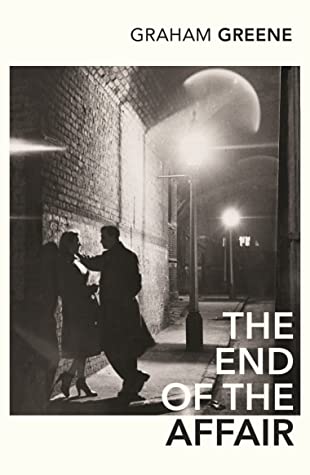

The End of the Affair by Graham Greene

Graham Greene’s 1951 novel, The End of the Affair, was one of the final unread books on my Classics Club list, which I’ve been neglecting recently. As I had left a few empty slots on my 20 Books of Summer list for random reads, I decided this would be a good opportunity to read it.

The End of the Affair is narrated by Maurice Bendrix, a writer living in London. As the title suggests, the novel begins at the end of an affair between Bendrix and neighbour Sarah, the wife of Henry Miles, a civil servant. It was Sarah who ended the relationship, leaving Bendrix confused, hurt and bitter. In January 1946, almost two years after the affair ends, Bendrix meets Henry by chance crossing the Common that separates their two houses. Henry never knew about the affair, but he now confides in Bendrix that he suspects Sarah is seeing another man. This revives Bendrix’s suppressed feelings for Sarah and he decides to hire a private detective to follow her and try to find out who her new lover is.

I really enjoyed the first half of this book. Greene writes so convincingly about Bendrix’s regret for his lost love and the mixture of emotions it provokes in him: disappointment, anger, resentment and – after hearing Henry’s suspicions – jealousy. The private detective he employs, Alfred Parkis, is a wonderful character and I wished he’d played a bigger part in the book. Although he’s not particularly successful in his detecting, he’s so eager to please and to set a good example for his young son, Lance, that I found him very endearing. He also adds a touch of comedy to what is otherwise a very serious story.

In the middle of the novel, the focus switches to Sarah and through some passages from her diary, we see her side of the story and discover her reasons for ending the affair with Bendrix. I found the second half of the book less compelling as discussions of Catholicism, religious conversion and the existence of God begin to dominate. There are lots of interesting ideas being explored, but I felt that it completely changed the direction and the feel of the story I had previously been enjoying. Still, I liked the book overall, loved the quality of the writing and thought the 1940s setting was perfectly evoked.

This is the first book I’ve read by Graham Greene and maybe it wasn’t the best place to start with him, but I do want to read more. Any recommendations are welcome!

Book 14/20 for 20 Books of Summer 2025.

This is also book 47/50 from my second Classics Club list.

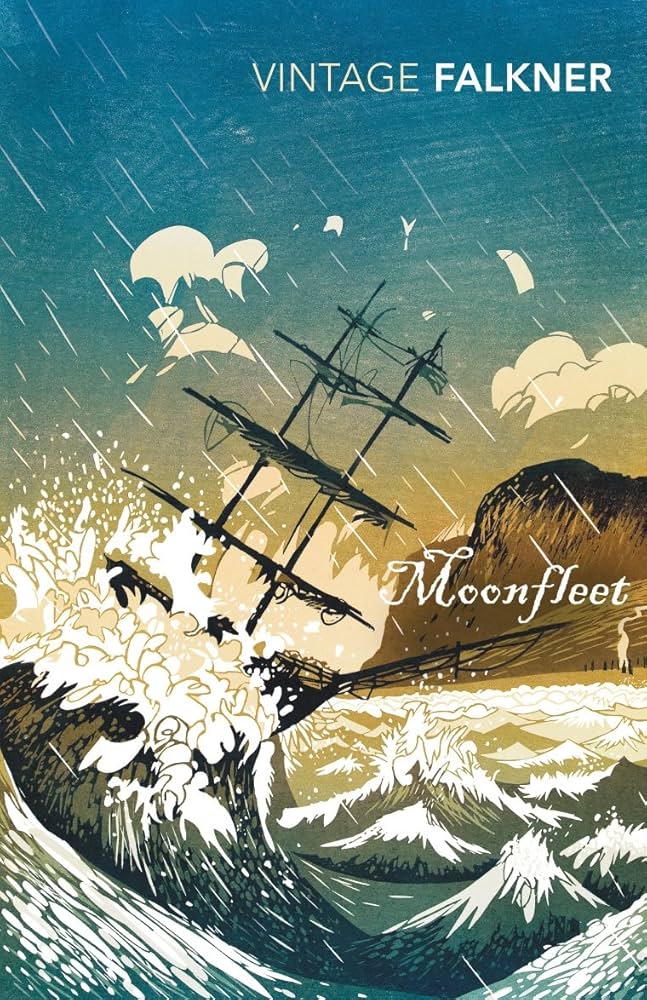
Moonfleet by John Meade Falkner

I added Moonfleet to my Classics Club list after seeing some very positive reviews from other bloggers and thinking it sounded like something I might enjoy. It’s an adventure story and was apparently very popular when it was published in 1898, although it seems to have been overshadowed by similar books like Treasure Island and Kidnapped. Modern authors are still influenced by it, though, such as Alex Preston, who named it as the inspiration for his 2022 novel, Winchelsea.

Moonfleet is set in the 18th century and is narrated by John Trenchard, a fifteen-year-old orphan who lives with his aunt in the village of Moonfleet on the south coast of England. The village takes its name not from the moon but from a prominent local family, the Mohunes. Generations of Mohunes are buried in the family vault under the church, including the notorious Colonel John ‘Blackbeard’ Mohune who once stole a diamond from King Charles I and hid it in a secret location. According to legend, his ghost now walks the churchyard trying to find the hidden jewel.

One night, John Trenchard finds himself accidentally locked in the Mohune vault where he discovers a locket containing a scrap of paper with what appear to be clues to the location of the missing diamond. He also makes another discovery: a group of local smugglers are using the vault as a hiding place for their contraband. He is rescued by two of the smugglers – the innkeeper Elzevir Block and Master Ratsey, the church sexton – and now that he knows their secret, he becomes involved in their smuggling operations. When an encounter with the excisemen ends in violence, John and Elzevir are forced to flee and as they’re unable to return to Moonfleet, they decide to go off in search of Blackbeard’s diamond.

Although this is usually described as a children’s book, like most classics it can also be enjoyed by adults. As it was published in the 19th century, the writing style is naturally very dated now, but I think there should still be enough to keep both older and younger readers interested – as well as the smugglers, hidden treasure and haunted churchyards, there are sea voyages, shipwrecks, coded messages, curses and even a touch of romance (John is in love with Grace, daughter of the novel’s villain, the magistrate Maskew). Later in the book, there’s also a surprising amount of emotional depth as a relationship forms between John, who has grown up without a father, and Elzevir, who has lost a son.

Moonfleet itself is a fictional village, but is based on East Fleet near Chesil Beach in Dorset. The geography of the area plays a big part in the book, with descriptions of the high cliffs, secluded bays and hidden coves that make the coastline ideal for smuggling. It’s just as important to the story as the characters and the plot. I enjoyed the book, although I don’t think it would have been a favourite classic even if I’d read it as a child. Still, I found it entertaining and perfect escapism, which is something I think most of us need now and then! It seems Falkner only wrote two other novels, The Lost Stradivarius and The Nebuly Coat; if you’ve read them, I’d love to know what you thought.

This is book 46/50 from my second Classics Club list.

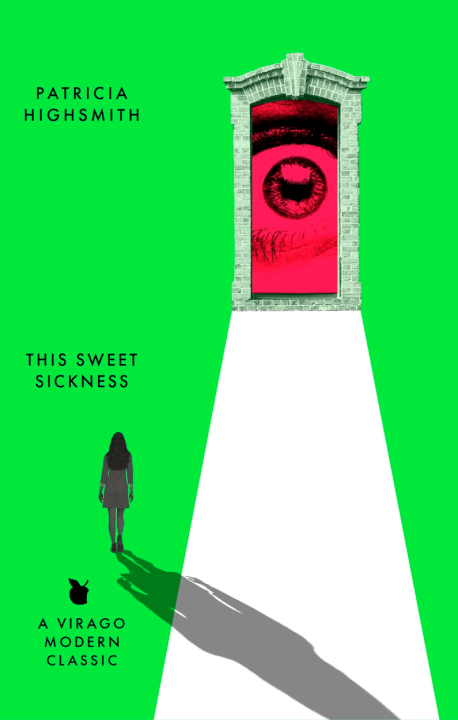
This Sweet Sickness by Patricia Highsmith

Virago have just reissued ten of the books from their Modern Classics range with new green cover designs, including Valley of the Dolls by Jacqueline Susann, Their Eyes Were Watching God by Zora Neale Hurston – and this one, Patricia Highsmith’s This Sweet Sickness. I’ve been meaning to try another Highsmith novel since reading Strangers on a Train a few years ago, so when I spotted this book on NetGalley it seemed the perfect opportunity.

This Sweet Sickness was first published in 1960 and takes us inside the mind of David Kelsey, a young man who lives in a boarding house in the town of Froudsburg, New York, and works as a scientist at a fabrics factory. At least, this is his life from Monday to Friday. When the weekend comes around, David leaves for his own house in nearby Ballard, where he becomes William Newmeister, a freelance journalist. For two whole days he locks himself away and imagines he is happily married to Annabelle, the love of his life. He has decorated the house the way he thinks Annabelle would have wanted it, prepares the meals he’s sure she would like and has even bought her a piano. The only problem is, Annabelle ended their relationship two years earlier and married another man. She and her husband, Gerald Delaney, live in Connecticut with their baby son and Annabelle has never even visited the house in Ballard, let alone lived in it.

David thinks he has successfully covered up his dual identities, having convinced everyone at work and at the boarding house that he visits his elderly mother at her nursing home every weekend. His mother has actually been dead for many years, but he’s sure no one will ever find out! However, two of his friends – a work colleague, Wes Carmichael, and a fellow boarder, Effie Brennan – begin to grow suspicious and decide to investigate. They are right to be concerned, because David is becoming increasingly unstable. He can’t and won’t accept that his relationship with Annabelle is over and bombards her with letters and phone calls, urging her to leave Gerald and marry him. Eventually, things take a more sinister turn and David finds himself in trouble. Is his double life about to be exposed at last?

I loved this book and although the first half is quite slow, I was completely gripped by it all the way through. It’s definitely a disturbing read, though, particularly as the whole book is written from David’s perspective (in third person). I was so impressed by the way Highsmith changed my perception of him several times throughout the book. At first I saw him as a basically decent person who’d had his heart broken and was struggling to move on, then I quickly lost sympathy for him when it became clear how dangerous his obsession was and how relentlessly he was stalking Annabelle, and finally, despite his actions, I began to pity him again because by then he had completely lost his grip on reality and desperately needed help.

Annabelle, although we do meet her occasionally, exists mainly as a fantasy woman in David’s mind and it seems obvious that if he got his wish and married her he would find that the real Annabelle didn’t quite live up to the imaginary one. Annabelle frustrated me because she could have been much more firm with David; instead, at least at first, she seems to be encouraging him, speaking to him on the phone, agreeing to meet him and letting him think there’s still hope. It would have been interesting to have seen things from Annabelle’s perspective, I think. Did part of her still care about David and not want to hurt him? How did she really feel about Gerald?

Effie is another character who interested me. She’s clearly in love with David, but he’s too preoccupied with his delusions and obsessions to pay her much attention. He becomes more and more irritated by her persistence and her ‘spying’, without acknowledging that he is behaving the same way towards Annabelle. Effie and the other characters in the book are seen only through David’s eyes which almost certainly doesn’t give us a true or fair picture of what they are really like.

This Sweet Sickness is an unsettling novel and not very comfortable to read, but it’s also fascinating from a psychological point of view and I found it very immersive. I liked it better than Strangers on a Train and look forward to reading more of Patricia Highsmith’s books.

Thanks to Little, Brown Book Group UK/Virago for providing a copy of this book for review via NetGalley.

The Black Lake by Hella S. Haasse – #WITMonth

Translated by Ina Rilke

Since reading Hella S. Haasse’s In a Dark Wood Wandering, I’ve been looking forward to reading more of her books. This one, The Black Lake, is on both my Classics Club list and 20 Books of Summer list and is also perfect for this year’s Women in Translation Month. Always good when one book counts towards multiple projects!

First published in 1948 as Oeroeg, this book is considered a Dutch classic and is apparently often taught in Dutch schools. Now that I’ve read it, I can see why it would be a popular choice with schoolteachers; it’s a short novella (under 140 pages in my edition so doesn’t take long to read), is written from the perspective of a young protagonist, and deals with the subject of colonialism in Indonesia, formerly the Dutch East Indies.

Our unnamed narrator is the son of a Dutch planter and his wife and grows up on their tea plantation in Preanger (now Priangan), West Java. As a child, he forms a close friendship with Oeroeg, the son of his father’s estate manager, and soon the two are inseparable. The narrator becomes vaguely aware that his parents and their servants disapprove of his attachment to a ‘native boy’, but with the innocence of childhood he has no idea why. However, when Oeroeg’s family is struck by tragedy, his father feels a sense of duty to the boy and reluctantly allows the friendship to continue. It’s only when he and Oeroeg start to attend school that the narrator begins to understand that their lives will never be able to follow the same path and that society has different expectations for each of them. During World War II, he leaves to serve in the Dutch army and on his return he finds that neither Oeroeg nor Indonesia are the same as when he went away.

The Black Lake is a beautifully written book, with lovely, vivid descriptions of the island of Java – the mountains, the rivers and the black lake of the title, Telaga Hideung, where one of the story’s pivotal scenes takes place. Ina Rilke’s English translation flows smoothly and is easy to read, while keeping in place some Dutch words and terms which can be looked up in the glossary at the back of the book if needed.

With the whole story being told from the perspective of a boy from a white Dutch colonial family, it’s both interesting and limiting. If Haasse was writing this book today, I think she would be expected to include the perspective of the oppressed people as well as the colonists – or maybe not write it at all and leave the story for an Indonesian author to tell. But in the context of the 1940s, when it was published, it gives some fascinating insights into the colonial mindset and I’m sure Haasse will have drawn on some of her own experiences and views (she was born in Indonesia herself and spent most of her first twenty years there).

Although I found this a powerful book, it’s not really one that I can say I ‘enjoyed’. The writing style was too dreamlike and distancing for me to fully engage with and the narrator’s story left me with a feeling of sadness. He’s naive, oblivious and looks back on his earlier years with what seems to be a fond nostalgia for an idyllic childhood, with a lack of understanding that, for Oeroeg, it was hardly idyllic at all. Oeroeg is the centre of the narrator’s life, yet there’s no indication that Oeroeg feels the same way or places much value on their friendship. Oeroeg proves to be the most socially and politically aware of the two and eventually the narrator is in the uncomfortable position of having stayed the same while everyone and everything around him has changed.

Of the two Haasse books I’ve read, I preferred the much longer In a Dark Wood Wandering, but am glad I read this one as well. If you’ve read any of her other books which are available in English translations, I’d love to hear your thoughts.

This is book 19/20 of my 20 Books of Summer 2024.

This is also book 45/50 from my second Classics Club list

The Elusive Pimpernel by Baroness Orczy

Since reading Baroness Orczy’s The Scarlet Pimpernel several years ago, I have been slowly working my way through the rest of the Pimpernel series. There are various recommended reading orders – some following publication dates and others attempting to follow an internal timeline – and I’m not sure if I’ve chosen the best route through the series, but The Elusive Pimpernel is the fifth book I’ve read. Like the others, this one revolves around the efforts of the English adventurer known as the Scarlet Pimpernel to rescue aristocrats from the guillotine during the French Revolution.

*If you have not read the first book and would prefer not to know the identity of the Scarlet Pimpernel, you may want to avoid the rest of this review as I can’t really discuss this book without naming him!*

First published in 1908, the novel begins in September 1793 with Citizen Chauvelin, the Scarlet Pimpernel’s arch-enemy, receiving orders from Robespierre in Paris. Having failed to capture the Pimpernel in the past, Chauvelin is being given one last chance. He must go to England as a representative of the Committee of Public Safety, responsible for the interests of French citizens who have settled in England. The real reason for his mission, however, is to hunt down the Scarlet Pimpernel and bring him back to France dead or alive.

As the action switches temporarily to England, we meet a French actress, Désirée Candeille, who has been befriended by Marguerite Blakeney, wife of Sir Percy, the Scarlet Pimpernel himself. Unknown to Marguerite, Désirée is in league with Chauvelin and part of the scheme to lure Sir Percy to France. Will their scheme be successful – and could Marguerite unintentionally be the one to lead her husband into the trap?

Although it’s not quite as good as the original book, The Elusive Pimpernel is probably the best of the sequels I’ve read so far. The plot Chauvelin comes up with to capture Sir Percy is so fiendishly clever I couldn’t see how he was going to find a way out of it. Of course, I knew that he probably would find a way out, because he’s the Scarlet Pimpernel, after all, and there are more books in the series, but it seemed to me that he was well and truly trapped this time! One of the things I like about these books is that Chauvelin is by no means portrayed as a bumbling idiot who is easily outwitted; his plan would almost certainly have succeeded against anybody less brilliant than Sir Percy.

We don’t see very much of the other members of the League of the Scarlet Pimpernel, although we are briefly reunited with some characters from the previous book, I Will Repay (so I would recommend reading that book before this one, if you can). Marguerite, though, plays a big part in the story and is one of our main viewpoint characters. It’s frustrating to see how easily she is manipulated, but she does mean well and her love for Percy isn’t in doubt, so I can forgive her!

Continuing chronologically, the next book for me to read will be Lord Tony’s Wife. Have you read that one – or any of the others in the series?

This is book 14/20 of my 20 Books of Summer 2024.

Book 31/50 for the Historical Fiction Reading Challenge 2024

This is also book 44/50 from my second Classics Club list

A Different Sound: Stories by Mid-Century Women Writers edited by Lucy Scholes

This is a fascinating collection of short stories, all written by women and originally published in the 1940s and 50s. When I saw the list of authors included in the book, there were several I’d already read, others I’d heard of but never read, and a few that were completely new to me. There are eleven stories in total and as always when writing about collections like this, I’ll have more to say about some of them than others!

There’s only one story in this collection that I’ve read before – and that’s The Birds by Daphne du Maurier. As she’s one of my favourite authors, I decided to read it again and found it just as wonderful and atmospheric as I did the first time. Rather than discuss it again here, I’ll direct you to my previous review and will just add that even if you’ve seen the Hitchcock film, I would still recommend reading the story which is quite different in several ways.

Elizabeth Jane Howard is an author I’m familiar with through her Cazalet Chronicles (I’ve read the first two books in the series and am planning to read the others) and she is represented here with Three Miles Up, an eerie story in which two men are taking a trip through the countryside on a canal boat when they encounter a young woman called Sharon. Once Sharon joins them on the boat, things begin to go wrong and they find themselves sailing up a canal that doesn’t appear on any maps. I loved this one, although I wasn’t aware that Howard wrote ghost stories so it wasn’t what I’d expected at all.

The other two authors I’ve read previously are Stella Gibbons and Elizabeth Taylor. The Gibbons story, Listen to the Magnolias, is set during the war and involves an elderly widow nervously awaiting the arrival of five American soldiers who will be billeted in her home, while Taylor’s The Thames Spread Out follows a woman who is trapped upstairs in her house during a flood while swans swim at the bottom of her staircase. I liked both of these, particularly the second.

Apart from The Birds, my favourite story in the book turned out to be The Skylight by Penelope Mortimer, in which a woman and her young son rent a house in a remote area of France but arrive to find the doors all locked and no sign of the owners. The only point of access is an open skylight in the roof and the mother makes a decision she quickly comes to regret. Mortimer creates a real sense of fear and tension in this story and I couldn’t wait to reach the end to find out if everything was going to be okay!

Considering the publication dates, the Second World War naturally plays a part in many of these stories – I’ve already mentioned the Stella Gibbons, but another is Diana Gardner’s wonderful story, The Land Girl, about a young woman placed on a farm as a Land Girl who takes an instant dislike to the woman whose home she is staying in and decides, out of spite and jealousy, to cause trouble for her.

The stories above are the ones that really stood out for me in this collection, but I enjoyed all of them to some extent, apart from maybe Elizabeth Bowen’s Summer Night which I found well written but confusing due to the structure and changing perpectives. I was also slightly disappointed by Sylvia Townsend Warner’s Scorched Earth Policy about an elderly couple preparing for a wartime invasion, simply because it was too short for any real plot or character development. It was nice to discover some authors I’d never come across before, though: Frances Bellerby, who in The Cut Finger tells the story of a little girl learning some important lessons about the world; Inez Holden whose Shocking Weather, Isn’t It? follows a woman who visits her cousin in various different places over the years; and Attia Hosain who explores the feelings of a newly married woman struggling to fit in with her husband’s friends in The First Party.

I can definitely recommend this collection; I found something to interest me in every story, even the ones I didn’t enjoy as much. I also now have a list of authors I need to explore further!

Thanks to Pushkin Press Classics for providing a copy of this book for review via NetGalley.