The Black Lake by Hella S. Haasse – #WITMonth

Translated by Ina Rilke

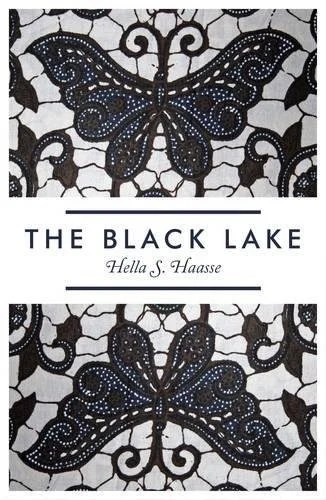
Since reading Hella S. Haasse’s In a Dark Wood Wandering, I’ve been looking forward to reading more of her books. This one, The Black Lake, is on both my Classics Club list and 20 Books of Summer list and is also perfect for this year’s Women in Translation Month. Always good when one book counts towards multiple projects!

First published in 1948 as Oeroeg, this book is considered a Dutch classic and is apparently often taught in Dutch schools. Now that I’ve read it, I can see why it would be a popular choice with schoolteachers; it’s a short novella (under 140 pages in my edition so doesn’t take long to read), is written from the perspective of a young protagonist, and deals with the subject of colonialism in Indonesia, formerly the Dutch East Indies.

Our unnamed narrator is the son of a Dutch planter and his wife and grows up on their tea plantation in Preanger (now Priangan), West Java. As a child, he forms a close friendship with Oeroeg, the son of his father’s estate manager, and soon the two are inseparable. The narrator becomes vaguely aware that his parents and their servants disapprove of his attachment to a ‘native boy’, but with the innocence of childhood he has no idea why. However, when Oeroeg’s family is struck by tragedy, his father feels a sense of duty to the boy and reluctantly allows the friendship to continue. It’s only when he and Oeroeg start to attend school that the narrator begins to understand that their lives will never be able to follow the same path and that society has different expectations for each of them. During World War II, he leaves to serve in the Dutch army and on his return he finds that neither Oeroeg nor Indonesia are the same as when he went away.

The Black Lake is a beautifully written book, with lovely, vivid descriptions of the island of Java – the mountains, the rivers and the black lake of the title, Telaga Hideung, where one of the story’s pivotal scenes takes place. Ina Rilke’s English translation flows smoothly and is easy to read, while keeping in place some Dutch words and terms which can be looked up in the glossary at the back of the book if needed.

With the whole story being told from the perspective of a boy from a white Dutch colonial family, it’s both interesting and limiting. If Haasse was writing this book today, I think she would be expected to include the perspective of the oppressed people as well as the colonists – or maybe not write it at all and leave the story for an Indonesian author to tell. But in the context of the 1940s, when it was published, it gives some fascinating insights into the colonial mindset and I’m sure Haasse will have drawn on some of her own experiences and views (she was born in Indonesia herself and spent most of her first twenty years there).

Although I found this a powerful book, it’s not really one that I can say I ‘enjoyed’. The writing style was too dreamlike and distancing for me to fully engage with and the narrator’s story left me with a feeling of sadness. He’s naive, oblivious and looks back on his earlier years with what seems to be a fond nostalgia for an idyllic childhood, with a lack of understanding that, for Oeroeg, it was hardly idyllic at all. Oeroeg is the centre of the narrator’s life, yet there’s no indication that Oeroeg feels the same way or places much value on their friendship. Oeroeg proves to be the most socially and politically aware of the two and eventually the narrator is in the uncomfortable position of having stayed the same while everyone and everything around him has changed.

Of the two Haasse books I’ve read, I preferred the much longer In a Dark Wood Wandering, but am glad I read this one as well. If you’ve read any of her other books which are available in English translations, I’d love to hear your thoughts.

This is book 19/20 of my 20 Books of Summer 2024.

This is also book 45/50 from my second Classics Club list

The Elusive Pimpernel by Baroness Orczy

Since reading Baroness Orczy’s The Scarlet Pimpernel several years ago, I have been slowly working my way through the rest of the Pimpernel series. There are various recommended reading orders – some following publication dates and others attempting to follow an internal timeline – and I’m not sure if I’ve chosen the best route through the series, but The Elusive Pimpernel is the fifth book I’ve read. Like the others, this one revolves around the efforts of the English adventurer known as the Scarlet Pimpernel to rescue aristocrats from the guillotine during the French Revolution.

*If you have not read the first book and would prefer not to know the identity of the Scarlet Pimpernel, you may want to avoid the rest of this review as I can’t really discuss this book without naming him!*

First published in 1908, the novel begins in September 1793 with Citizen Chauvelin, the Scarlet Pimpernel’s arch-enemy, receiving orders from Robespierre in Paris. Having failed to capture the Pimpernel in the past, Chauvelin is being given one last chance. He must go to England as a representative of the Committee of Public Safety, responsible for the interests of French citizens who have settled in England. The real reason for his mission, however, is to hunt down the Scarlet Pimpernel and bring him back to France dead or alive.

As the action switches temporarily to England, we meet a French actress, Désirée Candeille, who has been befriended by Marguerite Blakeney, wife of Sir Percy, the Scarlet Pimpernel himself. Unknown to Marguerite, Désirée is in league with Chauvelin and part of the scheme to lure Sir Percy to France. Will their scheme be successful – and could Marguerite unintentionally be the one to lead her husband into the trap?

Although it’s not quite as good as the original book, The Elusive Pimpernel is probably the best of the sequels I’ve read so far. The plot Chauvelin comes up with to capture Sir Percy is so fiendishly clever I couldn’t see how he was going to find a way out of it. Of course, I knew that he probably would find a way out, because he’s the Scarlet Pimpernel, after all, and there are more books in the series, but it seemed to me that he was well and truly trapped this time! One of the things I like about these books is that Chauvelin is by no means portrayed as a bumbling idiot who is easily outwitted; his plan would almost certainly have succeeded against anybody less brilliant than Sir Percy.

We don’t see very much of the other members of the League of the Scarlet Pimpernel, although we are briefly reunited with some characters from the previous book, I Will Repay (so I would recommend reading that book before this one, if you can). Marguerite, though, plays a big part in the story and is one of our main viewpoint characters. It’s frustrating to see how easily she is manipulated, but she does mean well and her love for Percy isn’t in doubt, so I can forgive her!

Continuing chronologically, the next book for me to read will be Lord Tony’s Wife. Have you read that one – or any of the others in the series?

This is book 14/20 of my 20 Books of Summer 2024.

Book 31/50 for the Historical Fiction Reading Challenge 2024

This is also book 44/50 from my second Classics Club list

A Different Sound: Stories by Mid-Century Women Writers edited by Lucy Scholes

This is a fascinating collection of short stories, all written by women and originally published in the 1940s and 50s. When I saw the list of authors included in the book, there were several I’d already read, others I’d heard of but never read, and a few that were completely new to me. There are eleven stories in total and as always when writing about collections like this, I’ll have more to say about some of them than others!

There’s only one story in this collection that I’ve read before – and that’s The Birds by Daphne du Maurier. As she’s one of my favourite authors, I decided to read it again and found it just as wonderful and atmospheric as I did the first time. Rather than discuss it again here, I’ll direct you to my previous review and will just add that even if you’ve seen the Hitchcock film, I would still recommend reading the story which is quite different in several ways.

Elizabeth Jane Howard is an author I’m familiar with through her Cazalet Chronicles (I’ve read the first two books in the series and am planning to read the others) and she is represented here with Three Miles Up, an eerie story in which two men are taking a trip through the countryside on a canal boat when they encounter a young woman called Sharon. Once Sharon joins them on the boat, things begin to go wrong and they find themselves sailing up a canal that doesn’t appear on any maps. I loved this one, although I wasn’t aware that Howard wrote ghost stories so it wasn’t what I’d expected at all.

The other two authors I’ve read previously are Stella Gibbons and Elizabeth Taylor. The Gibbons story, Listen to the Magnolias, is set during the war and involves an elderly widow nervously awaiting the arrival of five American soldiers who will be billeted in her home, while Taylor’s The Thames Spread Out follows a woman who is trapped upstairs in her house during a flood while swans swim at the bottom of her staircase. I liked both of these, particularly the second.

Apart from The Birds, my favourite story in the book turned out to be The Skylight by Penelope Mortimer, in which a woman and her young son rent a house in a remote area of France but arrive to find the doors all locked and no sign of the owners. The only point of access is an open skylight in the roof and the mother makes a decision she quickly comes to regret. Mortimer creates a real sense of fear and tension in this story and I couldn’t wait to reach the end to find out if everything was going to be okay!

Considering the publication dates, the Second World War naturally plays a part in many of these stories – I’ve already mentioned the Stella Gibbons, but another is Diana Gardner’s wonderful story, The Land Girl, about a young woman placed on a farm as a Land Girl who takes an instant dislike to the woman whose home she is staying in and decides, out of spite and jealousy, to cause trouble for her.

The stories above are the ones that really stood out for me in this collection, but I enjoyed all of them to some extent, apart from maybe Elizabeth Bowen’s Summer Night which I found well written but confusing due to the structure and changing perpectives. I was also slightly disappointed by Sylvia Townsend Warner’s Scorched Earth Policy about an elderly couple preparing for a wartime invasion, simply because it was too short for any real plot or character development. It was nice to discover some authors I’d never come across before, though: Frances Bellerby, who in The Cut Finger tells the story of a little girl learning some important lessons about the world; Inez Holden whose Shocking Weather, Isn’t It? follows a woman who visits her cousin in various different places over the years; and Attia Hosain who explores the feelings of a newly married woman struggling to fit in with her husband’s friends in The First Party.

I can definitely recommend this collection; I found something to interest me in every story, even the ones I didn’t enjoy as much. I also now have a list of authors I need to explore further!

Thanks to Pushkin Press Classics for providing a copy of this book for review via NetGalley.

Count Luna by Alexander Lernet-Holenia

Translated by Jane B. Greene

What a strange book this is! I enjoyed it, but I’m not sure I fully understood everything the author was trying to say. It’s the first book I’ve read by Alexander Lernet-Holenia and I’m definitely now interested in reading more.

Count Luna was first published in German in 1955 (Lernet-Holenia was an Austrian author) and appeared in an English translation by Jane B. Greene a year later. It has recently been published in a new edition by Penguin Classics.

The novel begins with Alexander Jessiersky, an Austrian aristocrat, entering the Catacombs of Praetextatus in Rome, apparently in search of two French priests believed to have vanished somewhere in the underground passageways. When Jessiersky himself also fails to emerge from the catacombs, his disappearance is reported to the police, who link him with a series of incidents which occurred in Austria and are still under investigation. The rest of the book is presented as an account of Jessiersky’s life leading up to the disappearance, based on reports by the Italian and Austrian authorities.

We learn that at the start of World War II, Jessiersky is the head of a large Viennese transport company. When the company tries to purchase some land belonging to Count Luna, who refuses to sell, the board of directors come up with a plan to confiscate the land and have Luna sent to a Nazi concentration camp. Jessiersky himself is not involved in this, but does nothing to prevent it from happening – and so, when the war is over, he begins to worry that Luna has survived the camp and is coming back to take his revenge.

On one level, Count Luna could be described as a psychological thriller; told mainly from Jessiersky’s perspective, there’s a growing sense of paranoia and fear as he becomes convinced that Count Luna is following him around Vienna, watching from the shadows, breaking into his house and even trying to poison his children. Whether any of these things are true or only exist in Jessiersky’s imagination I’ll leave you to discover for yourself. The atmosphere becomes very dark and the feeling of tension increases as the novel heads towards its conclusion and Jessiersky enters the catacombs – and from this point the story becomes quite bizarre and even more nightmarish.

At 160 pages, Count Luna is a short novel, but took longer than I expected to read as there are some long, detailed digressions into subjects such as the lineage of the Jessiersky family, which need some concentration from the reader (and don’t really add a lot to the story as a whole). Apart from the references to the war, it felt more like a book written in the 19th century than one written in the 1950s. The war is a crucial part of the story, however, and I’ve seen reviews suggesting that Lernet-Holenia was drawing parallels between Jessiersky’s guilt over Luna’s fate and Austria’s own post-war guilt, which does make a lot of sense. I also think the name Luna (the moon) is no coincidence, as Jessiersky discovers that trying to escape from Luna – and therefore from his guilt – is as useless as trying to escape from the moon.

Although I didn’t love this book as much as I thought I was going to at the beginning, I did find it completely fascinating and it left me with a lot to think about.

Thanks to Penguin Classics for providing a copy of this book for review via NetGalley.

The Trumpet-Major by Thomas Hardy

I love Thomas Hardy so was pleased when The Trumpet-Major was chosen for me in the recent Classics Club Spin. The deadline for finishing our Spin books was 3rd March, but I’m late as usual!

First published in 1880, The Trumpet-Major is set in Hardy’s fictional Wessex during the Napoleonic Wars (making it his only historical novel). Beginning in 1804, it follows the story of Anne Garland and her three suitors: miller’s son John Loveday, who is the Trumpet Major of the title; his brother Bob, a sailor whom Anne has secretly loved since she was a young girl; and Festus Derriman, nephew of the local squire. Anne’s mother, who marries Miller Loveday, would prefer Anne to pick Festus, but it quickly becomes obvious to the reader that he is spiteful and cowardly and that Anne’s choice will be between Bob and John.

With John being a soldier and Bob a sailor in the merchant navy, they each have to spend long periods of time away from home, allowing Anne to grow closer to the other in his absence. It’s difficult to know which, if either, she will eventually accept; John is a typical loyal, steadfast Hardy hero, but Bob, although more immature and less trustworthy, is clearly the one she has lost her heart to. There are lots of twists and turns along the way as the situation becomes complicated by misunderstandings, the arrival of another woman, and the scheming of Festus Derriman. There’s a subplot involving Squire Derriman – known as Uncle Benjy – who is looking for a place to hide his will, but otherwise the novel never really loses its focus on Anne and the three young men, which makes the story easy to follow and, for a Victorian novel, relatively short and quick to read.

The action all takes place in and around Budmouth, a fictional town based on Weymouth on the Dorset coast. This is not a military novel, despite the title and the occupations of two of the main characters, but it plays out against a backdrop of the Napoleonic Wars and the people of Budmouth live in fear of a French invasion at any minute. It’s quite a light story, in comparison with Hardy’s more famous tragedies like Jude the Obscure and Tess of the D’Urbervilles, but the constant threat of war gives it a more serious tone than it would otherwise have had, and there are some dramatic episodes such as a false alarm which causes Anne’s village to begin evacuating in panic and the arrival of a naval press gang.

The Trumpet-Major has a happier ending than many of Hardy’s other books, but I didn’t personally find it very satisfying and would have preferred it to end in a different way. Still, I enjoyed this book and although I would definitely describe it as one of his lesser novels, I can honestly say that I haven’t yet read anything by Hardy that I didn’t like! I only have two of his novels left to read and they are probably his most obscure ones – The Well-Beloved and The Hand of Ethelberta – so I’ll be curious to find out what I think of those two.

This is book 43/50 read from my second Classics Club list.

Book 11/50 for the Historical Fiction Reading Challenge 2024

Nicholas Nickleby by Charles Dickens

Nicholas Nickleby was the book chosen for me to read in the Classics Club Spin back in October 2023. It has taken me until now to finish it, partly because it’s a book with over 800 pages and also because I started to find it a bit tedious halfway through and kept putting it aside to read something else. I’m sorry to have to say that, as I know a lot of people consider it a favourite and I really did want to love it, but I just couldn’t. However, I did still find a lot to like, so I certainly don’t feel that I wasted my time reading it!

Originally published as a serial from 1838 to 1839, this is one of Dickens’ earliest novels and is very episodic, lacking any real overarching plot, (which I think is probably one of the reasons I had problems staying engaged with it – and the reason I have so far been avoiding The Pickwick Papers!). Therefore it’s difficult to give a summary, but I think all you really need to know is that at the beginning of the book Nicholas Nickleby’s father dies, leaving Nicholas, his mother and his sister Kate penniless and dependent on Uncle Ralph for support. Ralph is a rich but cold, uncaring man who has little compassion for his late brother’s wife and children. He finds Nicholas a low-paid position as an assistant at Dotheboys Hall, a grim and unpleasant school in Yorkshire, while Kate remains under his own ‘protection’ in London…

The most compelling part of the novel, I thought, was the section set at Dotheboys Hall, where Nicholas finds himself working for the evil Wackford Squeers, who claims to be a ‘schoolmaster’, although it quickly becomes obvious that the establishment he is running is not so much a school as a home for unwanted, neglected boys and that Squeers treats them harshly, starving and beating them. Dickens always includes a lot of social commentary in his novels and here he is clearly drawing attention to the terrible conditions found in 19th century boarding schools; apparently he personally visited Yorkshire in early 1838 to do some background research. It’s interesting to compare his portrayal of Dotheboys to Charlotte Brontë’s Lowood School in Jane Eyre. I was sorry that this only formed a relatively small portion of the novel, although it’s important not only for the social history, but also because it introduces Smike, a frail, badly abused young man whom Nicholas rescues from the school and who becomes his loyal friend and the heart of the most emotional scenes in the book.

I also enjoyed the episode where Nicholas, having fled Yorkshire, travels to Portsmouth and joins an acting troupe, run by the actor-manager Vincent Crummles. A lot of time is devoted to introducing the other members of the company – including Crummles’ daughter, the ‘Infant Phenomenon’, who has been acting in child roles for so long she can’t possibly still be an infant! – and although none of this really has much relevance to the rest of the book, I always like theatrical settings so I found it entertaining. Unfortunately, there were other subplots and characters that didn’t interest me at all, such as the Kenwigs family, Mr Lillyvick and Miss Petowker, and the implausibly saintly Cheeryble brothers. This is a book where the good characters are very good and the bad ones are very bad – although Uncle Ralph at least does have some nuance. I liked both Kate and Nicholas (who definitely fall into the ‘good’ category) and while Dickens isn’t really known for writing strong female characters, Kate is more sensible than some of his others.

This hasn’t become a favourite Dickens, then, but I’m still pleased to have read it! Now I can move on to my next Classics Club Spin book, The Trumpet-Major by Thomas Hardy.

This is book 42/50 read from my second Classics Club list.

Silence by Shūsaku Endō

Translated by William Johnston

One of my resolutions for 2024 is to read more historical fiction in translation and where better to start than with a book for the Japanese Literature Challenge (hosted by Dolce Bellezza throughout January and February).

First published in Japanese in 1966 and in English in 1969, Shūsaku Endō’s Silence is set in the 17th century and tells the story of a Portuguese Jesuit priest, Sebastian Rodrigues, who travels to Japan to investigate claims that his old mentor, Father Ferreira, has committed apostasy – in other words, renounced his faith. Rodrigues and his friend Francisco Garrpe, another priest, can’t believe that their teacher would do such a thing. Certain that there must be some mistake, the two set out from Lisbon on the long journey to Japan, where they hope to learn what has really happened to Ferreira.

Rodrigues and Garrpe reach Japan in 1639 and quickly discover that the local Christian communities are being persecuted and forced to hide their religion from the authorities. Anyone the officials suspect of being a Christian is told to trample on an image of Christ, known as a fumie, and if they refuse they are imprisoned and tortured by being suspended upside down over a pit. On his arrival in Japan, Rodrigues goes into hiding with the other Christians, carrying out his missionary work and helping them to worship in secret, but he knows it’s only a matter of time before he is caught and has his own faith put to the test.

Silence is both beautifully written and beautifully translated. From beginning to end, I was completely immersed in another time and place; there’s no jarringly modern language to pull the reader out of the story and everything feels authentic and real. I was intrigued by Endō’s decision to write the novel from the perspective of Rodrigues (first in the form of letters written by the priest and then in the third person) rather than the Japanese Christians and it was interesting to see how Endō viewed his country, its people and its customs through the eyes of a stranger.

I am not a particularly religious person but you don’t need to be to be able to appreciate this novel. I was very moved by the internal struggles Rodrigues faces as he begins to question why God is remaining silent in the midst of so much torture and persecution and whether renouncing his faith, under certain circumstances, could actually be the right thing to do if it helps alleviate the suffering of others. As you can imagine, it’s quite a bleak story, but I loved it and although it’s only been a few days since I finished it, I don’t think it’s a book I’ll ever forget. I would like to try more of Endō’s work and am pleased to see that some of his other novels are also available in English translations.

I read this book for the Japanese Literature Challenge 17 and the Historical Fiction Reading Challenge.