A Long Fatal Love Chase by Louisa May Alcott

Until recently I hadn’t realised what a diverse writer Louisa May Alcott was. Like many people I read Little Women and its sequels as a child – and Little Women is still one of my favourite books – but I never thought about exploring her other fiction until now. A Long Fatal Love Chase is a suspense novel, written in 1866 but never published in Alcott’s lifetime (it was eventually published in 1995). I didn’t even know Alcott had written books like this, so I’m glad I have now been enlightened!

Rosamond Vivian, eighteen years old at the beginning of the novel, lives with her cold-hearted grandfather in a mansion on a remote island. Bored and lonely, feeling unloved by her grandfather, Rosamond longs for some adventure in her life. When she loses her temper with the old man one day and tells him she would gladly sell her soul to Satan for a year of freedom, it seems that her wishes are about to come true.

That same day, Phillip Tempest arrives (during a storm, of course) to do some business with Rosamond’s grandfather. Tempest, who we are told resembles a painting of the demon Mephistopheles, is handsome, charming and surrounded by an aura of mystery. Rosamond is instantly attracted to him and soon Tempest sweeps her away with him on his yacht. But Rosamond’s happiness doesn’t last for long. When she makes some shocking discoveries about Tempest she decides to leave him…but it seems Tempest is not prepared to let her go.

The rest of the story is, as the title suggests, a long and fatal love chase in which Rosamond flees across France, Germany and Italy from chateau to convent to asylum with Tempest never far behind. The tension builds and builds; almost every chapter ends on a cliffhanger as Rosamond finds herself in danger yet again. With Tempest growing more and more obsessed and increasingly devious in the methods he uses to track down her hiding places, will Rosamond ever be able to escape?

As you’ll be able to tell by now, A Long Fatal Love Chase is not like Little Women at all, but that shouldn’t be a problem as long as you’re not expecting it to be (which I wasn’t). Just be aware of its sensational nature and be prepared for something over-the-top and melodramatic. There’s a lot of symbolism too and as well as the Mephistopheles reference I mentioned earlier there are many other allusions to mythology, art and literature, particularly Shakespeare – with a character whose name is Tempest, I suppose that’s not surprising!

If you have read Little Women and remember Jo writing her novels, it’s easy to imagine Jo sitting in her garret writing a story like this and persuading Meg, Beth and Amy to act out some of the scenes with her! It wasn’t the best book of this type that I’ve read, especially in comparison to the more complex sensation novels written during the same period by Wilkie Collins, Mary Elizabeth Braddon or Ellen Wood, but it was still exciting, entertaining and also quite daring for its time, with its themes of obsession and stalking. It has a lot in common with early gothic novels by authors such as Ann Radcliffe too, though with the advantages that this one is easier to read and Rosamond is a stronger character than the heroines of Radcliffe’s books.

Apart from Rosamond, the other characters in the novel are less well-developed and tend to represent either the good side of human nature (the priest who becomes Rosamond’s friend and confidant) or the bad (Tempest). From the moment he first appears in the novel, Tempest is such an obvious villain and there are so many hints and so much foreshadowing, that it’s easy for us, as the reader, to know that he is not to be trusted. Rosamond is a young, naïve girl (though not without a lot of courage and spirit) being taken advantage of by a ruthless and manipulative older man, and it takes her a lot longer than it takes the reader to discover that something is not right. But despite so much of the plot being predictable, some of the twists did still take me by surprise and the ending was not quite what I had expected either!

If you’ve enjoyed this book, I would also recommend Nine Coaches Waiting by Mary Stewart – although they were written almost 100 years apart I thought they had a very similar feel.

Classics Challenge November Prompt

This year I have been taking part in a Classics Challenge hosted by Katherine of November’s Autumn. Every month Katherine has posted a prompt to help us discuss the classic novels we are reading.

I have enjoyed taking part in the challenge and although I haven’t managed to answer all of the prompts, I did want to respond to this one as it provides a sort of summary of the year’s reading, encouraging us to look back at all the classics we have read in 2012.

Here are this month’s questions and my answers:

Of all the Classics you’ve read this year is there an author or movement that has become your new favorite? Which book did you enjoy the most? Or were baffled by?

It’s not exactly a movement, but it seems that a lot of the classics I’ve been drawn to this year have been what I would describe as swashbuckling adventure novels: Scaramouche by Rafael Sabatini, The Scarlet Pimpernel by Baroness Orczy, The Prisoner of Zenda by Anthony Hope and Ivanhoe by Sir Walter Scott. I would like to read more books by all of these authors, especially Sabatini and Scott.

I also enjoyed Jerome K. Jerome’s Three Men on the Bummel (though not as much as one of my favourite books from last year, Three Men in a Boat) and my two Austen re-reads (Mansfield Park and Emma).

I can’t say I’ve been baffled by any of the classics I’ve read this year, but the one I found the most challenging to read was A Farewell to Arms by Ernest Hemingway, purely because I didn’t like the style of his writing.

Who’s the best character? The most exasperating?

My favourite character from the classics I’ve read this year is definitely Andre-Louis Moreau, the hero of Scaramouche. I also liked Joe Gargery in Great Expectations – Dickens’ novels are always filled with memorable characters and I remember writing about Joe in response to one of the first Classic Challenge posts of the year.

The most exasperating has to be Sylvia from Sylvia’s Lovers by Elizabeth Gaskell. I was irritated by her silliness in the first half of the book and although she did start to mature after that, she still continued to frustrate me with some of the decisions she made.

From reading other participants’ posts which book do you plan to read and are most intrigued by?

The Mill on the Floss seems to have been a popular choice for the Classics Challenge and I definitely want to read that one soon. Vanity Fair, The House of Mirth, The Heir of Redclyffe and East of Eden are other books I’ve added to my list for 2013 after reading other participants’ posts.

Have you read any of the books I’ve mentioned in this post? Are there any more classics you think I really need to read next year?

The Prisoner of Zenda by Anthony Hope

At the beginning of The Prisoner of Zenda, twenty-nine-year-old English gentleman Rudolf Rassendyll is leading a quiet, comfortable life in London, not working or doing anything at all, to the annoyance of his sister-in-law, Rose. To keep her happy, Rudolf agrees to accept a position working for the ambassador Sir Jacob Borrodaile, but finding himself with some free time before he starts his new job, he decides to visit the small European country of Ruritania to see the coronation of their new King.

Ruritania is almost, but not quite, a fantasy world. You won’t find it on a map – it’s a fictitious kingdom located somewhere in central Europe – and although there are no magical creatures, wizards, monsters or dragons, it is still a place where strange and unexpected things can and do happen. Soon after arriving there, Rassendyll meets his exact double – the man who is about to be crowned King of Ruritania, whose name also happens to be Rudolf. The likeness is explained by the fact that the two Rudolfs are distant cousins and both have the long, sharp, straight nose and dark-red hair that appear every few generations.

On the eve of his coronation, the King is drugged by his villainous half-brother, Black Michael, the Duke of Strelsau, who is hoping to steal both the King’s throne and the woman he is going to marry, the beautiful Princess Flavia. With the King unconscious and unable to appear at the coronation, his attendants persuade Rassendyll to impersonate the King at the ceremony. The coronation goes ahead as planned, but Rudolf’s impersonation doesn’t end there – the real King has been kidnapped and imprisoned in a castle in the town of Zenda. Rassendyll must continue to take his place until he is rescued, but things become more and more dangerous for Rudolf as he finds himself caught in the plots and schemes of Black Michael and his henchman Rupert of Hentzau. And as if life wasn’t already complicated enough, he also begins to fall in love with Princess Flavia…

I put this book on my list for the Classics Club, intending to read it at some point in the next few years, but I didn’t really know what it was about and was in no hurry to get to it. Then I read Lisa’s review and it sounded so exactly like the kind of book I would love that I was inspired to move it straight to the top of my list. Having somehow managed to go through life without seeing any of the film versions, I didn’t know anything about the plot, though as I read the book parts of it did feel familiar, maybe because it has been the inspiration for so many other adventure stories.

The Prisoner of Zenda was written near the end of the Victorian period, in 1894, though I found it a lot lighter and easier to read than most Victorian novels. It’s also a very short novel (only around 200 pages in the edition I read) but the kingdom of Ruritania, with its woods, castles and palaces, and the people who inhabit it are well developed and unforgettable. One of my favourite characters was Rupert, so I was pleased to discover there is a sequel, Rupert of Hentzau, which I’m looking forward to reading.

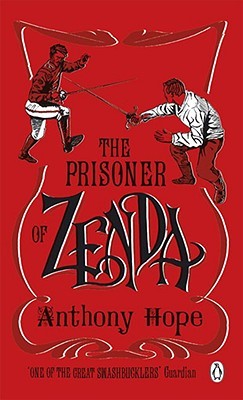
“One of the great swashbucklers” it says on the cover of the Penguin Classics edition of this book, and I would agree, although I did prefer Scaramouche by Rafael Sabatini and The Scarlet Pimpernel by Baroness Orczy, both of which I read this year and loved. 2012 seems to be turning into the year of the swashbuckler for me, doesn’t it? I did still enjoy this one though; it was entertaining, fast-paced and a lot of fun to read. I recommend saving it for a dull, dreary afternoon when you want nothing more than to be whisked away to a world of action, adventure, kings, princesses, evil brothers, mistaken identities, swordfights, romance, castles, kidnappings and daring escapes!

A Farewell to Arms by Ernest Hemingway

I’ve never read anything by Ernest Hemingway before, partly because he’s one of those classic authors I’ve always felt intimidated by, but when I was offered a review copy of this beautiful new hardback edition of A Farewell to Arms (with a cover image replicating the original 1929 cover and lots of additional material) it seemed a perfect opportunity to give one of his books a try.

A Farewell to Arms is narrated by Frederic Henry, an American ambulance driver who is serving as a Lieutenant (or ‘Tenente’) in the Italian army during the Italian Campaign of World War I. Early in the story he meets a British nurse, Catherine Barkley. When Henry is injured by a mortar shell he has to spend some time in hospital and during this period his relationship with Catherine develops. What will happen when it’s time for him to return to the front? Part love story, part war story, this novel is based on Ernest Hemingway’s own experiences in the Italian ambulance corps where, like Henry, he was injured and fell in love with one of the nurses at the hospital. The fact that the story is semi-autobiographical gives it a realistic, unsentimental feel.

Hemingway’s writing style is very simple and direct, he gets straight to the point and avoids flowery language and long, detailed descriptions (though he still manages to choose just the right words to evoke the settings he is writing about). You might think that such plain, simple prose would be easy to read but for me, the opposite was true; it was distracting and it took me a long time to get used to it. Some passages are written in an almost stream-of-consciousness style, which is something I often struggle with, and there are also lots of very long sentences consisting of a string of short clauses all joined together by the word ‘and’. His writing is very distinctive and you’ll either like it or you won’t.

Hemingway rarely tells us anything that is not completely essential to the plot and so I finished the book feeling that I never really got to know either Henry or Catherine – neither of them are described in any great detail, we are only given very basic information about their backgrounds, and we aren’t even told the narrator’s name until several chapters into the book. Instead it is left to us to read between the lines, work things out for ourselves and use our imagination, and I think it’s intentional that we are told so little about the lives of Catherine and Henry before the war. However, the fact that the characters were not fully fleshed out meant that Catherine in particular didn’t feel like a real three-dimensional person; I liked her, but seen through Henry’s eyes she was very sweet and submissive, and it would have been nice to have had more insight into her personality.

Frederic Henry’s narrative style is detached and factual, almost as if things are happening at a distance and as if he sometimes feels very disconnected from the events going on around him. This works though, because it helps to portray the futility and harsh reality of war, and it reflects the way Henry feels; he is a person who has seen so many terrible things they no longer have such an emotional effect on him. The problem with the combination of terse writing style and detached narrative voice is that it made it hard for me to form any kind of emotional attachment to the characters, but the story was still quite poignant and moving in places, especially the final chapter.

Apparently Hemingway wrote the ending of the book thirty-nine times before he was satisfied with it. This new edition of the book includes an appendix with the text of all thirty-nine different endings. I read some of them, though not all (I think this type of supplementary material might be of more interest to someone who is studying Hemingway or considers themselves a fan of his work rather than to a first-time reader like myself) and although I did like some of the alternate endings, in my opinion the one he finally settled on was probably the right choice. I had tears in my eyes at the end and I’ve always thought that if an author can make me cry he or she must have done something right!

I’m not sure if I’ll want to read more Hemingway novels in the future but I’m glad I’ve had the chance to try this one and have now had some experience of an author I had heard so much about.

Thanks to William Heinemann for the review copy of A Farewell to Arms

Classics Challenge October Prompt: Chapter Musings

This year I have been taking part in a Classics Challenge hosted by Katherine of November’s Autumn. Every month Katherine posts a prompt to help us discuss the classic novel we are currently reading. The prompt for October is:

Chapter Musings

Jot down some notes about the chapter you’ve just read or one that struck you the most. It can be as simple as a few words you learned, some quotes, a summary, or your thoughts and impressions.

The classic I’m reading at the moment is A Farewell to Arms by Ernest Hemingway, the story of an American ambulance driver on the Italian front during World War I. This is the first Hemingway book I’ve read and I wasn’t sure what to expect, as he seems to be one of those authors people either love or hate. I’m only seven (very short) chapters into the book so it’s really too early to tell, but so far I’m finding it a lot more readable than I had thought it would be.

Chapter 1, which is the chapter I’ve chosen to focus on for the purposes of this post, is less than two pages long yet it has a lot of significance as it sets the scene and the tone of the novel. We learn almost nothing about our narrator in these two pages, not even his name, and although it’s obvious that he is involved with the army in some way, he seems very detached from what is going on around him.

“Troops went by the house and down the road and the dust they raised powdered the leaves of the trees. The trunks of the trees too were dusty and the leaves fell early that year and we saw the troops marching along the road and the dust rising and leaves, stirred by the breeze, falling and the soldiers marching and afterward the road bare and white except for the leaves.”

I’ve included the quote above because I think it’s a good example of Hemingway’s writing style. He uses simple, direct language and seems to like stringing together very long sentences using the word ‘and’! He also manages to paint vivid pictures of his settings while avoiding flowery descriptions. I’m not sure yet whether I like his writing or not, but I’ll see how I feel after reading a whole book written in this style.

Chapter 1 ends with the following two sentences:

“At the start of the winter came the permanent rain and with the rain came the cholera. But it was checked and in the end only seven thousand died of it in the army.”

The Princess of Cleves by Madame de Lafayette

First published in French in 1678, The Princess of Cleves (or La Princesse de Clèves to give it its French title) is considered to be one of the first psychological novels. The story is set in the previous century (between 1558 and 1559), which also makes it an early example of the historical fiction novel.

Newly arrived at the court of Henri II, the beautiful Mademoiselle de Chartres catches the eye of the Prince of Cleves and they are soon married. The new Princess of Cleves does not love her husband, but she likes and respects him and for a while it seems that might be enough…until she meets and falls in love with the Duc de Nemours. The rest of the book explores the Princess’s conflicting emotions, as she becomes torn between her passionate love for the Duc and her desire to stick to her morals and do what she believes is right. Eventually the Princess faces an important decision, but the choice she makes is maybe not what you would expect and it’s left to the reader to make up their own mind whether they agree with her actions or not.

This book was of particular interest to me because earlier this year I read Queens’ Play by Dorothy Dunnett, which is set at the French court in the middle of the 16th century. The Princess of Cleves is set at the same court during the same period and so it was filled with names I recognised. The title character and her mother are fictional but the others are real historical figures: Henri II and his wife Catherine de’ Medici, Diane de Poitiers (the Duchess de Valentinois), the Constable de Montmorency, the Mareschal de St. Andre, the Prince of Conde, the Vidame of Chartres, the Duke de Guise and his brothers, as well as the Dauphin and his wife, Mary Queen of Scots. I think the fact that I was already familiar with these characters made the opening pages of this book slightly less overwhelming than they might otherwise have been! And luckily, only a few of the people mentioned play an important part in the story, so it’s not necessary to keep track of all of them.

If you can get past the first section, which is little more than a long list of names and descriptions of the relationships between the various courtiers, the story does start to pick up. It all appears to be very accurate historically, although not much attention is given to the important historical events of the period – this is a character driven story with the focus on the actions of the Princess, her husband and the Duc de Nemours. The court of France at that time was known for being frivolous, decadent and rife with romantic intrigue and gossip, and the author manages to capture these aspects of court life. However, having read about the background to the novel, it seems Madame de Lafayette was also commenting on the behaviour and structure of the court of her own time, Louis XIV, which I know less about so am not sure how similar or different the two courts were.

The Princess of Cleves is not a book I would recommend if you’re looking for an entertaining read with an exciting plot, but if you enjoy French literature and history or if you’re interested in the development of the early novel then I think it’s definitely worth reading. It’s a short novel and doesn’t take too long to read, though it does require some concentration, especially at the beginning. I found the writing very dry, though maybe that’s my own fault for reading the free version from Project Gutenberg rather than searching for a better translation. As I’m not able to read it in its original French, which would obviously be the best option, I’d appreciate any opinions as to which translation I should try if I decide to re-read the book at some point in the future.

The Strange Case of Dr Jekyll and Mr Hyde by Robert Louis Stevenson

The problem with reading The Strange Case of Dr Jekyll and Mr Hyde in the 21st century is that most of us probably already know what the story involves. Even without having read it or seen any of the film versions, everyone knows what is meant by a ‘Jekyll and Hyde personality’. And this completely takes away the suspense and air of mystery that the story relies on so heavily. I’m sure the original Victorian readership would have found the connection between Dr Jekyll and Mr Hyde much more shocking! So is there still any point in reading it? Yes, I thought there was, because although I knew what the ultimate revelation would be, I didn’t know all the details of the plot or how the conclusion would be reached.

We first see Dr Henry Jekyll and Edward Hyde through the eyes of Jekyll’s friend and lawyer, Mr Utterson, who becomes concerned when he discovers that Jekyll has made a new will leaving everything to Mr Hyde. All Mr Utterson knows about Hyde is that he’s a sinister and brutal man responsible for some cruel and unprovoked acts of violence. The first half of the book follows the lawyer’s attempts to learn more about Hyde and his relationship with Jekyll. It’s only as we approach the end of the story that we hear from Dr Jekyll himself, in the form of a letter addressed to Mr Utterson, and the truth is finally revealed.

The story is cleverly structured so that if you had no idea what was coming, you would be kept wondering, knowing only as much as Mr Utterson knows, and it’s disappointing that for most modern readers the surprise has been spoiled. The part of the story I found the most interesting was the final chapter, after the secret has been uncovered and Jekyll gives his own explanation of what happened and his views on the good and the evil aspects of human nature. We can really feel his desperation as his own dark side grows stronger and things begin to spiral out of his control.

The edition I read contained just the novella The Strange Case of Dr Jekyll and Mr Hyde; other editions include a selection of other Stevenson short stories. Jekyll and Hyde on its own was only 88 pages long and if I’d realised how short it was I would have made time to read it earlier. This was one of my choices for RIP VII, and I would recommend it to other RIP participants who would like to read an important piece of classic Victorian fiction without committing to a full-length novel. I can’t say that I loved it and it’s not something I would want to read again, but I’m glad I’ve read it once and can see why it has become a part of popular culture.