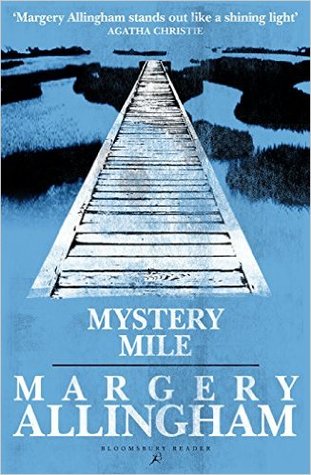
Mystery Mile by Margery Allingham

mystery-mile I often seem to be in the mood for reading mysteries at this time of year and as this one had been on my TBR for months, I found myself reaching for it the week before Christmas. I had read Margery Allingham before – one of her standalones, The White Cottage Mystery, which I enjoyed – and was curious to make the acquaintance of her most famous character, Albert Campion. Mystery Mile is the second in the Campion series, but I had been assured that it wouldn’t matter too much if I didn’t read the books in order.

Mystery Mile opens with an American judge, Crowdy Lobbett, sailing across the Atlantic with his son and daughter, having narrowly escaped several recent attempts on his life. When a further attempt takes place aboard the ship – and is thwarted thanks to a young man with a pet mouse – it is obvious that the gang who want Judge Lobbett dead are still on his trail. On arriving in England, the judge accepts the help of Albert Campion, who brings him to stay with his friends, Biddy and Giles Paget, at their home in Mystery Mile, a small, remote village on the Suffolk coast.

Campion hopes that Judge Lobbett and his children – Marlowe and Isopel – will be safe in the Paget’s house, but when a fortune teller pays a visit and shortly afterwards the village rector is found dead, it becomes clear that they are still not out of danger. Campion and his friends must try to interpret a range of intriguing clues including a red knight from a chess set and a suitcase full of children’s books if they are to solve the mystery and deal with the threat to the judge.

I had mixed feelings about my first Albert Campion novel. I loved the beginning, with the opening scenes on the ship – I thought the way in which Allingham introduced Campion into the story was excellent – and I enjoyed watching the story develop as the group arrived in Mystery Mile and one strange occurrence followed another. The setting is perfect: a mist-shrouded village surrounded by dangerous soft mud which acts like quicksand and a lonely manor house with a garden maze in which it appears that people can disappear without trace. Later, though, when the action moves to London for a while and we meet an assortment of criminals and gang members, the novel loses the quirky country-mystery feel it has at the beginning and I found that the second half of the novel has a very different tone from the first.

As for the character of Albert Campion himself, I couldn’t decide what to think of him! I liked the fact that there is clearly a lot more to him than meets the eye – his relationship with the police is never quite explained, and there are even hints that Albert Campion is not his real name. Although there was something about his constant quips and silly behaviour that I found slightly irritating, I was intrigued because it was obvious that his foolish, flippant public persona is designed to hide his true thoughts and his true intelligence. I can see why he is sometimes compared with Dorothy L. Sayers’ Lord Peter Wimsey, but based on what I’ve read of both so far, I prefer Sayers and Wimsey. Still, I’m looking forward to reading more books in this series and to meeting Albert Campion again!

The Poisoners by Marjorie Bowen

The Poisoners I have read several novels by Marjorie Bowen this year and this is one of my favourites so far. First published in 1936, The Poisoners originally appeared under one of her other pseudonyms, George Preedy, and now that I’ve read it I can see why she chose to use a different name for this one. Although this book, like the others I’ve read, is set in the past, it is more of a mystery/thriller which should appeal to readers of vintage crime as well as to fans of historical fiction.

The story takes place in 17th century Paris during the reign of the Sun King, Louis XIV, and revolves around a famous murder scandal known as L’affaire des poisons (Affair of the poisons). Our hero is Charles Desgrez, newly arrived in Paris with his wife, Solange, to take up a position as Lieutenant of Police and keen to make a name for himself. At the beginning of the novel, the couple are attending a party for Solange’s birthday, when one of the guests – the Widow Bosse, a supplier of perfumes – drunkenly boasts of becoming rich by helping wives to become widows. “I’ve only got three more poisonings to do and I shall be a very wealthy woman,” she says.

To satisfy his curiosity, Desgrez asks Solange to visit the Widow in disguise, posing as a wife unhappy with her husband – and he is shocked by what he learns. Reporting his findings to the Chief of Police, M. de la Reynie, the two begin to investigate and gradually discover that the network of poisoners operating in Paris is much larger and more sophisticated than they could ever have imagined. To complicate things further, some of the people involved are closely connected to the Sun King himself – so Desgrez and de la Reynie must find a way to bring the criminals to justice while avoiding the publicity the King would prefer to avoid.

The Affair of the Poisons is a dark and fascinating episode in Parisian history. I’ve read about it before, in The Oracle Glass by Judith Merkle Riley, and it was good to revisit the same subject from a different angle. As far as I can tell, Bowen’s novel sticks to the basic historical facts of The Affair, with the addition of a few fictional characters and plot developments. The result is an atmospheric and suspenseful crime novel featuring fortune tellers and spies, counterfeiters and apothecaries, an empty house which hides sinister secrets, mysterious letters marked with the sign of a pink carnation, and a society thought to be involved in black magic.

The plot is excellent – fast-paced and exciting – but there’s not a lot to say about the characters in The Poisoners. Many of them are based on real historical figures, such as the king’s mistress, Madame de Montespan, and the notorious poisoner, La Voisin. Although they are all interesting to read about, none of them are developed in any great depth. I enjoyed reading about the work of the police officers in the novel (I hadn’t realised the French police were so well organised in the 17th century, which is something Bowen talks about in her author’s note) and I did like Charles and Solange Desgrez, but they are not the sort of characters who stay in your thoughts after finishing the book. This is a novel you would read for the plot rather than the characters, and maybe this is one of the differences between the books which were originally published under the Marjorie Bowen and George Preedy names.

If you’ve read anything by Marjorie Bowen (or any of Margaret Gabrielle Vere Campbell’s other pseudonyms) I’d love to hear what you thought!

Daisy in Chains by Sharon Bolton

Daisy in Chains I don’t read a lot of crime fiction these days and when I do it tends to be the vintage or historical sort, but one author of contemporary crime whose books I always look forward to reading is Sharon Bolton. Her latest novel, Daisy in Chains, is a standalone, which I was pleased about as although I did enjoy reading her Lacey Flint series, her standalones are usually my favourites. This one is a fascinating psychological thriller with the typically dark, twisty and suspenseful plot I have come to expect from this author.

Hamish Wolfe, once a successful surgeon, is serving a life sentence for the murder of three women. Despite being found guilty, he insists that he is innocent – and he thinks he has found the person who can get his sentence overturned. She is Maggie Rose, an eccentric blue-haired lawyer and true-crime author, who has already had several convicted murderers released on technicalities. Maggie agrees to visit Hamish in prison but insists that she needs more information before she can decide whether to take on his case.

DC Pete Weston, the man responsible for Hamish Wolfe’s arrest and imprisonment, is not happy to hear that he has been in contact with Maggie. Pete is adamant that he got the right man and that there is no question of Wolfe’s guilt…but is this what he truly believes or does he just want to stop Maggie from getting involved before she uncovers something he would prefer to keep hidden? As Maggie begins to investigate, she becomes caught in the middle between the detective and the prisoner, and it is unclear which of them, if either, can be trusted.

Being a handsome, intelligent and charismatic man, Hamish has his own fan club who send him letters declaring their love for him and who are determined to prove his innocence. I wasn’t quite sure what to think of Hamish: I thought he was innocent – I wanted him to be innocent – but because Bolton never allows us to get right into the minds of any of the novel’s main characters, I couldn’t be certain. The question, of course, is that if Hamish didn’t kill the three women, who did?

It’s never easy to work out exactly what is happening in a Sharon Bolton novel. Her plots are always filled with twists and revelations which leave you questioning everything you have read up to that point – and this one is no exception. I did manage to guess one of the novel’s big twists – not immediately, but well before it was revealed – but another, near the end, came as a complete surprise to me and changed the way I thought about the whole story.

I won’t say any more about the plot or the characters because I think it’s best to know as little as possible before you start to read, but I do want to mention some of the other things I liked about this book, particularly the way in which Bolton uses so many different types of media to tell the story. There are newspaper reports, blog posts, emails, letters, interview transcripts, and even draft chapters from the new book Maggie has started writing about Hamish Wolfe! She also touches on some interesting issues, such as the reasons why a woman might be attracted to a convicted criminal, the difficulties of relationships where one partner is in prison, and the way in which overweight women are perceived by society (all three of Hamish Wolfe’s alleged victims are described as ‘fat’).

Another of the things I always love about Bolton’s books is the mood she creates – the eeriness, the feeling of isolation and the sense of danger and foreboding. There’s usually a lonely, atmospheric setting too: previous novels have been set in the Falkland Islands, the Shetlands, a remote English village and a houseboat on the River Thames. This book does have its moments, with some great scenes set in the caves of Somerset’s Cheddar Gorge, a deserted fairground and a prison on the Isle of Wight, but I didn’t find it quite as atmospheric as some of Bolton’s other novels and for this reason only, although I did enjoy Daisy in Chains, it’s not one of my favourites. I do think all of her books are excellent, though, and if you’ve never tried one before this might be a good place to start!

I received a copy of this book for review via NetGalley.

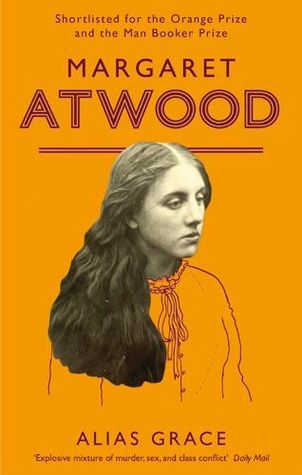
Alias Grace by Margaret Atwood

Alias Grace This is only the second book I’ve read by Margaret Atwood. The first was The Handmaid’s Tale, which I read in December 2012 and loved; thinking about which one to read next, Alias Grace sounded the most appealing to me but it wasn’t until it was selected for my Ten From the TBR project last month that I actually got round to reading it.

Alias Grace is a work of fiction based on a true story: the story of Grace Marks, a woman sentenced to life imprisonment for murder in 1840s Canada. Grace (who was only sixteen at the time) and her alleged accomplice, James McDermott, were accused of the murders of their employer, Thomas Kinnear, and his housekeeper, Nancy Montgomery. Grace has been in the Kingston Penitentiary for fifteen years when Simon Jordan, a doctor with an interest in criminal behaviour, decides to visit her as part of his research.

Although Grace claims to have no memory of the murders, she does have plenty of other memories which she gradually shares with Dr Jordan: her childhood in Ireland, her journey across the Atlantic and arrival in Canada, her first job as a maid and her friendship with a girl called Mary Whitney – and finally, the time she spent in Kinnear’s household prior to the murders.

As Dr Jordan listens to her story unfold, he tries to make up his mind about Grace. Is she being completely honest with him? Is she really guilty of the crimes of which she has been accused? Margaret Atwood doesn’t offer any answers here; it is left up to the reader to decide – but proving Grace’s guilt or innocence is not really the point of this book. Grace’s life story is interesting in itself, giving us some insights into what it was like to be an Irish immigrant in the 19th century, and the novel also explores attitudes towards women and towards mental illness at that time.

Alias Grace is a fascinating blend of fact and fiction. Grace Marks really existed but although Atwood states in her author’s note that she has not changed any of the known facts regarding the murder case, there were enough gaps in the records to allow her to invent parts of the story. Simon Jordan is a fictional character, but his inclusion in the novel adds another perspective – and also another layer, because we can never be sure whether Grace is telling him the truth or just saying what she thinks he would like to hear. Hannah Kent uses a similar device in Burial Rites and as I read, I did keep being reminded of Burial Rites (although Alias Grace was published first, of course).

I loved Alias Grace, but it’s a very different type of book from The Handmaid’s Tale, which has made me curious about the rest of Margaret Atwood’s novels. Which one do you think I should read next?

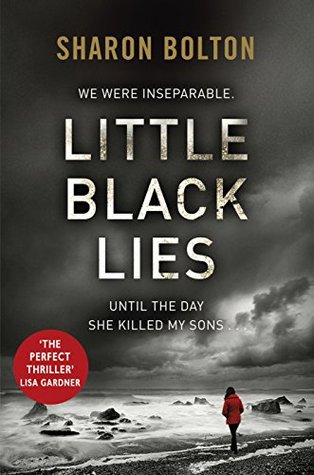
Little Black Lies by Sharon Bolton

Little Black Lies As soon as I started to read Sacrifice by S.J. Bolton back in 2011, I knew immediately that I had found an author who would become a favourite and this was confirmed a few months later when I read another of her books, Awakening. Now writing under the name Sharon Bolton, her last four novels have been part of a series following the investigations of detective Lacey Flint – and while I have enjoyed the series, I was pleased to hear that her newest book, Little Black Lies, was going to be another standalone.

Little Black Lies is set on the Falkland Islands, the British territory in the South Atlantic which is still the subject of dispute between Britain and Argentina. The events of the novel take place over one week in November 1994. The Falklands War which took place twelve years earlier is still fresh in people’s minds, but as the story opens the islanders have something new to worry about: the fate of a little boy who has disappeared on the islands – the third missing child in three years.

The novel is divided into three sections narrated by three different characters, each of whom may or may not be involved in the disappearances of the boys. The first of these narrators, Catrin Quinn, is someone who understands exactly what it is like to lose a child. Still trying to come to terms with the recent deaths of her two young sons in a car accident, Catrin is seeking solace in her conservation work and in plotting revenge on her former best friend, Rachel Grimwood, the woman she blames for the tragedy.

Next we hear from Catrin’s ex-lover, Callum Murray, a British soldier who took part in the Falklands War of 1982. Callum is suffering from post-traumatic stress disorder and is experiencing worrying lapses in his memory. Finally, Rachel has a chance to tell her side of the story – and unsurprisingly, her version of events is very different from Catrin’s.

Three different narrators and, as I’ve come to expect from Sharon Bolton, all three are flawed and all three are unreliable. The author delves deeply into the lives of each character, but although we get to know them very well over the course of the novel we can never be quite sure whether they’re being completely honest with the reader or with themselves. As I read, I suspected first Catrin, then Callum, then Rachel – and then I changed my mind – and then I changed it again. There are plot twists, there are surprises and there are revelations (one of them coming at the end of the very last page) and every time I thought I knew where the story was going, I was proved wrong.

I have praised the plot and the characters, but the setting also deserves a mention. The Falkland Islands are hardly a popular choice of setting for crime novels (with a population of fewer than 3,000 people, most of whom live in the capital, Stanley, violent crime is almost unheard of on the islands) but the fact that I’d never read a book set there before is one of the reasons I loved Little Black Lies so much. The landscape is beautifully described and the sense of isolation creates a wonderful, eerie atmosphere. This book is dark, powerful and emotional…and probably my favourite by Sharon Bolton so far.

I received a copy of Little Black Lies for review via NetGalley.

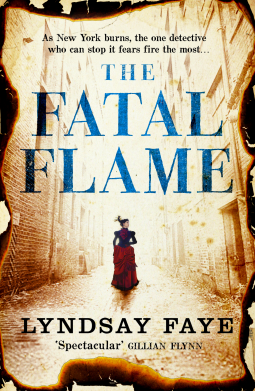
The Fatal Flame by Lyndsay Faye

The Fatal Flame Since reading The Gods of Gotham, Lyndsay Faye’s first novel to feature New York ‘copper star’ Timothy Wilde, I’ve been looking forward to each new book in what I’d hoped would be a long series. I was disappointed to discover that it’s actually a trilogy and The Fatal Flame is the last we’ll see of Tim and his friends – but pleased to have had the chance to read what has been a very enjoyable set of books.

Timothy’s story began in 1845 when his home in Manhattan was destroyed by fire and his brother, Valentine, helped him find work as a copper star in the newly formed New York City Police Department (the name comes from the copper stars the officers wore to identify themselves). In The Gods of Gotham you can read about the early days of Timothy’s career and how his crime-solving skills gained him a position as one of the NYPD’s first detectives, while the second book, Seven for a Secret, followed his investigations into a gang of ‘blackbirders’ (people who hunted down runaway slaves and returned them to slavery in the south). Ideally, these two books should be read before The Fatal Flame as there are some recurring characters and storylines, but it’s not essential.

In this third and final book, set in 1848, a mysterious arsonist appears to be targeting properties belonging to the unscrupulous politician and businessman Robert Symmes. The main suspect is one of his former employees at the New American Textile Manufactory, a woman with a grudge. But as Tim begins to dig deeper into Symmes’ business dealings and his treatment of his female workers, things quickly become much more complex than they seemed at first – especially when Tim’s brother, Valentine, announces that he will be running against Symmes in the next election. Meanwhile, Mercy Underhill, the fascinating, eccentric woman Timothy loves, has returned from London and it’s not long before she befriends Dunla Duffy, a young Irish girl who could hold the key to the mystery.

Most of the other characters we got to know in the previous novels are also back again in this one, including Bird Daly, Silkie Marsh, Jim Playfair and Elena Boehm. With this being the end of the trilogy, the personal story of each character is brought to a close, in one way or another – I would have hoped for a happier ending for one or two of them, but was satisfied with the way most of their stories concluded. I’ve particularly enjoyed watching the relationship between Timothy and Valentine (my favourite character) develop throughout the three books and I loved their scenes together in this book, especially towards the end.

I have mentioned in my posts on the previous two Timothy Wilde books the use of flash (the language of the criminal underworld) and how it adds to the atmosphere and authenticity of the story. Each novel includes a glossary which translates the flash terminology, although by the time you reach the third book in the series you’ll find yourself relying on it less and less (and the meaning can often be worked out from the context anyway). In this book, we see flash being used for the purpose for which it was originally intended – as a secret language to enable the speakers to hold a conversation that is unintelligible to anyone else who may be listening.

Another of the highlights of this trilogy has been seeing how Lyndsay Faye brings to life the New York City of the 19th century and tackles some of the important issues facing the people who lived there during that period. I have hinted at two of the main themes in The Fatal Flame already: political corruption and the exploitation of female employees (particularly Irish immigrants). Sometimes, though, Timothy’s attitudes towards the injustices of 19th century life make him feel slightly unconvincing as a man of his time, which is really my only criticism of the book and of the trilogy as a whole.

The language, the setting, the atmosphere and, most of all, Tim and Val Wilde – I’ve found so much to enjoy in these three novels! Now I’m wondering what Lyndsay Faye will be writing next.

Thanks to Headline for providing a copy of this book for review.

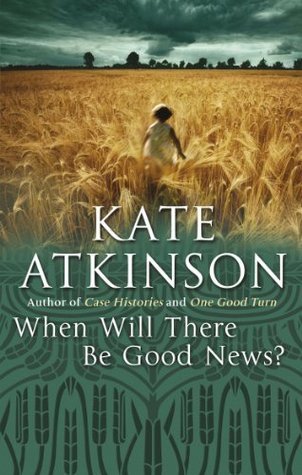
When Will There Be Good News? by Kate Atkinson

When Will There Be Good News It seems that everyone is talking about Kate Atkinson’s new novel, A God in Ruins, at the moment – and that’s definitely a book I would like to read soon, as I loved Life After Life – but I’m also still working through her Jackson Brodie series, of which this book, When Will There Be Good News?, is the third.

The story opens with a tragedy: the murder of a mother and two of her three children as they walk home through the countryside on a beautiful summer’s day. Six-year-old Joanna, who witnesses the brutal attack, is the sole survivor. Thirty years later, Joanna is living in Edinburgh where she is now a doctor with a successful practice and mother of a beloved baby son. She has managed to put the horrors of her childhood behind her and build a new life for herself, but how will she react when she hears that the man who murdered her family is about to be released from prison?

Another character with a troubled past is sixteen-year-old Reggie (short for Regina) Chase, Joanna’s ‘mother’s help’. Reggie is alone in the world apart from her criminal brother, Billy, and the only bright spots in her life are her friendship with Joanna and her love of ancient literature (she has left school but is continuing to study Greek and Latin in private sessions with an eccentric retired teacher, Ms MacDonald). When Joanna and her baby disappear, Reggie is sure something terrible must have happened and she can’t understand why nobody else seems to be worried.

Like the previous two books in this series (Case Histories and One Good Turn), the plot is built around coincidences, chance encounters and interlinking storylines. This is how our old friend Jackson Brodie is brought into the story; accidentally boarding a train heading north towards Edinburgh instead of south to London, he finds himself caught up in a rail disaster which brings him into contact not only with Reggie but also with Detective Chief Inspector Louise Monroe, one of his love interests from One Good Turn. It was nice to meet Jackson and Louise again, but the real star of this book is Reggie, possibly my favourite character to appear in the series so far.

I find Kate Atkinson’s books very quick, addictive reads – despite enjoying them so much that I don’t really want to reach the end, I just can’t seem to read them slowly! As I’ve mentioned before, her books are not conventional crime novels. Crimes are committed and investigated, but the focus tends to be on the impact the crimes have on the characters, and the events and relationships that arise as a result. Each time I’ve finished a Jackson Brodie novel I’ve found that it’s not the plot I remember, but the characters. They are so well developed and so human, with hopes and dreams, likes and dislikes, doubts and worries that any reader will be able to identify with.

This is probably the darkest book of the series so far, with so many tragedies, disasters and accidents that I could certainly understand why it was given the title When Will There Be Good News? The book is not without some humour and lighter moments, though, so don’t let that put you off reading it! I now have only one more Jackson Brodie novel to read (Started Early, Took My Dog), but I may be tempted to read A God in Ruins first – or is there another Kate Atkinson book you think I really need to read without delay?