Little Black Lies by Sharon Bolton

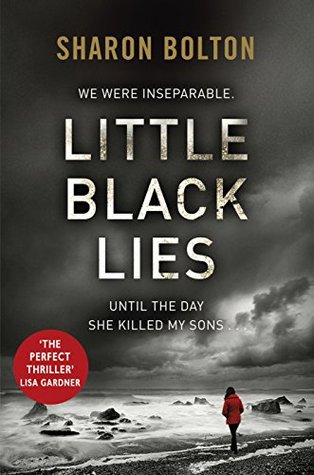
Little Black Lies As soon as I started to read Sacrifice by S.J. Bolton back in 2011, I knew immediately that I had found an author who would become a favourite and this was confirmed a few months later when I read another of her books, Awakening. Now writing under the name Sharon Bolton, her last four novels have been part of a series following the investigations of detective Lacey Flint – and while I have enjoyed the series, I was pleased to hear that her newest book, Little Black Lies, was going to be another standalone.

Little Black Lies is set on the Falkland Islands, the British territory in the South Atlantic which is still the subject of dispute between Britain and Argentina. The events of the novel take place over one week in November 1994. The Falklands War which took place twelve years earlier is still fresh in people’s minds, but as the story opens the islanders have something new to worry about: the fate of a little boy who has disappeared on the islands – the third missing child in three years.

The novel is divided into three sections narrated by three different characters, each of whom may or may not be involved in the disappearances of the boys. The first of these narrators, Catrin Quinn, is someone who understands exactly what it is like to lose a child. Still trying to come to terms with the recent deaths of her two young sons in a car accident, Catrin is seeking solace in her conservation work and in plotting revenge on her former best friend, Rachel Grimwood, the woman she blames for the tragedy.

Next we hear from Catrin’s ex-lover, Callum Murray, a British soldier who took part in the Falklands War of 1982. Callum is suffering from post-traumatic stress disorder and is experiencing worrying lapses in his memory. Finally, Rachel has a chance to tell her side of the story – and unsurprisingly, her version of events is very different from Catrin’s.

Three different narrators and, as I’ve come to expect from Sharon Bolton, all three are flawed and all three are unreliable. The author delves deeply into the lives of each character, but although we get to know them very well over the course of the novel we can never be quite sure whether they’re being completely honest with the reader or with themselves. As I read, I suspected first Catrin, then Callum, then Rachel – and then I changed my mind – and then I changed it again. There are plot twists, there are surprises and there are revelations (one of them coming at the end of the very last page) and every time I thought I knew where the story was going, I was proved wrong.

I have praised the plot and the characters, but the setting also deserves a mention. The Falkland Islands are hardly a popular choice of setting for crime novels (with a population of fewer than 3,000 people, most of whom live in the capital, Stanley, violent crime is almost unheard of on the islands) but the fact that I’d never read a book set there before is one of the reasons I loved Little Black Lies so much. The landscape is beautifully described and the sense of isolation creates a wonderful, eerie atmosphere. This book is dark, powerful and emotional…and probably my favourite by Sharon Bolton so far.

I received a copy of Little Black Lies for review via NetGalley.

The Fatal Flame by Lyndsay Faye

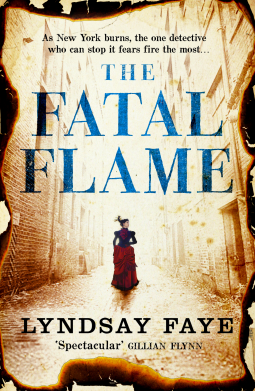
The Fatal Flame Since reading The Gods of Gotham, Lyndsay Faye’s first novel to feature New York ‘copper star’ Timothy Wilde, I’ve been looking forward to each new book in what I’d hoped would be a long series. I was disappointed to discover that it’s actually a trilogy and The Fatal Flame is the last we’ll see of Tim and his friends – but pleased to have had the chance to read what has been a very enjoyable set of books.

Timothy’s story began in 1845 when his home in Manhattan was destroyed by fire and his brother, Valentine, helped him find work as a copper star in the newly formed New York City Police Department (the name comes from the copper stars the officers wore to identify themselves). In The Gods of Gotham you can read about the early days of Timothy’s career and how his crime-solving skills gained him a position as one of the NYPD’s first detectives, while the second book, Seven for a Secret, followed his investigations into a gang of ‘blackbirders’ (people who hunted down runaway slaves and returned them to slavery in the south). Ideally, these two books should be read before The Fatal Flame as there are some recurring characters and storylines, but it’s not essential.

In this third and final book, set in 1848, a mysterious arsonist appears to be targeting properties belonging to the unscrupulous politician and businessman Robert Symmes. The main suspect is one of his former employees at the New American Textile Manufactory, a woman with a grudge. But as Tim begins to dig deeper into Symmes’ business dealings and his treatment of his female workers, things quickly become much more complex than they seemed at first – especially when Tim’s brother, Valentine, announces that he will be running against Symmes in the next election. Meanwhile, Mercy Underhill, the fascinating, eccentric woman Timothy loves, has returned from London and it’s not long before she befriends Dunla Duffy, a young Irish girl who could hold the key to the mystery.

Most of the other characters we got to know in the previous novels are also back again in this one, including Bird Daly, Silkie Marsh, Jim Playfair and Elena Boehm. With this being the end of the trilogy, the personal story of each character is brought to a close, in one way or another – I would have hoped for a happier ending for one or two of them, but was satisfied with the way most of their stories concluded. I’ve particularly enjoyed watching the relationship between Timothy and Valentine (my favourite character) develop throughout the three books and I loved their scenes together in this book, especially towards the end.

I have mentioned in my posts on the previous two Timothy Wilde books the use of flash (the language of the criminal underworld) and how it adds to the atmosphere and authenticity of the story. Each novel includes a glossary which translates the flash terminology, although by the time you reach the third book in the series you’ll find yourself relying on it less and less (and the meaning can often be worked out from the context anyway). In this book, we see flash being used for the purpose for which it was originally intended – as a secret language to enable the speakers to hold a conversation that is unintelligible to anyone else who may be listening.

Another of the highlights of this trilogy has been seeing how Lyndsay Faye brings to life the New York City of the 19th century and tackles some of the important issues facing the people who lived there during that period. I have hinted at two of the main themes in The Fatal Flame already: political corruption and the exploitation of female employees (particularly Irish immigrants). Sometimes, though, Timothy’s attitudes towards the injustices of 19th century life make him feel slightly unconvincing as a man of his time, which is really my only criticism of the book and of the trilogy as a whole.

The language, the setting, the atmosphere and, most of all, Tim and Val Wilde – I’ve found so much to enjoy in these three novels! Now I’m wondering what Lyndsay Faye will be writing next.

Thanks to Headline for providing a copy of this book for review.

When Will There Be Good News? by Kate Atkinson

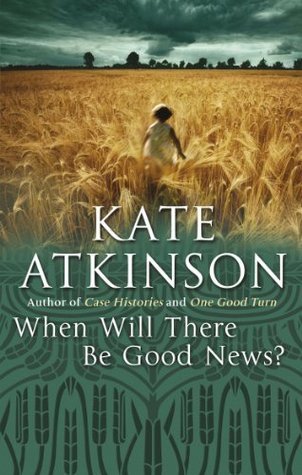
When Will There Be Good News It seems that everyone is talking about Kate Atkinson’s new novel, A God in Ruins, at the moment – and that’s definitely a book I would like to read soon, as I loved Life After Life – but I’m also still working through her Jackson Brodie series, of which this book, When Will There Be Good News?, is the third.

The story opens with a tragedy: the murder of a mother and two of her three children as they walk home through the countryside on a beautiful summer’s day. Six-year-old Joanna, who witnesses the brutal attack, is the sole survivor. Thirty years later, Joanna is living in Edinburgh where she is now a doctor with a successful practice and mother of a beloved baby son. She has managed to put the horrors of her childhood behind her and build a new life for herself, but how will she react when she hears that the man who murdered her family is about to be released from prison?

Another character with a troubled past is sixteen-year-old Reggie (short for Regina) Chase, Joanna’s ‘mother’s help’. Reggie is alone in the world apart from her criminal brother, Billy, and the only bright spots in her life are her friendship with Joanna and her love of ancient literature (she has left school but is continuing to study Greek and Latin in private sessions with an eccentric retired teacher, Ms MacDonald). When Joanna and her baby disappear, Reggie is sure something terrible must have happened and she can’t understand why nobody else seems to be worried.

Like the previous two books in this series (Case Histories and One Good Turn), the plot is built around coincidences, chance encounters and interlinking storylines. This is how our old friend Jackson Brodie is brought into the story; accidentally boarding a train heading north towards Edinburgh instead of south to London, he finds himself caught up in a rail disaster which brings him into contact not only with Reggie but also with Detective Chief Inspector Louise Monroe, one of his love interests from One Good Turn. It was nice to meet Jackson and Louise again, but the real star of this book is Reggie, possibly my favourite character to appear in the series so far.

I find Kate Atkinson’s books very quick, addictive reads – despite enjoying them so much that I don’t really want to reach the end, I just can’t seem to read them slowly! As I’ve mentioned before, her books are not conventional crime novels. Crimes are committed and investigated, but the focus tends to be on the impact the crimes have on the characters, and the events and relationships that arise as a result. Each time I’ve finished a Jackson Brodie novel I’ve found that it’s not the plot I remember, but the characters. They are so well developed and so human, with hopes and dreams, likes and dislikes, doubts and worries that any reader will be able to identify with.

This is probably the darkest book of the series so far, with so many tragedies, disasters and accidents that I could certainly understand why it was given the title When Will There Be Good News? The book is not without some humour and lighter moments, though, so don’t let that put you off reading it! I now have only one more Jackson Brodie novel to read (Started Early, Took My Dog), but I may be tempted to read A God in Ruins first – or is there another Kate Atkinson book you think I really need to read without delay?

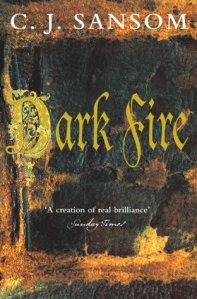
Dark Fire by C.J. Sansom

Dark Fire This is the second in CJ Sansom’s Shardlake series set in Tudor England and following the investigations of hunchbacked lawyer Matthew Shardlake. The action in Dark Fire takes place a year or two after the events of the first book, Dissolution, which I loved, but although I would recommend reading the books in order it’s not essential and this is a complete story in itself.

Dark Fire is set during the summer heatwave of 1540 as Henry VIII prepares to cast aside his fourth wife, Anne of Cleves, and marry Catherine Howard. Thomas Cromwell, the man who was instrumental in arranging the marriage to Anne, has fallen out of favour with the King and needs to regain Henry’s trust as quickly as possible. When he witnesses a demonstration of Greek Fire (sometimes called Dark Fire), a legendary Byzantine weapon capable of destroying a ship in minutes, Cromwell thinks he has found the perfect way to impress Henry. The problem is, only a tiny amount of Greek Fire remains and the secret formula to produce more has gone missing.

Meanwhile, Shardlake has been approached by a client, Joseph Wentworth, whose niece, Elizabeth has been arrested for murder. Shardlake is convinced she is innocent, but as the girl refuses to say a word in her own defence it seems that even our hero’s skills as a lawyer will not be enough to save her. At the last minute Cromwell intervenes; Shardlake can have more time to investigate and to attempt to clear Elizabeth’s name – but in return he must help to discover the ancient secrets of Greek Fire, which Cromwell has promised to present to the King in twelve days’ time.

I enjoyed Dark Fire; everything I remembered from the previous book was here again – the thorough research, the atmospheric descriptions and the insights into 16th century society. Where this book is even better than Dissolution, in my opinion, is in the characterisation of Jack Barak, the rough, outspoken young man whom Cromwell chooses to assist Shardlake in his task. Barak and Shardlake are such different personalities, with such different strengths and weaknesses, that they form the perfect partnership. Watching their relationship develop was one of my favourite things about this novel.

The first Shardlake novel, Dissolution, was a murder mystery set almost entirely within the confines of a monastery. Dark Fire has a wider scope, with Shardlake and his new assistant, Barak, embarking on a race around London as they try to locate the ancient formula and prove Elizabeth’s innocence before their time runs out. Their journey takes them from prison cells and taverns to law courts and churches, and along the way they experience the best and the worst Tudor London has to offer: one day Shardlake is attending a ‘sugar banquet’ at the elegant home of the aristocratic Lady Honor, the next Barak is climbing down a well in the middle of the night to look for evidence.

Both of the novel’s central mysteries were intriguing, particularly the Greek Fire one – and both present their own set of difficulties and dangers to Shardlake and Barak. It appears that the Wentworth family (with the exception of Joseph) are more than happy for Elizabeth to take the blame and don’t want outsiders trying to interfere, while the Greek Fire mystery seems to result in death for anyone who gets too close to the truth. The appeal of this book for me, though, was not so much the plot as the wonderful portrayal of Tudor life. I’m pleased that I still have another four Shardlake novels to read, beginning with the third in the series, Sovereign.

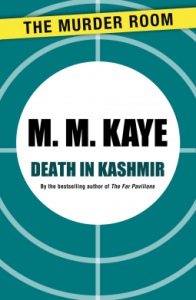
Death in Kashmir by M. M. Kaye

Death in Kashmir I have always thought of M. M. Kaye as an author of historical novels (such as the wonderful Far Pavilions) and although I was vaguely aware that she had also written a series of mystery novels, I had never really thought about reading them. Now that I’ve read the first one, Death in Kashmir, I will certainly be reading the others. What a great book this is!

Death in Kashmir was first published in 1953, but set a few years earlier in 1947, just as India is about to gain independence from Britain. Our heroine, Sarah Parrish, is attending what will probably be the final meeting of the Ski Club of India at Gulmarg, a resort in the mountains of Kashmir. Sarah is hoping for an enjoyable, relaxing holiday but the first sign of trouble ahead comes when another skier has a fatal accident on the slopes. Another death soon follows the first, but this time, the victim – a young woman called Janet Rushton – was able to share an important secret with Sarah before she died.

Sarah is now certain that neither death was accidental but all she wants is to leave Gulmarg and its secrets behind her and have nothing more to do with the whole business. When the skiing party breaks up she visits her aunt in Peshawar and tries to forget what she has learned. Soon, though, her promise to Janet pulls her back to Kashmir where she finds herself caught up in the mission her friend was working on before her death – and this time, Sarah’s own life could be in danger.

I loved this book from the very beginning. It’s so important that a first chapter pulls you straight into the story and this one did, right from the opening line – “Afterwards Sarah could never be quite sure whether it was the moonlight or that soft, furtive sound that had awakened her”. The rest of the story was equally engrossing: a perfect mixture of mystery, suspense, romance and espionage.

The descriptions of Kashmir are stunning. The first part of the book is set in winter on the snow-covered mountain trails of Gulmarg and later the action moves to the Dal Lake in the summer resort of Srinagar where Sarah takes over the lease on a houseboat that once belonged to Janet. Both of these locations are described beautifully, but Kaye also chooses just the right words and images to create a genuinely eerie and unsettling atmosphere. I found myself literally holding my breath as Sarah wondered who was standing outside the ski lodge in the dark, as she watched an unknown figure disappearing up a staircase and as she listened to footsteps on the boards of her houseboat in the night.

What makes Sarah’s situation even more dangerous is that she’s sure the enemy must be one of the group of skiers who were gathered at Gulmarg – the same group who are all now spending the summer in Srinagar. Who should she trust? The hostile Helen Warrender who makes no secret of her dislike for Sarah? The jovial, good-natured Hugo and his long-suffering wife, Fudge? Timid Meril Forbes and her domineering aunt? Or the handsome, polo-playing Captain Charles Mallory? When the villain was eventually revealed it didn’t come as a complete surprise – but I have to admit I had suspected almost everybody at some point, so one of my guesses was bound to be right!

The book is also interesting from the historical viewpoint, being set just before the end of the British Raj and the transfer of powers back to India. Through the stories of Sarah and the rest of the British community in Kashmir, I thought Kaye had perfectly captured the mood of a group of people who knew that their way of life was about to change forever.

I’m now looking forward to reading the other five Death In… mysteries. I just need to decide which one to read next!

One Good Turn by Kate Atkinson

One Good Turn After reading Case Histories, the first of Kate Atkinson’s Jackson Brodie novels just before New Year, I was desperate to continue with the series. Luckily, I saw a copy of the second book, One Good Turn (subtitled A Jolly Murder Mystery), on the shelf on my next visit to the library so I didn’t have too long to wait!

Following the events of Case Histories, Jackson Brodie has given up his private investigating, taken his inheritance and is leading a quiet life in the French countryside. At the beginning of One Good Turn, he is visiting Scotland for the Edinburgh Fringe Festival where his girlfriend, Julia, is acting in a new play. On Tuesday, as he waits to enter a comedy venue, Jackson witnesses a road rage incident in which one man attacks another with a baseball bat. Jackson doesn’t want to get involved but it seems that he may have no choice.

Another bystander is crime writer Martin Canning, who intervenes by throwing his laptop at the assailant – and then begins to wish he hadn’t when he is asked to accompany the victim to hospital and stay with him overnight. They say that one good turn deserves another, but Martin’s good turn leads to a chain of bizarre incidents that could almost have come straight out of the pages of one of his own Nina Riley crime novels.

Over the next four days, a complex plot unfolds involving a fraudulent businessman, a mysterious cleaning company, a knife-wielding Russian girl, two teenage shoplifters, an unwelcome guest and an aggressive dog. Jackson can’t help being drawn into the investigations, but as the mystery deepens he finds that he has become both a victim and a suspect.

I had enjoyed Case Histories but I thought this one was even better. It was good to meet Jackson again and to see how his relationship with Julia has developed, but I also think it’s good that Jackson is only one of a large cast of eccentric, colourful characters, each of whom becomes caught up in the whirlwind of events. Atkinson puts so much detail and so much humour into her characterisation that each one feels like a real person – we can laugh at them and with them, but we can understand them and have sympathy for them as well.

In this book, we get to know Gloria Hatter, the bored and disillusioned wife of an unscrupulous businessman in trouble for fraud; police detective Louise Monroe, who is trying to investigate the case while struggling to cope with the behaviour of her teenage son; and my favourite, Martin the crime novelist, a shy, reclusive man still haunted by memories of a disastrous trip to Russia several years earlier. Martin’s Nina Riley mysteries sounded so much fun I kept wishing they really existed!

The one criticism I had of Case Histories – the fact that it dealt with three separate storylines that never really came together – was not a problem with this book, as it’s more of a conventional crime novel in that respect. Characters and events that seemed unrelated at the beginning do eventually begin to overlap and things start to fall into place (comparisons are made throughout the novel to a set of Russian dolls, with one fitting inside the other). I loved the ending too; there was a surprise on the final page that left me questioning everything I’d read about one of the characters!

Now I’m looking forward to reading the third book in the series, When Will There Be Good News?

Case Histories by Kate Atkinson

Case Histories My first introduction to Kate Atkinson’s work was Life After Life, which I read in 2013 and loved. I’ve been wanting to read more of her books and knowing that a lot of people speak very highly of her Jackson Brodie novels, I decided to start with the first one in the series, Case Histories.

In Case Histories, private detective Jackson Brodie is investigating three old cases that have remained unresolved for years:

Case History No. 1 – During the summer heatwave of 1970, three-year-old Olivia Land is sleeping in a tent in the garden with her older sister, Amelia. When Amelia wakes up, she finds that Olivia has disappeared without trace.

Case History No. 2 – In 1994, eighteen-year-old Laura Wyre is murdered on her first day working in her father’s office. Her killer has still not been found and no motive for the attack has ever been discovered.

Case History No. 3 – In 1979, Michelle Fletcher is living on an isolated farm with her new husband and baby daughter. Depressed, lonely and finding it hard to cope, an argument with her husband ends in a brutal murder.

The connection between these three stories is Jackson Brodie, who is contacted by family members hoping to have the cases reopened or looked at again. Amelia and Julia Land want to find out what happened to their little sister, Olivia, and whether she could still be alive; Laura’s father, Theo, wants to know who killed his beloved daughter and why; and Shirley Morrison is searching for her sister Michelle’s daughter, with whom she lost contact after the incident which tore their family apart. But Jackson has problems of his own and as he begins to investigate these three very different crimes, he is reminded of a tragedy in his own past and another ‘lost girl’ who disappeared from his life decades earlier.

I loved Case Histories. I know describing a book as unputdownable is a cliché, but it was true in this case – it really is the sort of book where once you start reading, you don’t want to stop until you reach the end. It’s a crime novel I would recommend even to readers who are not really interested in crime fiction because, while the three mysteries are quite interesting, the real strength of the book is in the characterisation. The story is not so much about the crimes themselves as about the effect they had on the people involved and how they have tried (and often failed) to move on from what has happened.

I liked Jackson and am looking forward to meeting him again in the rest of the series, but my favourites in this book were Amelia and Theo. Amelia, who is approaching middle age feeling friendless and unwanted, has invented an imaginary boyfriend to brighten up her non-existent social life, and Theo, for whom his daughter was the centre of his universe, is neglecting his health while he devotes his life to finding her killer, drawing up colour-coded charts of her friends and teachers and making yearly pilgrimages to the scene of her death. Their lives are sad, lonely and tragic, yet Atkinson injects just enough humour into their stories to turn them into characters who are amusing but not ridiculous, flawed but sympathetic.

I also thought the structure of the book was interesting, because the timeline is not entirely linear. We see events from one perspective in one chapter, then in the next chapter we go back several hours, days or weeks to see those same events from another character’s perspective, filling in gaps and adding to our knowledge of what is going on. Two of the case histories – Olivia’s disappearance and Laura’s murder – worked very well alongside each other, but the third one, involving Michelle and her sister, felt disconnected from the others and didn’t work quite as well. I think I had expected all three cases to be much more closely linked than they actually were and I was disappointed that they weren’t.

At the end of the book, after Jackson is sure he’s solved the crimes, there are still more twists to come. We are given enough information throughout the story so that we can guess at what may have happened and work out some parts of the mystery, but the final pieces of the puzzle are withheld from us until the very end.

That’s two Kate Atkinson books read and two enjoyed; now I can’t wait to read the second book in the Jackson Brodie series, One Good Turn.