The Progress of a Crime by Julian Symons

Remember, remember, the Fifth of November,
Gunpowder, treason and plot,
I see no reason why gunpowder treason,
Should ever be forgot

It’s the fifth of November today, so no better time to review one of my recent reads, Julian Symons’ The Progress of a Crime, first published in 1960 and subtitled A Fireworks Night Mystery. For those not in the UK or familiar with British culture, this is the night when people traditionally light bonfires and set off fireworks to mark the anniversary of when Guy Fawkes was caught preparing to blow up Parliament with gunpowder in 1605. The Progress of a Crime, the first book I’ve read by Julian Symons, deals with a murder committed at a Bonfire Night celebration.

Hugh Bennett, reporter with the Gazette, has been covering a news story in the village of Far Wether on November the fifth and decides to stay on to watch the lighting of the bonfire on the village green. However, he witnesses more than just a fire that evening when a gang of youths arrive and begin throwing fireworks and causing a disturbance. Things escalate and a man is stabbed to death, but although there are many witnesses, in the darkness nobody is able to say with any certainty which of the boys was the culprit.

All of the group are arrested and questioned, but two quickly emerge as the most likely suspects: the leader, Jack ‘King’ Garney, and his most faithful friend, Leslie Gardner. There’s enough evidence to bring the two to trial and Hugh Bennett is drawn into the investigations due to both his role as a local journalist and as a witness to the crime. Hugh has his own opinions on what happened in Far Wether that night, but when he begins to fall in love with Jill Gardner, Leslie’s sister, things become more complicated.

The Progress of a Crime is an interesting portrayal of society in the early 1960s, but will probably disappoint anyone looking for a more conventional mystery novel. There’s very little suspense and not much actual ‘detecting’ as there are only really two suspects and we know who they are from the beginning. The most exciting part of the book comes in the second half when Garney and Gardner stand trial and we are given some insights into the preparations for the court case, the cross examining of the witnesses and the tensions between family members as they worry over what will happen in court.

According to Martin Edwards’ introduction, Symons took his inspiration for this novel from a real crime, and the book as a whole does feel realistic and gritty. It explores a range of topics including the causes and consequences of juvenile crime, the methods of extracting information used by the police, and the role of the press in reporting on the investigations and maybe even influencing the outcome. This British Library Crime Classics edition also features a short story by Symons, The Tigers of Subtopia, which has obviously been selected for inclusion because it covers similar themes. I can’t really say that I enjoyed either the novel or the short story as I found them quite bleak and depressing, with some very unlikeable characters, but they are interesting from a social history perspective and I would be happy to read some of Symons’ other books.
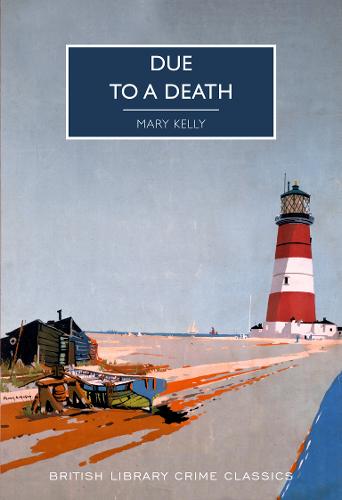
Due to a Death by Mary Kelly – #1962Club

This week Karen of Kaggsy’s Bookish Ramblings and Simon of Stuck in a Book are hosting another of their club weeks, where we all read and write about books published in the same year. This time, the year is 1962 and what a great year for publishing it has turned out to be! There were lots of tempting books to choose from, but I decided to start with one from the British Library Crime Classics series by an author who is new to me: Mary Kelly.

Due to a Death is a very different kind of BLCC book; it’s not really a detective novel, not really a thriller, not a country house or locked room mystery – not even much of a mystery at all. Although there is an element of crime, I would describe this more as a character study and an exploration of the lives of women in a small community in the early 1960s.

Our narrator, Agnes, lives in Gunfleet, a fictional village in the marshlands of Kent. Agnes used to be a teacher but her marriage to Tom meant she was no longer expected to work. It’s not a very happy or satisfying marriage and Tom, who works in a museum, spends most of his free time with his friends, Ian (who is also his stepbrother) and Tubby. Agnes appears to have no friends of her own so Tubby, Ian, and their wives Carole and Helen (whom she doesn’t particularly get along with), form her entire social circle. When Hedley Nicholson, a newcomer to the village, joins their little group he seems to sense that Agnes is lonely and bored and begins to spend more and more time with her, teaching her to drive – something she hopes will provide independence and freedom.

In the opening chapter, we learn that the body of a young woman has been found in the marshes. The rest of the novel is then told in the form of a flashback as Agnes sits in a church, thinking back over the events of the summer. The identity of the dead woman and her connection with the other characters is slowly revealed, but the focus of the book is always on Agnes and her relationships with Hedley, Tom, Ian and Tubby. It’s an interesting study of how, despite living in a small, claustrophobic community where everybody knows everybody else’s business, it’s still possible to feel isolated and alone.

I was very impressed with this book and although it has a slow pace, I found it difficult to put down. However, everything about it is relentlessly bleak, from the desolate marshland setting to the dreary lives of the characters and the tragic motive behind the young woman’s death. I liked it but, as I’ve said, it’s not a typical crime novel, so be prepared!

I hope to have at least one more 1962 review for you later in the week. Meanwhile, here’s my list of other 1962 books previously read and reviewed on my blog.

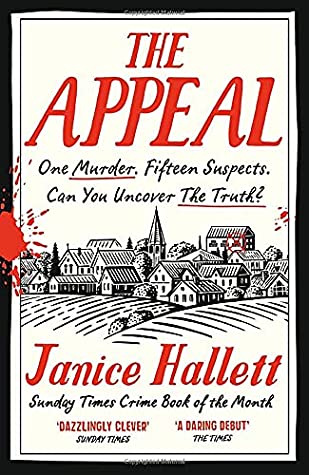
The Appeal by Janice Hallett

I loved Janice Hallett’s most recent novels, The Twyford Code and The Mysterious Case of the Alperton Angels, so I was looking forward to going back and reading her first book, The Appeal. I know Hallett’s style is not one that works for all readers (to be honest, I’m very surprised that it works for me), but if you enjoyed either of those other two novels, I can almost guarantee that you’ll enjoy this one as well.

The Appeal begins in the small English town of Lower Lockwood where the members of an amateur dramatics society, The Fairway Players, are preparing for their upcoming production of All My Sons by Arthur Miller. The Players are led by Martin Hayward and his wife Helen, a couple who also own the local golf club and are highly respected within the community, as well as members of several other prominent Lockwood families. On the fringes of the group and desperate to be accepted into the Haywards’ social circle is Isabel Beck, a young nurse who convinces her new friends Sam and Kel Greenwood to join the Players.

Before the group even begin rehearsals, disaster strikes: Martin and Helen’s two-year-old granddaughter, Poppy, has developed a rare form of brain cancer which is unlikely to be cured with conventional chemotherapy. Poppy’s parents have placed all their hopes in a new experimental treatment which is not yet available in the UK. Determined to obtain this very expensive new drug from America, the Haywards and their friends launch a fundraising appeal, ‘A Cure for Poppy’. At first, everything seems to be going well, but when one of the Fairway Players is found murdered, questions are raised not just regarding the killer but the appeal itself. Does the doctor responsible for obtaining the new treatment really have Poppy’s best interests at heart? Why did Sam leave her last nursing position in Africa so suddenly? And who is the mystery donor who promised a large sum of money then changed his mind?

Roderick Tanner QC has set his two law students, Femi and Charlotte, the task of looking through the documents associated with the Lockwood case. Someone has already been sentenced for the murder, but Tanner believes they are innocent and he wants the students to confirm his opinion as he prepares to appeal the decision. The novel is presented entirely in the form of emails sent to and from the various characters involved in the case, as well as several WhatsApp discussions between Femi and Charlotte as they try to make sense of the evidence. As I’ve said, this is probably something you’ll either love or hate, but for me it’s very effective – I find that the short length of each email makes the book very immersive and compelling as it’s easy to think ‘I’ll just read one more!’ It also allows a lot of misdirection as every character could be considered an unreliable narrator; we can never be sure who they really are or how they really feel because all we see is the way they choose to present themselves in an email or on social media. Some suspension of disbelief is required, though, as most people aren’t sending constant emails to each other all day long!

The weakest aspect of The Appeal for me was actually the murder mystery. The murder doesn’t take place until late in the novel and then we learn that Tanner has been withholding information from us, which makes it very difficult to solve the mystery for ourselves. I also wasn’t sure why he wanted help from Charlotte and Femi, as he already seemed to know everything anyway. Apart from that, I enjoyed following the progress of the Poppy campaign and correctly guessed some of the twists in that storyline! There’s a large cast of characters to get to know, but I found that most of them had their own very distinctive personalities – from needy, eager to please Isabel to practical, no-nonsense professional fundraiser Sarah-Jane – so I had no problem keeping track of them all.

Of the three Janice Hallett books I’ve read, this is my least favourite, but it still kept me entertained from beginning to end. I’m looking forward to reading her new novella, The Christmas Appeal, coming in October!

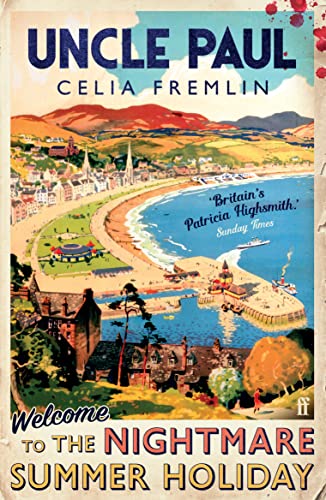
Uncle Paul by Celia Fremlin

I know they say never to judge a book by its cover, but I have to confess, the cover is what made me want to read this book before I even knew what it was about! Luckily, the story lived up to the cover and you can expect to see Uncle Paul on my books of the year list in December, without a doubt.

First published in 1959, this is a recent reissue by Faber. It’s Celia Fremlin’s second novel but the first I’ve read and I was delighted to find that she wrote fifteen more. If any of them are even half as good as this one then I have some great reading ahead of me!

Uncle Paul is written from the perspective of Meg, the youngest of three sisters but in many ways the most mature. She is leading her own independent life in London with a job, a flat and a new boyfriend, Freddy, a pianist who is both charming and secretive. The novel opens with Meg receiving a telegram from her older sister Isabel, who is spending the summer holidays in a caravan at the seaside with her family. Isabel is concerned about their half-sister Mildred, who is twenty years older and helped to bring them up as children. Mildred has left her husband and come to stay at a nearby cottage – the same cottage where she spent her honeymoon with her first husband, Paul, fifteen years earlier.

Meg and Isabel had been very young at the time of Mildred’s marriage to Paul – they knew him as ‘Uncle Paul’ – but they remember the scandal that occurred when it emerged that he was guilty of both bigamy and attempted murder. Paul was given a long prison sentence after Mildred went to the police, but she is convinced that he has now been released and is coming to take his revenge. Believing that her sisters are panicking about nothing, Meg sets off for the coast intending to tell them to stop being foolish, but when she finds herself spending the night at Mildred’s cottage listening to footsteps moving around in the dark she begins to wonder whether Uncle Paul really has come back after all.

Uncle Paul is an excellent psychological thriller, but I think what I actually loved most about it was the setting – the portrayal of a typical British seaside holiday in the 1950s. Fremlin does a great job of bringing to life Isabel’s rickety caravan, trips to the beach and walks along the pier, the challenges of keeping children amused on a wet day and the friendships that inevitably begin to form with the other guests – in this case, the gallant old Captain Cockerill and a mother with her son, Cedric, an irritating little boy who thinks he knows everything (and often does). The characters are all very well drawn, even the minor ones like these, but I found the three sisters particularly interesting, with their very different personalities: the sensible, level-headed Meg who, despite being the youngest, is the one the others rely on to take control of every situation; the rich, dramatic and often irrational Mildred (her decision to stay on her own in an isolated cottage where she could easily be found by Paul being one example of her illogical behaviour); and the nervous, anxious Isabel, the sort of person who worries about anything and everything.

The psychological elements of the story are very well done, so that we can never be quite sure whether the strange occurrences and the noises in the middle of the night are real or just a figment of our characters’ imaginations. Even when one alarming incident is proven to have an innocent explanation, the suspense begins to build all over again, convincing us that this time Meg and her sisters really are in danger! Similarly, Fremlin creates enough mystery around the characters of Isabel’s husband and Meg’s boyfriend that neither we nor Isabel and Meg themselves know whether they really are who they claim to be.

Having been kept guessing all the way through this wonderful novel, I found the ending both unexpected and clever. Definitely one of my favourite books of the year so far and I can’t wait to try another one by Celia Fremlin.

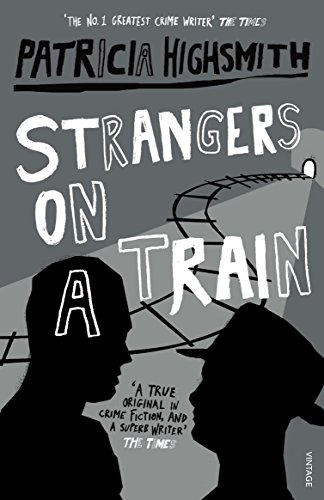
Strangers on a Train by Patricia Highsmith

Patricia Highsmith’s 1950 novel Strangers on a Train begins, as you might expect, with two strangers meeting on a train. One is Guy Haines, an aspiring architect who is on his way home to Metcalf, Texas to see his wife, Miriam, from whom he’s been separated for the last three years. Guy is hoping to secure a divorce from Miriam so that he can start a new life with Anne, the woman he loves. Although Miriam has so far been reluctant to agree to a divorce, she is now pregnant with another man’s child and Guy is optimistic that this will be a chance for both of them to move on.

The other stranger is Charles Bruno, a young man from a wealthy Long Island family. After falling into conversation on the train, Bruno invites Guy to come and eat with him in his private dining compartment. Guy doesn’t particularly like his new companion, but soon finds himself telling Bruno about his troubles with Miriam. In turn, Bruno confesses that he hates his father – and then makes a shocking suggestion. If Bruno were to kill Miriam on Guy’s behalf, there would be nothing to link him to the crime. Guy could then kill Bruno’s father and again there would be no motive and no connection. Two perfect murders! Horrified, Guy refuses to have anything to do with the plan and when the train reaches his destination he leaves Bruno behind, hoping he’ll never see him again. However, when Miriam is later found dead, Guy quickly begins to suspect the truth. Has Bruno gone ahead with the plan – and is he waiting for Guy to uphold his side of the bargain?

This is the first book I’ve read by Patricia Highsmith; I thought it would be a good idea to start with one of her most famous novels and this one proved to be a great choice. It reminded me very much of In a Lonely Place by Dorothy B. Hughes, another classic psychological thriller I read recently. Although I didn’t love this one quite as much, I did still enjoy it very much and found it a real page-turner, despite the fact that Highsmith often slows down the pace to concentrate on exploring the thought processes of Bruno and Guy as they each try to deal with the situation in their own way.

The novel is written from the perspectives of both men and although they are both interesting characters, Highsmith doesn’t make it easy for us to like either of them, particular the spoiled, immature and constantly drunk Bruno. We can have some sympathy for Guy at first, as he tries to resist getting involved in Bruno’s schemes, but he has his resolve gradually worn away as he comes under more and more pressure to carry out the murder and in turn becomes less likeable as the story progresses. The secondary characters are less well drawn – Anne and Miriam never fully come to life and we don’t get to know the other potential murder victim, Bruno’s father, at all, which lessens the emotional impact of the book. From a psychological point of view, however, I found this a fascinating novel.

If you’ve read any other Patricia Highsmith books, please tell me which one you think I should read next!

This is book 11/20 of my 20 Books of Summer 2023

It’s also book 41/50 from my second Classics Club list.

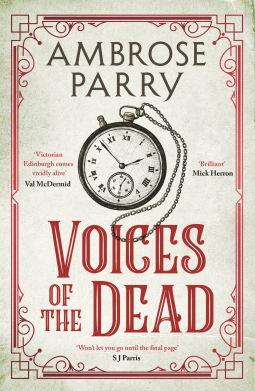
Voices of the Dead by Ambrose Parry

This is the fourth book in Ambrose Parry’s series of crime novels set in the medical world of 19th century Edinburgh – and it’s my favourite so far. Ambrose Parry is a pseudonym of Dr Marisa Haetzman, a consultant anaesthetist, and her husband, the crime author Chris Brookmyre, and they each bring their own set of skills and knowledge to the writing of these books. The series follows Dr Will Raven, assistant to the great Scottish obstetrician James Simpson (a real historical figure), and Sarah Fisher, who dreams of one day becoming a doctor herself, so each book includes a wealth of medical detail as well as a murder mystery to be solved.

In Voices of the Dead, set in 1854, Will is now married with a child and another on the way, but he doesn’t have much time to enjoy being a husband and father – not only is he struggling to move out from under the wing of Dr Simpson and establish his own reputation, he has also become mixed up in yet another murder case. Parts of a dismembered body have been turning up in random places around Edinburgh and Will’s friend, Dr Henry Littlejohn, has asked for his help in identifying the victim.

Meanwhile, Sarah Fisher’s plans to study medicine and follow in the footsteps of Dr Elizabeth Blackwell have had to be put on hold. Disappointed and frustrated, she turns instead to the emerging science of mesmerism, which is beginning to grow in popularity. An American mesmerist has just arrived in Edinburgh and Sarah is keen to learn more about the possible uses of mesmerism in healing patients. Will Raven, however, has a low opinion of such things and, not for the first time, he and Sarah find themselves in conflict. Eventually, however, Sarah is also drawn into the murder investigation and she and Will must work together again to find the culprit.

If you’re new to this series you may be wondering whether you could start here without having read the previous three books. Well, this one does work as a standalone mystery, but I would recommend reading all four in order if you can, starting with The Way of All Flesh. Will and Sarah have a complex relationship – made even more complex by the addition of Will’s wife, Eugenie – and it would be best to get to know them both from the beginning. There are also lots of recurring characters who develop throughout the series; in this book, I particularly enjoyed being reacquainted with Gregor the giant. Like the real life Irishman Charles Byrne (whom I read about recently in Hilary Mantel’s The Giant, O’Brien), Gregor’s size has made him the target of unscrupulous men who hope to acquire his body for exhibition after his death.

As well as the usual details of Will’s work as an obstetrician, I found it fascinating to read about the public displays of mesmerism, hypnotism and spiritualism being staged across Edinburgh and the differing views people held towards them. Were the mesmerists and spiritualists really just frauds preying on gullible victims, as Will believed, or were they acting with the best intentions, trying to provide comfort to people who needed it? This storyline introduces some colourful new characters, including a magician of whom I became quite fond and am hoping we’ll meet again.

Every book in this series has been very enjoyable, but I think this one is the best yet. I’m looking forward to the next one and hope we won’t have to wait too long for it!

Thanks to Canongate for providing a copy of this book for review via NetGalley.

This is book 23/50 read for the 2023 Historical Fiction Reading Challenge.

The Cat Saw Murder by Dolores Hitchens

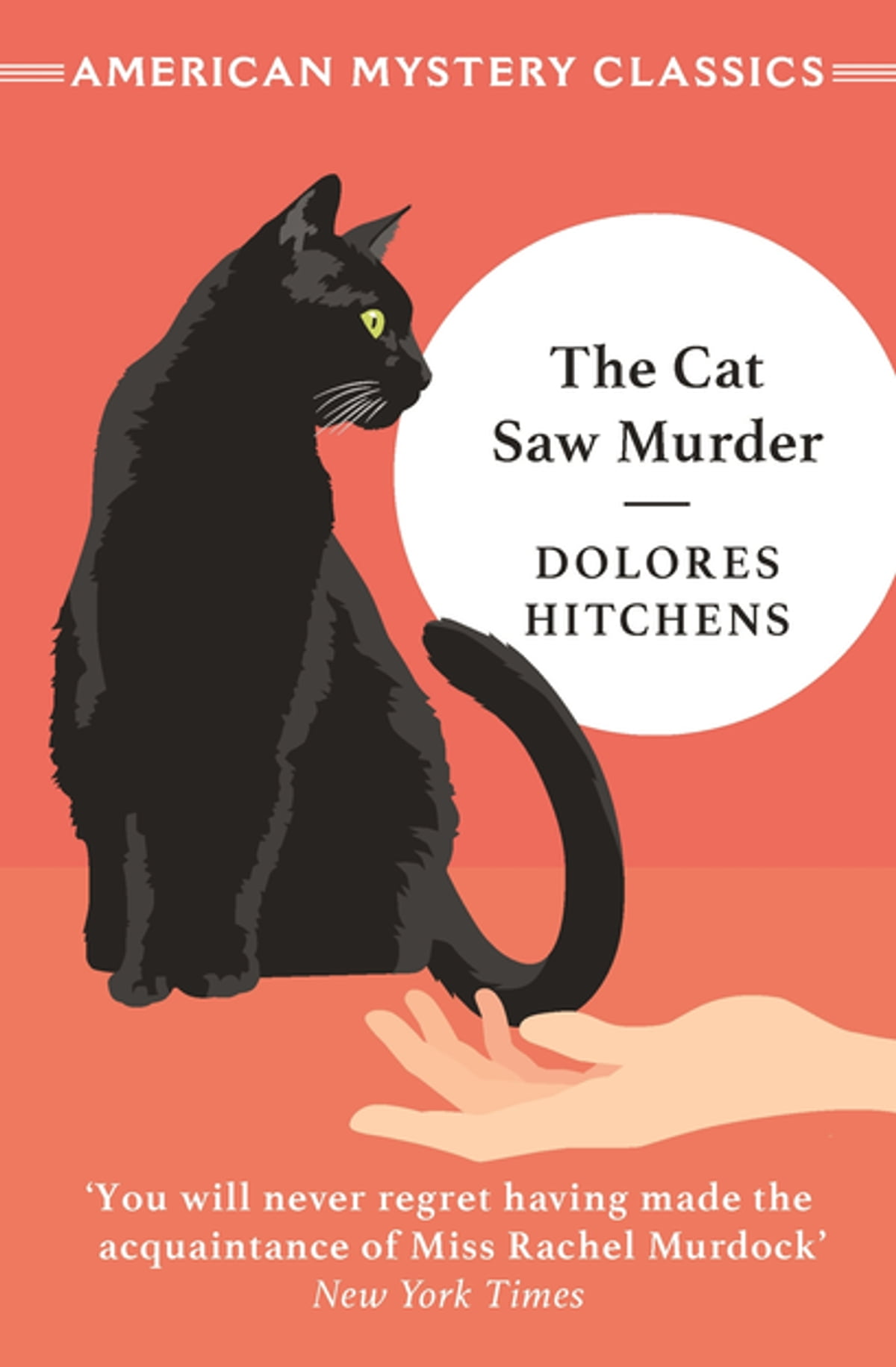
This week, Mallika of Literary Potpourri is hosting Reading the Meow, a celebration of books featuring cats. When this event was first announced, I wasn’t sure if I had anything suitable; The Life and Opinions of the Tomcat Murr by ETA Hoffmann would have been perfect, if I hadn’t just read it last year. Then I came across a whole series of books with cats in them (or in the titles, at least): Dolores Hitchens’ Rachel Murdock mysteries, some of which have now been reissued as part of the American Mystery Classics imprint. The Cat Saw Murder, originally published in 1939, is the first and I hoped it would be a good choice for Reading the Meow.

The novel begins with elderly Miss Rachel Murdock going to stay with her adopted niece, Lily Sticklemann, who lives at Breakers Beach near Los Angeles. Lily has hinted that she’s in trouble and needs advice, so Miss Rachel has packed her case and set off by train to see if she can help. Her less adventurous sister Jennifer has stayed behind, but Miss Rachel is accompanied by Samantha, the black cat who once belonged to their other sister, Agatha. Agatha was an eccentric woman and on her death she left her fortune to the cat, meaning that Samantha is now a wealthy heiress in her own right. After meeting Lily and discovering that she is having financial difficulties, Miss Rachel becomes concerned for Samantha’s safety, suspecting that Lily has her eye on the cat’s inheritance. However, Lily herself is the one who is murdered – and it seems that Samantha may have been a witness.

There are plenty of suspects – Lily lives in a boarding house, Surf House, and is murdered in her bedroom, which means all of the other residents of the building immediately come under suspicion. Several also have a motive for the crime, as Lily owes gambling debts to some of them and is thought to have been romantically involved with another. Although this is not a locked-room mystery exactly (we know that the bedroom door opens and closes more than once during the night of the murder), it does share many elements of that kind of mystery, but thankfully never becomes too concerned with the puzzle-solving aspects at the expense of the characters and motives.

Miss Rachel is a great character; I found her very endearing and quite similar to Agatha Christie’s Miss Marple in many ways, although she’s more agile and energetic for her age than Miss Marple is and spends a portion of the book searching rooms and crawling around in the attic. She has a good relationship with the detective investigating the murder, Lieutenant Mayhew, and they both contribute, in their different ways, to the solving of the mystery.

The plot feels slightly disjointed at times and there are some confusing shifts between past and present tense (the book seems to be narrated by someone at an unspecified future date looking back on Mayhew and Miss Rachel’s first case), but otherwise I really enjoyed this book and it did turn out to be a good choice for Reading the Meow. Samantha the cat, although not the main focus of the story, does have a substantial part to play and provides some intriguing clues. The second book in the series is The Alarm of the Black Cat and I think I’ll be tempted to read it soon!

This is book 1/20 of my 20 Books of Summer 2023