Strangers on a Train by Patricia Highsmith

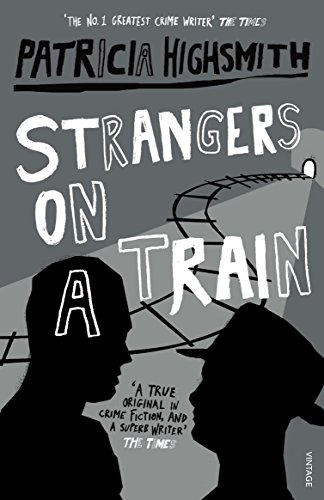
Patricia Highsmith’s 1950 novel Strangers on a Train begins, as you might expect, with two strangers meeting on a train. One is Guy Haines, an aspiring architect who is on his way home to Metcalf, Texas to see his wife, Miriam, from whom he’s been separated for the last three years. Guy is hoping to secure a divorce from Miriam so that he can start a new life with Anne, the woman he loves. Although Miriam has so far been reluctant to agree to a divorce, she is now pregnant with another man’s child and Guy is optimistic that this will be a chance for both of them to move on.

The other stranger is Charles Bruno, a young man from a wealthy Long Island family. After falling into conversation on the train, Bruno invites Guy to come and eat with him in his private dining compartment. Guy doesn’t particularly like his new companion, but soon finds himself telling Bruno about his troubles with Miriam. In turn, Bruno confesses that he hates his father – and then makes a shocking suggestion. If Bruno were to kill Miriam on Guy’s behalf, there would be nothing to link him to the crime. Guy could then kill Bruno’s father and again there would be no motive and no connection. Two perfect murders! Horrified, Guy refuses to have anything to do with the plan and when the train reaches his destination he leaves Bruno behind, hoping he’ll never see him again. However, when Miriam is later found dead, Guy quickly begins to suspect the truth. Has Bruno gone ahead with the plan – and is he waiting for Guy to uphold his side of the bargain?

This is the first book I’ve read by Patricia Highsmith; I thought it would be a good idea to start with one of her most famous novels and this one proved to be a great choice. It reminded me very much of In a Lonely Place by Dorothy B. Hughes, another classic psychological thriller I read recently. Although I didn’t love this one quite as much, I did still enjoy it very much and found it a real page-turner, despite the fact that Highsmith often slows down the pace to concentrate on exploring the thought processes of Bruno and Guy as they each try to deal with the situation in their own way.

The novel is written from the perspectives of both men and although they are both interesting characters, Highsmith doesn’t make it easy for us to like either of them, particular the spoiled, immature and constantly drunk Bruno. We can have some sympathy for Guy at first, as he tries to resist getting involved in Bruno’s schemes, but he has his resolve gradually worn away as he comes under more and more pressure to carry out the murder and in turn becomes less likeable as the story progresses. The secondary characters are less well drawn – Anne and Miriam never fully come to life and we don’t get to know the other potential murder victim, Bruno’s father, at all, which lessens the emotional impact of the book. From a psychological point of view, however, I found this a fascinating novel.

If you’ve read any other Patricia Highsmith books, please tell me which one you think I should read next!

This is book 11/20 of my 20 Books of Summer 2023

It’s also book 41/50 from my second Classics Club list.

Voices of the Dead by Ambrose Parry

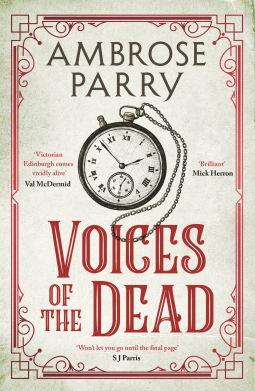
This is the fourth book in Ambrose Parry’s series of crime novels set in the medical world of 19th century Edinburgh – and it’s my favourite so far. Ambrose Parry is a pseudonym of Dr Marisa Haetzman, a consultant anaesthetist, and her husband, the crime author Chris Brookmyre, and they each bring their own set of skills and knowledge to the writing of these books. The series follows Dr Will Raven, assistant to the great Scottish obstetrician James Simpson (a real historical figure), and Sarah Fisher, who dreams of one day becoming a doctor herself, so each book includes a wealth of medical detail as well as a murder mystery to be solved.

In Voices of the Dead, set in 1854, Will is now married with a child and another on the way, but he doesn’t have much time to enjoy being a husband and father – not only is he struggling to move out from under the wing of Dr Simpson and establish his own reputation, he has also become mixed up in yet another murder case. Parts of a dismembered body have been turning up in random places around Edinburgh and Will’s friend, Dr Henry Littlejohn, has asked for his help in identifying the victim.

Meanwhile, Sarah Fisher’s plans to study medicine and follow in the footsteps of Dr Elizabeth Blackwell have had to be put on hold. Disappointed and frustrated, she turns instead to the emerging science of mesmerism, which is beginning to grow in popularity. An American mesmerist has just arrived in Edinburgh and Sarah is keen to learn more about the possible uses of mesmerism in healing patients. Will Raven, however, has a low opinion of such things and, not for the first time, he and Sarah find themselves in conflict. Eventually, however, Sarah is also drawn into the murder investigation and she and Will must work together again to find the culprit.

If you’re new to this series you may be wondering whether you could start here without having read the previous three books. Well, this one does work as a standalone mystery, but I would recommend reading all four in order if you can, starting with The Way of All Flesh. Will and Sarah have a complex relationship – made even more complex by the addition of Will’s wife, Eugenie – and it would be best to get to know them both from the beginning. There are also lots of recurring characters who develop throughout the series; in this book, I particularly enjoyed being reacquainted with Gregor the giant. Like the real life Irishman Charles Byrne (whom I read about recently in Hilary Mantel’s The Giant, O’Brien), Gregor’s size has made him the target of unscrupulous men who hope to acquire his body for exhibition after his death.

As well as the usual details of Will’s work as an obstetrician, I found it fascinating to read about the public displays of mesmerism, hypnotism and spiritualism being staged across Edinburgh and the differing views people held towards them. Were the mesmerists and spiritualists really just frauds preying on gullible victims, as Will believed, or were they acting with the best intentions, trying to provide comfort to people who needed it? This storyline introduces some colourful new characters, including a magician of whom I became quite fond and am hoping we’ll meet again.

Every book in this series has been very enjoyable, but I think this one is the best yet. I’m looking forward to the next one and hope we won’t have to wait too long for it!

Thanks to Canongate for providing a copy of this book for review via NetGalley.

This is book 23/50 read for the 2023 Historical Fiction Reading Challenge.

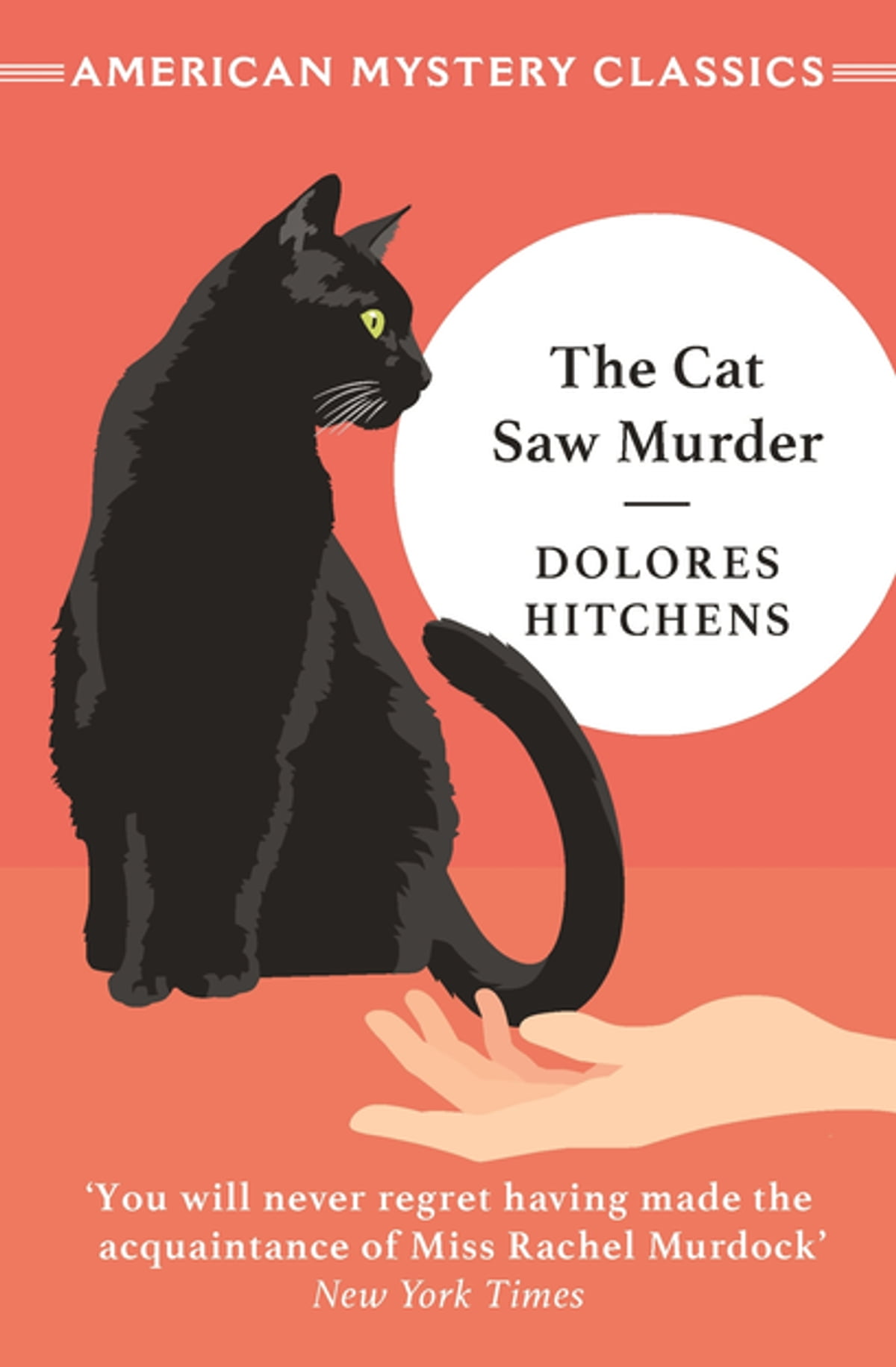
The Cat Saw Murder by Dolores Hitchens

This week, Mallika of Literary Potpourri is hosting Reading the Meow, a celebration of books featuring cats. When this event was first announced, I wasn’t sure if I had anything suitable; The Life and Opinions of the Tomcat Murr by ETA Hoffmann would have been perfect, if I hadn’t just read it last year. Then I came across a whole series of books with cats in them (or in the titles, at least): Dolores Hitchens’ Rachel Murdock mysteries, some of which have now been reissued as part of the American Mystery Classics imprint. The Cat Saw Murder, originally published in 1939, is the first and I hoped it would be a good choice for Reading the Meow.

The novel begins with elderly Miss Rachel Murdock going to stay with her adopted niece, Lily Sticklemann, who lives at Breakers Beach near Los Angeles. Lily has hinted that she’s in trouble and needs advice, so Miss Rachel has packed her case and set off by train to see if she can help. Her less adventurous sister Jennifer has stayed behind, but Miss Rachel is accompanied by Samantha, the black cat who once belonged to their other sister, Agatha. Agatha was an eccentric woman and on her death she left her fortune to the cat, meaning that Samantha is now a wealthy heiress in her own right. After meeting Lily and discovering that she is having financial difficulties, Miss Rachel becomes concerned for Samantha’s safety, suspecting that Lily has her eye on the cat’s inheritance. However, Lily herself is the one who is murdered – and it seems that Samantha may have been a witness.

There are plenty of suspects – Lily lives in a boarding house, Surf House, and is murdered in her bedroom, which means all of the other residents of the building immediately come under suspicion. Several also have a motive for the crime, as Lily owes gambling debts to some of them and is thought to have been romantically involved with another. Although this is not a locked-room mystery exactly (we know that the bedroom door opens and closes more than once during the night of the murder), it does share many elements of that kind of mystery, but thankfully never becomes too concerned with the puzzle-solving aspects at the expense of the characters and motives.

Miss Rachel is a great character; I found her very endearing and quite similar to Agatha Christie’s Miss Marple in many ways, although she’s more agile and energetic for her age than Miss Marple is and spends a portion of the book searching rooms and crawling around in the attic. She has a good relationship with the detective investigating the murder, Lieutenant Mayhew, and they both contribute, in their different ways, to the solving of the mystery.

The plot feels slightly disjointed at times and there are some confusing shifts between past and present tense (the book seems to be narrated by someone at an unspecified future date looking back on Mayhew and Miss Rachel’s first case), but otherwise I really enjoyed this book and it did turn out to be a good choice for Reading the Meow. Samantha the cat, although not the main focus of the story, does have a substantial part to play and provides some intriguing clues. The second book in the series is The Alarm of the Black Cat and I think I’ll be tempted to read it soon!

This is book 1/20 of my 20 Books of Summer 2023

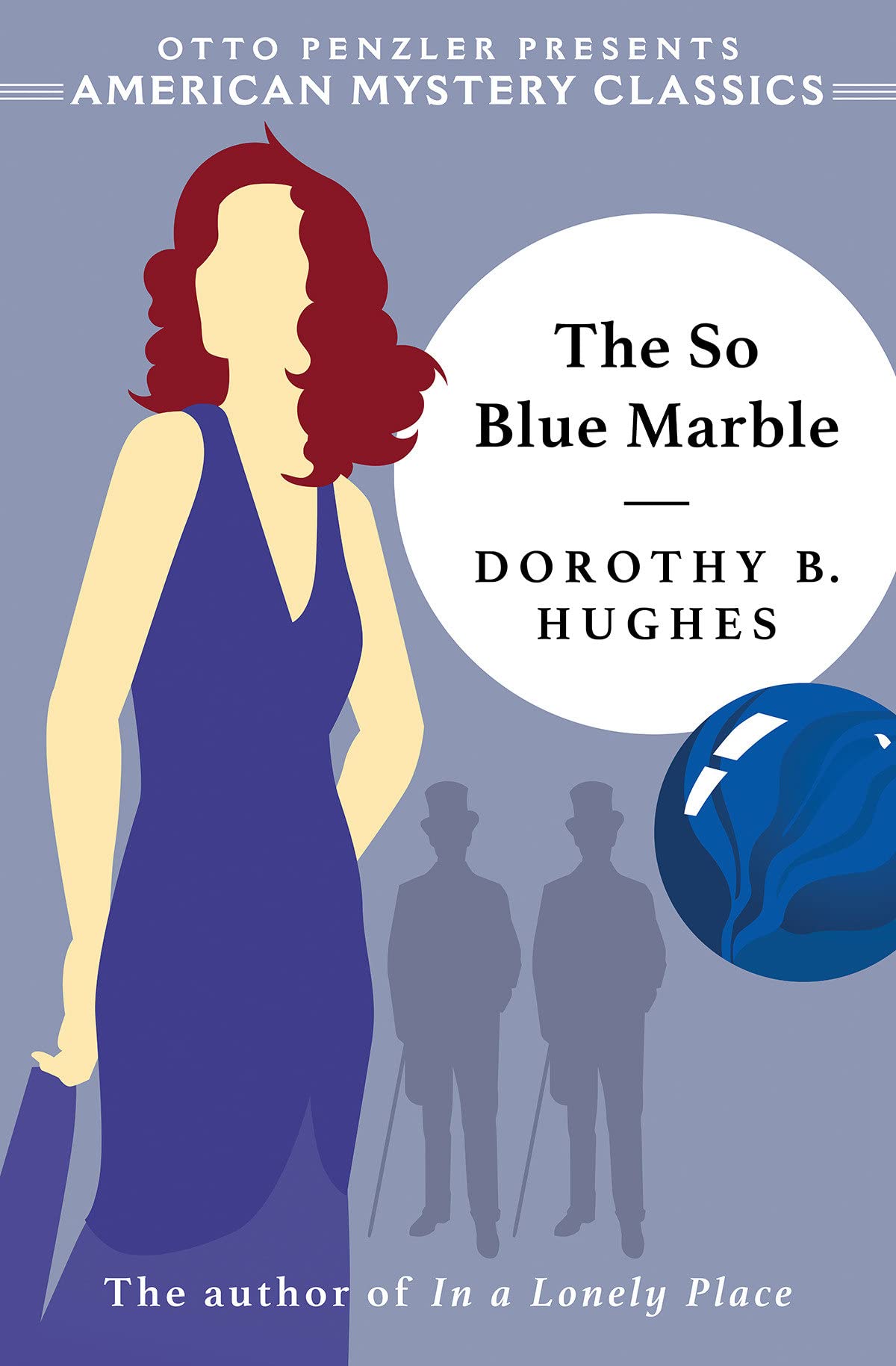
The So Blue Marble by Dorothy B. Hughes – #1940Club

I’ve read and loved three books by Dorothy B. Hughes – The Expendable Man, Ride the Pink Horse and In a Lonely Place, all of which featured on my books of the year list in the respective years in which I read them – so when I was looking for possible titles to read for Karen and Simon’s 1940 Club my eye was immediately drawn to The So Blue Marble. Published in 1940 (obviously), this was Hughes’ first novel and although it doesn’t feel as elegant and polished as her later ones, it’s still very enjoyable.

Twenty-four-year-old Griselda Satterlee has abandoned a promising career as an actress and returned home to New York to start a new life as a costume designer. Walking along Fifth Avenue one night on her way back to her ex-husband Con’s apartment, where she is staying in his absence, she is accosted by two young men who force their way into the apartment with her. The men, whom she later learns are twins Danny and David Montefierrow, seem to know all about Griselda, although she’s sure she’s never met them before. However, it’s not Griselda herself that they are interested in – all they are looking for is a blue marble, which they insist must be somewhere inside the apartment.

Griselda has no idea why they are so desperate to find the blue marble – the very blue marble or the so blue marble, as they always describe it – but she is determined that, whether it’s in Con’s apartment or not, it must not fall into the hands of the twins. But David and Danny are equally determined to obtain it and will stop at nothing to get hold of it, including murder.

This book doesn’t seem to be very highly thought of by Hughes readers – there are lots of one and two star reviews on Goodreads – and I can understand why, but I did still enjoy it. It’s true that the plot is ridiculous, yet I don’t think it’s intended to be taken too seriously and if you go into the book prepared to accept it for what it is, The So Blue Marble is a lot of fun to read. It’s also quite creepy in places – the Montefierrow twins, identical but for their different coloured hair and eyes, who charm everyone else around them and move in the highest circles of society, make very sinister villains, as does Missy, Griselda’s teenage sister, who arrives from Paris and becomes caught up in the search for the marble.

Although I would describe this book as more of a thriller, there’s still a sense of mystery surrounding the importance of the very blue marble and why so many people are so keen to find it. Once these questions have been answered, I felt that things began to fall apart slightly and the story lost some of its impetus. Still, there’s plenty of suspense from beginning to end, some unexpected plot twists and some characters who are not quite what they seem, all of which makes this a very entertaining read.

If you’re new to Hughes, don’t start here – start with one of the other three books I’ve mentioned instead, but if you’re ready to explore some of her lesser known work this one is definitely worth reading. I’ve discovered that Hughes also wrote a second novel featuring Griselda Satterlee, The Bamboo Blonde, which I’ll have to look for at some point.

On Monday I reviewed The Bird in the Tree by Elizabeth Goudge.

And here’s my list of previous 1940 reads.

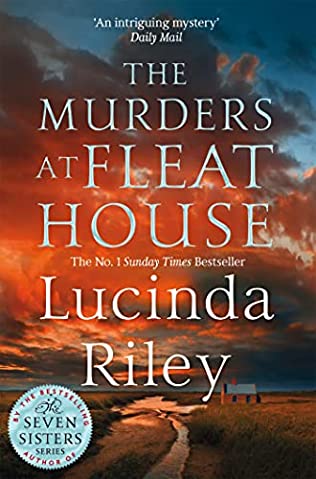
The Murders at Fleat House by Lucinda Riley

Lucinda Riley is best known for her Seven Sisters series and her other standalone dual time period novels, so The Murders at Fleat House – a contemporary crime novel – is something very different. It would have made an excellent start to a new series, but sadly that’s not to be as Lucinda passed away in 2021, leaving this book as the only example of her crime writing. It’s one of several novels she wrote early in her career, without a publisher, and it was finally published posthumously in 2022.

The novel begins with the sudden death of Charlie Cavendish, a student at St Stephen’s, a private boarding school in rural Norfolk. The cause of death is found to be aspirin, to which Charlie was allergic – a fact known to everyone else who boarded with him in Fleat House. The school headmaster, concerned about the reputation of St Stephen’s, is keen to have the incident declared a tragic accident, but the police suspect there’s more to it than that. It seems that someone switched the medication Charlie took to control his epilepsy with aspirin – but who did it and why?

Detective Inspector Jazmine ‘Jazz’ Hunter happens to be in Norfolk at the time of the death, having attempted to walk away from her police career in London for personal reasons, but she is persuaded to return to work and lead the investigation. As she begins to look into the circumstances surrounding Charlie’s death, events take an unexpected turn with the discovery of a second dead body and the disappearance of another of the Fleat House boys. The clues all seem to point towards one culprit, but Jazz is not convinced. Can she solve the mystery before the wrong person is found guilty?

Schools often make interesting settings for murder mysteries and this is no exception. However, we only get to know one or two of the children; it’s the adults – the detectives, the teachers, the staff and the parents – who are at the forefront of the story here. Jazz herself is an engaging protagonist and could have been the star of a whole series, if the author had lived to write more books. A lot of time is spent on personal storylines – a difficult relationship with her Irish ex-husband, a father ill in hospital – which sometimes detracts from the central mystery, but would be understandable if Riley was trying to round out Jazz’s character with future books in mind.

I really enjoyed The Murders at Fleat House – the worst I can say about it is that it was a bit too long and could have used some editing. Having said that, Harry Whittaker (Lucinda Riley’s son) explains in his foreword to the book why he made the decision to leave his mother’s work in its original form and largely unedited. Otherwise, I found this a very entertaining and compelling murder mystery, with a classic feel; rather than lots of blood and gore, which you often get in modern crime novels, the focus is on looking for clues, interviewing suspects and trying to unravel family secrets and complex relationships. The ending came as a surprise – I certainly hadn’t guessed the identity of the murderer or their motive!

Although I’m sorry that we won’t have a chance to meet Jazz Hunter again, I’m now looking forward to the final Seven Sisters book, Atlas: The Story of Pa Salt, which has been completed by Harry Whittaker and will be published in May. Only another month to wait!

Death of an Author by E.C.R. Lorac – #ReadIndies

E.C.R. Lorac’s Death of an Author, first published in 1935, begins with the novelist Michael Ashe persuading his publisher to arrange a dinner party so that he can meet another of their authors, the crime writer Vivian Lestrange. Despite being famously secretive and reclusive, Lestrange accepts the invitation – but to Ashe’s surprise, a young woman arrives at the party rather than the man he had expected. Vivian, of course, could be either a man’s name or a woman’s, and Lestrange seems amused by Ashe’s assumptions. She engages Ashe in a debate on gender equality and whether it’s possible to tell a man’s writing from a woman’s – and naturally, she comes out of the argument on top.

Three months later, the same young woman approaches the police to report a crime and introduces herself as Eleanor Clarke, secretary to the author Vivian Lestrange. She admits that Lestrange really is a man, although she has impersonated him at parties a few times for fun. Her reason for contacting the police is that Mr Lestrange has disappeared along with his housekeeper, Mrs Fife, and Eleanor is unable to gain entry to his house, her place of work. She is concerned about him and wants the police to investigate. Inspector Bond, however, is convinced that Eleanor herself is Vivian Lestrange and that some sort of deception is taking place. His Scotland Yard colleague, Inspector Warner, on the other hand, believes what Eleanor has told them and accepts that she and Lestrange are two separate people. But which of them is correct – and if Eleanor is telling the truth, what has happened to the real Vivian Lestrange?

This is the first book I’ve read by Lorac, although I’ve been intending to try one for a long time as I know she’s one of the most popular authors in the British Library Crime Classics series. It was maybe not the best one to start with (it has just been reprinted in January, and I would imagine the British Library have been publishing her stronger books first), but I found it enjoyable enough, with one or two reservations. It certainly has a fascinating plot, with the police trying to investigate a crime without being sure who the victim is or even whether a crime has been committed at all. It was interesting to watch the two detectives, Warner and Bond, working together to come up with different possible scenarios and trying to decide which was the most likely.

As an author who wrote under her initials (her real name was Edith Caroline Rivett) and other pseudonyms including Carol Carnac (Lorac is Carol backwards), the arguments Eleanor Clarke makes to defend women’s writing and to refute the assumption that only men could write a certain kind of book must have been close to Lorac’s own heart. And yet, the way the story develops after this seems to contradict some of the points that were being made at the beginning and I was left feeling slightly confused as to what Lorac was actually trying to say.

Although I couldn’t quite manage to love this one, it was still an entertaining read and I’m sure I’ll try more of Lorac’s books. I know some of you have read a lot of them, so I would like to hear which ones you would recommend!

I’m counting this towards #ReadIndies, a month celebrating books from independent publishers hosted by Kaggsy’s Bookish Ramblings and Lizzy’s Literary Life.

The Mysterious Case of the Alperton Angels by Janice Hallett

Imagine you find a box of documents that make up the research material for a true crime book. After reading them, you see that the book will shed new light on the eighteen-year-old case of the Alperton Angels – but what will you do next? Destroy the documents? Or hand them over to the police? This is the premise of Janice Hallett’s new novel, The Mysterious Case of the Alperton Angels. It’s fascinating, but Hallett has a style all of her own which can take a while to get used to. I knew what to expect as I loved her previous novel, The Twyford Code – one of my favourite books of 2022 – and I think I enjoyed this one even more.

The case of the Alperton Angels involved a cult led by a man who called himself the Angel Gabriel, two vulnerable teenagers and a baby they believed to be the Antichrist. When true crime writer Amanda Bailey is commissioned to write a book for a new series re-assessing historic crimes, she decides to write about the Alperton Angels from the perspective of the baby, who is now about to turn eighteen. The only problem is, she has no idea where the baby is – or even who they are. Even worse, she discovers that one of her rivals, Oliver Menzies, is working on the same book from the same angle. Who will find the baby first and uncover the truth behind the Alperton Angels?

The whole novel is presented as Amanda’s collection of research material: emails, letters, WhatsApp messages, and even excerpts from books and film scripts. Where she has met and interviewed people involved in the case, these conversations are transcribed by her assistant Ellie, who adds her own amusing observations and asides. This modern, multimedia style of storytelling is not something that would usually sound appealing to me, but in Janice Hallett’s hands I love it. And actually, when I think about it, it’s really just an updated form of the classic epistolary novels I’ve always enjoyed, so there’s no reason why I shouldn’t like it!

Despite the fragmentary style, I could still get a feel for the personalities of the main characters – Amanda persistent and tenacious, Oliver gullible and easily led, and Ellie witty and down to earth – but there’s also a sense that there’s a lot we’re not being told. How much can you trust what someone says in an email or in an interview where they know they’re being recorded? Similarly, the facts behind the case of the Alperton Angels are unravelled very slowly, one little piece of information at a time, and with many of the suspects and witnesses following their own agenda, we don’t even know if what we are reading is true or will be proved false later in the book. Things do eventually start to come together and make sense – and if you continue to the end, you’ll be rewarded with some great twists!

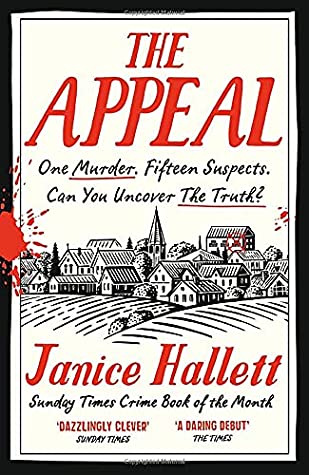
I found The Mysterious Case of the Alperton Angels completely gripping and difficult to put down, particularly as there are no traditional chapter breaks so no logical places to stop. Now I’m looking forward to reading Janice Hallett’s first novel, The Appeal.

Thanks to Viper for providing a copy of this book for review via NetGalley.