The Hollow Hills by Mary Stewart

Hollow Hills I didn’t really intend to read The Hollow Hills last weekend. I have books on my library pile, review copies to catch up with, and books to read for various other projects, but something made me yearn for Mary Stewart and I picked up the second of her Arthurian novels on Saturday morning. I was immediately pulled into the story and had finished the book by Monday.

The Hollow Hills is part of a series of five books set in Arthurian Britain, although the first three are usually described as the Merlin Trilogy. The first book, The Crystal Cave, introduces us to Merlin and his world; The Hollow Hills continues the story, beginning just before the birth of Arthur. As the illegitimate son of Uther Pendragon and Ygraine of Cornwall, the young Arthur is sent into hiding, not only as protection against Uther’s enemies but also to keep him conveniently out of the way until another legitimate heir is born. But Merlin, with his gift of prophecy and visions, knows that it will be Arthur who will one day raise the legendary sword Caliburn from its resting place and become King.

Like The Crystal Cave, the story is narrated by Merlin himself and as Arthur is only a baby throughout much of the novel (and still only fourteen at the end) this book is more about Merlin than it is about Arthur. While Arthur is growing up in safety, ignorant of his true parentage, Merlin is having adventures of his own as he travels throughout Europe, takes on new identities, and explores the legends behind the great sword Caliburn (which until now I have always known as Excalibur). I loved the book from beginning to end and was never bored, but there is always the sense that the whole novel is building towards the moment when Arthur will learn who he really is and be ready to reclaim his heritage.

The plot means that Merlin and Arthur are kept apart for most of the novel, but I enjoyed the scenes that they do have together. I like the way Mary Stewart portrays both characters and the development of the bond between the two of them. It’s disappointing, though, that there are no strong female characters in this book: Ygraine only appears briefly and while Morgause (in this version Arthur’s half-sister) does have an important role in the story, she is hardly portrayed very flatteringly. Apart from that, I loved everything else about this book, and of course, it’s very well written with lots of beautiful, vivid descriptions. It’s Mary Stewart, after all!

While I don’t have a lot of knowledge of the Arthurian legends, I do know the basic details, so some parts of the story felt familiar to me – but even where I thought I knew what was going to happen, this didn’t lessen the enjoyment of the book for me. There is not just one version of the legend, of course, but lots of them which all differ slightly, and in her notes at the end of the book, Stewart explains some of the choices she has made. Some readers may be disappointed that there is so little actual ‘magic’ in this novel, but that’s one of the things I like about it; most of what happens has a rational explanation and there’s only a touch of the supernatural.

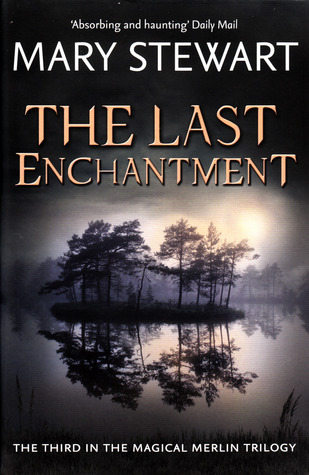
I think of the two books in this series that I’ve read so far, I did prefer The Crystal Cave, but only slightly, and I’m now looking forward to reading the next one, The Last Enchantment.

Uprooted by Naomi Novik

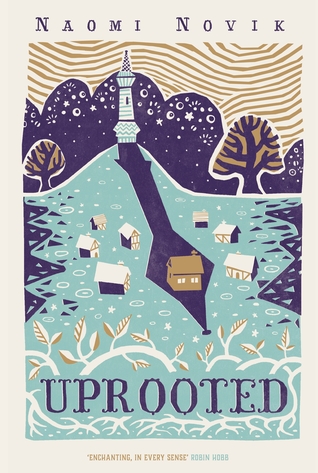
Uprooted Naomi Novik is best known for her Temeraire series set during an alternate version of the Napoleonic Wars in which dragons are used in aerial combat. After reading the first Temeraire book in March I was delighted when I unexpectedly received a review copy of Novik’s new novel. While Uprooted is not a Temeraire story, it does have a Dragon…but not of the winged, fire-breathing variety. The Dragon in Uprooted is a wizard – the most powerful wizard in the kingdom. Which kingdom? Well, we aren’t really told, but it does resemble Poland in the 16th century.

Our narrator, Agnieszka, lives in Dvernik, a village on the edge of a dark and sinister forest known only as the Wood. The villagers rely on the Dragon to defend them from the horrors that lurk in the Wood, but his protection comes at a price: every ten years the Dragon selects a seventeen-year-old girl from the village and takes her away to live with him in his tower. Nobody knows what happens to the girls during their time with the Dragon, but when they return ten years later they have changed and are unwilling to go back to their old lives in the village.

The year Agnieszka turns seventeen is a Dragon-year and she waits anxiously with the other girls her age while he makes his choice. Everyone thinks it will be the beautiful Kasia, Agnieszka’s best friend, but the Dragon has other ideas and it is Agnieszka herself who ends up in his tower. At first she has no idea what the Dragon wants from her and spends most of her time trying to avoid him, but it’s not long before she discovers why she was chosen. As Agnieszka learns more about the wizard and his magic, the evil forces within the Wood continue to grow stronger and soon she and the Dragon must work together to save the kingdom.

Uprooted is a wonderfully imaginative fantasy novel. When I first began to read, I thought it felt like a fairy tale retelling – there were definitely some elements of Beauty and the Beast as well as some references to Eastern European folklore – but very soon it started to develop into something original and different. There was a lot to love about the book and although it wasn’t as flawlessly brilliant as it seemed to be at first, I would highly recommend it both to fantasy fans and to those like me who only dip into fantasy occasionally.

I found the ways in which magic is used in the novel particularly interesting, as there are so many different types performed by the Dragon and various other characters. These range from the Dragon’s meticulous, almost scientific methods to the more natural, instinctive magic found in the old spellbooks of the great witch, Jaga. Agnieszka learns a lot about magic while living in the Dragon’s tower; it was fascinating and I was slightly disappointed when the scope of the story broadened and the action moved first to court and then to other parts of the kingdom.

The relationship between Agnieszka and the Dragon is well written, particularly in the first half of the book, but a lot of time is also spent on exploring the strong female friendship between Agnieska and her best friend, Kasia. There’s also a romantic thread to the story but this does not form a big part of the plot, which could be either a good thing or a bad thing depending on how you feel about romance. Personally I would have liked this aspect of the novel to have been developed in a little bit more depth as it seemed to be neglected halfway through as a very long and drawn out magical battle took centre stage instead.

The most memorable thing about Uprooted, though, was the role played by the Wood. When people talk about books, they often say that the setting felt almost like a character. With this book, it wouldn’t be an exaggeration to say that the setting really is a character. The Wood is portrayed as not just a collection of trees, but as a strong evil presence – an intelligent living entity with thoughts, feelings and desires. I found it genuinely creepy and menacing and the fact that it isn’t human makes it an unforgettable fantasy villain.

I’m not sure whether Naomi Novik is going to write more books set in this world. There is the potential for more, but the way Uprooted ended suggests that it will remain a standalone. Either way I’m happy – and I still have the rest of the Temeraire series to read!

Thanks to Pan Macmillan for providing a copy of this book for review.

The Last Light of the Sun by Guy Gavriel Kay

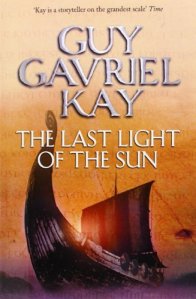
The Last Light of the Sun I’m hoping to read Guy Gavriel Kay’s Under Heaven soon for the Once Upon A Time challenge, but first I need to tell you about another of his novels which I read a few weeks ago: The Last Light of the Sun.

This is the third book I’ve read by Kay and like the other two (Tigana and The Lions of Al-Rassan) it is set in a fantasy world that closely resembles a real historical one. A blue moon and a white moon shine in the sky, faeries wait to claim the souls of the dead, and ancient magical forces lurk in the forest, yet the world portrayed in The Last Light of the Sun can easily be identified as Northern Europe in the time of the Vikings, the Anglo-Saxons and the Celts.

In this re-imagined land, the Vikings have been renamed the Erlings, the Anglo-Saxons have become the Anglycn and the Celts have been transformed into the Cyngael. While the Erlings are sea-raiders who inhabit the islands in the far north, the Anglycn live in what is surely the country we now know as England, and the Cyngael live to the west, presumably in Wales. These lands of the Cyngael, on the western edge of the known world, are the last to see the light of the setting sun – and also form the final outpost of the new religion of Jad, the sun god.

Throughout the novel, we follow the adventures of three groups of characters from each of the three cultures I’ve described above. First, we meet Bern Thorkellson, a young Erling who has lost his lands and his freedom as a result of his father being exiled for murder. Desperate to escape and build a new life for himself, Bern joins a raiding party heading for the Anglycn shores. Meanwhile, in the Cyngael lands, two young princes called Alun and Dai happen to be spending the night at the home of a rival Cyngael warrior, Brynn ap Hywll, when it is attacked by another group of Erling raiders. Finally we get to know the family of the Anglcyn king, Aeldred, who has been trying to unite his people against the threat of the Erlings.

To describe the plot in any more detail would be difficult as it does become quite complex as the lives of each of these characters become entwined with all of the others. The author doesn’t really ‘take sides’ or favour one of the three cultures over the other two – perspectives and points of view are balanced fairly between the three and there are good people and bad within each group. Feuds and rivalries are formed, but so are friendships and loyalties as Erling, Anglcyn and Cyngael find that they need to adapt to a changing world.

One thing Kay does in this book, which I’m not sure I really like, is to occasionally leave his main characters behind for a while to explore the life of a completely new character who enters the novel for a few pages and then disappears, never to be mentioned again – as Kay himself describes it: “At the margins of any tale there are lives that come into it only for a moment. Or, put another way, there are those who run quickly through a story and then out, along their paths.” I can understand the reasons for this – to show us what is going on away from the central plot and the central characters – but I did find it slightly distracting.

This is a beautifully written novel, though, and as well as being an entertaining story, it’s also very thought-provoking in places. I particularly liked these two quotes:

“It happens this way. Small things, accidents of timing and congruence: and then all that flows in our lives from such moments owes its unfolding course, for good or ill, to them. We walk (or stumble) along paths laid down by people and events of which we remain forever ignorant. The road someone else never took, or travelled too late, or too soon, means an encounter, a piece of information, a memorable night, or death, or life.”

“A hard truth: that courage can be without meaning or impact, need not be rewarded, or even known. The world has not been made in that way. Perhaps, however, within the self there might come a resonance, the awareness of having done something difficult, of having done…something.”

I’ve loved all three of the Guy Gavriel Kay novels I’ve read so far and am looking forward to reading his others, beginning with Under Heaven. Have you read any of his books, and if so do you have a favourite?

Temeraire by Naomi Novik

Temeraire Temeraire (also published as His Majesty’s Dragon) is the first in a series of nine books and is set during an alternate version of the Napoleonic Wars. This alternate world is exactly like our own in almost every detail, but with one very important difference – the existence of dragons. These dragons are intelligent creatures, capable of human speech and independent thought, and are used by both the British and French to provide aerial support to their navies. This first novel explores the beginning of a very special relationship between Captain Will Laurence and his dragon, Temeraire.

When we first meet Laurence he is a Captain in the Royal Navy and has just captured a French ship which happens to be carrying an unhatched dragon egg. The egg is very close to hatching and Laurence knows that if the dragon is to be tamed (and therefore of use to Britain’s Aerial Corps) it’s essential that it is harnessed and made to accept a human handler as soon as possible. The thought of becoming an aviator is not something that appeals to Laurence – as well as requiring total dedication, leaving little time for a family life, aviators are treated with scorn and contempt by the rest of the military. Unfortunately, the newly-hatched dragon refuses to accept any other handler so Laurence, after naming him Temeraire, reluctantly resigns himself to his new career and new way of life.

The rest of the novel follows the adventures of Laurence and Temeraire as they begin their training with the Aerial Corps in Scotland, learning all the flying manoeuvres and formations they will need to know before being called into service. This does feel very much like the first in a series and although Laurence and Temeraire do have the opportunity to take part in some action towards the end of the novel, the main purpose of the book seems to be to set the scene and introduce us to the concept of dragon warfare. This doesn’t mean that I thought the book was boring, though – quite the opposite: I found all the details of dragon training fascinating and now that I know how things work in the world of Temeraire I’m looking forward to continuing with the series.

I particularly enjoyed meeting all the other aviators and dragons who form the Aerial Corps including Captain Harcourt and her Longwing dragon, Lily (the presence of female aviators is something Laurence has to adapt to, having been used to the male-dominated Navy), Berkley and his Regal Copper, Maximus, and the training master, Celeritas, who is himself a dragon. One of my favourites was Levitas, a little dragon who has been neglected by his selfish captain and is desperate for some love and affection.

Most of all, I loved watching the relationship develop between Temeraire and Laurence as they come to trust and understand each other. There are some intriguing revelations about Temeraire at the end of the novel that make me want to pick up the second book in the series, Throne of Jade, as soon as possible!

I read Temeraire for Week 1 of the Forgotten Histories Reading Challenge.

Assassin’s Quest by Robin Hobb

Assassins Quest I’ve finished the Farseer Trilogy and now I feel bereft! After the cliffhanger ending of the previous book, Royal Assassin, I immediately moved on to the final instalment but now I wish I’d waited a while so that the whole experience wouldn’t have been over so quickly. This particular book wasn’t my favourite of the three – I had a few minor problems with this book that prevented me from enjoying it as much as the first two – but I can’t express how much I loved this trilogy as a whole.

It is almost impossible to discuss the final book of three without giving away things that happened in the previous two, so be aware that there will be spoilers throughout the rest of this post! If you’re new to Robin Hobb it wouldn’t be a good idea to start with this book anyway – Assassin’s Apprentice is where you need to begin.

Assassin’s Quest is slightly different from the first two Farseer novels because, while those two were centred around Buckkeep and its inhabitants, in this third book Fitz is on a mission that will take him across the Six Duchies and beyond. It feels more like a traditional fantasy adventure novel – and in fact, it does contain much stronger fantasy elements than the previous books. We learn more about the Wit and the Skill – and both of these types of magic are used in ways I hadn’t realised was possible – and we even meet some dragons (which isn’t surprising, as there’s one pictured on the book cover). While I thought the strengthening of the fantasy elements felt like a natural development as Fitz ventures further into the Realm of the Elderlings, I did prefer the more subtle fantasy atmosphere of Assassin’s Apprentice and Royal Assassin.

This novel picks up the story where Royal Assassin ended, with Fitz believed to have died at the hands of King Regal and his coterie. We, however, know that he has only left his body temporarily to join his wolf, Nighteyes, with whom he is Wit-bound. After a slow start in which Fitz returns to human form and has to come to terms with no longer being a wolf, he finally sets out on his quest. His aim is to hunt down Regal and kill him, but this proves to be more difficult than he expected and eventually he becomes aware that he has allowed himself to be distracted from what should have been his real purpose: finding Verity, his beloved uncle and rightful King of the Six Duchies.

Verity left Buckkeep halfway through the previous novel to go in search of the legendary Elderlings in the hope that they would help him to defeat the Red Ship Raiders. He has never been seen since, but Fitz is sure he’s still alive – he can sense Verity’s presence with his Skill and hear his command (“Come to me!”) in his mind. This certainty that his King is waiting for him is what keeps Fitz focused on his task, even when he wants nothing more than to return to Buck and look for Molly, the woman he loves, now only visible to him in Skill dreams.

As Fitz and Nighteyes travel across all of the Six Duchies and on into the Mountain Kingdom they are joined by some old friends, as well as making new ones such as Starling, a minstrel, and Kettle, an old woman who clearly knows a lot more about the Skill than she wants to admit to. That, by the way, was one of the little things that annoyed me about the book. It seemed that on a mission where everybody needed to pull together, every one of the party was keeping secrets from the others, making cryptic comments when a simple explanation could have saved so much trouble. Speaking of secrets and cryptic comments, we do learn quite a lot about the Fool in this book. However, the revelations that are made about the Fool just seem to raise more questions than they answer!

Unlike the first two books which I loved from the beginning, it took me a while to really get into Assassin’s Quest; the opening section with Fitz learning to be human again seemed to go on forever. After the journey got underway, I was quickly drawn into the story once again and became so absorbed in Fitz’s world I was dreading reaching the end of the book – especially as I was sure it wouldn’t end happily. This is a big, thick book (with over 800 pages in the edition I read) and there were a few points where I thought the story started to drag. I didn’t mind persevering through the slower parts, though, because there are some truly fantastic moments in this book, my favourites being the breathtaking scenes set inside Regal’s palace at Tradeford.

So, do Fitz and his friends find Verity and if so, has he succeeded in enlisting the help of the Elderlings? Will Fitz have another chance to kill Regal? Despite my spoiler warnings, I’m not going to answer those questions here. I will just say that I found the ending (the final two or three chapters, really) every bit as sad as I’d expected it to be, and yes, I cried. I’m not always a fan of happy, fairytale endings but after all the misery Fitz and the other characters had gone through in this trilogy I think I would have liked one here! As for the way everything was wrapped up in the last few pages in the style of an epilogue, I didn’t find that very satisfying either. I realise, though, that we’ll meet Fitz again later in the Tawny Man Trilogy and I’m looking forward to reading those books – but not until I’ve read the Liveship Traders first!

Royal Assassin by Robin Hobb

Royal Assassin The way I read has changed since I started blogging. I can no longer seem to just read one book at a time and often find myself with four or five on the go at once. Sometimes, though, there comes a point where one book becomes so absorbing that I have to drop everything else and concentrate solely on that book right to the end. That’s what happened with Royal Assassin; other books had to be pushed aside while I became immersed in the world of the Six Duchies.

Royal Assassin is the second of The Farseer Trilogy and continues the story begun in Assassin’s Apprentice. If you haven’t read the first book yet, be aware that spoilers may follow!

At the beginning of the novel, FitzChivalry Farseer has survived his mission in the Mountain Kingdom and is ready to return home. On arriving at Buckkeep, however, Fitz is confronted with a new set of problems. King Shrewd is suffering from a mysterious illness and is losing control of his kingdom, while his son, King-in-Waiting Verity, is preoccupied with defending the coastal Duchies from the persistent attacks of the Red Ship Raiders. Currently, Verity’s only weapon against the Raiders is the Skill – a form of magic known to only a select few within the keep – but it is having little effect. When he hears tales of the mythical Elderlings who once helped a previous king tackle the threat of the Raiders, Verity sets off to find them – a journey that will take him far away from Buckkeep.

It is left to Fitz, then, to try to protect Buckkeep and its inhabitants from the plots of Prince Regal who, with his elder brother gone and his father ill, has set his sights on taking the throne for himself. Fitz is not entirely alone and can rely on the help of old friends – Burrich the Stablemaster, Chade, his instructor in the arts of assassination, and his father’s widow, Patience – as well as new ones such as Verity’s Queen-in-Waiting, Kettricken, but with Regal intent on removing anyone who gets in the way of his ambitions, it’s a difficult and dangerous time for Fitz and his allies. He is able to find comfort in his reunion with Molly, the woman he loves, and also in a special bond with a wolf called Nighteyes, but even these relationships are not without their complications…

I loved Assassin’s Apprentice when I read it a couple of months ago and I’m pleased to say that I found this book just as good as the first – possibly even better. I can only think of two things that bothered me slightly about this book. First, I couldn’t quite believe that Verity would abandon Buckkeep at such a crucial moment. I understand why his leaving was necessary for the plot; it just seemed a bit unconvincing to me. Also, I find Regal a disappointingly one-dimensional villain. Unless things are going to change in the third book, he seems to have absolutely no good qualities or nuances to his character – though maybe this is only noticeable because most of the others are so interesting and well developed. I realise that I still haven’t mentioned one of the most intriguing characters in the book: the Fool. Sometimes he seems so clever and wise, at other times so vulnerable and childlike. I think I said in my review of Assassin’s Apprentice that I wanted to know more about the Fool; well, we do learn a little bit more, but he is still a character surrounded by mystery.

I find the inhabitants of Buckkeep and the relationships between them so interesting that the Red Ship Raiders and Forging storyline becomes secondary to me. I thought the Skilling and Wit passages in this book were particularly well written; sometimes novels with plots that rely on telepathic communications can seem unrealistic, but here I had no problem believing in Fitz’s conversations with Nighteyes, to give one example. In the previous novel I didn’t fully understand the implications of The Wit and the problems it could cause, but now things are a bit clearer. The role it plays in the story is fascinating, especially towards the end!

The first two books in this trilogy have been among the most enjoyable books I’ve read this year. The third one, Assassin’s Quest, is on my library pile and I’ll have to start it soon as it looks enormous!

The Crystal Cave by Mary Stewart

The Crystal Cave With only four of Mary Stewart’s suspense novels still to read, I decided that for Anbolyn’s Mary Stewart Reading Week I would try one of her Arthurian novels instead. The Crystal Cave is the first in the series and introduces us to Myrddin Emrys, better known as Merlin. I should begin by saying that I have previously read very few novels that tell the story of Merlin or King Arthur (T. H. White’s The Sword in the Stone is the only one that really comes to mind). I wasn’t sure that The Crystal Cave would be my type of book and I wondered if I would regret not picking up another of the romantic suspense novels for the reading week. Well, I can assure you that I didn’t regret my choice at all!

The book is set in 5th century Britain, a land of several warring kingdoms held together by Vortigern, the High King. Vortigern has invited the Saxons to Britain to help him rule, but they are disliked by the people and Vortigern’s throne is soon under threat not only from his own son, Vortimer, but also from two other princes – Ambrosius and Uther who are exiled in Less Britain (Britanny). This is the world into which Merlin is born.

Our story begins with six-year-old Merlin living in the home of his grandfather, the King of South Wales. Merlin’s mother is the King’s daughter, Niniane, but the identity of his father is unknown as Niniane has refused to reveal his name. Merlin is a lonely child, despised by his grandfather, but he is also very intelligent, quick to learn and has a special gift known as ‘the Sight’. One day he rides out into the hills near his home and discovers a cave inhabited by a man called Galapas. Inside this cave is a second, smaller cave filled with crystals in which Merlin has visions when he looks into the light of these crystals. When fate takes him across the Narrow Sea to Less Britain several years later, Merlin meets the exiled Ambrosius and makes some important discoveries about both the past and the future…

The Crystal Cave is a great book and is now one of my absolute favourites by Mary Stewart. It obviously has a different feel from her contemporary suspense novels, but there were also some similarities and I could definitely tell it was written by the same author! Whenever I read a Stewart novel I expect a strong setting with vivid descriptions and I certainly got that with this book. Merlin’s travels take him through England, Brittany and Ireland, to Tintagel Castle in Cornwall, to the wonders of Stonehenge and, of course, to Wales:

There were rain clouds massing in the west, but in front of them, like a bright curtain, the slanting sunlight. One could see on a day like this why the green hills of Wales had been called the Black Mountains and the valleys running through them the Valleys of Gold. Bars of sunlight lay along the trees of the golden valleys, and the hills stood slate-blue or black behind them, with their tops supporting the sky.

One thing that surprised me about this book is that it does not have such a strong fantasy element as I’d expected. While Merlin certainly does have visions which foretell the future, many of the things he does have very little to do with magic and more to do with his observations and understanding of science and of human nature. I loved the way his character was portrayed; he felt so believable and real. It probably helped that I don’t have a lot of previous knowledge of the myths and legends surrounding Merlin which meant I had no preconceived ideas and could just concentrate on enjoying Mary Stewart’s version of the story. I’m so pleased I chose The Crystal Cave for the Reading Week and am now looking forward to meeting Merlin again in The Hollow Hills!